Damage To Arecibo Leaves Gaping Hole In Astronomy

In the early morning hours of August 10th, a support cable at the Arecibo Observatory pulled lose from its mount and crashed through the face of the primary reflector below. Images taken from below the iconic 305 meter dish, made famous by films such as Contact and GoldenEye, show an incredible amount of damage. The section of thick cable, estimated to weigh in at around 6,000 kilograms (13,000 pounds), had little difficulty tearing through the reflector’s thin mesh construction.

Worse still, the cable also struck the so-called “Gregorian dome”, the structure suspended over the dish where the sensitive instruments are mounted. At the time of this writing it’s still unclear as to whether or not any of that instrumentation has been damaged, though NASA at least has said that the equipment they operate inside the dome appears to have survived unscathed. At the very least, the damage to the dome structure itself will need to be addressed before the Observatory can resume normal operations.

The Arecibo Observatory by JidoBG [CC-BY-SA 4.0]
But how long will the repairs take, and who’s going to pay for them? It’s no secret that funding for the 60 year old telescope has been difficult to come by since at least the early 2000s. The cost of repairing the relatively minor damage to the telescope sustained during Hurricane Maria in 2017 may have been enough to shutter the installation permanently if it hadn’t been for a consortium led by the University of Central Florida. They agreed to share the burden of operating the Observatory with the National Science Foundation and put up several million dollars of additional funding.

It’s far too early to know how much time and money it will take to get Arecibo Observatory back up to operational status, but with the current world situation, it seems likely the telescope will be out of commission for at least the rest of the year. Given the fact that repairs from the 2017 damage still haven’t been completed, perhaps even longer than that. In the meantime, astronomers around the globe are left without this wholly unique resource.

Continue reading “Damage To Arecibo Leaves Gaping Hole In Astronomy”
Mobile Transmitter Gets Internal GPS And Bluetooth

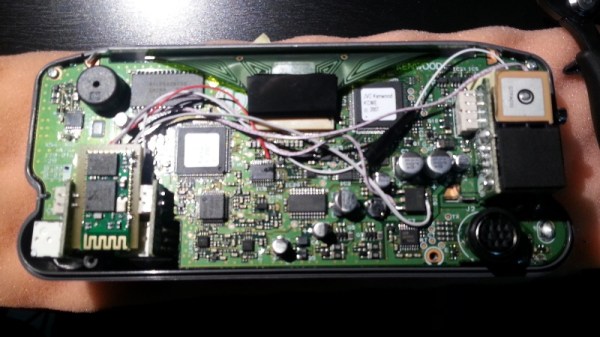
While [Selim Olcer] was relatively happy with his Kenwood TM-D710a radio, he didn’t like the fact that it needed a bulky external GPS “backpack” for APRS location data. So he decided to crack open the head unit and see if he couldn’t integrate his own GPS hardware (machine translation). Not only did he succeed, but he even threw in Bluetooth compatibility for good measure.

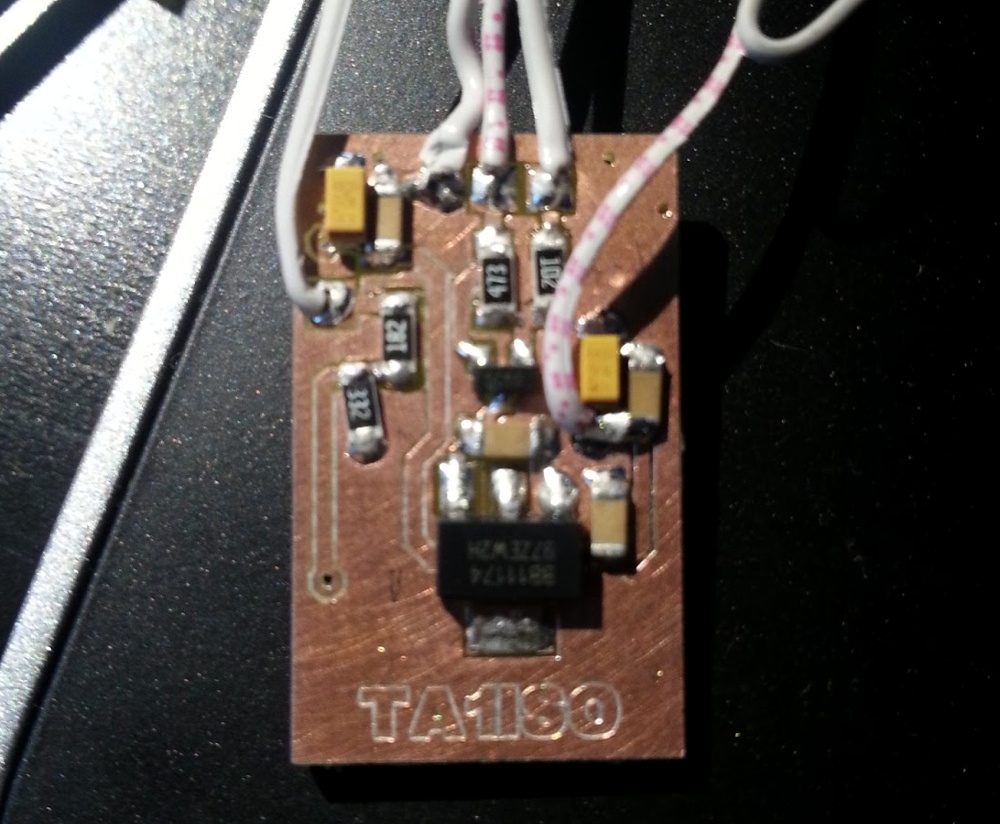
With the repair manual circuit diagrams in hand, it was no problem to find the GPS RX and TX lines that were being broken out to the external connector. Unfortunately, the radio’s electronics are all 5 volts and the GPS module [Selim] wanted to use was only 3.3 V. So he came up with a small PCB that included not only the voltage regulator to power the GPS module, but also some voltage-dividers to level shift those signals.

Since the Kenwood TM-D710a was already designed to accept a GPS upgrade module, he just needed to change some configuration options in the radio’s menus for it to see the new hardware. Technically the project was done at this point, but since there was still room in the case and he had a GPS module spitting out NMEA sentences, [Selim] tacked on a common Bluetooth serial module so he could see the position information on his smartphone. With an application like APRSdroid, he now has a nice moving map display using the position pulled from the radio’s GPS.

With this modification done it looks like the head unit is ready to go, but that’s only the beginning for a mobile rig. Now we want to see how he integrates the whole thing into the car.

A Miniature Power Supply For High Voltage Hacking

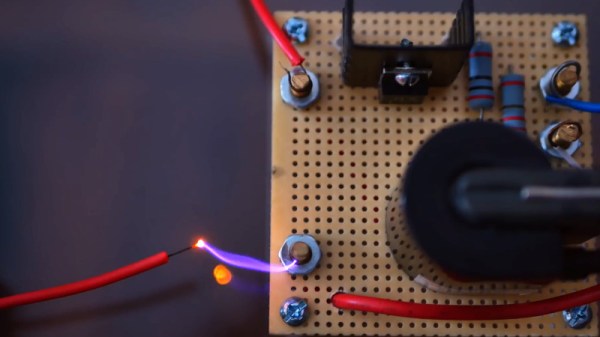
If you’re looking to experiment with plasma, you’re going to need a high voltage power supply. Usually that means something big, complex, and (naturally) expensive. But it doesn’t have to be. As [Jay Bowles] demonstrates in his latest Plasma Channel video, you can put together a low-cost power supply capable of producing up to 20,000 volts that fits in the palm of your hand. Though you should probably just put the thing down on a table when in use…

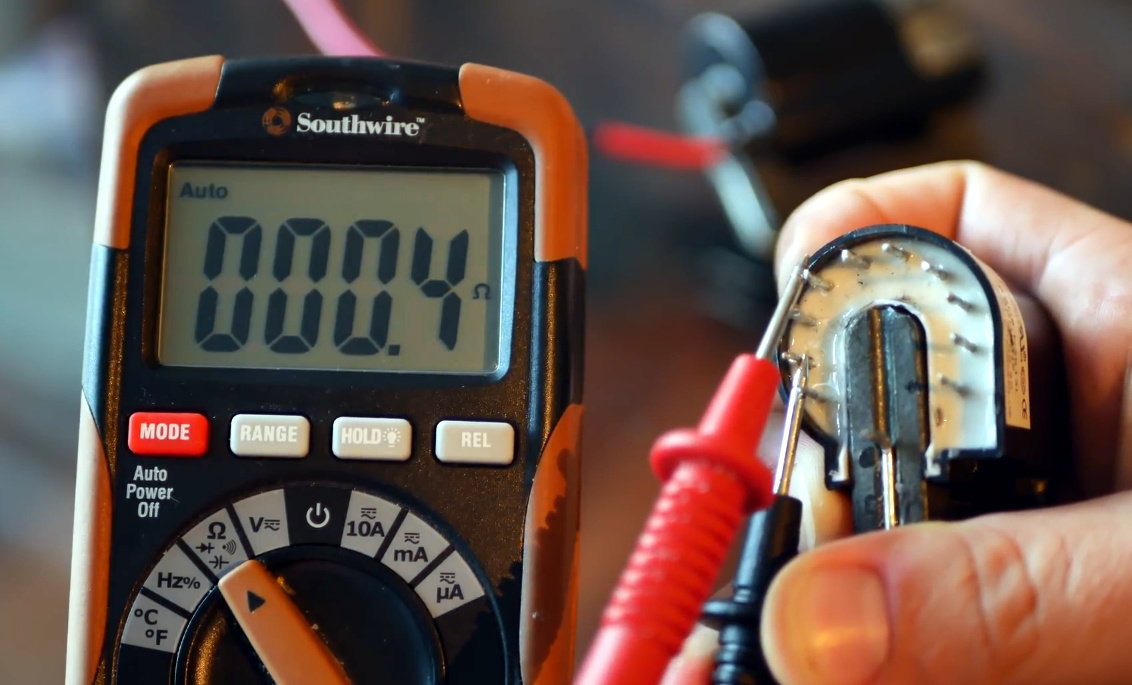
Finding the feedback coil with a multimeter.

The secret to the build is the flyback transformer. A household staple during the era of CRT televisions, these devices can still be readily found online or even salvaged from a broken TV. We’d recommend searching eBay for new old stock (NOS) transformers rather than risk getting blown through a wall while poking around in an old TV you found on the side of the road, but really it all depends on your experience level with this sort of thing.

In any event, once you have the flyback transformer in hand, the rest of the build is very simple. [Jay] demonstrates how you can determine the pinout for your transformer even if you can’t find a datasheet for it, and then proceeds to assemble the handful of ancillary parts necessary to drive it. Housed on a scrap of perfboard and mounted to a piece of plastic to keep stray objects away from the sparky bits underneath, this little power supply would be a reliable workhorse for anyone looking to start experimenting with high voltage. Perhaps an ionic lifter is in your future?

Readers with a photographic memory may recall that [Jay] used this same diminutive power supply in his recently completed water-based Marx generator.

Continue reading “A Miniature Power Supply For High Voltage Hacking”

Unique LED Display Inspired By Fighter Jet Dashboard

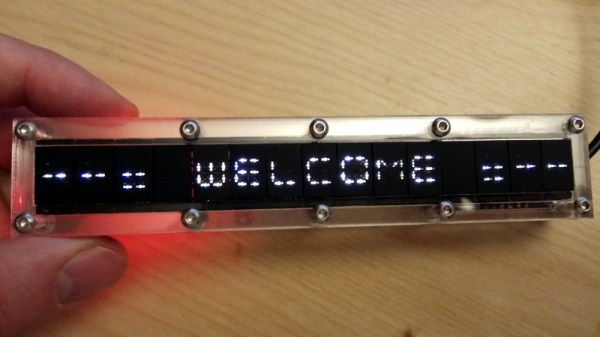
Last year, [Mangy_Dog] was asked by a few friends to consult on a project they were working on. The goal was to build an authentic replica of an F-18 cockpit, apparently for the purposes of creating a film. The project never materialized, but it did inspire him to take a hard look at the 1970s era alphanumeric displays utilized in the real aircraft. One thing lead to another, and he ended up using his own take on the idea to build his own “starburst” digit display.

As [Mangy_Dog] explains, while the faces of these original displays might have been quite small, there was a lot going on behind the scenes. Due to the technical limitations of the time, each alphanumeric character was made up of an array of incandescent light bulbs and fiber optic cables. This worked well enough, but was bulky and complex to manufacture.

Today, we can do better, even on the hobbyist level. As it turns out, 0402 LEDs are just about the right size to recreate the segments of the original starburst displays. So [Mangy_Dog] came up with a simple PCB design to not only align the LEDs properly, but drive them with a 74HC595 shift register and an array of MOSFETs. While assembly wasn’t without its challenges, he made good use of his custom built reflow oven to get all the diminutive components in place.

He went through a few different ideas for the diffuser, but eventually settled on black plastic with tiny holes drilled through courtesy of his laser cutter. Behind each set of three holes is a small pocket that got filled from both sides with transparent UV resin, which was then sanded down after curing. The end result isn’t perfect as you can still tell the center dot is brighter than its peers, but the overall effect is still very nice and definitely has a sort of faux-retro appeal.

The military naturally has access to some incredible technology, though they have a tendency to hold onto it for decades. That an individual with a meager budget and homemade tools can improve upon a piece of hardware installed in a $60+ million airplane is a testament to just how fast things are moving.

Continue reading “Unique LED Display Inspired By Fighter Jet Dashboard”

Hackaday Podcast 081: Mask-apult, Beef Tallow, Grinding Melted Plastic, And Stretching Flowing Metal

Hackaday editors Mike Szczys and Tom Nardi chew the beef tallow as they take a tour through some of the best and most interesting articles from the past week, from kicking off another round of the popular Circuit Sculpture contest to building artisan coffee makers. We’ll look at the engineering behind the post-apocalyptic face mask launcher of our nightmares, and stand in awe at the intersection of orbiting spacecraft and lawn emojis. Several tiny remote controlled vehicles will be discussed, and we’ll take an unexpected look at how extruding plastic and aluminum might not be so different after all. Make sure to stick around until the end to learn why a little-known locomotive technology of the 1840s really sucked.

Take a look at the links below if you want to follow along, and as always, tell us what you think about this episode in the comments!

Take a look at the links below if you want to follow along, and as always, tell us what you think about this episode in the comments!

Direct download (60 MB or so.)

Continue reading “Hackaday Podcast 081: Mask-apult, Beef Tallow, Grinding Melted Plastic, And Stretching Flowing Metal”

Hand-Stitched Keycaps For Truly Luxurious Typing

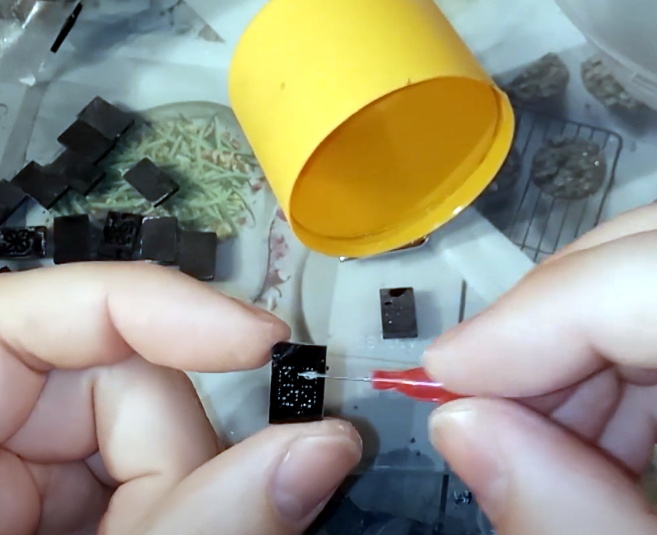
We’ve seen some very unique custom keycaps recently, but nothing quite like the embroidered ones that [Billie Ruben] has been experimenting with. Using a clever 3D printed design, she’s crafted what could well be one of the most easily customizable keycaps ever made…assuming you’ve got a needle and thread handy.

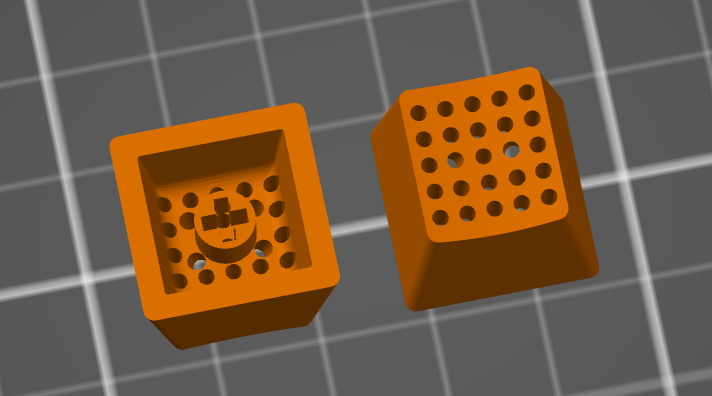
The idea is to take a standard keycap blank and pop an array of 25 holes in the face. Your thread or yarn is run through these holes, allowing you to create whatever shape you wish within the 5 x 5 matrix. While it’s somewhat tight quarters on the underside of the cap, nothing prevents you from using multiple colors or even materials to do your stitching. As an added bonus, the soft threads should provide a very comfortable and particularly tactile surface to tap on.

Now the most obvious application is to simply stitch up versions of all the alphanumeric keys, but there’s clearly room for some interpretation here. [Billie] has already shown off some simple iconography like a red heart and we’re sure creative folks will have no trouble coming up with all sorts of interesting needlepoint creations to top their prized mechanical keyboards.

The intricate details necessary to make this idea work may be beyond the common desktop FDM 3D printer, so [Billie] ran these prototypes off on a resin printer (she attributes the visible layer lines to a hasty print). She’d love to hear feedback from other keyboard aficionados who’ve made the leap to liquid goo printing, so be sure to drop her a line if you print out a set of your own. It sounds like a new version is in the works which will provide a false bottom to cover the stitching from below, but functionally these should get you started.

Building The Ultimate Raspberry Pi Automation Controller

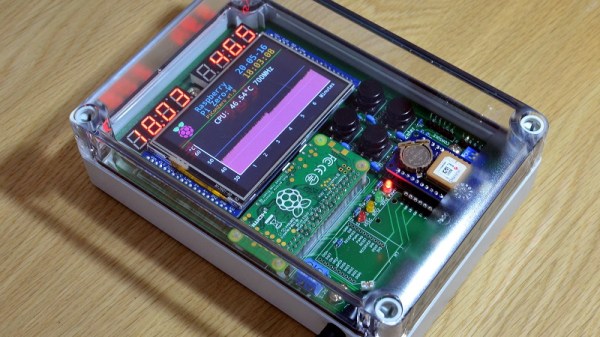
At this point, we’ve lost count of how many automation projects we’ve seen with some variant of a Raspberry Pi at the helm. Which is hardly surprising, as the boards are cheap, powerful, and well documented. The list of reasons not to use one has never been very long, but with the PiCon One that [Frank] has been working on, it’s about to get even shorter.

The project takes the form of an IP65 industrial enclosure and support electronics that the Raspberry Pi Zero W plugs into. While expandable in nature, [Frank] has a core set of features he’s aiming for as a baseline such as additional serial ports, integrated uninterruptible power supply, a battery-backed Real Time Clock (RTC), an array of programmable status LEDs, and support for XBee and GPS plug-in modules. Feedback is provided through a pair of four digit seven-segment displays and a color 320×480 TFT screen running a custom user interface.

[Frank] envisions the PiCon One for use as a rugged solar power controller, eventually able to measure array output, energy consumption, and even operate motorized mounts to keep the panels pointed at the sun. To that end, he’s recently been experimenting with running JPL’s Horizon software on the Pi to determine the sun’s position in real-time. But the device is capable of so much more, and would make an ideal controller for many home and potentially even industrial applications.

Continue reading “Building The Ultimate Raspberry Pi Automation Controller”