Will 2020 (Finally) Be The Year Of Electronic Paper?

These days paper is being phased out whenever possible, and while we’re still far from being a completely digital society, the last decade or two has seen a huge reduction in the amount of paper the average person deals with on a daily basis. At the very least, we seem a lot closer to a future without the printed page than we are flying cars or any of the other concepts we generally associate with the far-flung future.

That said, there’s still something undeniably appealing about reading on paper. The idea of squirting ink on a piece of thin wood might seem increasingly archaic to us, but it sure does look nice when you hold it in your hand. Which is exactly why so much effort has been put into recreating the look of printed paper in electronic form; we all love the experience of paper, but the traditional execution doesn’t align itself particularly well with modern sensibilities.

Of course electronic “eReaders”, most notably the Kindle line from Amazon, have gone a long way towards making this a reality. At least for reading books, anyway. But what about magazines, newspapers, or even the lowly notebook we keep by the bench to jot down measurements or ideas? A PDF datasheet, with graphics where the grey tones matter? Being able to carry a whole bookshelf worth of novels in your bag is incredible, but despite what science fiction has promised us since 2001: A Space Odyssey, we’re still consuming plenty of media off of dead trees.

But that might be changing soon. This year will see the release of two tablets that promise to deliver an experience much closer to reading and writing on traditional paper than anything we’ve seen previously. They certainly aren’t cheap, and it’s too early to tell how much is just hype, but these devices could end up being an important step towards the paperless future we’ve been dreaming of.

Continue reading “Will 2020 (Finally) Be The Year Of Electronic Paper?”
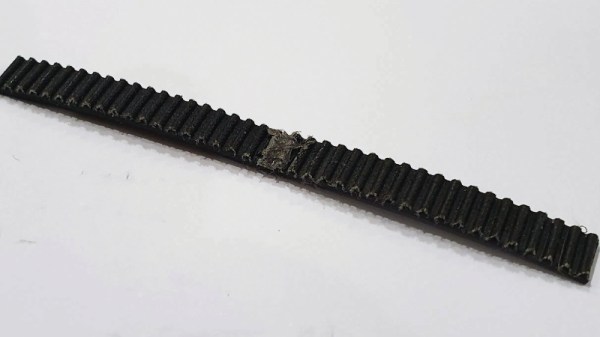
Stitching Up Custom Belts

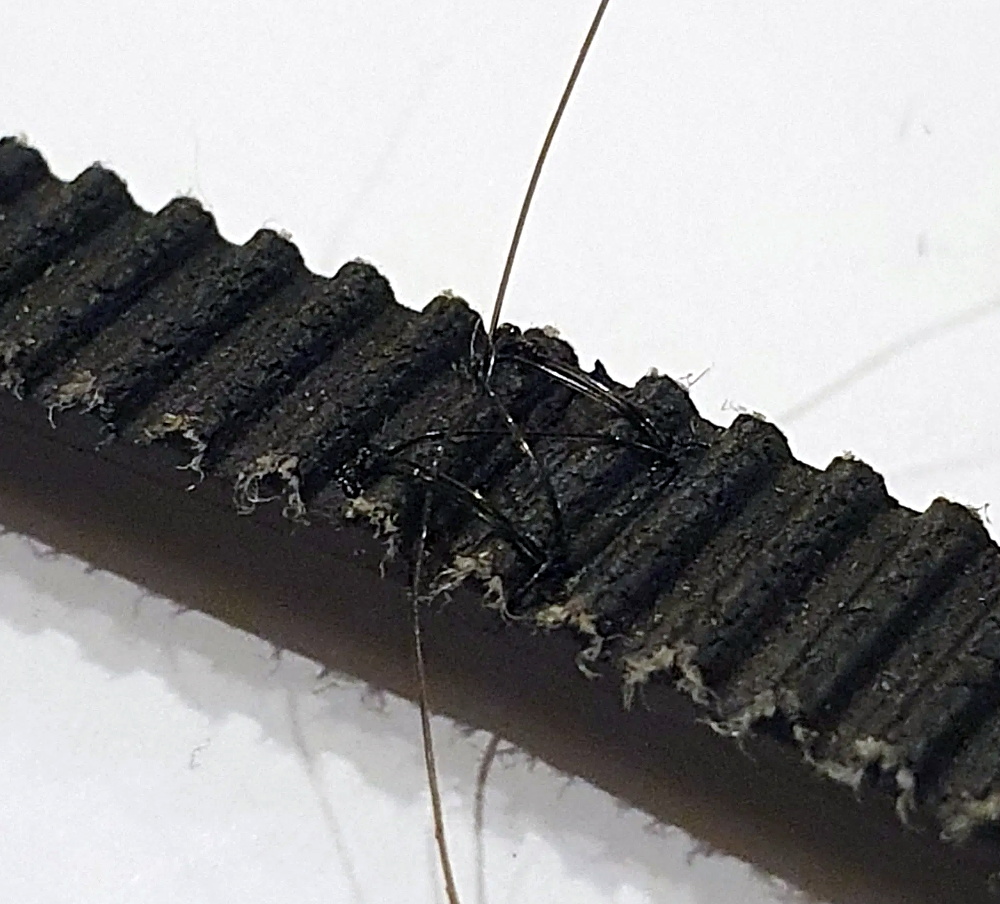
If you’ve got a 3D printer, you’re probably familiar with the reinforced belts that are commonly used on the X and Y axis. These belts either come as long lengths that you attach to the machine on either end, or as a pre-sized loop. Traditional wisdom says you can’t just take a long length of belt and make your own custom loops out of it, but [Marcel Varallo] had his doubts about that.

This is a simple tip, but one that could get you out of a bind one day. Through experimentation, [Marcel] has found that you can use a length of so-called GT2 belt and make your own bespoke loop. The trick is, you need to attach the ends with something very strong that won’t hinder the normal operation of the belt. Anything hard or inflexible is right out the window, since the belt would bind up as soon as it had to go around a pulley.

It seems the key is to cut both ends of the belt very flat, making sure the belt pattern matches perfectly. Once they’ve been trimmed and aligned properly, you stitch them together with nylon thread. You want the stitches to be as tight as possible, and the more you do, the stronger the end result will be.

[Marcel] likes to follow this up with a bit of hot glue, being careful to make sure the hardened glue takes the shape of the belt’s teeth. The back side won’t be as important, but a thin layer is still best. The end result is a belt strong enough for most applications in just a few minutes.

Would we build a 3D printer using hand-stitched GT2 belts? Probably not. But during a global pandemic, when shipments of non-essential components are often being delayed, we could certainly see ourselves running some stitched together belts while we wait for the proper replacement to come in. Gotta keep those face shields printing.

A Fantastic Raspberry Pi Handheld Just Got Better

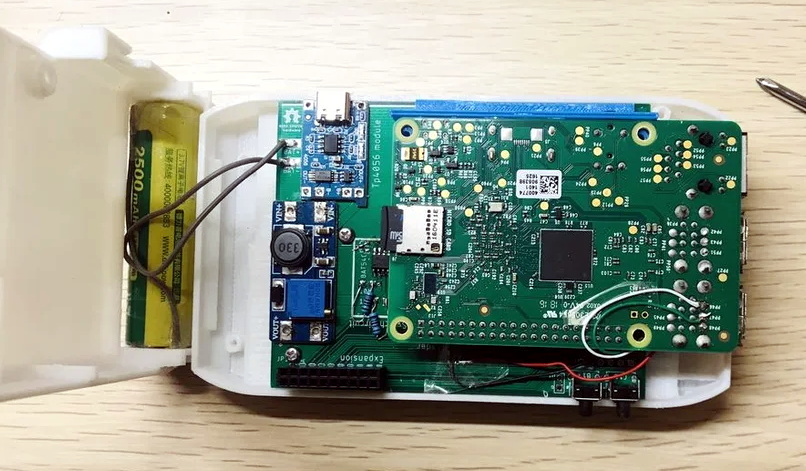
Last year, we brought you word of the MutantC by [rahmanshaber]. The Raspberry Pi handheld was more than a little inspired by the classic T-Mobile Sidekick, with a sliding display and physical QWERTY keyboard. The design was a little rough around the edges and missing a few key features, but it was clear the project had a lot of potential.

Today, we’re happy to report that [rahmanshaber] has officially released MutantC_v2. It looks like the new version of this handheld, perhaps more properly categorized as a ultra-mobile PC (UMPC), successfully addresses a number of the shortcomings found in the original; so if you held off on building one last year, you might want to start warming up the 3D printer now.

The major improvement over the original is the inclusion of a battery, which makes the device truly mobile. This was something that we mentioned [rahmanshaber] was working on back when he released the first version, as it was easily the most requested feature from the community. We certainly wouldn’t say a miniature handheld computer is completely useless if it has to stay tethered, but there’s no arguing that being able to take it on the go is ideal.

This upgraded version of the design now officially supports the Raspberry Pi 4 as well, which previously [rahmanshaber] was advising against due to overheating concerns. Slotting in the latest-and-greatest edition of every hacker’s favorite Linux single board computer will definitely kick things up a notch, though we imagine the older and less power hungry iterations of the Pi will be plenty for the sort of tasks you’re likely to be doing on a gadget like this.

If you like the idea of having a diminutive Linux computer within arm’s reach of your bench but aren’t necessarily committed enough to build something like the MutantC, there are certainly simpler designs you can get started with.

Continue reading “A Fantastic Raspberry Pi Handheld Just Got Better”

The Evolution Of A 3D Printed Off-Road R/C Car

For about as long as hackers and makers have been using desktop 3D printers, there have been critics that say the plastic parts they produce aren’t good for much else than toys and decorative pieces. They claim that printed parts are far too fragile to be of any practical use, and are better suited as prototype placeholders until the real parts can be injection molded or milled. Sure. Try telling that to [Engineering Nonsense].

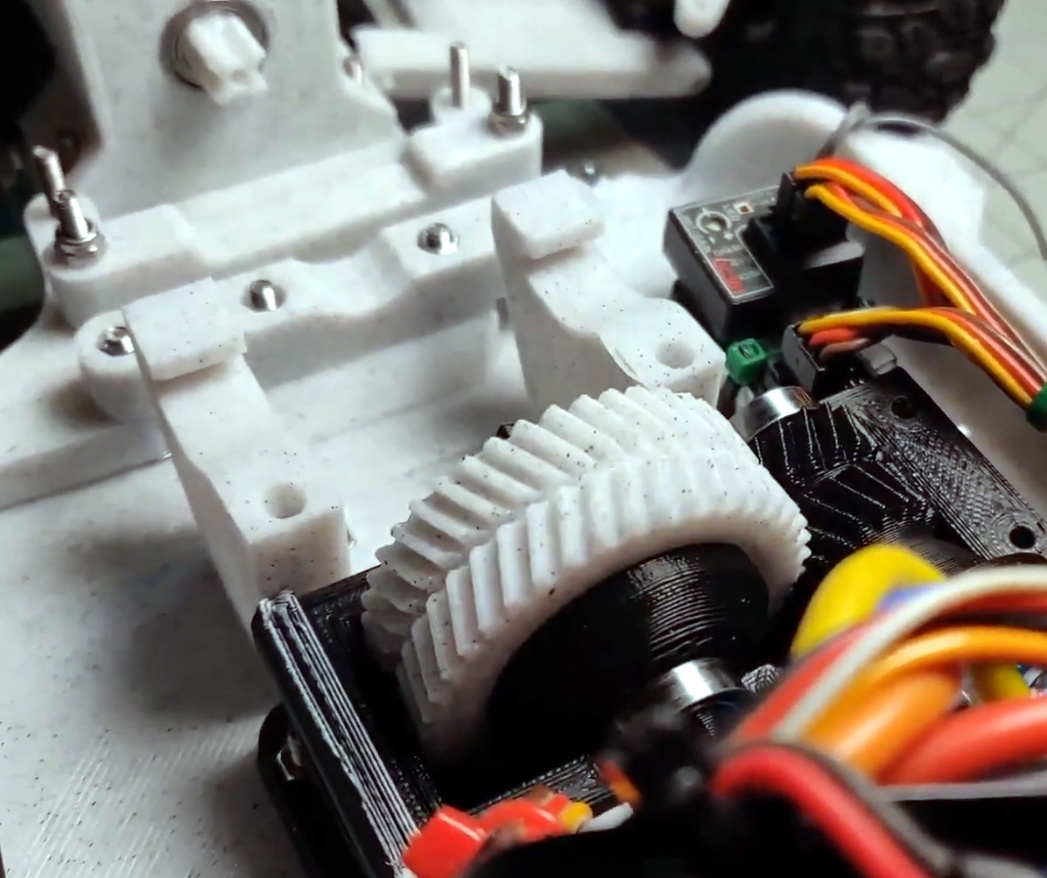
He recently wrote in (as did a few other people, incidentally) to share the latest version of his incredible 3D printed remote control car, and seeing it tearing around in the video after the break, “fragile” certainly isn’t a word we’d use to describe it. Though it didn’t get that way overnight. The Tarmo4 represents a year of development, and as the name suggests, is the fourth version of the design.

We know the purists out there will complain that the car isn’t entirely 3D printed, but honestly, it’s hard to imagine you could get much closer than this. Outside of the electronics, fasteners, tires, and shocks, the Tarmo4 is all plastic. That includes the gearbox and drive shafts. [Engineering Nonsense] even mentions in the video that he’s not happy with the tires he’s found on the market, and that they too will likely get replaced with printed versions in the future.

While the car is certainly an incredible technical achievement, what’s perhaps just as impressive is the community that’s developed around it in such a relatively short time. Towards the end of the video he shows off a number of custom builds based on previous iterations of the Tarmo. We’re sure that interest from the community has played a part in pushing the design forward, and it’s always good to see a one-off project become something bigger. Hopefully we’ll be seeing even more from this passionate community in the near future.

Just like the Open R/C Project, Tarmo proves that 3D printed parts are more than a novelty. If these diminutive powerhouses can run with printed gears and drive shafts, then you shouldn’t have anything to worry about when you run off the parts for your next project.

Continue reading “The Evolution Of A 3D Printed Off-Road R/C Car”

A Hacker’s Guide To JTAG

If you’re reading Hackaday, you’ve almost certainly heard of JTAG. There’s an excellent chance you’ve even used it once or twice to reflash an unruly piece of hardware. But how well do you actually know JTAG? More specifically, do you know how useful it can be when reverse engineering hardware?

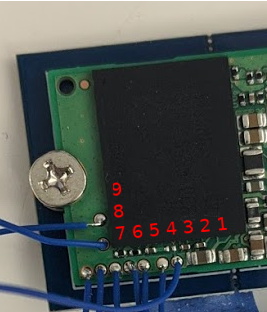
Whether you’re a JTAG veteran or a novice, this phenomenal guide written by [wrongbaud] is sure to teach you a thing or two. Starting with a low-level explanation of how the interface actually works, the guide takes you though discovering JTAG ports on unknown targets, the current state-of-the-art in open source tools to interact with the device, and finally shows a real-world example of pulling and analyzing a gadget’s firmware.

There’s no way to do his write-up justice with a breakdown or a summary, so we won’t even try. Just get comfortable, maybe grab a drink, and dive in. It’s certainly not a short read, but there isn’t a wasted word on the page. Every piece of the puzzle, from how to figure out an unlabeled pinout to determining the instruction length, is explained in exactly the amount of detail you’re looking for. This is a guide for hackers written by a hacker, and it shows.

It will probably come as no surprise to find this isn’t the first time [wrongbaud] has done a deep dive like this. Over the last few months we’ve been covering his series of practical reverse engineering guides, and each one has been an invaluable resource. Perfect study guides for when a global pandemic has you stuck in the house.

Subwoofer Gets Arduino Brain Transplant

The Samsung PS-WTX500 subwoofer is designed to be used as part of a 5.1 channel home theater system, but not just any system. It contains the amplifiers for all the channels, but they’ll only function when the subwoofer is connected to the matching receiver. [Alejandro Zarate] figured there must be some way to unlock the system’s full functionality without being limited to the original receiver, he just needed to reverse engineer how the subwoofer worked.

All the wires tuck underneath the Arduino

The result is a fantastically well documented write-up that covers the whole process, starting with how [Alejandro] identified and researched the Pulsus PS9829B Digital Audio Processor (DAP). Documentation for this particular chip seems hard to come by, but he was able to find a similar chip from the same manufacturer that was close enough to put him on the right track. From there, he started studying the SPI communications between the DAP and the subwoofer’s S3P70F4 microcontroller.

After analyzing the communication between the two chips, [Alejandro] pulled the S3P70F4 off the board and wired an Arduino Pro Mini 328 in its place. The Arduino was quite a bit larger than the original microcontroller, but with some careful wiring, he manged a very professional looking installation. Short of coming up with a custom PCB adapter, we don’t think it could look much better.

With some relatively straightforward code and a listing of the captured byte sequences, the Arduino was able to power up the PS-WTX500’s amplifiers and handle the incoming audio signal as a stand-alone device.

In the past we’ve seen a similar trick done with the ESP8266, which had the added benefit of enabling WiFi control of the speakers. We’re all for adding modern functionality to older hardware, even if you’ve got to hang it off the back as an external module.

Continue reading “Subwoofer Gets Arduino Brain Transplant”

Getting To Space Is Even Harder During A Pandemic

At this point, most of us are painfully aware of the restrictions that COVID-19 social distancing protocols have put on our daily lives. Anyone who can is working from home, major events are canceled, non-essential businesses are closed, and travel is either strongly discouraged or prohibited outright. In particularly hard hit areas, life and commerce has nearly ground to a halt with no clear end date in sight.

Naturally, there are far reaching consequences for this shutdown beyond what’s happening on the individual level. Large scale projects are also being slowed or halted entirely, as there’s only so much you can do remotely. That’s especially true when the assembly of hardware is concerned, which has put some industries in a particularly tight spot. One sector that’s really feeling the strain is aerospace. Around the world, space agencies are finding that their best laid plans are suddenly falling apart in the face of COVID-19.

In some cases it’s a minor annoyance, requiring nothing more than some tweaks to procedures. But when the movements of the planets are concerned, a delay of weeks or months changes everything. While things are still changing too rapidly to make an exhaustive list, we already know of a few missions that are being impacted in these uncertain times.

Continue reading “Getting To Space Is Even Harder During A Pandemic”