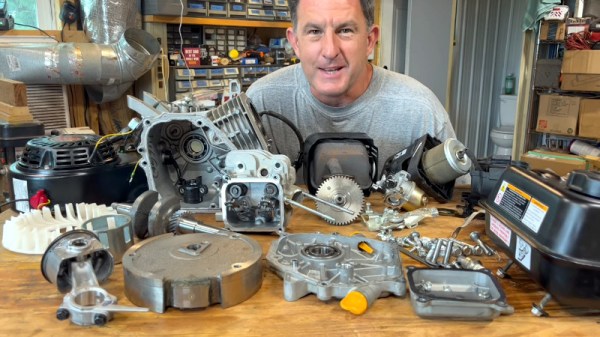
When the 6.5 HP (212 cc) Harbor Freight Predator engine in his kid’s go-kart gave up the ghost after some particularly hard driving, [HowToLou] figured it would be a good time to poke around inside the low-cost powerplant for our viewing pleasure. As a bonus, he even got it up and running again.
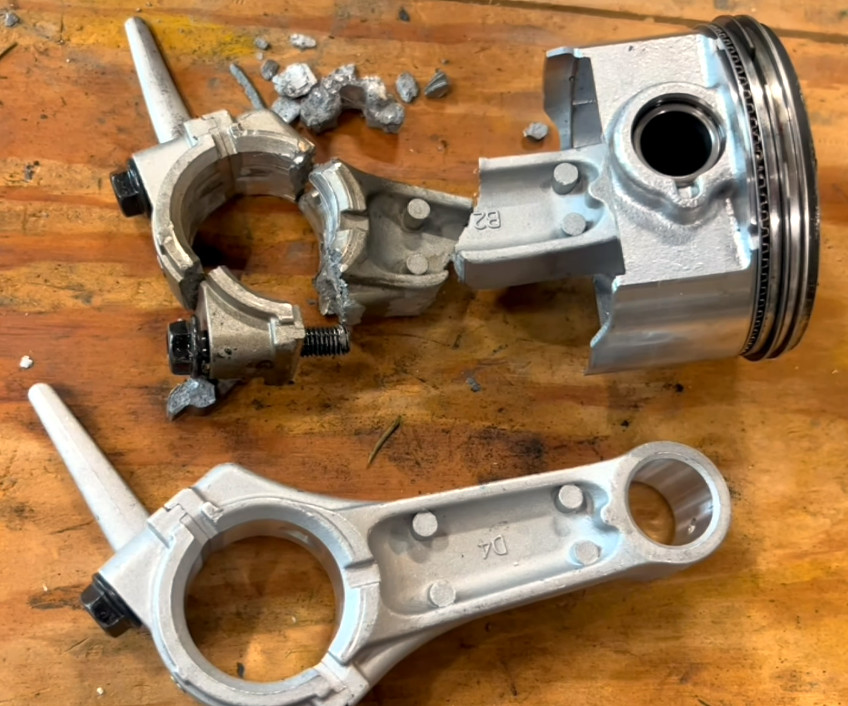
The shattered rod, and its replacement.
For an engine that has a retail price of just $160 USD, we’ve got to admit, the inside of the Predator doesn’t look too shabby. Admittedly, [HowToLou] determined that the cause of the failure was a blown connecting rod, but he also mentions that somebody had previously removed the engine’s governor, allowing it to rev up far beyond the nominal maximum of 3,600 RPM. No word on who snuck in there and yanked the governor out, but we’re betting it wasn’t the 7-year old driver…
Replacing the connecting rod meant taking most of the engine apart, but for our education, [HowToLou] decided to take it a bit further and remove everything from the engine. After stripping it down to the block, he re-installs each piece while explaining its function. If you’ve ever wanted to see what makes one of these little engines tick, or perhaps you’ve got a Predator 212 cc in need of a repair or rebuild, the presentation is a fantastic resource.
We’ve seen an incredible number of homebrew environmental monitors here at Hackaday, and on the whole, they tend to follow a pretty predicable pattern. An ESP8266 gets paired with a common temperature and humidity sensor, perhaps a custom PCB gets invited to the party, and the end result are some values getting pushed out via MQTT. It’s a great weekend project to get your feet wet, but not exactly groundbreaking in 2022.
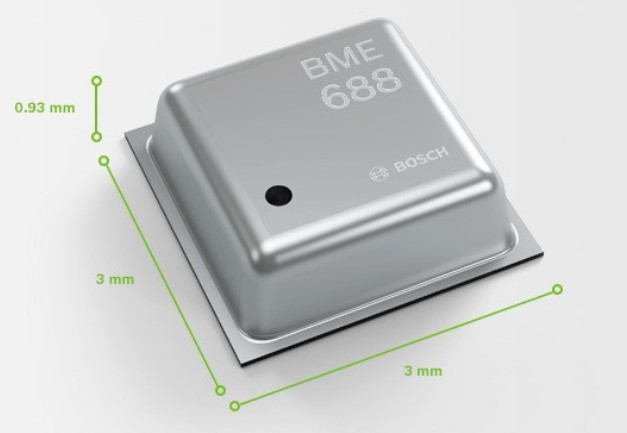
Which is why we find the AERQ project from [Mircea-Iuliu Micle] so refreshing. Not only does this gadget pick up temperature and humidity as you’d expect, but its Bosch BME688 sensor can also sniff out volatile organic compounds (VOCs) and gases such as carbon monoxide and hydrogen. The datasheet actually claims this is the “first gas sensor with Artificial Intelligence (AI)”, and while we’re not sure what exactly that means in this context, it’s a claim that apparently warrants a price tag of $15+ USD a pop in single quantities.
There’s an AI hiding in there someplace.
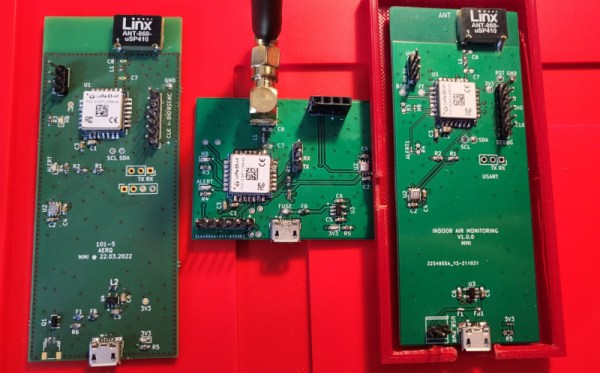
But the fancy sensor isn’t the only thing that sets AERQ apart from the competition. Instead of a member of the ubiquitous ESP family, it’s using the Wio-E5, a relatively exotic STM32 package that integrates a long-range LoRa radio. [Mircea-Iuliu] has paired that with a Linx USP-410 chip antenna or, depending on which version of the four-layer PCB you want to use, a u.Fl connector for an external antenna. The whole thing is powered by a simple USB connection, and its Mbed OS firmware is setup to dump all of its collected data onto The Things Network.
All told, it’s a very professional build that certainly wouldn’t look out of place if it was nestled into some off-the-shelf air quality monitor. While the high-end detection capabilities might be a bit overkill for home use, [Mircea-Iuliu Micle] points out that AERQ might provide useful insight for those running indoor events as COVID-19 transitions into its endemic stage.
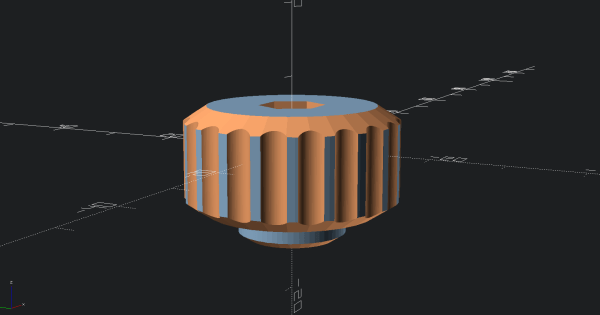
While not everyone is necessarily onboard for the CAD-via-code principle behind OpenSCAD, there’s no denying the software lends itself particularly well to parametric designs. Using a few choice variables, it’s possible to make a model in OpenSCAD that can be easily tweaked by other users — even if they have zero prior experience with CAD.
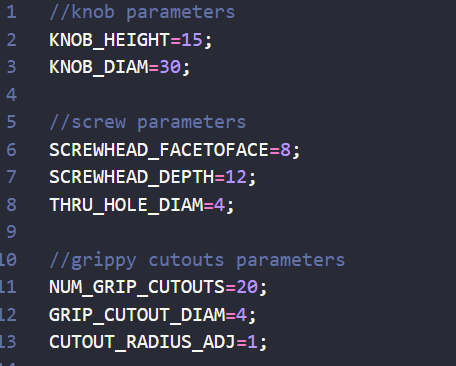
Take for example this parametric-knob-maker written by [aminGhafoory]. The code clocks in at less than 100 lines, but if you’re looking to spin up your own version, all you really need to pay attention to are the clearly labeled variables up at the top. Just plug in your desired diameter and height, fiddle around a bit with the values that get fed into the grip generating function, and hit F7 to export it to an STL ready for printing.
Now admittedly, all the knobs generated with this code will look more or less the same. But that’s the beauty of open source, should you want to print out some wild looking knobs, you can at least use this code as a basis to build on. With the core functionality in place, you just need to concern yourself with writing a new function to generate a grip texture more to your liking.
Modern firearms might seem far removed from the revolvers of the Old West, but conceptually, they still operate on the same principle: exploding gunpowder. But as anyone who has put too much voltage through an electrolytic capacitor knows, gunpowder isn’t the only thing that explodes. (Yes, it isn’t technically an explosion.)
[Jay Bowles] wondered if it would be possible to construct an electrically-fired weapon that used used a standard capacitor in place of the primer and powder of a traditional cartridge. While it would naturally have only the fraction of the muzzle velocity or energy of even the smallest caliber firearm, it would be an interesting look at an alternate approach to what has been considered a largely solved problem since the mid-1800s.
In his latest Plasma Channel video, [Jay] walks viewers through the creation of his unconventional pistol, starting with a scientific determination of how much energy you can get out of popped capacitor. His test setup involved placing a capacitor and small projectile into an acrylic tube, and noting the relation between the speed of the projectile and the voltage passed through the cap. At 30 VDC the projectile would reliably fire from the barrel of his makeshift cannon, but by tripling the voltage to 90 VDC, he noted that the muzzle velocity saw the same 3X improvement.
NASA’s upcoming Artemis I mission represents a critical milestone on the space agency’s path towards establishing a sustainable human presence on the Moon. It will mark not only the first flight of the massive Space Launch System (SLS) and its Interim Cryogenic Propulsion Stage (ICPS), but will also test the ability of the 25 ton Orion Multi-Purpose Crew Vehicle (MPCV) to operate in lunar orbit. While there won’t be any crew aboard this flight, it will serve as a dress rehearsal for the Artemis II mission — which will see humans travel beyond low Earth orbit for the first time since the Apollo program ended in 1972.
As the SLS was designed to lift a fully loaded and crewed Orion capsule, the towering rocket and the ISPS are being considerably underutilized for this test flight. With so much excess payload capacity available, Artemis I is in the unique position of being able to carry a number of secondary payloads into cislunar space without making any changes to the overall mission or flight trajectory.
NASA has selected ten CubeSats to hitch a ride into space aboard Artemis I, which will test out new technologies and conduct deep space research. These secondary payloads are officially deemed “High Risk, High Reward”, with their success far from guaranteed. But should they complete their individual missions, they may well help shape the future of lunar exploration.
With Artemis I potentially just days away from liftoff, let’s take a look at a few of these secondary payloads and how they’ll be deployed without endangering the primary mission of getting Orion to the Moon.
Ask the average person about steam power and they’ll probably imagine a bygone era, a time when the sky was thick with smoke belched out by coal-burning locomotives and paddle-wheel ships. Steam is ancient technology they’ll say, and has as much to do with modern living as the penny-farthing.
Naturally, the real story is a bit more complex than that. Sure the reciprocating steam engine has fallen out of favor as a means of propulsion, but the concept of running machinery with steam is alive and well. In fact, unless you’re running on wind or solar power, there’s an excellent chance that a steam turbine is responsible for keeping the lights on in your house.
In honor of all things steam, we invited Quinn Dunki to host this week’s Hack Chat. Those who follow her exploits on YouTube will know that over the last several years she’s built a number of steam engines, from miniature scratch-built models to commercial kits that can do useful work. Who better to answer your burning steaming questions?
The first questions in the Chat were logical enough, with several users wanting to know just how hard it is to build a functional steam engine if you don’t have access to a mill or other means of high precision machining. According to Quinn, while better equipment will certainly allow you to build a more powerful and efficient engine, the basic premise is so simple that it doesn’t take much to get one going. If you’ve got a mini lathe and some bar stock, you’re half way there. In fact, they are so forgiving that she opines you’d struggle to build a steam engine that didn’t at least turn over — though that doesn’t mean it will necessarily run well.
Naturally some comparisons were drawn between the complexity of building a steam engine and putting together a small internal combustion engine (ICE). But while they might seem conceptually similar, Quinn cautions that building a working ICE from scratch is far more difficult and dangerous. She explains that steam engines have a tendency to fail gracefully, that is, mistakes in the design or poor tolerances generally result in little worse than wasted steam and extra noise. Comparatively, a faulty ICE design could easily turn into a bomb on your workbench.
Of course, that’s not to say working with steam is without danger. You certainly don’t want to underestimate high pressure steam, which is why boilers that are over 6 in (15 cm) in diameter or that produce more than 100 PSI will often require the operator to be licensed. They may also need to be inspected, though Quinn notes that your local government official probably won’t be able to make heads or tails of your homebrew build — so if you need an official stamp of approval, your best bet is to find a local model engineering club or society that would have the appropriate connections. All that being said, most hobbyists make it a point to try and get their engine running at the lowest pressure possible, so unless you’ve got something really massive in mind, you’ll probably never need to build up more than 60 PSI or so.
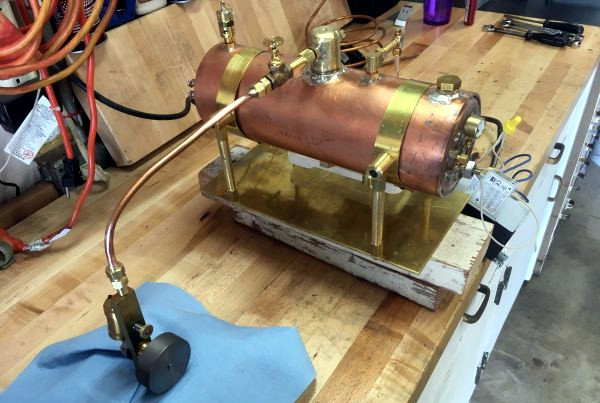
A DIY electric boiler and small steam engine.
Another topic of discussion was how to fuel the boiler itself. An electrically powered boiler is perhaps the easiest option, but is somewhat counterproductive if you hope to put your steam engine to useful work. Coal and wood fires are an option, and indeed were commonly used in the old days, but the soot and ash they produce can be a problem.
Quinn also notes that if you’re using such fuels, you need a way to quickly remove the firebox from the boiler in an emergency; something she likens to the starship Enterprise having to eject its warp core before it explodes. For her own projects, Quinn says she uses either an electric element or a camping gas burner.
While most of the questions during this Hack Chat had to do with the work Quinn has already featured on her blog and YouTube channel, naturally there were questions about where things go from here. After she completes the steam engine kit she’s working on currently, she says she’ll likely to back to another scratch-built engine. She also plans on coupling some of her engines to generators, as she’s gotten many requests about seeing these machines put to useful work. Looking further ahead Quinn says she’s interested in casting her own bronze and aluminum components, and specifically wants to work with “lost PLA” casting, which is a variant of lost wax casting that uses a mold based on a 3D printed part.
We’d like to thank Quinn Dunki for stopping by the Hack Chat and sharing some insights into this unique hobby. While a handcrafted boiler or a desktop steam reciprocating engine might not be on the average Hackaday reader’s list of future projects, it’s still fascinating to see how they work. We owe much of our modern life to steam power, so the least we can do is show it some respect.
The Hack Chat is a weekly online chat session hosted by leading experts from all corners of the hardware hacking universe. It’s a great way for hackers connect in a fun and informal way, but if you can’t make it live, these overview posts as well as the transcripts posted to Hackaday.io make sure you don’t miss out.
Editor-in-Chief Elliot Williams and Managing Editor Tom Nardi are here to bring you the best stories and hacks from the previous week (and maybe a little older). Things kick off with news that the Early Bird tickets for the 2022 Hackaday Supercon tickets sold out in only two hours — a good sign that the community is just as excited as we are about the November event. But don’t worry, regular admission tickets are now available for those who couldn’t grab one out of the first batch.
This week there’s plenty of vehicular hacks to talk about, from John Deere tractors running DOOM to a particularly troublesome vulnerability found in many key fobs. We’ll also lament about the state of 3D CAD file formats, marvel at some retro-futuristic photography equipment, and look at the latest in home PCB production techniques. Wrapping things up there’s a whole lot of cyberdeck talk, and a trip down silicon memory lane courtesy of Al Williams.