Virtual Software Defined Radio

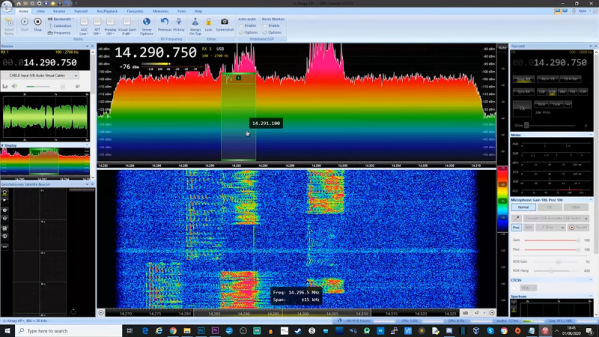
Software defined radio or SDR has changed the radio landscape forever. But to use one you need to buy some kind of hardware right? Maybe not. As [Tech Minds] shows in a recent video there are plenty of SDRs publically available on the Internet. We know that isn’t news, but the video does cover several different methods of finding and using SDR receivers including many that run totally in the browser.

Of course, there are a lot of reasons you might want to borrow an alien radio receiver, even if you have your own hardware. Maybe you don’t have a great antenna or maybe you want to hear a signal — maybe even your own — from a different location.

Continue reading “Virtual Software Defined Radio” →

IRobot Makes Learning Robot More Affordable

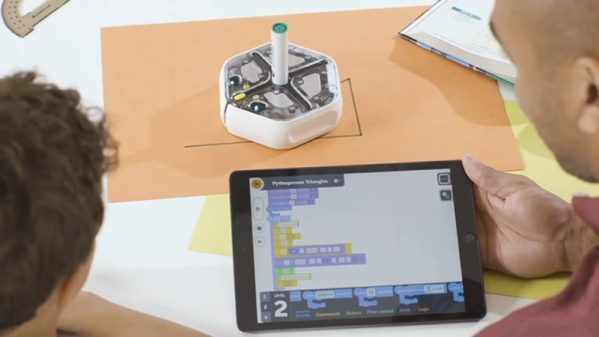
When you think of iRobot, you probably think of floor cleaning or military robots. But they also have a set of robots aimed at education. The Root robot — an acquisition the company made in 2019 — originally targeted classrooms and cost about $200 each. A new version costs about $130 and is a better fit for home users.

The original version  — Root rt1 — is still available, but the rt0 version has several missing features to hit the desired price. What’s missing? Apparently, the rt1 can stick to a whiteboard using magnets, but that feature is missing on the rt0. There are also no “cliff” sensors or color scanner.

Continue reading “IRobot Makes Learning Robot More Affordable” →

[NileRed] Makes Superconductors

We always enjoy [NileRed’s] videos. His latest shows how he made some relatively high-temperature superconducting ceramic. After finding what appeared to be some really good instructions on the Internet, [NileRed] found there were some things in the paper that didn’t make sense. You can watch the video, below.

The superconductor was YBCO, sometimes known as 123 because of the ratio of its components. Turns out that most of the materials were available online, except for one exotic chemical that he had to buy from a more conventional source.

Continue reading “[NileRed] Makes Superconductors” →

Linux-Fu: Help Messages For Shell Scripts And Here Documents

Imagine that you want to output multiple lines of text in Bash, or any shell script. Maybe it’s for a help string for a particularly convoluted shell script you’re writing. You could have a separate echo command for each line.  Or you could use the “here document“.

The “here document” construction takes the text between two delimiters and passes it, as if it were piped, to a command.

if [[$# == 0 ]] || [[ "$1" == "-h" ]]; then
cat << EOF
This is my help message. There are many like it but this one is mine.
My help message is my best friend.
EOF

All of the text, as written, with line breaks and spaces and all, get passed to cat and your helpful formatted message is printed to the user.

Continue reading “Linux-Fu: Help Messages For Shell Scripts And Here Documents” →

VK-01 Is A Bartender You Don’t Need To Tip

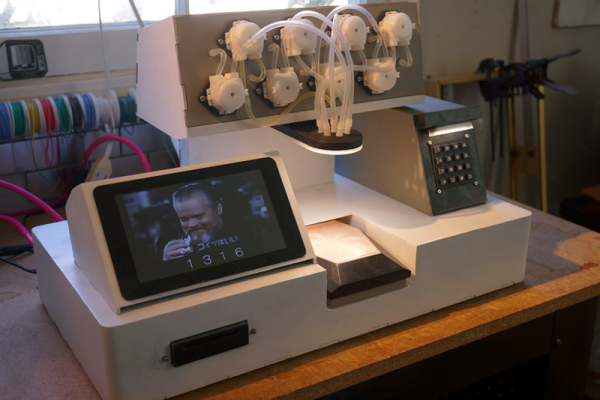
[Donald Bell’s] robotic bartender entry into the 2020 Cocktail Robotics Grand Challenge is one of those things that sounds easy until you start getting into the details. After all, how hard is it to dispense some liquids into a glass? Harder than you might think. Sure there are pumps — [Donald] uses peristaltic pumps — but there’s also two Raspberry Pis, an ESP8622, and at least one more microcontroller lurking underneath. You can see a video about the device below.

Even if you don’t want a refreshing libation, you’ll probably like the VK-01’s Bladerunner cyberpunk styling. What we really enjoyed about the post was that it took you through the concept sketches, some of the design trades, and even a cardboard prototype.

Continue reading “VK-01 Is A Bartender You Don’t Need To Tip” →

Inside A $30,000 8 GHz Scope

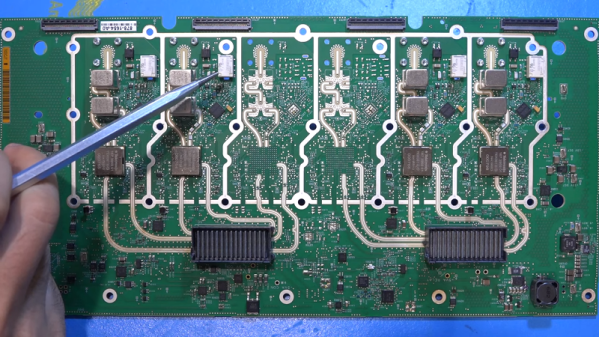
One of the best things about the Internet — especially the video part — is that you can get exposed to lots of things you might otherwise not be able to see. Take oscilloscopes, for example. If you were lucky, you might have one or two really nice instruments at work and you certainly weren’t going to be allowed to tear them open if they were working well. [The Signal Path], as a case in point, tears down a $30,000 MSO6 8 GHz oscilloscope.

Actually, the base price is not quite $30,000 but by the time you outfit one, you’ll probably break the $30K barrier. Compared to the scopes we usually get to use, these are very different. Sure, the screens are larger and denser, but looking at the circuit boards they look more like some sort of high-end computer than an oscilloscope. Of course, in a way, that’s exactly what it is.

Continue reading “Inside A $30,000 8 GHz Scope” →

Ultracapacitors Might Have Bad Fruity Smell

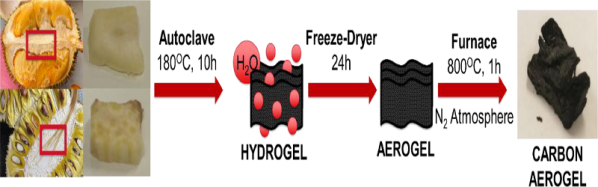
You might think the smell of an electrolytic capacitor boiling out is bad, but if scientists from the University of Sydney have their way, that might be nothing. They’ve devised an ultracapacitor — that uses biomass from the stinky durian fruit along with jackfruit. We assume the capacitors don’t stink in normal use, but we wouldn’t want to overload one and let the smoke out.

One of the things we found interesting about this is that the process seemed like something you might be able to reproduce in a garage. Sure, there were a few exotic steps like using a vacuum oven and a furnace with nitrogen, and you’d need some ability to handle chemicals like vinylidene fluoride. However, the hacker community has found ways to create lots of things with common tools, and we would imagine creating aerogels from some fruit ought not be out of reach.

Continue reading “Ultracapacitors Might Have Bad Fruity Smell” →