Mining Bitcoin On The ESP32 For Fun, Definitely Not Profit

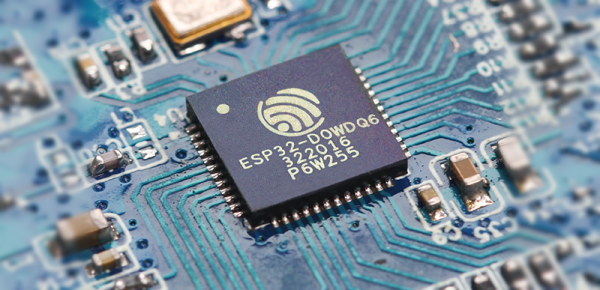
Bitcoin’s great, if you sold at the end of 2017. If you’re still holding, your opinion might be a little more sour. The cost to compete in the great hashing race continues to rise while cryptocurrency values remain underwhelming. While getting involved at the top end is prohibitively expensive, you can still have some fun with the basic concepts – as [Jake] did, by calculating Bitcoin hashes on the ESP32.

It’s a project that is very much done for fun, rather than profit. [Jake] notes that even maxing out both cores, it would take 31 billion years to mine one block at current difficulty levels. Regardless, the underlying maths is nothing too crazy. Double-hashing the right data with the SHA256 algorithm is all that’s required, a task that is well within the ESP32’s capabilities. There’s hardware acceleration available, too – though this is weirdly slower than doing it in software.

Overall, you’re not going to get rich hashing Bitcoin on a cheap microcontroller platform. You might just learn something useful, though. If this isn’t weird enough though, you could always try the same thing on a 1970s Xerox Alto. 


FPGA NES Looks Sharp On Perfboard

FPGAs are wonderful things, packed with logic cells that can be reconfigured as your heart desires. They excel at signal processing, anything requiring speed, and recreating vintage hardware. In that vein, [Jon Thomasson] decided to bring back the original Nintendo Entertainment System, in perfboard form.

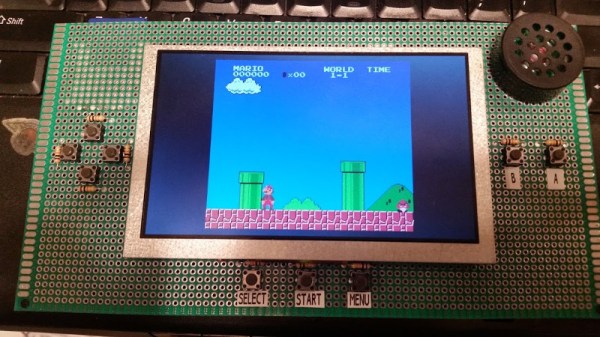
The build uses a Spartan 6 from Xilinx, which [Jon] uses in the form of his own development board design. The NES core is courtesy of code by [Brian Bennett], sourced from Github. Games are loaded from an SD card by a Parallax Propeller, which passes the data to the FPGA over a serial connection. Display is on a sharp 800×480 LCD, with the 4:3 video output of the NES being displayed in a pillarboxed fashion.

The project is assembled on perfboard, with a pleasing handheld formfactor. Control is via tactile pushbuttons in the classic NES layout. Current draw is approximately 400 mA, giving a runtime of around 5 hours when running off four AA batteries.

We’ve seen the venerable NES implemented on FPGA platforms before. As development boards get cheaper and devices get more capable, expect to see ever more complex systems being implemented. Video after the break.

Continue reading “FPGA NES Looks Sharp On Perfboard”

You’re Listening To Quantum Radio

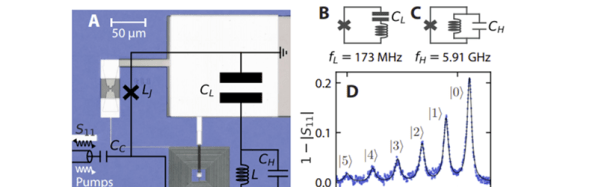
Researchers at Delft University of Technology have created a detector that enables the detection of a single photon’s worth of radio frequency energy. The chip is only 10 mm square and the team plans to use it to explore the relationship of mass and gravity to quantum theory.

The chip has immediate applications in MRI and radio astronomy. Traditionally, detecting a single photon at radio frequencies is difficult due to the significance of thermal fluctuations. At lower frequencies, cryogenic cooling can reduce the issue, but as frequency increases the fluctuations are harder to tame.

The trick requires a qubit that samples the radio frequency energy. While the radio source is at 173 MHz, the qubit is at 1 GHz, allowing a fine time resolution. Coupling of the two is via an LC circuit that uses a Josephson junction which, of course, requires very cold temperatures. Continue reading “You’re Listening To Quantum Radio”

Hands-On: New Nvidia Jetson Nano Is More Power In A Smaller Form Factor

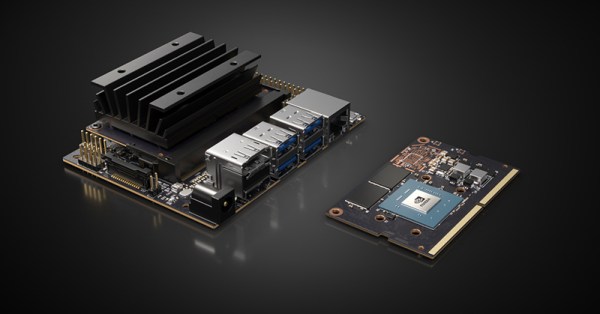
Today, Nvidia released their next generation of small but powerful modules for embedded AI. It’s the Nvidia Jetson Nano, and it’s smaller, cheaper, and more maker-friendly than anything they’ve put out before.

The Jetson Nano follows the Jetson TX1, the TX2, and the Jetson AGX Xavier, all very capable platforms, but just out of reach in both physical size, price, and the cost of implementation for many product designers and nearly all hobbyist embedded enthusiasts.

The Nvidia Jetson Nano Developers Kit clocks in at $99 USD, available right now, while the production ready module will be available in June for $129. It’s the size of a stick of laptop RAM, and it only needs five Watts. Let’s take a closer look with a hands-on review of the hardware.

Continue reading “Hands-On: New Nvidia Jetson Nano Is More Power In A Smaller Form Factor”

Social Media Jacket Puts Your Likes On Your Sleeve

The great irony of the social media revolution is that it’s not very social at all. Users browse through people’s pictures in the middle of the night while laying in bed, and tap out their approval with all the emotion of clearing their spam folder. Many boast of hundreds or thousands of “friends”, but if push came to shove, they probably couldn’t remember when they had last seen even a fraction of those people in the real world. Assuming they’ve even met them before in the first place. It’s the dystopian future we were all warned about, albeit a lot more colorful than we expected.

But what if we took social media tropes like “Likes” and “Follows”, and applied them to the real world? That’s precisely what [Tuang] set out to do with the “Social Touch Suit”, a piece of wearable technology which requires a person actually make physical contact with the wearer to perform social engagements. There’s even a hefty dose of RGB LEDs to recreate the flashy and colorful experience of today’s social media services.

Every social action requires that a specific and deliberate physical interaction be performed, which have largely been designed to mimic normal human contact. A pat on the shoulder signifies you want to follow the wearer, and adding them as a friend is as easy as giving a firm handshake. These interactions bring more weight to the decisions users make. For example, if somebody wants to remove you as a friend, they’ll need to muster up the courage to look you in the eye while they hit the button on your chest.

The jacket uses an Arduino to handle the low level functions, and a Raspberry Pi to not only provide the slick visuals of the touch screen display, but record video from the front and rear integrated cameras. That way you’ve even got video of the person who liked or disliked you. As you might expect, there’s a considerable energy requirement for this much hardware, but with a 5200 mAh LiPo battery in the pocket [Tuang] says she’s able to get a run time of 3 to 4 hours.

Considering how much gadgetry is packed into it, the whole thing looks remarkably wearable. We wouldn’t say it’s a practical piece of outerwear when fully decked out, but most of the electronic components can be removed if you feel like going low-key. [Tuang] also points out that for a garment to be functional it really needs to be washable as well, so being able to easily strip off the sensitive components was always an important part of the design in her mind.

The technology to sensors wearable and flexible is still largely in its infancy, but we’ve very excited to see where it goes. If projects like these inspire you, be sure to check out the presentation [Kitty Yeung] gave at the Hackaday Supercon where she talks about her vision for bespoke wearable technology. Continue reading “Social Media Jacket Puts Your Likes On Your Sleeve”

Es’hail-2: Hams Get Their First Geosynchronous Repeater

In the radio business, getting the high ground is key to covering as much territory from as few installations as possible. Anything that has a high profile, from a big municipal water tank to a roadside billboard to a remote hilltop, will likely be bristling with antennas, and different services compete for the best spots to locate their antennas. Amateur radio clubs will be there too, looking for space to locate their repeaters, which allow hams to use low-power mobile and handheld radios to make contact over a vastly greater range than they could otherwise.

Now some hams have claimed the highest of high ground for their repeater: space. For the first time, an amateur radio repeater has gone to space aboard a geosynchronous satellite, giving hams the ability to link up over a third of the globe. It’s a huge development, and while it takes some effort to use this new space-based radio, it’s a game changer in the amateur radio community.

Continue reading “Es’hail-2: Hams Get Their First Geosynchronous Repeater”

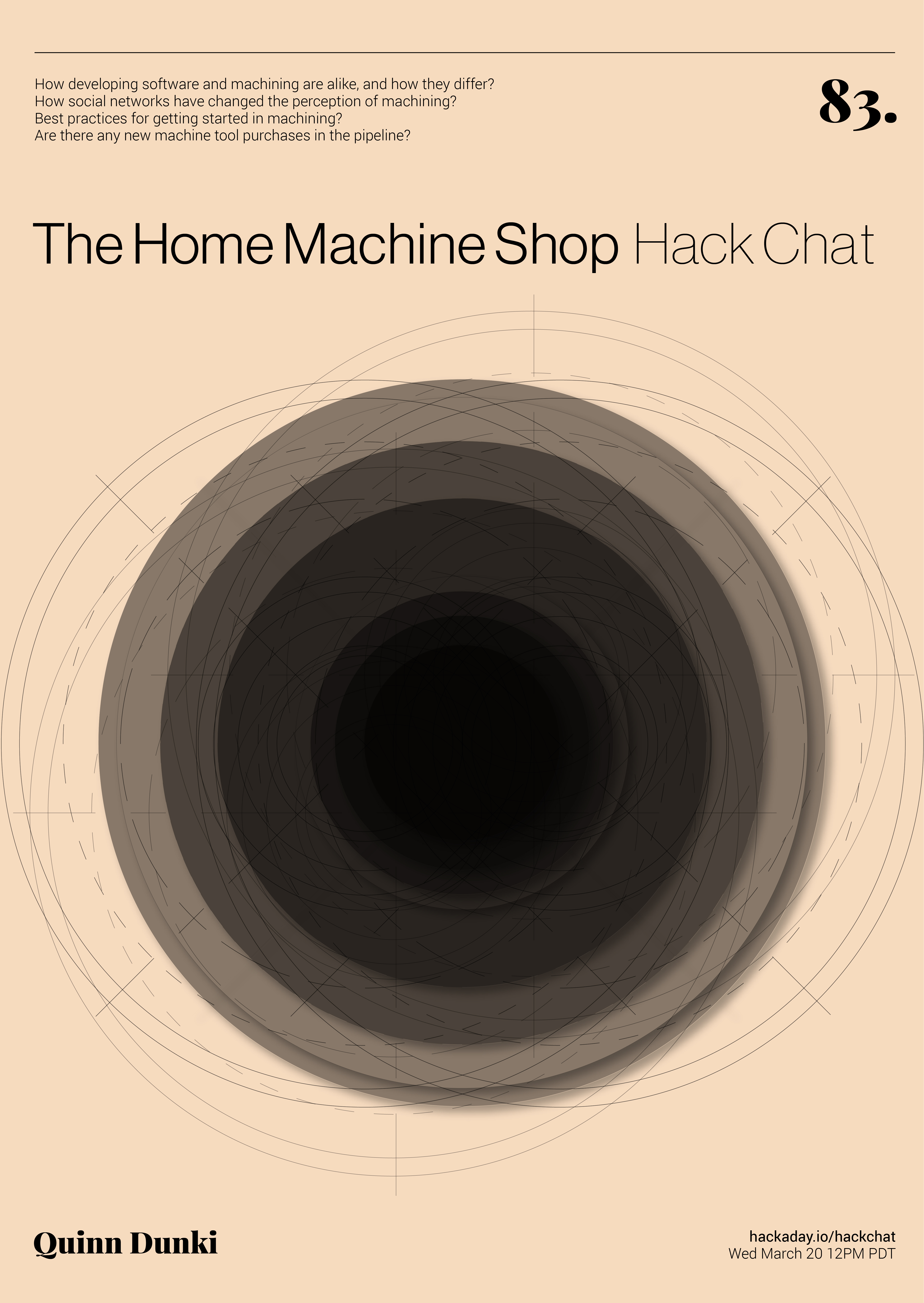
Hack Chat: The Home Machine Shop With Quinn Dunki

Join us Wednesday at noon Pacific time for the Home Machine Shop Hack Chat!

Even if you haven’t been here for very long, you’ll probably recognize Quinn Dunki as Hackaday’s resident consulting machinist. Quinn recently did a great series of articles on the “King of Machine Tools”, the lathe, covering everything from the history of precision machine tools to making your first chips. She’s documented the entire process of procuring and setting up a new lathe, pointing out all the potential pitfalls the budding home machinist may face. You can get a much deeper dive into her machining adventures on her YouTube channel, Blondihacks.

Flinging hot metal chips around is hardly all Quinn has accomplished, though. Long before her foray into machine tools, there was Veronica, a scratch-built 6502 machine Quinn created as an homage to the machines that launched her into a life of writing software. We’ve featured Veronica on our pages a couple of times, and she’s always made quite a hit.

Please join us for this Hack Chat, where we’ll discuss:

  • How developing software and machining are alike, and how they differ;
  • How social networks have changed the perception of machining;
  • Best practices for getting started in machining; and
  • Are there any new machine tool purchases in the pipeline?

You are, of course, encouraged to add your own questions to the discussion. You can do that by leaving a comment on the Home Machine Shop Hack Chat and we’ll put that in the queue for the Hack Chat discussion.

join-hack-chatOur Hack Chats are live community events on the Hackaday.io Hack Chat group messaging. This week we’ll be sitting down on Wednesday, March 20, at noon, Pacific time. If time zones have got you down, we have a handy time zone converter.

Click that speech bubble to the right, and you’ll be taken directly to the Hack Chat group on Hackaday.io. You don’t have to wait until Wednesday; join whenever you want and you can see what the community is talking about.