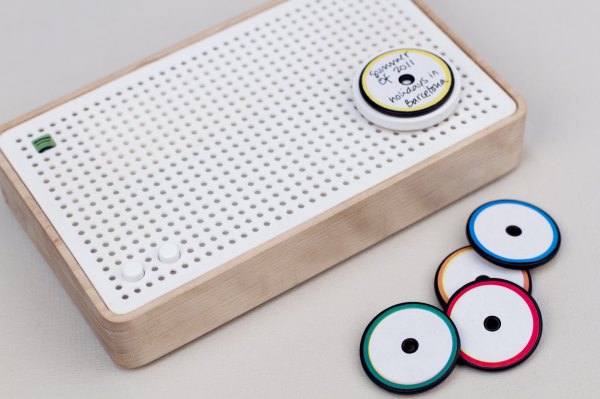
Digital music has made keeping all your tunes with you a lot more convenient, but have we lost something with dematerialization? [Jordi Parra] felt that there was something lacking with the digital music experience and designed a Spotify player with a tactile interface.
Specific playlists are selected via small RFID tags that look like a cross between a MiniDisc and a vinyl record. As this is a prototype, an Arduino reads the RFID tag, but needs a computer to actually play the Spotify playlist. Future iterations could include an integrated speaker and run libspotify to create a self-contained device.
While there is still work to do for a fully seamless experience, we love the details in the industrial design of this project. Clean simple lines and a combination of wood and more modern materials make this feel like a timeless piece of tech. Definitely check out the full photo gallery including shots of the really impressive packaging.
Want more digital music with a tactile interface? Check out this MP3 Player Shelf or a Simple Internet Radio Transplant.
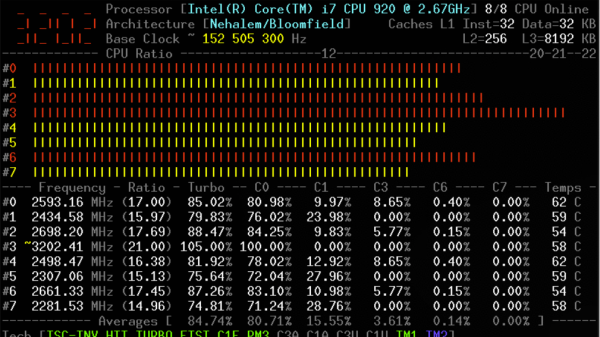
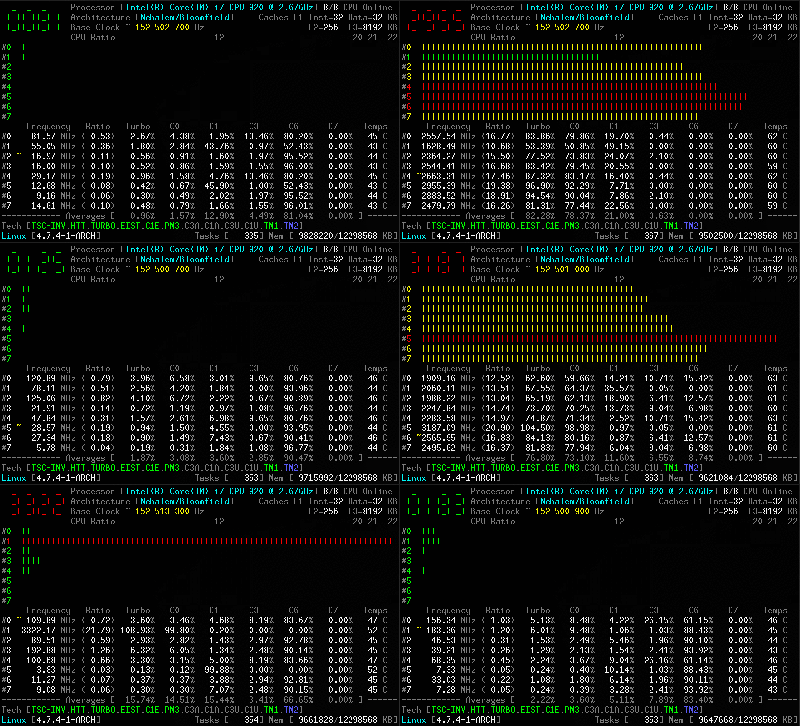 The tool relies on a kernel module, and is coded primarily in C, with some assembly code used to measure performance as accurately as possible. It’s capable of reporting everything from core frequencies to details on hyper-threading and turbo boost operation. Other performance reports include information on instructions per cycle or instructions per second, and of course, all the thermal monitoring data you could ask for. It all runs in the terminal, which helps keep overheads low.