SkyWater PDK Hack Chat

Join us on Wednesday, September 16 at noon Pacific for the CNC on the SkyWater PDK Hack Chat with Tim “mithro” Ansell, Mohamed Kassem, and Michael Gielda!

We’ve seen incredible strides made in the last decade or so towards democratizing manufacturing. Things that it once took huge, vertically integrated industries with immense factories at their disposal are now commonly done on desktop CNC machines and 3D printers. Open-source software has harnessed the brainpower of millions of developers into tools that rival what industry uses, and oftentimes exceeds them. Using these tools and combining them with things like on-demand PCB production and contract assembly services, and you can easily turn yourself into a legit manufacturer.

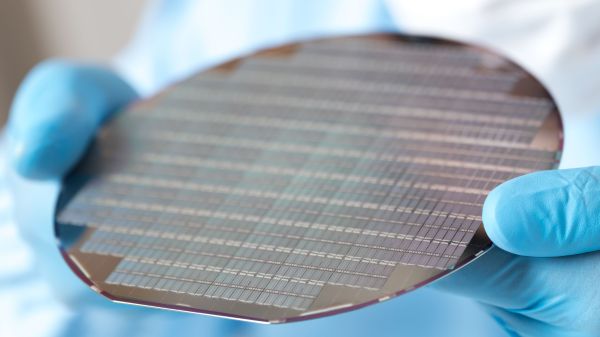
This model of pushing manufacturing closer to the Regular Joe and Josephine only goes so far, though. Your designs have pretty much been restricted to chips made by one or the other big manufacturers, which means pretty much anyone else could come up with the same thing. That’s all changing now thanks to SkyWater PDK, the first manufacturable, open-source process-design kit. With the tools in the PDK, anyone can design a chip for the SkyWater foundry’s 130-nm process.  And the best part? It’s free — as in beer. That’s right, you can get an open-source chip built for nothing during chip manufacturing runs that start as early as this November and go through 2021.

We’re sure this news will stir a bunch of questions, so Tim Ansell, a software engineer at Google who goes by the handle “mithro” will drop by the Hack Chat to discuss the particulars. He’ll be joined by Mohamed Kassem, CTO and co-founder of efabless.com, and Michael Gielda, VP of Business Development at Antmicro. Together they’ll field your questions about this exciting development, and they’ll walk us through just what it takes to turn your vision into silicon.

join-hack-chatOur Hack Chats are live community events in the Hackaday.io Hack Chat group messaging. This week we’ll be sitting down on Wednesday, September 16 at 12:00 PM Pacific time. If time zones baffle you as much as us, we have a handy time zone converter.

Click that speech bubble to the right, and you’ll be taken directly to the Hack Chat group on Hackaday.io. You don’t have to wait until Wednesday; join whenever you want and you can see what the community is talking about.
Continue reading “SkyWater PDK Hack Chat”

Weather Warnings And Dust Detection From This Meteorological Marvel

We love getting our weather in a flurry of different methods, but have you tried building your own sensor suite to harvest the data for you? [Giovanni ‘CyB3rn0id’ Bernardo] needed to monitor isolated locations outside the reach of WiFi. His ray of hope is an ESP32 controller coupled with a LoRa module to beam data to a remote station that can access the cloud.

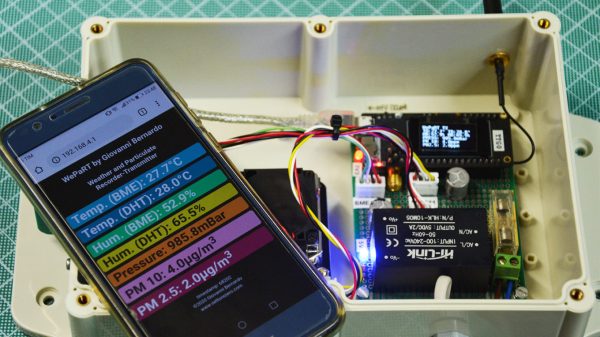
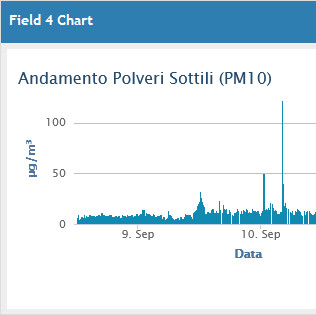
In addition to radios, he poured a deluge of sensors into the base station to read the temperature, barometric pressure, humidity, and fine dust. Why monitor dust as part of weather data collection? Particulate matter has a huge effect on air quality, something of great interest during a respiratory pandemic. For those readers near wildfires, quantifying your air quality (both indoors and out) is certainly of interest. [Giovanni] is using an SDS011 air quality sensor and has a long writeup just on this part. It uses a fan to move air past a laser-based sensing mechanism.

At the base station, live readings are shown on an OLED screen, but you can also connect to the ESP32 through your phone like a hotspot. If you keep a memory card installed, it will cache the readings in a perpetually-updated CSV file. In regular operation, the LoRa module overcasts the telemetry to its sister unit that acts as a Wifi/LoRa bridge so anyone can view gauges and graphs in real-time on ThingSpeak.

We want to shower [CyB3rn0id] with praise for seeing the cirrus serious impact of harmful dust and making something that can alert people. We don’t want to rain on anyone’s parade, but sometimes it is better to stay inside.

Finalists Announced For The 2020 Hackaday Prize

In light of everything going on in 2020, the 7th annual Hackaday Prize is devoted to nurturing ideas that could literally help change the world. In a first, we partnered with several nonprofits to help identify some of today’s most difficult problems, ranging from conservation and disaster relief to the need for advanced assistive technology. With over $200,000 up for grabs, including microgrants to help teams work full-time on their projects, this year’s competition was designed to help bring critical solutions to fruition which otherwise might never see the light of day.

But it hasn’t been easy. The global pandemic has made it far more difficult to collaborate on projects in the way we’re all used to, parts have become harder to source, and many makers found themselves so engaged with grassroots efforts to combat COVID-19 that they found little time for anything else. But despite all of this uncertainty, we received hundreds of incredible entries from all over the globe.

It’s never easy to select who will move on to the next round of the competition. But with the help of our nonprofit partners, the panel of expert judges was able to whittle the list of entries down to the 34 finalists that produced some of the most impressive and impactful ideas the Hackaday Prize has ever seen. Let’s take a look at just a few of the projects that will be vying for the top prizes in November.

Continue reading “Finalists Announced For The 2020 Hackaday Prize”

It’s A Boat? It’s A Duck? It’s A DIY Plastic Wrap Kayak!

Only few cinematic moments were as traumatically heartbreaking as [Mufasa]’s death in The Lion King and [Wilson]’s demise in Cast Away. To think, if only [Tom Hanks]’ character had found a role roll of stretch wrap in the washed up cargo content, he could have built a vessel with enough room to safely store his faithful companion. Sounds unlikely? Well, [sg19point3] begs to differ, and has a kayak to prove it.

It’s as brilliant as its construction materials are simple: tree branches, packing tape, and of course the stretch wrap. [sg19point3] used two different types of branches, one that bends just enough to shape the kayak in its length, and a more flexible variety to form the rings that hold it all together. After removing the bark, he shaped the branches as needed using some pegs in the ground, and let it dry for a few days. Once ready, he put them together and stabilized the construct with packing tape until it was ready for the grand finale of wrapping the entire thing in several layers of plastic wrap. To prove he trusts his own construct, he took it for a ride to the nearest water and lived to tell the tale — and to make a video about it, which is embedded after the break.

Admittedly, putting it together all by yourself on a remote island may be a bit laborious after all, so good thing [sg19point3] had some friends to help with the wrapping. Whether you’d want to take it beyond your local, shallow pond is maybe another story — you’d definitely want to steer clear of sharp rocks. For something more sturdy, check out the 3D-printed kayak from a few years ago. But in case you prefer wood, here’s a beautiful canoe.

Continue reading “It’s A Boat? It’s A Duck? It’s A DIY Plastic Wrap Kayak!”

Nvidia Acquires ARM For $40 Billion

Nvidia announced on Sunday evening that it has reached an agreement to acquire Arm Limited from SoftBank for a cool $40 billion.

In this age of headlines that use the b-word in place of nine zeros it’s easy to lose track, so you may be wondering, didn’t SoftBank just buy Arm? That was all the way back in July of 2016 to the tune of $32 billion. SoftBank is a holding company, so that deal didn’t ruffle any feathers, but this week’s move by Nvidia might.

Arm Limited is the company behind the ARM architecture, but they don’t actually produce the chips themselves, instead licensing them to other companies who pay a fee to use the core design and build their own chip around it. Nvidia licenses the ARM core for some of their chips, and with this deal they will be in a position to set terms for how their competitors may license the ARM core. The deal still needs regulatory approval so time will tell if this becomes a kink in the acquisition plan.

There’s a good chance that you’re reading this article on a device that contains an ARM processor because of its dominance in the smartphone and tablet market. Although less common in the laptop market, and nearly unheard of in the desktop market, the tide may be changing as Apple announced early in the summer that their Mac line will be moving to ARM.

Chances are you know the Nvidia name for their role as purveyors of fine graphics cards. They got a major boost as the world ramped up Bitcoin and other cryptocurrency mining hardware which early on was mainly based on the heavy lifting of graphics processors. But the company also has their eye on the ongoing wave of hardware targeting AI applications like computer vision. Nvidia’s line of Jetson boards, marketed for “next-generation autonomous machines”, all feature ARM cores.

Assuming the deal goes through without a hitch, what will be the fallout? Your guess is as good ours. There is certainly a conflict of interest in a company who competes in the ARM market owning the Arm. But it’s impossible to say what efforts they will make to firewall those parts of the business. Some might predict a mass exodus from the ARM ecosystem in favor of an open standard like RISC-V, but that is unlikely in the near-term. Momentum is difficult to overcome — look at how long it took ARM to climb that mountain and it was primarily the advent of a new mobile ecosystem lacking an established dominant player that let ARM thrive.

Floating Spaceports For Future Rockets

While early prototypes for SpaceX’s Starship have been exploding fairly regularly at the company’s Texas test facility, the overall program has been moving forward at a terrific pace. The towering spacecraft, which CEO Elon Musk believes will be the key to building a sustainable human colony on Mars, has gone from CGI rendering to flight hardware in just a few short years. That’s fast even by conventional rocket terms, but then, there’s little about Starship that anyone would dare call conventional.

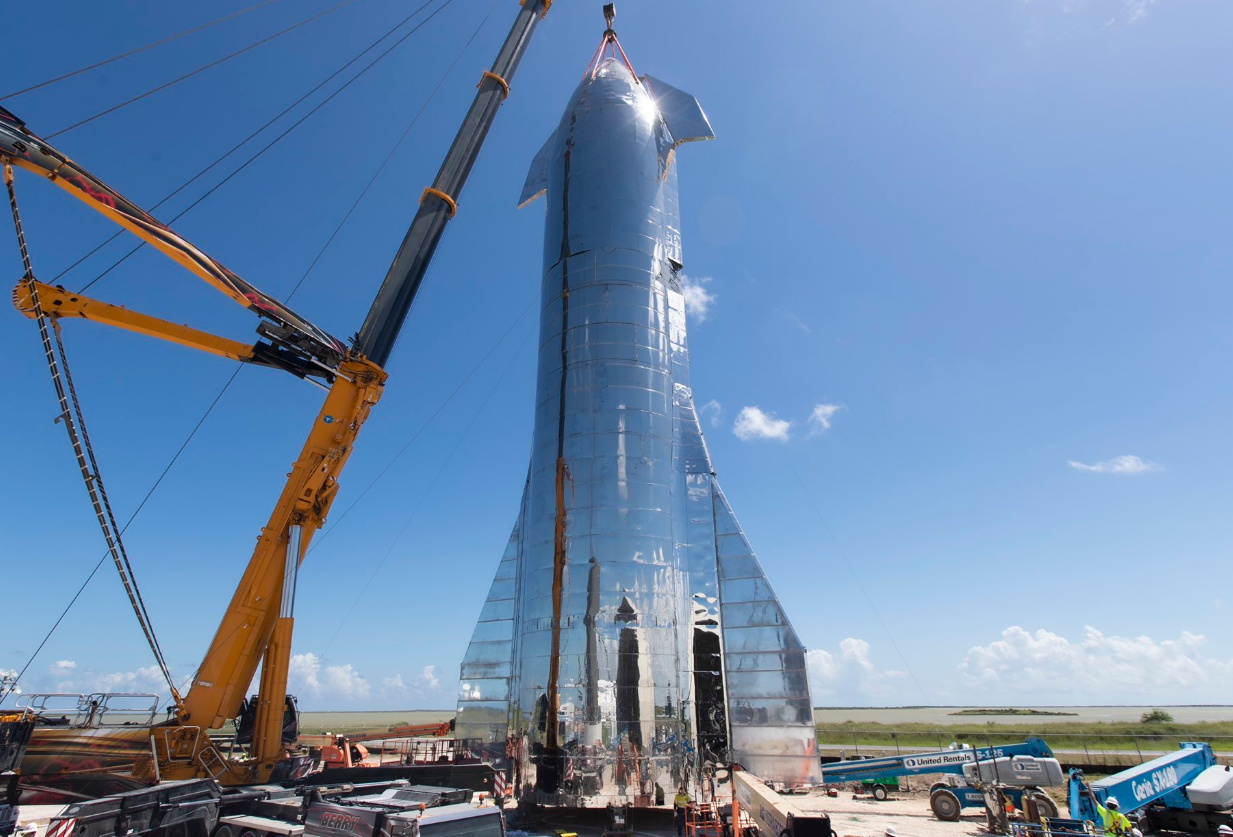
An early Starship prototype being assembled.

Nearly every component of the deep space vehicle is either a technological leap forward or a deviation from the norm. Its revolutionary full-flow staged combustion engines, the first of their kind to ever fly, are so complex that the rest of the aerospace industry gave up trying to build them decades ago. To support rapid reusability, Starship’s sleek fuselage abandons finicky carbon fiber for much hardier (and heavier) stainless steel; a material that hasn’t been used to build a rocket since the dawn of the Space Age.

Then there’s the sheer size of it: when Starship is mounted atop its matching Super Heavy booster, it will be taller and heavier than both the iconic Saturn V and NASA’s upcoming Space Launch System. At liftoff the booster’s 31 Raptor engines will produce an incredible 16,000,000 pounds of thrust, unleashing a fearsome pressure wave on the ground that would literally be fatal for anyone who got too close.

Which leads to an interesting question: where could you safely launch (and land) such a massive rocket? Even under ideal circumstances you would need to keep people several kilometers away from the pad, but what if the worst should happen? It’s one thing if a single-engine prototype goes up in flames, but should a fully fueled Starship stack explode on the pad, the resulting fireball would have the equivalent energy of several kilotons of TNT.

Thanks to the stream of consciousness that Elon often unloads on Twitter, we might have our answer. While responding to a comment about past efforts to launch orbital rockets from the ocean, he casually mentioned that Starship would likely operate from floating spaceports once it started flying regularly:

While history cautions us against looking too deeply into Elon’s social media comments, the potential advantages to launching Starship from the ocean are a bit too much to dismiss out of hand. Especially since it’s a proven technology: the Zenit rocket he references made more than 30 successful orbital launches from its unique floating pad.

Continue reading “Floating Spaceports For Future Rockets”

Budget-Friendly Bend Sensor Deforms With Precision

We’re pretty familiar with budget resistor-based bend sensors at this point, but this sensor is in a totally different class. Instead of relying on resistive elements, [Useok Jeong] and [Kyu-Jin Cho] devised a bend sensor that relies on geometric properties of the sensor itself. The result is a higher-fidelity measuring device made from a pretty widely available collection of stock parts.

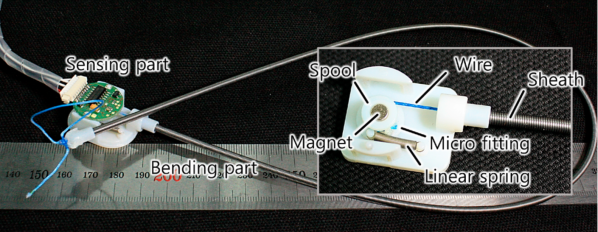
We’ll admit, calling this device a bend sensor might be a bit of a stretch, so let’s dig into some of the operating principles. What we’re actually measuring is the accumulated angle, the sum of all the curvature deformations along the length of the sensing element. The sensor is made of 3 main pieces: an outer extension spring-based wire sheath; a flexible, tensioned inner wire core that’s fixed at one end; and a small displacement sensor that measures the length changes in the wire’s free end. The secret ingredient to making this setup work is a special property of the outer wire sheath or spring guide. Here, the spring guide actually resists being compressed while being bent.  Because the inner radius of the bend remains a constant length, the center wire core is forced to elongate. With the excess wire spooled up at the sensor base, we simply measure how much we collected, apply some math, and get a resulting angle! What’s more, the folks behind this trick also demonstrate that the length and angle relationship is linear with an R-square of 0.9969.

One of the best parts about this sensor is how reproducible it seems from from a modest collection of stock parts. Spring guide (aka: extension spring) is available from McMaster-Carr and DR Templeman, and that flexible core might be readily substituted with some wire rope.

It’s not everyday that new topologies for bend sensors pop into the world, let alone linear ones. To learn more, the folks behind the project have kindly made their research paper open access for your afternoon reading enjoyment. (Bring scratch paper!) Finally, if you’re looking for other bend-related sensors, have a look at this multi-bend measurement setup.

Continue reading “Budget-Friendly Bend Sensor Deforms With Precision”