Amazing Open Source Quadruped Capable Of Dynamic Motion

The more we read about [Josh Pieper]’s quadruped, the mjbots quad A0, the more blown away we are by his year of progress on the design. Each part of the robot deserves its own article: from the heavily modified brushless motors (with custom planetary gears) to the custom motor driver designed just for this project.

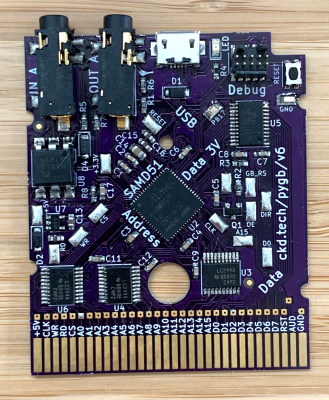
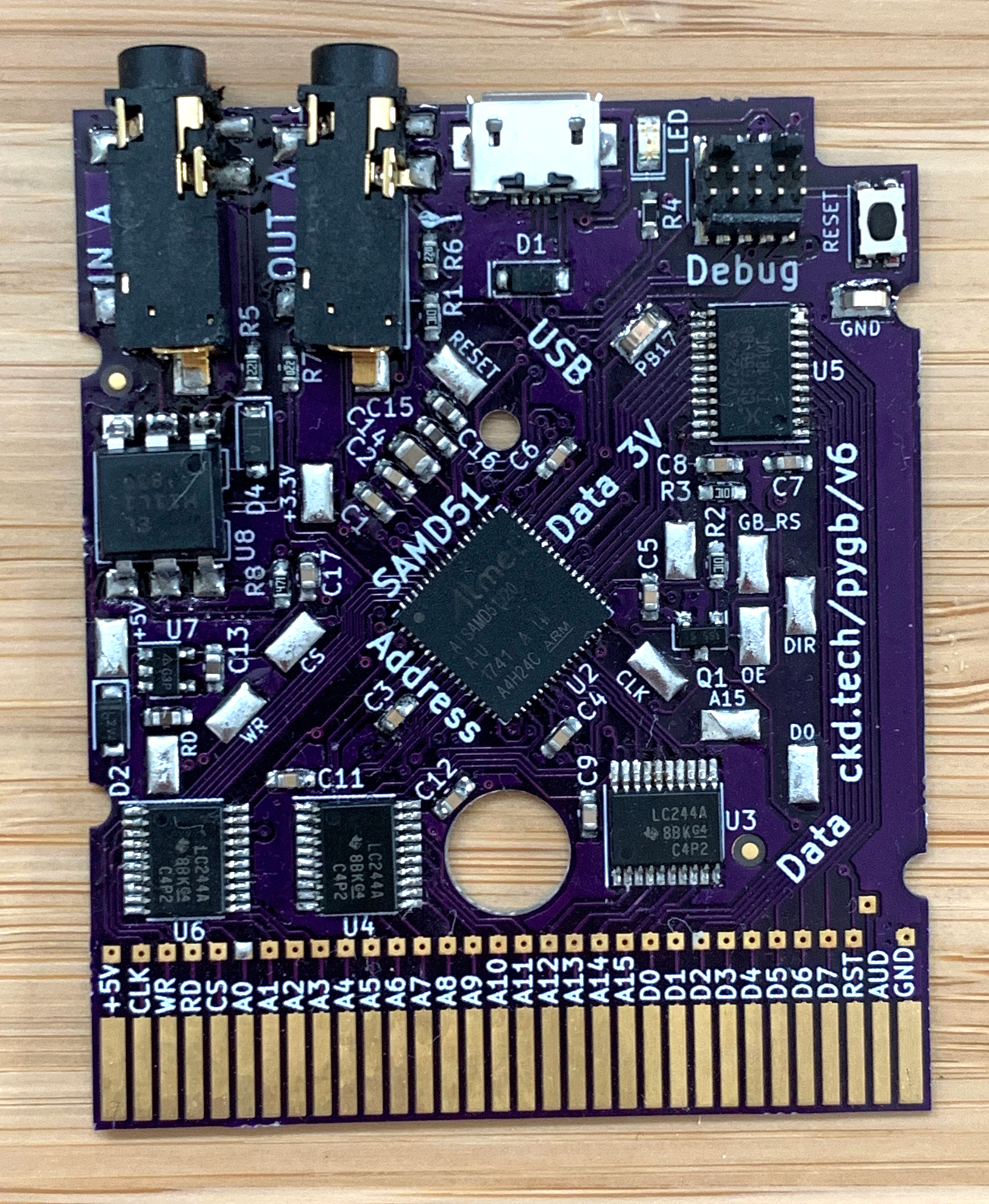
[Josh], realized early on that the off-the-shelf components like an ODrive just weren’t going to cut it for his application. So he designed his own board, took it through four revisions, and even did thermal and cycle testing on it. He ended up with the compact moteus board. It can pump out 400 Watts of peak power while its 3Mbit control protocol leaves plenty of bandwidth for real time dynamic control.

The motors and gearboxes are also impressive. It took thorough experimenting and taking inspiration from other projects  before he arrived at a 8108 quad copter motor modified and upgraded so heavily its own mother wouldn’t recognize it. This is all packed into a leg unit with three degrees of freedom that puts even the fanciest servo based quadruped to shame.

Finally it’s all packed into a neat four-legged robot frame with batteries and a Pi. You can get a video summary of the robot here or after the break, and we recommend reading his blog for some more images and details.

Continue reading “Amazing Open Source Quadruped Capable Of Dynamic Motion”

Saying Farewell To Another B-17 And Its Crew

The harsh reality of keeping historical airplanes airworthy and flying is that from time to time one will crash. Thus it was that on October 2nd a Boeing B-17 Flying Fortress crash-landed after technical troubles. Incidentally, this is the very same airplane which we covered only a number of days ago. Painted to look like another B-17 of WWII (Nine-o-Nine, variant B-17G-30-BO), this late-model B-17G-85-DL aircraft wasn’t finished in time to join World War II, but instead spent its 74 years being a flying museum to these amazing airplanes.

Details about the cause of the crash are still scarce, but from radio communication between the crew and tower, it’s understood the B-17 was having having issues with the number 4 engine, which was seen sputtering and smoking by a witness. The airplane’s pilots tried to perform an emergency landing at Bradley International Airport, Connecticut, where it had taken off from only moments ago. Unfortunately the aircraft ran off the runway and struck a building, after which it burst into flames. The NTSB has indicated that they have dispatched a team to investigate the crash, and say that a preliminary report is likely two weeks away.

Of the thirteen people on board, seven died, with the remaining six surviving with injuries. One person on the ground was injured as well. The vintage bomber (civilian registration number N93012) has been all but completely destroyed in the fire, with only a section of the wing and tail remaining recognizable.

We feel terrible about such loss of life and hope the injured make a speedy recovery. The loss of yet another B-17 is also tough to swallow, as this leaves just ten airworthy B-17s. How long until we say farewell to this part of our history, with the final flight of a B-17, or its kin?

(Thanks to Pez for this update)

No Need To Watch Your Tea, This Robot Does It For You

For anyone who’s ever had to make their own tea, steeping it for the right amount of time can be a pain. That’s precisely the problem that the automatic tea brewing robot solves with its painless approach to brewing tea, built by Slovenian electrical engineering student [Kristjan Berce].

You can use the robot by setting a timer on the knob, at which point the robot raises it arm for the tea bag then dips in the water every 30 seconds until the time has passed. At the end of the timer, the bag is raised clear of the cup to end the brewing. It’s a remarkably simple design that almost evokes chindogu (the Japanese art of useless inventions) if not for the fact that the robot actually serves a useful purpose.

The components for 3D printing the robot are available online, consisting of a case, a container for the Arduino-powered electronics, the lever for holding the tea, and the gear that raises the lever up and down. The device also uses an integrated Li-Ion battery with an accessible charging port and integrated BMS. A 35BYJ46 stepper motor and ULN2003 driver are used to move the 3D printed mechanism. The device uses a potentiometer for setting the steeping time between 1 and 9 minutes, and there’s even a buzzer for indicating once the tea is done brewing.

The Gerber and Arduino code files are open-source for any hackers looking to make their own tea brewers; just take care they operate with “deadly punctuality”.

Continue reading “No Need To Watch Your Tea, This Robot Does It For You”

DSP Spreadsheet: FIR Filtering

There’s an old saying: Tell me and I forget, teach me and I may remember, involve me and I learn. I’m guilty of this in a big way — I was never much on classroom learning. But if I build something or write some code, I’m more likely to understand how it works and why.

Circuit simulation and software workbooks like Matlab and Jupyter are great for being able to build things without a lot of overhead. But these all have some learning curve and often use clever tricks, abstractions, or library calls to obscure what’s really happening. Sometimes it is easier to build something in a spreadsheet. In fact, I often do little circuit design spreadsheets or even digital design because it forces me to create a mathematical model which, in turn, helps me understand what’s really going on.

In this article I’m going to use Google Sheets — although you could do the same tricks in just about any spreadsheet — to generate some data and apply a finite impulse response (FIR) filter to it. Of course, if you had a spreadsheet of data from an instrument, this same technique would work, too.

Continue reading “DSP Spreadsheet: FIR Filtering”

Solve Your Precision Woes With A Sliding Angle Grinder

Angle grinders are among the most useful tools for anyone who’s ever had to cut metal. They’re ergonomic, compact, and get the job done. Unfortunately, one of the tradeoffs you usually make when using them is precision.

But thankfully, there’s a DIY solution. YouTuber [workshop from scratch] demonstrated the build process for a sliding angle grinder in a recent video, welding steel beams into a flat frame and attaching fitted beams on top to slide across the rows. Where necessary, spacers are used to ensure that the slider is perfectly fitted to the beam. The contraption holding the angle grinder – a welded piece of steel bolted to the sliding mechanism – has a grip for the user to seamlessly slide the tool across the table.

The operation is like a more versatile and robust chop saw, not to mention the customized angle references you can make to cut virtually anything you like. The build video shows the entire process, from drill pressing and turning holes to welding pieces of the frame together to artfully spray painting the surface a classy black, with familiarity enough to make the project look like a piece of cake.

As the name implies, [workshop from scratch] is all about building your own shop tools, and we’ve previously taken a look at their impressive hydraulic vise and mobile crane builds. These tools, largely hacked together from scraps, prove that setting up your own shop doesn’t necessarily mean you need to break the bank.

Continue reading “Solve Your Precision Woes With A Sliding Angle Grinder”

Floating Power Plants; The Coastal City Solution Sure To Be Increasingly Popular

Building new things in an existing city is hard. Usually, new development means tearing down existing structures. Doing so for apartment complexes or new skyscrapers is one thing, but infrastructure is much more complicated, both from an engineering perspective and an economical one. Not only do people not want to foot the tax bill for things they may not see an immediate benefit from, but it can be difficult to find the space for bigger roads, more pipelines, or subway tunnels in a crowded urban area. It’s even harder for infrastructure that most consider an eyesore, like a power plant or electric substation. It’s no surprise then that some of the largest cities in the world have been making use of floating power plants rather than constructing them on dry land.

The latest city to entertain a bid for a new floating power plant (FPP) is New York, which is seeking to augment its current fleet of barge-based power stations already in operation. It already operates the largest FPP in the world at Gowanus in Brooklyn, which is able to output 640 MW of electricity. There’s also a 320 MW plant nearby as well, and the new plants would add eight 76 MW generators to New York City’s grid.

Let’s take a look at what goes into these barge-based generator designs.

Continue reading “Floating Power Plants; The Coastal City Solution Sure To Be Increasingly Popular”

PrintEye Gives You Stats In A Blink

Once upon a time, most things were single-purpose, like the pocket watch. Then somebody made a watch with a date function, and next thing you know, we had TV/VCR combos and Swiss army knives. Now, people pull computers out of their pockets just to check the time or the bed temperature of their RepRap.

[Owen]’s antidote for this multi-function madness is PrintEye, a simple interface that queries his printer and displays its vital signs on a pair of OLED peepers. It’s a parts bin special, and you know how much we love those. PrintEye connects to the Duet controller over UART, and does its firmware whispering with an ATMega328P. The ‘Mega sends a single M-command and gets back all the status and temperature data in JSON format. Then it parses the info and displays it on twin OLED screens.

Want to make one? [Owen]’s got all the files you need over on IO, but offers no hand-holding services. If you’ve never spun a board before, this could be your introduction. Have to have an internet connection? Check out the Octoprint monitor that inspired PrintEye.