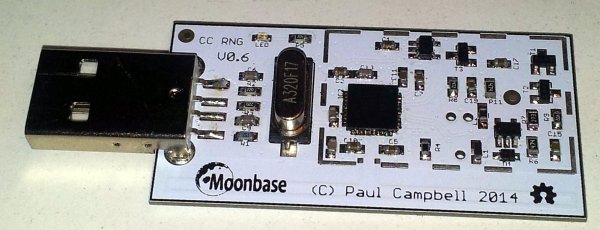
[Paul] designed a new open-hardware RNG (random number generator) that includes two sources of entropy in a small package. The first source of entropy is a typical avalanche diode circuit, which is formed by a pair of transistors. This circuit creates high-speed random pulses which are sampled by the onboard microcontroller.
What makes this design unique is a second entropy source: a CC2531 RF receiver. The RF receiver continuously skips around channels in the 2.5Ghz band and measures the RF signal level. The least-significant bit of the signal level is captured and used as a source of entropy. The firmware can be configured to use either source of entropy individually, or to combine both. The firmware also supports optionally whitening the entropy byte stream, which evens out the number of 1’s and 0’s without reducing entropy.
The OneRNG uses the USB-CDC profile, so it shows up as a virtual serial port in most modern operating systems. With the rngd daemon and a bit of configuration, the OneRNG can feed the system entropy source in Linux. [Paul] also has a good writeup about the theory behind the entropy generator which includes images of his schematic. Firmware, drivers, and hardware design files are open-source and are available for download.
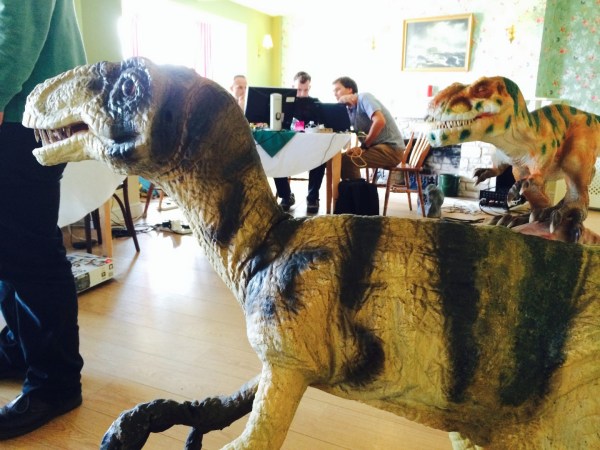
 Before the group arrived, the native dinos didn’t do much else than run a preprogrammed routine when triggered by someone’s presence… which needless to say, lacks the appropriate prehistoric dynamism. Seeing that their dated wag, wiggle, and roar response could use a fresh breath of flair, the park’s technical projects coordinator [Mark Butler] began adapting one of the dinosaur’s control boxes to work with a Raspberry Pi. This is when [Lucy] and her group were called upon for a two-day long excursion of play and development. With help and guidance from Raspberry Pi expert, [Neil Ford], the group learned how to use a ‘drag and build’ programing environment called