The Coming Copper Shortage: Aluminium Or Carbon Nanotubes To The Rescue?

The use of aluminium in wiring is unlikely to bring a smile to the face of anyone who has had to deal with it in a 1960s, or early 1970s-era house. The causes behind the fires and other accidents were myriad, including failure to deal with the higher thermal expansion of aluminium, the electrically insulating nature of aluminium oxide, and the general brittleness of aluminium when twisted.

Yet while copper is superior to aluminium in terms of electrical conductivity and ease of installation, copper prices have skyrocketed since the 1970s, and are on the verge of taking off to the moon. A big part of the reason is the increased use of copper in everything from electronics and electrical motors to generators, driven by large-scale deployment of wind turbines and electrical vehicles.

As the world moves to massively expand the use of electrical cars and installation of wind turbines, copper demand is predicted to outstrip current copper supply. With aluminium likely to make a big return as a result, it’s worth taking a look at modern-day aluminium-based wiring, including copper-clad aluminium and the use of carbon-based replacements. Continue reading “The Coming Copper Shortage: Aluminium Or Carbon Nanotubes To The Rescue?”

Green Roofs Could Help Improve Solar Panel Efficiency

There’s been a movement in architecture over the past couple of decades to help tie together large urban developments with plant life and greenery. We’ve seen a few buildings, and hundreds more renders, of tall skyscrapers and large buildings covered in vegetation.

The aesthetic is often a beautiful one, but the idea is done as much for its tangible benefits as for the sheer visual glory. Naturally, there’s the obvious boost from plants converting carbon dioxide into delicious, life-giving oxygen. However, greenery on the roofs of buildings could also help improve the output of solar installations, according to a recent study from Sydney, Australia.

Continue reading “Green Roofs Could Help Improve Solar Panel Efficiency”

So How Does A Rocket Fly Sideways, Anyway?

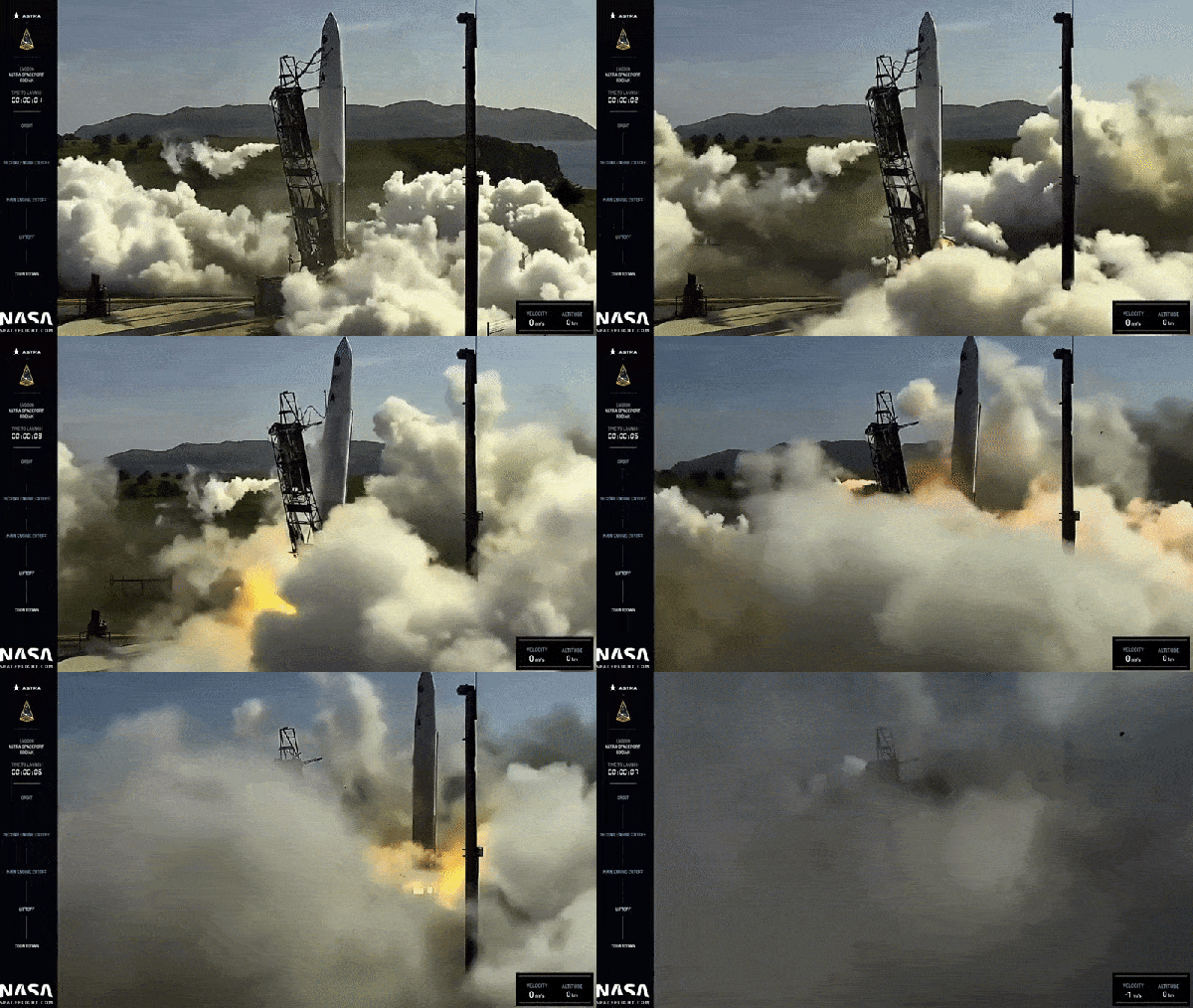
It’s often said that getting into orbit is less about going up, and more about going sideways very fast. So in that sense, the recent launch conducted by aerospace startup Astra could be seen as the vehicle simply getting the order of operations wrong. Instead of going up and then burning towards the horizon, it made an exceptionally unusual sideways flight before finally moving skyward.

As you might expect, the booster didn’t make it to orbit. But not for lack of trying. In fact, that the 11.6 meter (38 feet) vehicle was able to navigate through its unprecedented lateral maneuver and largely correct its flight-path is a testament to the engineering prowess of the team at the Alameda, California based company. It’s worth noting that it was the ground controller’s decision to cut the rocket’s engines once it had flown high and far enough away to not endanger anyone on the ground that ultimately ended the flight; the booster itself was still fighting to reach space until the very last moment.

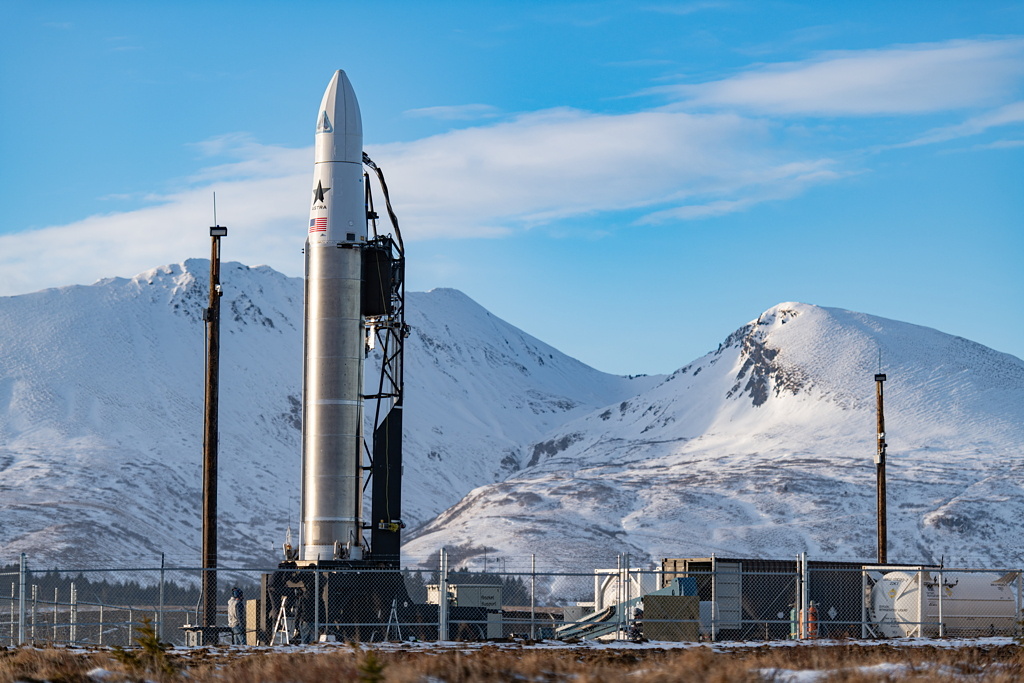
Astra’s rocket on the launch pad.

There’s a certain irony to the fact that this flight, the third Astra has attempted since their founding in 2016, was the first to be live streamed to YouTube. Had the company not pulled back their usual veil of secrecy, we likely wouldn’t have such glorious high-resolution footage of what will forever be remembered as one of the most bizarre rocket mishaps in history. The surreal image of the rocket smoothly sliding out of frame as if it was trying to avoid the camera’s gaze has already become a meme online, arguably reaching a larger and more diverse audience than would have resulted from a successful launch. As they say, there’s no such thing as bad press.

Naturally, the viral clip has spurred some questions. You don’t have to be a space expert to know that the pointy end of the rocket is usually supposed to go up, but considering how smooth the maneuver looks, some have even wondered if it wasn’t somehow intentional. With so much attention on this unusual event, it seems like the perfect time to take a close look at how Astra’s latest rocket launch went, quite literally, sideways.

Continue reading “So How Does A Rocket Fly Sideways, Anyway?”

Fusion Ignition: What Does The NIF’s 1.3 MJ Yield Mean For Fusion Research?

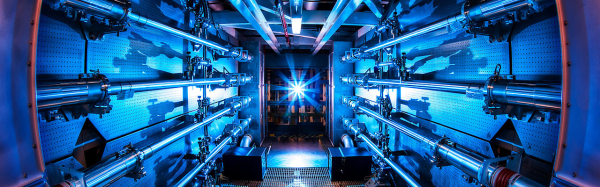
Earlier this month, Lawrence Livermore National Laboratory (LLNL) announced to the world that they had achieved a record 1.3 MJ yield from a fusion experiment at their National Ignition Facility (NIF). Yet what does this mean, exactly? As their press release notes, the main advancement of these results will go towards the US’s nuclear weapons arsenal.

This pertains specifically to the US’s nuclear fusion weapons, which LLNL along with Los Alamos National Laboratory (LANL) and other facilities are involved in the research and maintenance of. This traces back to the NIF’s roots in the 1990s, when the stockpile stewardship program was set up as an alternative to nuclear weapons testing. Much of this research involves examining how today’s nuclear weapons degrade over time, and ways to modernize the existing arsenal.

In light of this, one may wonder what the impact of these experimental findings from the NIF are beyond merely ensuring that the principle of MAD remains intact. To answer that question, we have to take a look at inertial confinement fusion (ICF), which is the technology at the core of the NIF’s experiments.

Continue reading “Fusion Ignition: What Does The NIF’s 1.3 MJ Yield Mean For Fusion Research?”

Ask Hackaday: What Is Amazon Thinking By Entering The Palm-Reading Business?

Have you heard about this One? At least three United States senators have, and they want to know what Amazon plans to do with all the biometric data collected by the Amazon One program. It’s their new contactless payment method that uses your unique palm print instead of cards or phones to make purchases, gain access to venues of work and play, and enter or pay in whatever other spaces Amazon can invade down the line. The idea is that one day, we’ll all be able to leave our homes without any form of money or ID of any kind, because we’ll all be stored away in Bezos’ big biometric file cabinet.

We tossed this one around in the writer’s room back when the Amazon One concept was nothing but a pile of buzzwords and a render or two, but these kiosks are now active in 50+ Whole Foods and Amazon 4-Star locations across the US. Here’s the deal: you can only sign up at a participating store that has a kiosk, because they have to scan your palms into the system. We were worried that the signup kiosk could easily take fingerprint scans at the same time, but according to the gifs in Morning Brew’s review, it just uses another of their point-of-sale palm scanners along with a touch screen and a card reader. But you still have to hover your entire hand over it, so who’s to say that the scan ends where the fingers begin?

Continue reading “Ask Hackaday: What Is Amazon Thinking By Entering The Palm-Reading Business?”

As ISS Enters Its Final Years, Politics Take Center Stage

There was a time when the idea of an international space station would have been seen as little more than fantasy. After all, the human spaceflight programs of the United States and the Soviet Union were started largely as a Cold War race to see which country would be the first to weaponize low Earth orbit and secure what military strategists believed would be the ultimate high ground. Those early rockets, not so far removed from intercontinental ballistic missiles (ICBMs), were fueled as much by competition as they were kerosene and liquid oxygen.

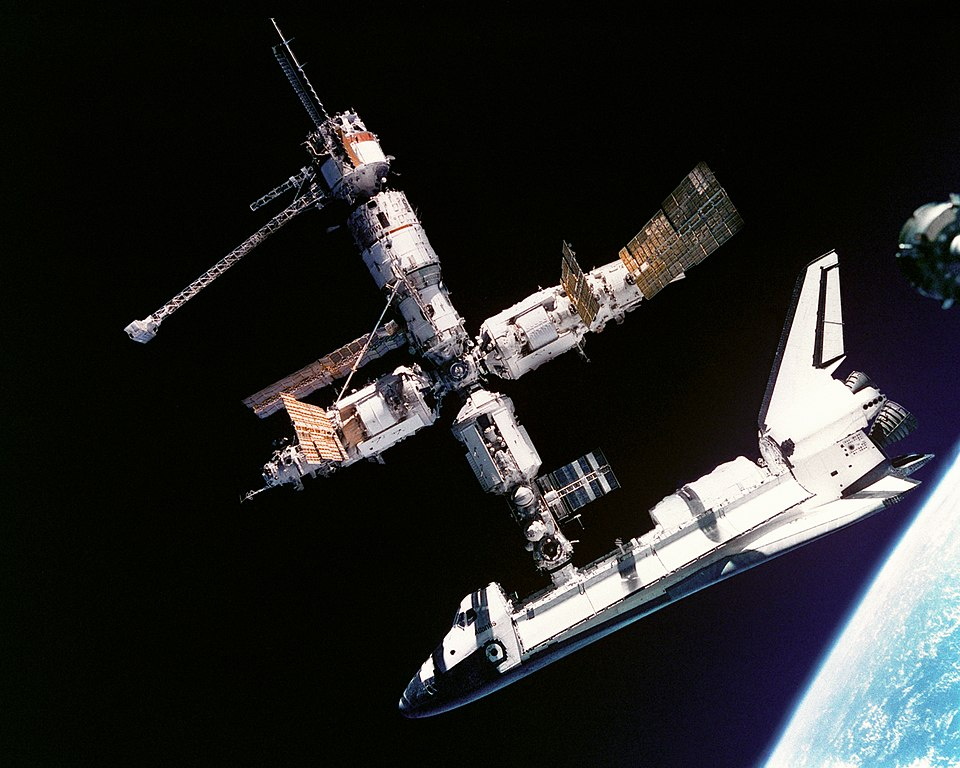
Space Shuttle docked to Mir space station in 1995.
Atlantis docked to Mir in 1995.

Luckily, cooler heads prevailed. The Soviet Almaz space stations might have carried a 23 mm cannon adapted from tail-gun of the Tu-22 bomber to ward off any American vehicles that got too close, but the weapon was never fired in anger. Eventually, the two countries even saw the advantage of working together. In 1975, a joint mission saw the final Apollo capsule dock with a Soyuz by way of a special adapter designed to make up for the dissimilar docking hardware used on the two spacecraft.

Relations further improved following the dissolution of the Soviet Union in 1991, with America’s Space Shuttle making nine trips to the Russian Mir space station between 1995 and 1997. A new era of cooperation had begun between the world’s preeminent space-fairing countries, and with the engineering lessons learned during the Shuttle-Mir program, engineers from both space agencies began laying the groundwork for what would eventually become the International Space Station.

Unfortunately after more than twenty years of continuous US and Russian occupation of the ISS, it seems like the cracks are finally starting to form in this tentative scientific alliance. With accusations flying over who should take the blame for a series of serious mishaps aboard the orbiting laboratory, the outlook for future international collaboration in Earth orbit and beyond hasn’t been this poor since the height of the Cold War.

Continue reading “As ISS Enters Its Final Years, Politics Take Center Stage”

Drone Hits Plane — And This Time It’s A Real (Police) One!

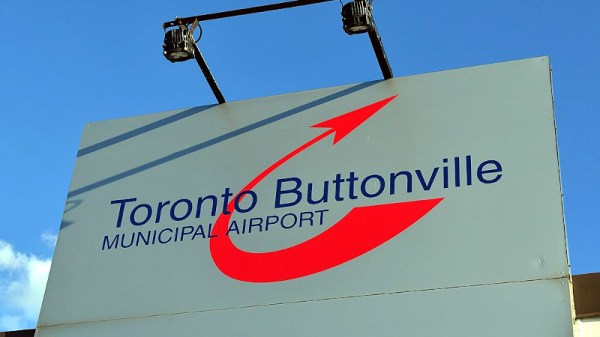
Over the years we’ve brought you many stories that follow the world of aviation as it struggles with the arrival of multirotors. We’ve seen phantom drone encounters cause panics and even shut airports, but it’s been vanishingly rare for such a story to have a basis in evidence. But here we are at last with a drone-aircraft collision story that involves a real drone. This time there’s a twist though, instead of one piloted by a multirotor enthusiast that would prompt a full-on media panic, it’s a police drone that collided with a Cesna landing at Toronto’s Buttonville airport. The York Regional Police craft was part of an operation unrelated to the airport, and its collision with the aircraft on August 10th was enough to make a significant dent in its engine cowling. The police are reported to be awaiting the result of an official investigation in the incident.

This is newsworthy in itself because despite several years and significant resources being devoted to the problem of drones hitting planes, demonstrable cases remain vanishingly rare. The machine in this case being a police one will we expect result in many fewer column inches for the event than had it been flown at the hands of a private multirotor pilot, serving only to heighten the contrast with coverage of previous events such as the Gatwick closure lacking any drone evidence.

It’s picking an easy target to lay into the Your Regional Police over this incident, but it is worth making the point that their reaction would have been disproportionately larger had the drone not been theirs. The CTV news report mentions that air traffic regulators were unaware of the drone’s presence:

NAV Canada, the country’s air navigation service provider, had not been notified about the YRP drone, Transport Canada said.

Given the evident danger to aviation caused by their actions it’s not unreasonable to demand that the officers concerned face the same penalties as would any other multirotor pilot who caused such an incident. We aren’t holding our breath though.

Header image: Raysonho @ Open Grid Scheduler / Grid Engine, CC0.