This excellent content from the Hackaday writing crew highlights recurring topics and popular series like Linux-Fu, 3D-Printering, Hackaday Links, This Week in Security, Inputs of Interest, Profiles in Science, Retrotechtacular, Ask Hackaday, Teardowns, Reviews, and many more.
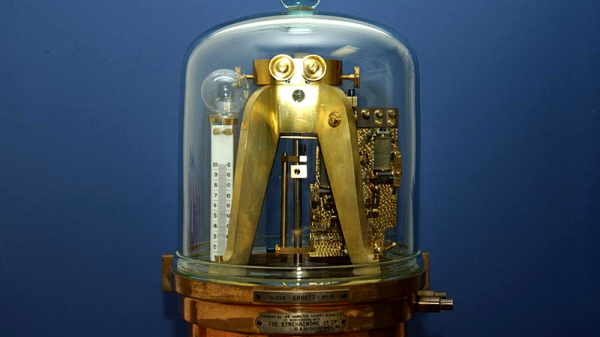
Would you believe a pendulum clock that can keep time accurately to within one second per year? If you answered “yes”, you’ve either never tried to regulate a pendulum clock yourself, or you already know about the Shortt Clock. Getting an electromechanical device to behave so well, ticking accurately to within 0.03 parts per million, is no mean feat, and the Shortt clock was the first timekeeping device that actually behaves more regularly than the Earth itself. Continue reading “Retrotechtacular: The Best Pendulum Clock”→
A 3D printer and laser cutter were cited as cause in two deaths. A couple (and two cats) were found dead in their apartment this week. The cause of death was carbon monoxide poisoning. Police and the gas company investigated the residence and found no other source of carbon monoxide besides a 3D printer and a laser cutter. Be sure to check out the people who know more about these deaths than the people who actually investigated these deaths in the comments below. In the mean time, get a CO detector. It’s nasty stuff.
At CES last this month, Lulzbot unleashed the MOARstruder. It’s an extruder with a massive, massive, 1.2mm nozzle. [James] from xrobots dot co dot uk just got his hands on the MOARstruder and the initial results are pretty cool. With a 1.2mm nozzle, you can print big parts fast (helpful for [James]’ massive builds), and the parts are stronger. Check out the video for a great hammer vs. printed part test.
We knew this would happen eventually. Pi Blades. Element14 is now offering ‘breakout boards but not quite’ for the full-size Raspberry Pis and Pi HATs. The idea of this product is to package clusters of Pis into an easy-to-use form factor. The Bitscope Blade Quattro, for example, provides power to four Pis. In other news, I own 20% of the world’s supply of vertical SODIMM sockets.
Arbitrary Code Execution On The Nintendo 64. A bit of background is required before going into this. Pokemon Stadium is a game for the N64. It used a Transfer Pak to read the save game data on Pokemon Game Boy cartridges to battle, trade, and organize Pokemon. Additionally, the Pokemon Tower in Pokemon Stadium allows players to play first-gen Game Boy Pokemon games from within an N64 – sort of like the SNES Super Game Boy. By using two Game Boy Pokemon games and two Transfer Paks, arbitrary code can be executed on the N64. Video demo right here. This is really cool, and the next obvious step is a ‘bootloader’ of sorts to allow arbitrary code downloading from controller button presses.
The Travelling Hacker Box is on the move! The original plan for the Travelling Hacker Box was to visit home base for the 2016 Hackaday SuperConference, then depart to foreign lands beginning with Canada, Greenland, Europe, Africa, Asia, Oceana, and the other America. After the SuperCon, the box was shipped out to its first recipient in Canada. The box came back. Something with customs. Now, the Travelling Hacker Box is on the move again. The plan is still the same, it’s just delayed a month or two. If you want to check out the future travels of the Travelling Hacker Box, here you go.
What the heck is CircuitPython? Get that question answered along with many more during this Friday’s Hack Chat. Three engineers from Adafruit join us as [Ladyada], [Tony DiCola], and [Scott Shawcoft] lead a CircuitPython discussion at Noon PST on 1/27/17.
CircuitPython is Adafruit’s new extension on the MicroPython codebase. It adds support for SAMD21 processors in MicroPython and reworks the API for better support across platforms and better documentation. Does this still sound like jibberish? The Python programming language has been extended to microcontrollers. CircuitPython is furthering that work and this Hack Chat is the perfect opportunity to talk with the people who are doing that work. They will also be doing a giveaway of five CircuitPlayground m0 Express boards (brand new, not yet released hardware).
Hack Chats are live community events that take place in the Hackaday.io Hack Chat group messaging. Visit that page (make sure you are logged in) and look for the “Join this Project Button” in the upper right. Once you are part of the project, that button will change to “Team Messaging” which takes you to the Hack Chat.
You don’t have to wait for Friday, join Hack Chat whenever you like and see what the community is currently talking about.
One of the most famous lectures in the history of technology was delivered by [Douglas Engelbart] in December 1968, at a San Francisco conference. In it he described for the first time most of what we take for granted in our desktop computers and networking today, several years before even the first microprocessor made it to market. It is revered not only because it was the first airing of these ideas, but because it was the event that inspired and influenced many of those who developed them and brought them to market. You may have heard of it by its poplar name: the Mother of All Demos.
This was an exciting time to be a technologist, as it must have been obvious that we lay on the brink of an age of ubiquitous computing. [Engelbart] was by no means alone in looking to the future and trying to imagine the impact that the new developments would have in the decades to come. On the other side of the Atlantic, at the British Post Office Telephone research centre at Dollis Hill, London, his British counterparts were no less active with their crystal ball gazing. In 1969 they produced our film for today, entitled complete with misplaced apostrophe “Telecommunications Services For The 1990’s” , and for our 2017 viewpoint it provides a quaint but fascinating glimpse of what almost might have been.
You can have any phone you want, as long as it’s state-owned! A GPO 746 telephone from the early 1970s.
Until the 1980s, the vast majority of British telephone services were a tightly regulated state monopoly run as part of the Post Office. There were only a few models of telephone available in the GPO catalogue, all of which were fixed installations with none of the phone sockets we take for granted today. Accessories such as autodiallers or answering machines were eye-wateringly expensive luxuries you’d only have found in offices, and since the fax machine was unheard of the height of data transfer technology was the telex. Thus in what later generations would call consumer information technology there really was only one player, so when they made pronouncements on the future they were a good indication of what you were likely to see in your home.
The film starts with a couple having a conversation, she in her bedroom and he in a phone box. Forgotten little touches such as a queue for a phone box or the then-cutting-edge-design Trimphone she’s using evoke the era, and the conversation leaves us hanging with the promise that their conversation would be better with video. After the intro sequence we dive straight into how the GPO thought their future network would look, a co-axial backbone with local circuits as a ring.
The real future-gazing starts with an office phone call to an Australian, at which we’re introduced to their concept of video calling with a colour CRT in a plastic unit that could almost be lifted from the set of The Jetsons. The presenter then goes on to describe a mass information service which we might recognise as something like our WWW, before showing us the terminal in more detail. Alongside the screen is a mock-up of a desktop console with keypad, cassette-based answerphone recorder, and a subscriber identity card slot for billing purposes. Period touches are a brief burst of the old harsh dial tone of a Strowger exchange, and mention of a New Penny, the newly-Decimalised currency. We’re then shown the system transmitting a fax image, of which a hard copy is taken by exposing a photographic plate to the screen.
Perhaps the most interesting sequence shows their idea of how an online information system would look. Bank statements and mortgage information are retrieved, though all with the use of a numeric keypad rather than [Englebart]’s mouse. Finally we see the system being used in a home office, a situation shown as farcical because the worker is continually harassed by his children.
Scorecard
This was the cutting edge in 1980, at least for people who hadn’t seen France’s Minitel. Fair use, via Wikimedia Commons.
So nearly five decades later, what did they get right and how much did they miss? The area you might expect them to be most accurate is oddly the one in which they failed most. The BT telecommunications backbone is now fibre-optic, and for the vast majority of us the last mile or two is still the copper pair it would have been a hundred years ago. In terms of the services though we have all of the ones they show us even if not in the form they envisaged. Fax and answering machines were everyday items by the 1980s, and though it didn’t gain much traction at the time we had video calling as a feature of most offices by the 1990s. We might however have expected them to anticipate a fax machine with a printer, after all it was hardly new technology. Meanwhile the online service they show us is visibly an ancestor of Prestel, which they launched for the late 1970s and which failed to gain significant traction due to its expense.
Another area they miss is wireless. We briefly see a pager, but even though they had a VHF radio telephone service and the ancestors of our modern cellular services were on the drawing board on the other side of the Atlantic at the time, they completely miss a future involving mobile phones.
The full film is below the break. It’s a charming period production, and the wooden quality of the action shows us that while the GPO engineers might have been telephone experts, they certainly weren’t actors.
Hackaday is primarily a place for electronics hackers, but that’s not to say that we don’t see a fair number of projects where woodworking plays a key role. Magic mirror builds come to mind, as do restorations of antique radios, arcade machines built into coffee tables, and small cases for all manner of electronic and mechanical gadgets. In some of these projects, the woodworking really shines and makes the finished project pop. In others — well, let’s just say that some woodwork looks good from far, but is far from good.
Hackers’ perspiration may go into soldering, coding, and building. For many of us, the inspiration for these projects comes from science fiction. The books, movies, TV shows, short stories, and comics we all grew up on, and continue to devour to this day. We’re paying homage to all these great Sci-Fi stories with our latest contest.
The Sci-Fi Contest isn’t about the most efficient way of building a 555 circuit or the tightest code. This one is about celebrating science fiction in the best way we know how — building awesome projects. This is Hackaday, so you’re going to have to use some form of working electronics in your entry. Beyond that, it’s up to you. Bring us your Overwatch cosplays, your Trek Tricorders, your Star Wars pod racers.
This isn’t our first Sci-Fi contest. In fact, Sci-Fi was one of Hackaday.io’s first contests way back in 2014.
3 years and over 100,000 new hackers later, it’s time to take a fresh look at what you all have been up to. Projects that were entered in the first Sci-Fi contest are eligible, but you need to create a new project page and do some new work.
Check the rules for the full details. Once you’ve published a project use the drop-down menu on the left sidebar to enter it in the Hackaday Sci-Fi Contest.
Prizes
Great work reaps great rewards. Here’s what we’ve got for this contest:
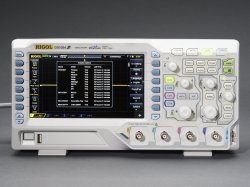
Grand Prize is a Rigol DS1054Z 4 Channel 50 MHz scope.
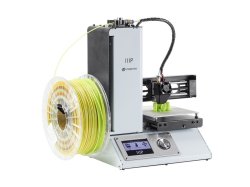
First Prize is a Monoprice Maker Select Mini 3D printer
Second Prize is a complete Blu-Ray box of Star Trek: The Next Generation
Third Prize is Lego’s latest rendition of the Millennium Falcon.
The deadline is Monday, March 6, 2017, 09:00 pm PST (+8 UTC), so don’t waste time! Warm up your soldering irons, spin up your warp drives, and create something awesome!
What is a 1971 Ford Torino worth? It depends, but even a 2-door in terrible condition should fetch about $7 or $8k. What is a 1971 Ford Torino covered in 3D printed crap worth? $5500. This is the first ‘3D printed car’ on an auction block. It looks terrible and saying ‘Klaatu Varada Nikto’ unlocks the doors.
Old Apple IIs had a DB19 connector for external floppy drives. Some old macs, pre-PowerPC at least, also had a DB19 connector for external floppy drives. These drives are incompatible with each other for reasons. [Dandu] has a few old macs and one old Apple II 3.5″ external floppy drive. This drive can be hacked so it works with a Mac Classic. The hack is simply disconnecting one of the boards in the drive, and it only reads 400 and 800kB disks, but it does work.
The US Army is working on a hoverbike. Actually, it’s not a hoverbike, because it doesn’t have a saddle or a seat, but it could carry 300 pounds at 60 mph. That’s 136,000 grams at 135 meters per second for the rest of the world out there. This ‘hoverbike’ will be used for very quick resupply, and hopefully a futuristic form of jousting.
Over the past few months, we’ve seen a few new microcontrollers built around the RISC-V core. The first is the HiFive1, a RISC-V on an Arduino-shaped board. The Open-V is another RISC-V based microcontroller, and now it too supports the Arduino IDE. That may not seem like much, but trust me: setting up the HiFive1 toolchain takes at least half an hour.
The NAMM show has been going on for the last few days, which means new electronic musical gear, effects pedals, and drum machines. This is cool, but somewhat outside our editorial prerogative. This isn’t. It’s a recording studio using a Rasberry Pi. Tracktion is working on a high-quality digital audio input and output add-on for the Pi 3. This is really cool, and you only need to look back at MPCs and gigantic Akai samplers from 15 years ago to see why.
Hey LA peeps. Sparklecon is next weekend. What’s Sparklecon? The 23B hackerspace pulls out the grill, someone brings a gigantic Tesla coil, we play hammer Jenga, and a bunch of dorks dork around. Go to Sparklecon! Superliminal advertising! Anyone up for a trip to the Northrop ham meetup next Saturday?