Lattice Semiconductor Targets Bitstream Reverse Engineering In Latest Propel SDK License

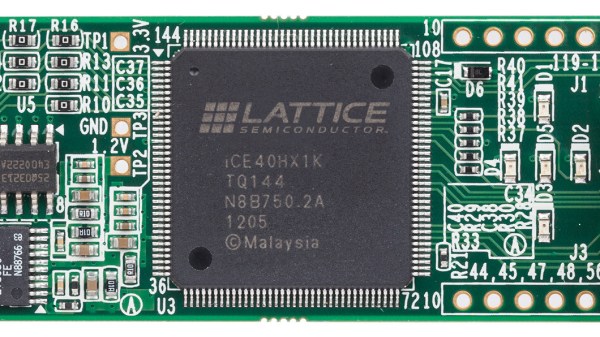
The topic of reverse engineering is highly contentious at best when it comes to software and hardware development. Ever since the configuration protocol (bitstream) for Lattice Semiconductor’s iCE40 FPGAs was published in 2015 through reverse engineering efforts, there has been a silent war between proponents of open bitstream protocols and FPGA manufacturers, with the Lattice ECP5’s bitstream format having been largely reverse-engineered at this point.

Update: About eight hours after this article was published, Lattice Semiconductor issued a statement retracting the EULA language that banned bitstream reverse engineering. Please check out Hackaday’s article about this reversal.

Most recently, it appears that Lattice has fired a fresh shot across the bow of the open source projects. A recently discovered addition to the Propel SDK, which contains tools to program and debug Lattice devices, specifically references bitstream reverse engineering. When logged in with an account on the company’s website the user must agree to the Lattice Propel License Agreement for Lattice Propel 1.0 prior to download. That document includes the following language:

In particular, no right is granted hereunder […] (3) for reverse engineering a bitstream format or other signaling protocol of any Lattice Semiconductor Corporation programmable logic device.


Continue reading “Lattice Semiconductor Targets Bitstream Reverse Engineering In Latest Propel SDK License” →

Ethics Whiplash As Sonos Tries Every Possible Wrong Way To Handle IoT Right

We’re trying to figure out whether Sonos was doing the right thing, and it’s getting to the point where we need pins, a corkboard, and string. Sonos had been increasing the functionality of its products and ran into a problem as they hit a technical wall. How would they keep the old speakers working with the new speakers? Their solution was completely bizarre to a lot of people.

First, none of the old speakers would receive updates anymore. Which is sad, but not unheard of. Next they mentioned that if you bought a new speaker and ran it on the same network as an old speaker, neither speaker would get updates. Which came off as a little hostile, punishing users for upgrading to newer products.

The final bit of weirdness was their solution for encouraging users to ditch their old products. They called it, “trading in for a 30% discount”, but it was something else entirely. If a user went into the system menu of an old device and selected to put it in “Recycle Mode” the discount would be activated on their account. Recycle Mode would then, within 30 days, brick the device. There was no way to cancel this, and once the device was bricked it wouldn’t come back. The user was then instructed to take the Sonos to a recycling center where it would be scrapped. Pictures soon began to surface of piles of bricked Sonos’s. There would be no chance to sell, repair, or otherwise keep alive what is still a fully functioning premium speaker system.

Why would a company do this to their customers and to themselves? Join me below for a guided tour of how the downsides of IoT ecosystem may have driven this choice.

Continue reading “Ethics Whiplash As Sonos Tries Every Possible Wrong Way To Handle IoT Right” →

Life On Contract: Product Development Lessons Big And Small

Developing a product and getting it out there to build a business is really hard. Whether it’s a single person acting alone to push their passion to the public, or a giant corporation with vast resources, everyone has to go through the same basic steps, and everyone needs to screw those steps up in the same way.

The reality is that the whole process needs to involve lots of aspects in order to succeed; small teams fail by not considering or dedicating resources to all of those aspects, and large teams fail by not having enough communication between the teams working on those pieces. But in truth, it’s a balance of many aspects that unlock a chance at a successful product. It’s worth recognizing this balance and seeking it out in your own product development efforts, whether you’re a one-engineer juggernaut or a large, established company.

Continue reading “Life On Contract: Product Development Lessons Big And Small” →

What Happened With Supermicro?

Back in October 2018, a bombshell rocked the tech industry when Bloomberg reported that some motherboards made by Supermicro had malicious components on them that were used to spy or interfere with the operation of the board, and that these motherboards were found on servers used by Amazon and Apple. We covered the event, looking at how it could work if it were true. Now seven months have passed, and it’s time to look at how things shook out.

Continue reading “What Happened With Supermicro?” →

A Million Zombie Taxis By 2020? It’s Not Going To Happen

The tech world has a love for Messianic figures, usually high-profile CEOs of darling companies whose words are hung upon and combed through for hidden meaning, as though they had arrived from above to our venture-capital-backed prophet on tablets of stone. In the past it has been Steve Jobs or Bill Gates, now it seems to be Elon Musk who has received this treatment. Whether his companies are launching a used car into space, shooting things down tubes in the desert, or synchronised-landing used booster rockets, everybody’s talking about him. He’s a showman whose many pronouncements are always soon eclipsed by bigger ones to keep his public on the edge of their seats, and now we’ve been suckered in too, which puts us on the spot, doesn’t it.

Your Johnny Cab is almost here

The latest pearl of Muskology came in a late April presentation: that by 2020 there would be a million Tesla electric self-driving taxis on the road. It involves a little slight-of-hand in assuming that a fleet of existing Teslas will be software upgraded to be autonomous-capable and that some of them will somehow be abandoned by their current owners and end up as taxis, but it’s still a bold claim by any standard.

Here at Hackaday, we want to believe, but we’re not so sure. It’s time to have a little think about it all. It’s the start of May, so 2020 is about 7 months away. December 2020 is about 18 months away, so let’s give Tesla that timescale. 18 months to put a million self-driving taxis on the road. Can the company do it? Let’s find out.

Continue reading “A Million Zombie Taxis By 2020? It’s Not Going To Happen” →

Radio Free Blockchain: Bitcoin From Space

Cryptocurrencies: love them, hate them, or be baffled by them, but don’t think you can escape them. That’s the way it seems these days at least, with news media filled with breathless stories about Bitcoin and the other cryptocurrencies, and everyone from Amazon to content creators on YouTube now accepting the digital currency for payments. And now, almost everyone on the planet is literally bathed in Bitcoin, or at least the distributed ledger that makes it work, thanks to a new network that streams the Bitcoin blockchain over a constellation of geosynchronous satellites.

Continue reading “Radio Free Blockchain: Bitcoin From Space” →

Bell Labs, Skunk Works, And The Crowd Sourcing Of Innovation

I’ve noticed that we hear a lot less from corporate research labs than we used to. They still exist, though. Sure, Bell Labs is owned by Nokia and there is still some hot research at IBM even though they quit publication of the fabled IBM Technical Disclosure Bulletin in 1998. But today innovation is more likely to come from a small company attracting venture capital than from an established company investing in research. Why is that? And should it be that way?

The Way We Were

There was a time when every big company had a significant research and development arm. Perhaps the most famous of these was Bell Labs. Although some inventions are inevitably disputed, Bell Labs can claim radio astronomy, the transistor, the laser, Unix, C, and C++ among other innovations. They also scored a total of nine Nobel prizes.

Bell Labs had one big advantage: for many years it was part of a highly profitable monopoly, so perhaps the drive to make money right away was less than at other labs. Also, I think, times were different and businesses often had the ability to look past the next quarter.

Continue reading “Bell Labs, Skunk Works, And The Crowd Sourcing Of Innovation” →