NASA Taps Lockheed To Bring Back A Piece Of Mars

Since NASA’s Mariner spacecraft made the first up-close observations of Mars in 1964, humanity has lobbed a long line of orbiters, landers, and rovers towards the Red Planet. Of course, it hasn’t all been smooth sailing. History, to say nothing of the planet’s surface, is littered with Martian missions that didn’t quite make the grade. But we’ve steadily been getting better, and have even started to push the envelope of what’s possible with interplanetary robotics through ambitious craft like the Ingenuity helicopter.

Yet, after nearly 60 years of studying our frigid neighbor, all we have to show for our work boils down to so many 1s and 0s. That’s not to say the data we’ve collected, both from orbit and on the surface, hasn’t been extremely valuable. But scientists on Earth could do more with a single Martian rock than any robotic rover could ever hope to accomplish. Even still, not so much as a grain of sand has ever been returned from the planet’s dusty surface.

But if everything goes according to plan, that’s about to change. Within the next decade, NASA and the European Space Agency (ESA) hope to bring the first samples of Martian rocks, soil, and atmospheric gases back to Earth using a series of robotic vehicles. While it’s still unclear when terrestrial scientists should expect delivery of this interplanetary bounty, the first stage of the program is already well underway. The Perseverance rover has started collecting samples and storing them in special tubes for their eventual trip back to Earth. By 2028, another rover will be deployed to collect these samples and load them into a miniature rocket for their trip to space.

Launching the Mars Ascent Vehicle (MAV).

Just last week NASA decided to award the nearly $200 million contract to build that rocket, known officially as the Mars Ascent Vehicle (MAV), to aerospace giant Lockheed Martin. The MAV will not only make history as the first rocket to lift off from a celestial body other than the Earth, but it’s arguably the most critical component of the sample return mission; as any failure during launch will mean the irrevocable loss of all the samples painstakingly recovered by Perseverance over the previous seven years.

To say this mission constitutes a considerable technical challenge would be an understatement. Not only has humanity never flown a rocket on another planet, but we’ve never even attempted it. No matter what the outcome, once the MAV points its nose to the sky and lights its engines, history is going to be made. But while it will be the first vehicle to make the attempt, engineers and scientists have been floating plans for a potential Martian sample return mission for decades. Continue reading “NASA Taps Lockheed To Bring Back A Piece Of Mars”

China Loves Battery Swapping EVs, But Will They Ever Make It Here?

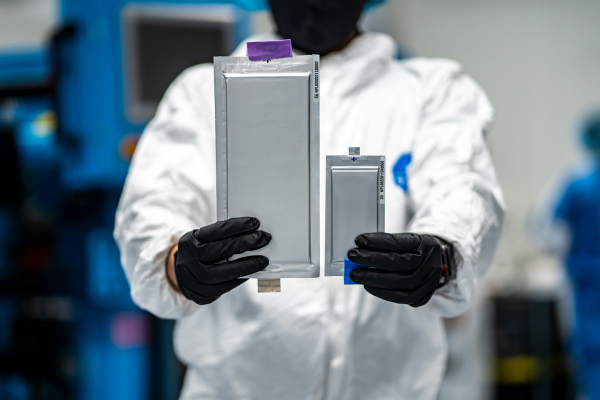
Electric vehicles promise efficiency gains over their gas-fuelled predecessors, but the issue of recharging remains a hurdle for many eager to jump on board with the technology. The problem is only magnified for those that regularly street park their vehicles or live in apartments, without provision to charge a vehicle overnight at home.

Battery swapping promises to solve that issue, letting drivers of EVs change out their empty battery for a freshly charged one in a matter of minutes. The technology has been widely panned and failed to gain traction in the US.

However, as it turns out, battery swapping for EVs is actually thing in China, and it’s catching on at a rapid rate.

Continue reading “China Loves Battery Swapping EVs, But Will They Ever Make It Here?”

How The Hunga Tonga Volcano Eruption Was Felt Around The World

On the 14th of January, 2022, the Hunga Tonga-Hunga Ha’apai volcano began a gigantic eruption that would go on to peak in ferocity the next day. The uninhabited island volcano would quickly make headlines as the country of Tonga was cut off the world and tsunamis bore out from the eurption zone.

In a volcanic event of this size, the effects can be felt around the world. With modern instruments, they can be properly understood too. Let’s take a look at how the effects of the Hunga Tonga eruption were captured and measured across the globe.

Continue reading “How The Hunga Tonga Volcano Eruption Was Felt Around The World”

SHERLOC And The Search For Life On Mars

Humanity has been wondering about whether life exists beyond our little backwater planet for so long that we’ve developed a kind of cultural bias as to how the answer to this central question will be revealed. Most of us probably imagine that NASA or some other space agency will schedule a press conference, an assembled panel of scientific luminaries will announce the findings, and newspapers around the world will blare “WE ARE NOT ALONE!” headlines. We’ve all seen that movie before, so that’s the way it has to be, right?

Probably not. Short of an improbable event like an alien spacecraft landing while a Google Street View car was driving by or receiving an unambiguously intelligent radio message from the stars, the conclusion that life exists now or once did outside our particular gravity well is likely to be reached in a piecewise process, an accretion of evidence built up over a long time until on balance, the only reasonable conclusion is that we are not alone. And that’s exactly what the announcement at the end of last year that the Mars rover Perseverance had discovered evidence of organic molecules in the rocks of Jezero crater was — another piece of the puzzle, and another step toward answering the fundamental question of the uniqueness of life.

Discovering organic molecules on Mars is far from proof that life once existed there. But it’s a step on the way, as well as a great excuse to look into the scientific principles and engineering of the instruments that made this discovery possible — the whimsically named SHERLOC and WATSON.

Continue reading “SHERLOC And The Search For Life On Mars”

Floating Solar Farms Are Taking The World’s Reservoirs By Storm

Photovoltaic solar panels are wonderful things, capable of capturing mere light and turning it into useful electricity. They’re often installed on residential and commercial rooftops for offsetting energy use at the source.

However, for grid-scale generation, they’re usually deployed in huge farms on tracts of land in areas that receive plenty of direct sunlight. These requirements can often put solar farms in conflict with farm-farms — the sunlight that is good for solar panels is also good for growing plants, specifically those we grow for food.

One of the more interesting ideas, however, is to create solar arrays that float on water. Unlike some of the wackier ideas out there, this one comes with some genuinely interesting engineering benefits, too!

Continue reading “Floating Solar Farms Are Taking The World’s Reservoirs By Storm”

Reusable Booster Rockets, Asian Roundup

The Space Shuttle’s solid rocket boosters were reusable, although ultimately the overall system didn’t prove cheaper than expendable launches. But given the successes of the Falcon 9 program — booster B1051 completed its 11th mission last month — the idea of a rocket stage returning to the launch site and being reused isn’t such a crazy proposition anymore. It’s not surprising that other space agencies around the world are pursuing this technology.

Last year the India Space Research Organization (ISRO) announced plans for a reusable launcher program based on their GSLV Mark III rocket. The Japan Aerospace Exploratory Agency (JAXA) announced last Fall that it is beginning a reusable rocket project, in cooperation with various industries and universities in Japan. The South Korean space agency, Korea Aerospace Research Institute (KARI), was surprised in November when lawmakers announced a reusable rocket program that wasn’t requested in their 2022 budget. Not in Asia, but in December France’s ArianeGroup announced a reusable rocket program called Maïa.

Speaking of South Korea’s rocketry program, we wrote about the Nuri rocket in October which failed to reach orbit because of a problem in the third stage. Kari recently completed a review of all the data, and concluded the problem was with the anchors of the helium tanks which are located inside the oxidizer tank.

Apparently the changing buoyancy of the submerged tanks with altitude wasn’t completely accounted for in the design of the mounting brackets. When they ultimately failed, the resulting broken piping caused a LOX leak and the subsequent 46-second premature engine shutdown. The next scheduled launch in May 2022 will very likely be delayed.


Haber-Bosch And The Greening Of Ammonia Production

We here on Earth live at the bottom of an ocean of nitrogen. Nearly 80% of every breath we take is nitrogen, and the element is a vital component of the building blocks of life. Nitrogen is critical to the backbone of proteins that form the scaffold that life hangs on and that catalyze the myriad reactions in our cells, and the information needed to build these biopolymers is encoded in nucleic acids, themselves nitrogen-rich molecules.

And yet, in its abundant gaseous form, nitrogen remains directly unavailable to higher life forms, unusably inert and unreactive. We must steal our vital supply of nitrogen from the few species that have learned the biochemical trick of turning atmospheric nitrogen into more reactive compounds like ammonia. Or at least until relatively recently, when a couple of particularly clever members of our species found a way to pull nitrogen from the air using a combination of chemistry and engineering now known as the Haber-Bosch process.

Haber-Bosch has been wildly successful, and thanks to the crops fertilized with its nitrogenous output, is directly responsible for growing the population from a billion people in 1900 to almost eight billion people today. Fully 50% of the nitrogen in your body right now probably came from a Haber-Bosch reactor somewhere, so we all quite literally depend on it for our lives. As miraculous as Haber-Bosch is, though, it’s not without its problems, particularly in this age of dwindling supplies of the fossil fuels needed to run it. Here, we’ll take a deep dive into Haber-Bosch, and we’ll also take a look at ways to potentially decarbonize our nitrogen fixation industry in the future.

Continue reading “Haber-Bosch And The Greening Of Ammonia Production”