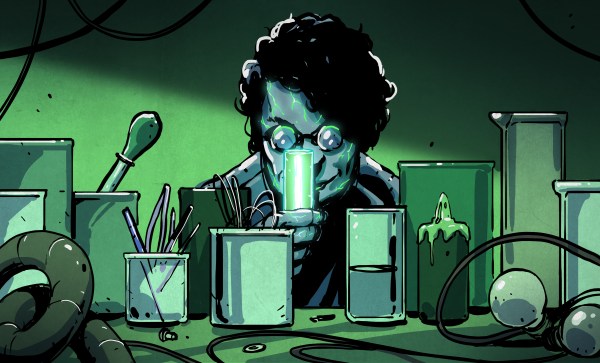
The National Institute Of Standards and Technology was founded on March 3, 1901 as the National Bureau of Standards, taking on its current moniker in 1988. The organisation is charged by the government with ensuring the uniformity of weights and measures across the United States, and generally helping out industry, academia and other users wherever some kind of overarching standard is required.
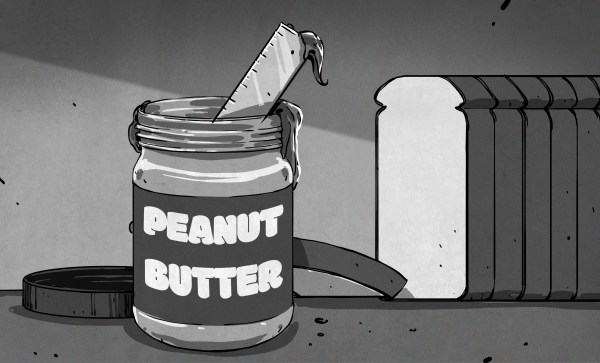
One of the primary jobs of NIST is the production and sale of Standard Reference Materials, or SRMs. These cover a huge variety of applications, from steel samples to concrete and geological materials like clay. However, there are also edible SRMS, too. Yes, you can purchase yourself a jar of NIST Standard Peanut Butter, though you might find the price uncompetitive with the varieties at your local supermarket. Let’s dive into why these “standard” foods exist, and see what’s available from the shelves of our favourite national standards institute. Continue reading “The Mouth-Watering World Of NIST Standard Foods”→
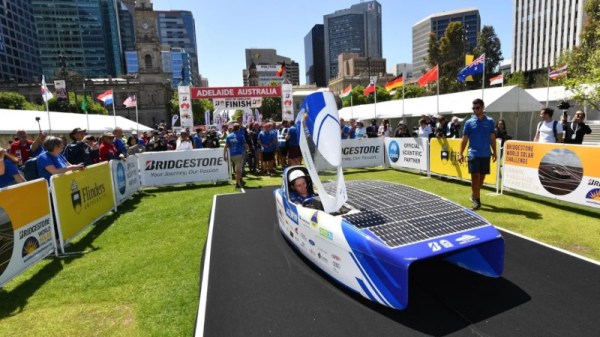
Solar power is a great source of renewable energy, but has always had its limitations. At best, there’s only 1,000 Watts/m2 available at the Earth’s surface on a sunny day, and the limited efficiency of solar panels cuts this down further. It’s such a low amount that solar panels on passenger cars have been limited to menial tasks such as battery tending and running low-power ventilation fans.
However, where some might see an impossibility, others see opportunity. The World Solar Challenge is a competition that has aimed to show the true potential of solar powered transport. Now 30 years since its inception, what used to be impossible is in fact achieved by multiple teams in under one tenth of the original time. To keep competitors on their toes, the rules have been evolving over time, always pushing the boundaries of what’s possible simply with sunlight. This isn’t mainstream transportation; this is an engineering challenge. How far can you go in a solar car?
Back before COVID-19, I was walking through the airport towards the gate when suddenly I remembered a document I wanted to read on the flight but had forgotten to bring along. No worry, I paused for a bit on the concourse, reached into my pocket and proceeded to download the document from the Internet. Once comfortably seated on the plane, I relaxed and began reading. Afterwards, I did a little programming in C on a shareware program I was developing.
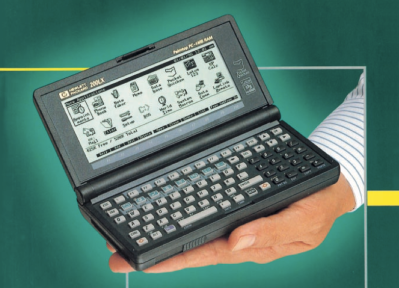
Today this would be an ordinary if not boring recollection, except for one thing: this happened in the 1990s, and what I pulled out of my pocket was a fully functional MS-DOS computer:
Introducing the HP-200LX, the first real palmtop computer. I used one of these daily up until the mid-2000s, and still have an operational one in my desk drawer. Let’s step back in time and see how this powerful pocket computer began its life. Continue reading “The First Real Palmtop”→
Trains are one of the oldest and most reliable ways we have of transporting things and people over long distances. But how often do you think about trains? Where I live, they can clearly be heard every hour or so. I should be used to the sound of them by now, but I like it enough to stop what I’m doing and listen to the whistles almost every time. In the early morning quiet, I can even hear the dull roar as it rumbles down the track.
I recently got a front row seat at a railroad crossing, and as the train chugged through the intersection, I found myself wondering for the hundredth time what all the cars had in them. And then, as I have for the last twenty or thirty years, I wondered why I never see a caboose anymore. I figured it was high time to answer both questions.
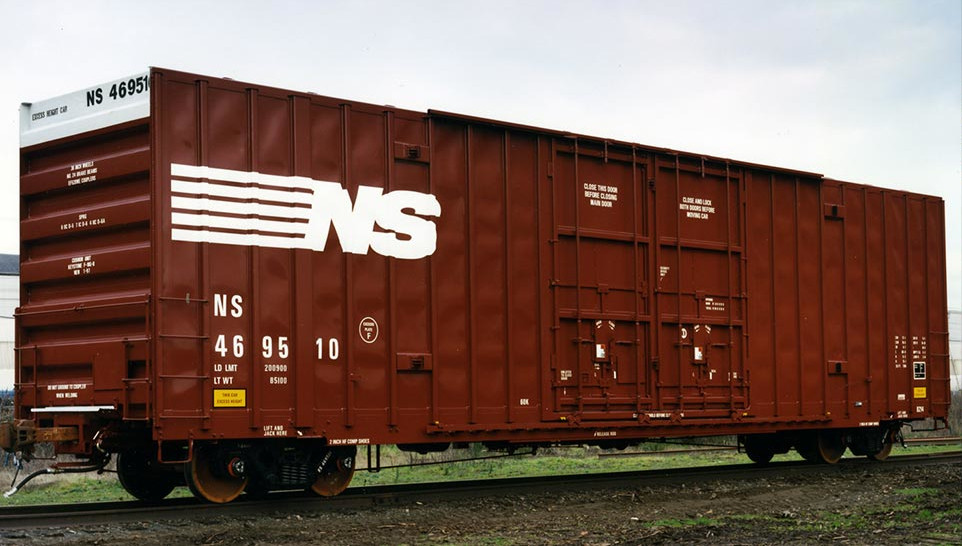
Boxcars are probably the most easily identifiable after the engine and the caboose.
Boxcars carry crated and palletized freight like paper, lumber, packaged goods, and even boxes. Refrigerated box cars carry everything from produce to frozen foods.
Boxcars (and barns for that matter) are traditionally a rusty red color because there were few paint options in the late 1800s, and iron-rich dirt-based paint was dirt cheap.
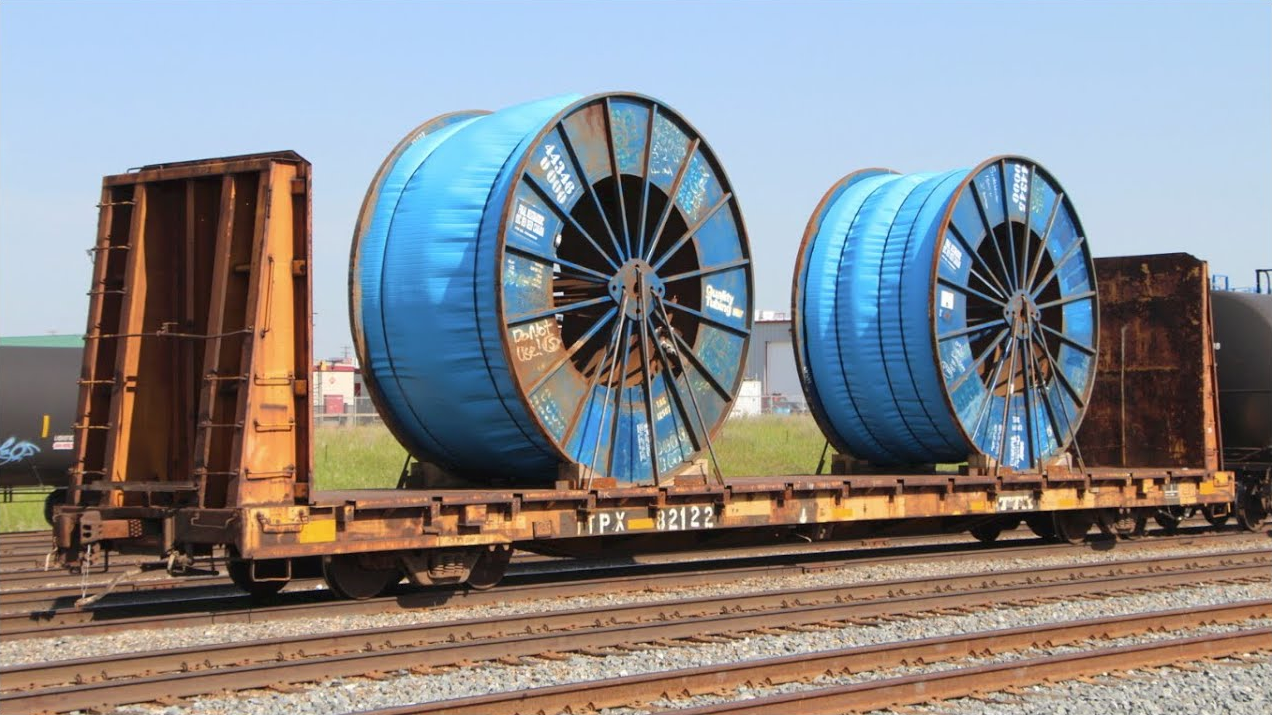
Standard, no-frills flat cars are the oldest types of rail cars. These are just big, flat platform cars that can carry anything from pipe, rail, and steel beams to tractors and military vehicles.
Flat cars come in different lengths and are also made with and without bulkheads that help keep the cargo in place. Some flat cars have a depression in the middle for really tall or heavy loads, like electrical transformers.
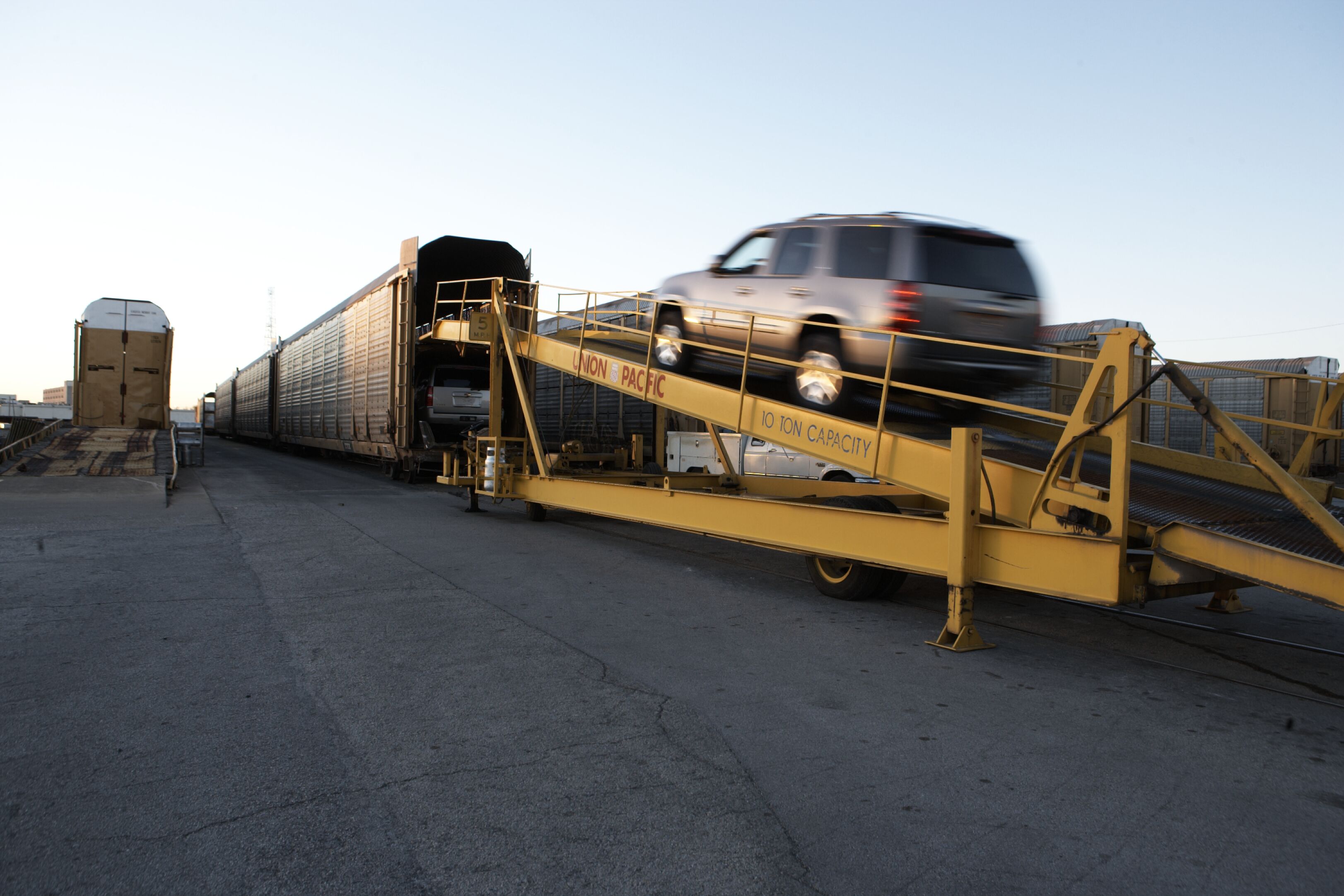
As the name implies, auto racks carry passenger cars, trucks, and SUV from factories to distributors. They come in two- and three-level models, although there have been specialized auto racks over the years.
Perhaps the strangest auto rack of them all was the Vert-a-Pac. When Chevrolet came up with the Vega in the gas-conscious 1970s, they wanted to be able to move them as cheaply as possible, so they shipped the cars on end. If you’re wondering about all the fluids in the car when they were upended, a special baffle kept oil from leaking out, the batteries were capped, and the windshield washer fluid bottle was positioned at an angle.
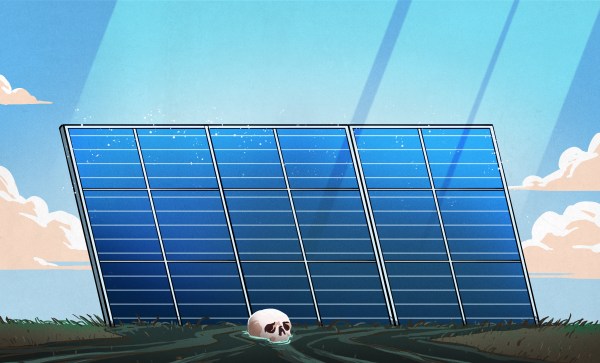
Everybody loves solar power, right? It’s nice, clean, renewable energy that’s available pretty much everywhere the sun shines. If only the panels weren’t so expensive. Even better, solar is now the cheapest form of electricity for companies to build, according to the International Energy Agency. But solar isn’t all apples and sunshine — there’s a dark side you might not know about. Manufacturing solar panels is a dirty process from start to finish. Mining quartz for silicon causes the lung disease silicosis, and the production of solar cells uses a lot of energy, water, and toxic chemicals.
The other issue is that solar cells have a guanteed life expectancy of about 25 years, with average efficiency losses of 0.5% per year. If replacement begins after 25 years, time is running out for all the panels that were installed during the early 2000s boom. The International Renewable Energy Agency (IREA) projects that by 2050, we’ll be looking at 78 million metric tons of bulky e-waste. The IREA also believe that we’ll be generating six million metric tons of new solar e-waste every year by then, too. Unfortunately, there are hardly any measures in place to recycle solar panels, at least in the US.
How are solar panels made, anyway? And why is it so hard to recycle them? Let’s shed some light on the subject.
Lithium (from Greek lithos or stone) is a silvery-white alkali metal that is the lightest solid element. Just one atomic step up from Helium, this magic metal seems to be in everything these days. In addition to forming the backbone of many kinds of batteries, it also is used in lubricants, mood-stabilizing drugs, and serves as an important additive in iron, steel, and aluminum production. Increasingly, the world is looking to store more and more power as phones, solar grids, and electric cars continue to rise in popularity, each equipped with lithium-based batteries. This translates to an ever-growing need for more lithium. So far production has struggled to keep pace with demand. This leads to the question, do we have enough lithium for everyone?
It takes around 138 lbs (63 kg) of 99.5% pure lithium to make a 70 kWh Tesla Model S battery pack. In 2016, OICA estimated that the world had 1.3 billion cars in use. If we replace every car with an electric version, we would need 179 billion pounds or 89.5 million tons (81 million tonnes) of lithium. That’s just the cars. That doesn’t include smartphones, laptops, home power systems, massive grid storage projects, and thousands of other products that use lithium batteries.
In 2019 the US Geological Survey estimated the world reserves of identified lithium was 17 million tonnes. Including the unidentified, the estimated total worldwide lithium was 62 million tonnes. While neither of these estimates is at that 89 million ton mark, why is there such a large gap between the identified and estimated total? And given the general rule of thumb that the lighter a nucleus is, the more abundant the element is, shouldn’t there be more lithium reserves? After all, the US Geological Survey estimates there are around 2.1 billion tonnes of identified copper and an additional 3.5 billion tonnes that have yet to be discovered. Why is there a factor of 100x separating these two elements?
It was a trope all too familiar in the 1990s — law enforcement in movies and TV taking a pixellated, blurry image, and hitting the magic “enhance” button to reveal suspects to be brought to justice. Creating data where there simply was none before was a great way to ruin immersion for anyone with a modicum of technical expertise, and spoiled many movies and TV shows.
Of course, technology marches on and what was once an utter impossibility often becomes trivial in due time. These days, it’s expected that a sub-$100 computer can easily differentiate between a banana, a dog, and a human, something that was unfathomable at the dawn of the microcomputer era. This capability is rooted in the technology of neural networks, which can be trained to do all manner of tasks formerly considered difficult for computers.
With neural networks and plenty of processing power at hand, there have been a flood of projects aiming to “enhance” everything from low-resolution human faces to old film footage, increasing resolution and filling in for the data that simply isn’t there. But what’s really going on behind the scenes, and is this technology really capable of accurately enhancing anything?


 Back before COVID-19, I was walking through the airport towards the gate when suddenly I remembered a document I wanted to read on the flight but had forgotten to bring along. No worry, I paused for a bit on the concourse, reached into my pocket and proceeded to download the document from the Internet. Once comfortably seated on the plane, I relaxed and began reading. Afterwards, I did a little programming in C on a shareware program I was developing.