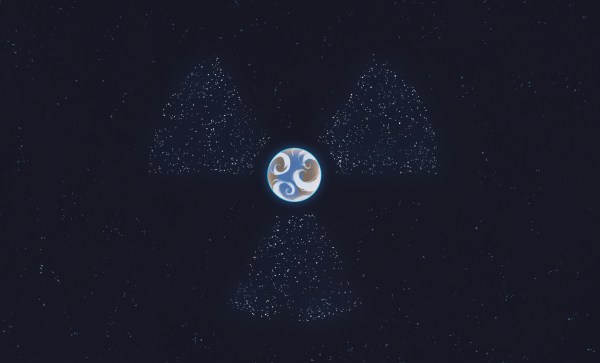
Space, as the name suggests, is mostly empty. However, since the first satellite launch in 1957, mankind began to populate the Earth orbit with all kinds of spacecraft. On the downside, space also became more and more cluttered with trash from defunct or broken up rocket stages and satellites. Moving at speeds of nearly 30,000 km/h, even the tiniest object can pierce a hole through your spacecraft. Therefore, space junk poses a real threat for both manned and unmanned spacecraft and that is why space agencies are increasing their efforts into tracking, avoiding, and getting rid of it.
Continue reading “Getting Rid Of All The Space Junk In Earth’s Backyard”
Featured3103 Articles
Longform articles, the best of what the Hackaday writing crew has to offer.
Lowering The Bar For Exam Software Security
Most standardized tests have a fee: the SAT costs $50, the GRE costs $200, and the NY Bar Exam costs $250. This year, the bar exam came at a much larger cost for recent law school graduates — their privacy.
Many in-person events have had to find ways to move to the internet this year, and exams are no exception. We’d like to think that online exams shouldn’t be a big deal. It’s 2020. We have a pretty good grasp on how security and privacy should work, and it shouldn’t be too hard to implement sensible anti-cheating features.
It shouldn’t be a big deal, but for one software firm, it really is.
The NY State Board of Law Examiners (NY BOLE), along with several other state exam boards, chose to administer this year’s bar exam via ExamSoft’s Examplify. If you’ve missed out on the Examplify Saga, following the Diploma Privilege for New York account on Twitter will get you caught up pretty quickly. Essentially, according to its users, Examplify is an unmitigated disaster. Let’s start with something that should have been settled twenty years ago.
Continue reading “Lowering The Bar For Exam Software Security”
Andrea Ghez Gazes Into Our Galaxy’s Black Hole
Decades ago, Einstein predicted the existence of something he didn’t believe in — black holes. Ever since then, people have been trying to get a glimpse of these collapsed stars that represent the limits of our understanding of physics.
For the last 25 years, Andrea Ghez has had her sights set on the black hole at the center of our galaxy known as Sagittarius A*, trying to conclusively prove it exists. In the early days, her proposal was dismissed entirely. Then she started getting lauded for it. Andrea earned a MacArthur Fellowship in 2008. In 2012, she was the first woman to receive the Crafoord Prize from the Royal Swedish Academy of Sciences.

Now Andrea has become the fourth woman ever to receive a Nobel Prize in Physics for her discovery. She shares the prize with Roger Penrose and Reinhard Genzel for discoveries relating to black holes. UCLA posted her gracious reaction to becoming a Nobel Laureate.
A Star is Born
Andrea Mia Ghez was born June 16th, 1965 in New York City, but grew up in the Hyde Park area of Chicago. Her love of astronomy was launched right along with Apollo program. Once she saw the moon landing, she told her parents that she wanted to be the first female astronaut. They bought her a telescope, and she’s had her eye on the stars ever since. Now Andrea visits the Keck telescopes — the world’s largest — six times a year.
Andrea was always interested in math and science growing up, and could usually be found asking big questions about the universe. She earned a BS from MIT in 1987 and a PhD from Caltech in 1992. While she was still in graduate school, she made a major discovery concerning star formation — that most stars are born with companion star. After graduating from Caltech, Andrea became a professor of physics and astronomy at UCLA so she could get access to the Keck telescope in Mauna Kea, Hawaii.

The Center of the Galaxy
Since 1995, Andrea has pointed the Keck telescopes toward the center of our galaxy, some 25,000 light years away. There’s a lot of gas and dust clouding the view, so she and her team had to get creative with something called adaptive optics. This method works by deforming the telescope’s mirror in real time in order to overcome fluctuations in the atmosphere.
Thanks to adaptive optics, Andrea and her team were able to capture images that were 10-30 times clearer than what was previously possible. By studying the orbits of stars that hang out near the center, she was able to determine that a supermassive black hole with four millions times the mass of the sun must lie there. Thanks to this telescope hack, Andrea and other scientists will be able to study the effects of black holes on gravity and galaxies right here at home. You can watch her explain her work briefly in the video after the break. Congratulations, Dr. Ghez, and here’s to another 25 years of fruitful research.
Firmware Hints That Tesla’s Driver Camera Is Watching
Currently, if you want to use the Autopilot or Self-Driving modes on a Tesla vehicle you need to keep your hands on the wheel at all times. That’s because, ultimately, the human driver is still the responsible party. Tesla is adamant about the fact that functions which allow the car to steer itself within a lane, avoid obstacles, and intelligently adjust its speed to match traffic all constitute a driver assistance system. If somebody figures out how to fool the wheel sensor and take a nap while their shiny new electric car is hurtling down the freeway, they want no part of it.
So it makes sense that the company’s official line regarding the driver-facing camera in the Model 3 and Model Y is that it’s there to record what the driver was doing in the seconds leading up to an impact. As explained in the release notes of the June 2020 firmware update, Tesla owners can opt-in to providing this data:
Help Tesla continue to develop safer vehicles by sharing camera data from your vehicle. This update will allow you to enable the built-in cabin camera above the rearview mirror. If enabled, Tesla will automatically capture images and a short video clip just prior to a collision or safety event to help engineers develop safety features and enhancements in the future.
But [green], who’s spent the last several years poking and prodding at the Tesla’s firmware and self-driving capabilities, recently found some compelling hints that there’s more to the story. As part of the vehicle’s image recognition system, which usually is tasked with picking up other vehicles or pedestrians, they found several interesting classes that don’t seem necessary given the official explanation of what the cabin camera is doing.
If all Tesla wanted was a few seconds of video uploaded to their offices each time one of their vehicles got into an accident, they wouldn’t need to be running image recognition configured to detect distracted drivers against it in real-time. While you could make the argument that this data would be useful to them, there would still be no reason to do it in the vehicle when it could be analyzed as part of the crash investigation. It seems far more likely that Tesla is laying the groundwork for a system that could give the vehicle another way of determining if the driver is paying attention.
Continue reading “Firmware Hints That Tesla’s Driver Camera Is Watching”
How To Shoot A Great Project Video
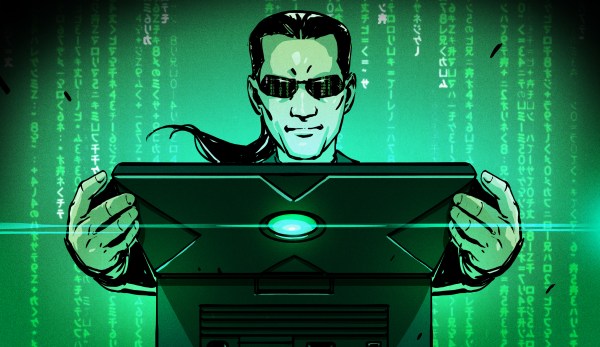
Creating projects is fun, but the real value, as far as the imaginary Internet points are concerned, is how well you show them off for the clout. Taking a few snaps is fine, but if you want to produce a quality video of your project, it pays to put some thought and effort into the process.
Telling The Story
Before setting out to document your project on video, think about what you’re trying to communicate to the viewer. Are you attempting to create a step-by-step guide on how to recreate what you’ve done, or are you simply trying to show off the awesome finished product? These are two very different types of video, and will require different content and delivery entirely. It also guides how you shoot your video.
If you want to show off your build process, you’ll need to shoot as you go. This can be time consuming, but also a great way to show the reality of what goes into your work. I always like it when people convey the pitfalls and successes they faced along the way, and get people involved in the story. It also means that you’ll end up shooting a lot of footage and you’ll spend plenty of time editing it all together. Continue reading “How To Shoot A Great Project Video”
Sensing The Earth’s Wobble In Time
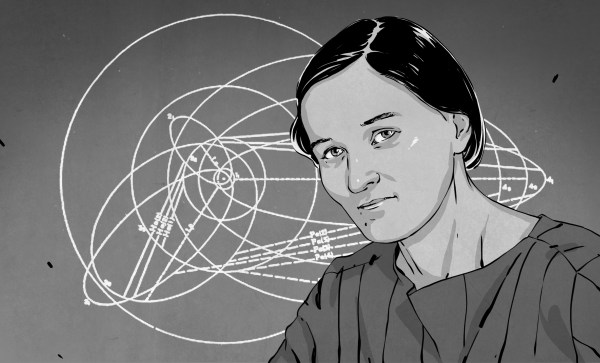
In the 1850s British railway companies started introducing a single standard time to make their timetables consistent. Before that, every city would set its own clock based on the observation of the position of the sun. Nowadays, precise time standards are not only needed so people don’t miss their trains but also make modern communication technologies and satellite navigation work.
Generally, there are two methods of defining time, one is based on the local passage of time as measured by atomic clocks, while the other relies on the exact measurement of Earth’s rotation. The latter is not an easy exercise that involves extragalactic radio sources or huge laser-based gyroscopes. The constant survey of the Earth’s spin tells us that days are constantly getting longer, but surprisingly, severe earthquakes and weather phenomena can also take little discrete bites out of the planet’s supply of rotational kinetic energy.
How do we keep our ultra precisely measured time, the rotation of the Earth, and our position in the heavens in line?
The Prusa I3 MK3S And A Tale Of Two Sensors
When the Prusa i3 MK3 was released in 2017, it was marketed as being “bloody smart” thanks to the impressive number of sensors that had been packed into the printer. The update wasn’t really about improving print quality over the MK2, but rather to make the machine easier to use and more reliable. There was a system for resuming prints that had stopped during a power outage, a thermometer so the firmware could compensate against thermal drift in the inductive bed sensor, RPM detection on all of the cooling fans, and advanced Trinamic stepper drivers that could detect when the printer had slipped or gotten stuck.

But the most exciting upgrade of all was the new filament sensor. Using an optical encoder similar to what you’d find in a mouse, the Prusa i3 MK3 could detect when filament had been inserted into the extruder. This allowed the firmware to pause the print if the filament had run out, a feature that before this point was largely unheard of on consumer-grade desktop 3D printers. More than that, the optical encoder could also detect whether or not the filament was actually moving through the extruder.
In theory, this meant the MK3 could sense problems such as a jammed extruder or a tangle in the filament path that was keeping the spool from unrolling. Any other consumer 3D printer on the market would simply continue merrily along, not realizing that it wasn’t actually extruding any plastic. But the MK3 would be able to see that the filament had stalled and alert the user. The capabilities of the optical filament sensor represented a minor revolution in desktop 3D printing, and combined with the rest of the instrumentation in the MK3, promised to all but eradicate the heartbreak of failed prints.
Fast forward to February of 2019, and the announcement of the Prusa i3 MK3S. This relatively minor refresh of the printer collected up all the incremental tweaks that had been made during the production of the MK3, and didn’t really add any new features. Though it did delete one: the MK3S removed the optical encoder sensor used in the MK3, and with it the ability to sense filament movement. Users would have to decide if keeping the ability to detect clogs and tangles was worth giving up all of the other improvements offered by the update.
But why? What happened in those three years that made Prusa Research decide to abandon what promised to be a huge usability improvement for their flagship product? The answer is an interesting look at how even the cleverest of engineering solutions don’t always work as expected in the real-world.
Continue reading “The Prusa I3 MK3S And A Tale Of Two Sensors”