At any given moment, several of the US Navy’s Nimitz class aircraft carriers are sailing the world’s oceans. Weighing in at 90 thousand tons, these massive vessels need a lot of power to get moving. One would think this power requires a lot of fuel which would limit their range, but this is not the case. Their range is virtually unlimited, and they only need refueling every 25 years. What kind of technology allows for this? The answer is miniaturized nuclear power plants. Nimitz class carriers have two of them, and they are pretty much identical to the much larger power plants that make electricity. If we can make them small enough for ships, can we make them small enough for other things, like airplanes?
Cellphone startup Fairphone is now taking pre-orders for their modular smartphone, which is expected to start shipping in December of this year. Although I’m much more familiar with Google’s project Ara, this is the first modular concept to make it to market. It does lead me to a few questions though: is this actually a modular smartphone, and how widely will modular concepts be adopted?
Today, Hackaday.io passed 100,000 registered users. It seems like yesterday that I wrote a post about passing 10k but that was last year already! Much has happened in that year, and there is much more to come. Thank you to everyone that makes Hackaday.io great by interacting with each other, posting about what is going on in basements, garages, hackerspaces, and workplaces, and finding new and interesting ways of making the site your very own. Your involvement has made Hackaday.io the greatest open source hardware resource in the world.
We don’t call it project hosting. The seed idea did start as project hosting for the hardware hacker, but Hackaday.io has long since outgrown that pair of shoes. It’s become a self-sustaining reaction that grows ever bigger and more awesome as everyone gets involved and decides how and what they want to do.
One of the major additions to Hackaday.io this year was group messaging. This spawned an explosion of new communities within Hackaday.io starting with the Hacker Channel. Anyone may request to be a team member and will then gain access to the group messaging; there are now well over 500 members. We’ve scheduled many somewhat-formal events on the channel over the last few months that invited people to show off what they’re building and ask for feedback. That evolved into topic-based sessions on things like FPGA design and what you need to know about manufacturing. Many of these were co-hosted by Hackaday Staff and community members.
This bizarre text is part of the itanimulli profile
A curious event on the site was the appearance of the user itanimulli who join and registered the vanity URL: /conspiracy. This is an enigma. The user is a puzzler and has posted a number of images and other challenges that appear to include hidden data. How do you solve something like this? Get all of your friends involved, of course! Thomas Wilson started a project to solve the itanimulli puzzle and posted about it on the stack to invite teammates to the challenge.
Hackaday.io has spilled over into the real world too. Do you ever look at the valuable odds and ends in your workshop that you know someone will use, but you never will? The Travelling Hacker Box is the answer to that conundrum. It’s the “take a penny, leave a penny” of the hacker world. Get on the project and get in line to receive the box. When it hits your workshop, take out something cool but then we want to see you build something with it! Replace what you took with something of your own and send it to the next person. International shipping has not been solved yet for this particular box, but nothing is stopping you from starting an EU version.
The support we’ve seen from the hardware community for Hackaday.io is one of the reasons we’ve set out to do something new. In just a few weeks the first ever Hackaday SuperConference will be held. Two days of talks and workshops let us meet in person the users we’ve grown close to through the site. I hope to see you there. But if not just ping me on Hackaday.io!
Or course 100k isn’t the only interesting number. We’ve got more juicy statistics in the image below.
One thing has stayed with the James Bond movie franchise through the decades: Mr. Bond always has the most wonderful of gadgets. Be it handheld, car-based, or otherwise, there’s always something to thrill that is mostly believable.
The biggest problem with all of those gadgets is that they mark Commander Bond as an obvious spy. “So Mr. Bond, I see you have a book with many random five character groups. Nothing suspicious about that at all!” And we all know that import/export specialists often carry exploding cufflinks or briefcases full of unknown electronics in hidden compartments.
Just as steganography hides data in plain sight, the best spy gadgets are the ones that don’t seem to be a spy gadget. It is no wonder some old weapons are little more than sticks or farm implements. You can tell a peasant he can’t have a sword, but it is hard to ban sticks.
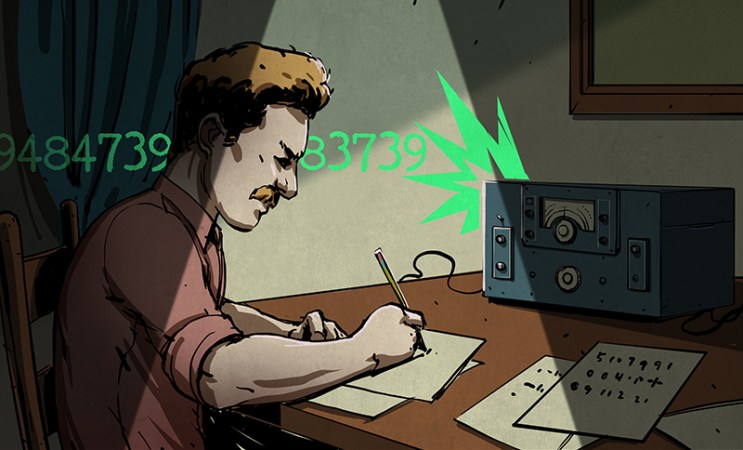
Imagine you were a cold war era spy living in a hostile country with a cover job with Universal Exports. Would you rather get caught with a sophisticated encryption machine or an ordinary consumer radio? I’m guessing you went with the radio. You aren’t the only one. That was one of the presumed purposes to the mysterious shortwave broadcasts known as number stations. These were very common during the cold war, but there are still a few of them operating. Continue reading “Secret Radio Stations By The Numbers”→
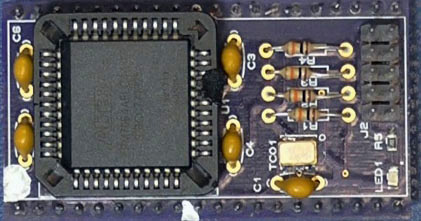
A Complex Programmable Logic Device (CPLD) is a great piece of hardware to have in your repertoire. As its name implies, you can program these chips to serve the logic functions you need. This might be replacing an obsolete chip, or maybe just a way to learn and try different techniques. What better way to learn than to get your hands on a CPLD and give it a try?
I created a CPLD module with the intent of being able to plug it into lots of things including solderless breadboards, but I screwed up. It seems that the plugin space available on a solderless breadboard is 1.1”, I had made the footprint 1” wide leaving no room for a row of wires on both sides. Duh.
But let me back up and show more about what I’m doing , I wanted to make a programmable piece of logic that could be built as a kit one could easily solder at home, could be programmed in-circuit, and could work at 3.3 or 5 volts.
To implement an easily solderable kit I went with an older CPLD part that also has 3.3v and 5v versions that will maintain its programming regardless of power. The logic itself is a CPLD IC from the Altera Max family with two versions that fit the board with either 32 or 64 macrocells. A macrocell is the basic logic building block and it is programmed with logic “terms” and then interconnected to other macrocells through a programmable interconnect.
We have been amazed by all of the talented people who submitted workshop proposals for the Hackaday SuperConference. With proposals made, and invitations accepted it’s time to announce the full slate of workshops you’ll find at this epic event.
For those just tuning in, Hackaday will host the hardware con you’ve been waiting for on November 14th and 15th at DogPatch Studios in San Francisco. The gorgeous venue will be packed with amazing people, both presenters and attendees. A single talk track will run the entire weekend while multiple workshops run on a different floor.
Put yourself in the middle of it all and be amazed by all we have in store. Apply for your ticket now!
Bitcoin, the libertarian’s dream currency, is far past the heady days of late 2013. When one Bitcoin was worth $1000 USD, there was no end to what could be done; new, gigantic mining rigs were being created, every online store jumped onto the bandwagon, and the price of Bitcoin inevitably crashed. Right now, the exchange rate sits at about $280 USD per coin, valuing all the Bitcoins ever mined somewhere around $4 Billion USD. That’s a lot of coins out there, and a lot of miners constantly verifying the integrity of the greatest thing to come from the Bitcoin community: the blockchain.
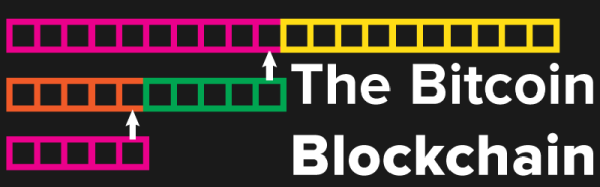
The bitcoin is just a record, or the ledger, of every transaction that has ever occurred on the Bitcoin network. It’s distributed, and the act of mining coins creates new blocks, or another set of data committed to the blockchain for eternity. While magical Internet money™ is by far the most visible product of the blockchain, developers, investors, and other people in the know are gushing about the possibilities of what can be done with a distributed record that can’t practically be altered and can’t be deleted.
[Jon Matonis], a figurehead for the entire cryptocurrency movement, recently said Bitcoin has become the strongest computer in the world, and stronger than all of the top 500 supercomputers combined. All of this computational power is effectively funneled in to verifying the integrity of the blockchain.
Bitcoin and other cryptocurrencies are not just a completely anonymous payment system; that’s only a side effect of the blockchain. The blockchain is the only inherently valuable part of a bitcoin; each transaction is logged in the blockchain, providing incredible security over how every coin is spent. No currency in the history of mankind has ever had a record of how every dollar or denarius is spent, and at the very least makes for very interesting economics research. Now, thousands of researchers across the globe are wondering what else the blockchain can do; tapping the power of the most powerful computer on the planet must have some interesting applications, and in the last few months, a few ideas have popped up.




 One of the major additions to Hackaday.io this year was group messaging. This spawned an explosion of new communities within Hackaday.io starting with