
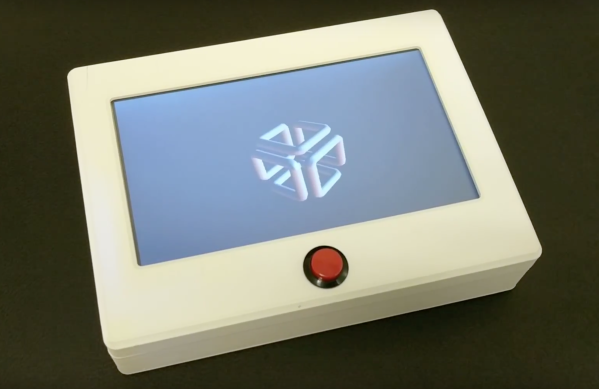
When [Lawrence] showed us the Alice4 after Maker Faire Bay Area last weekend it wasn’t apparent how special the system was. The case is clean and white, adorned only with a big red button below a 7″ screen with a power switch around the back. When the switch is flicked the system boots to display a familiar animation and drops you at a menu. Poking around from here elicits a variety of self-contained graphics demos, some interactive. So this is a Raspberry Pi in a box playing videos, right? Not even close.
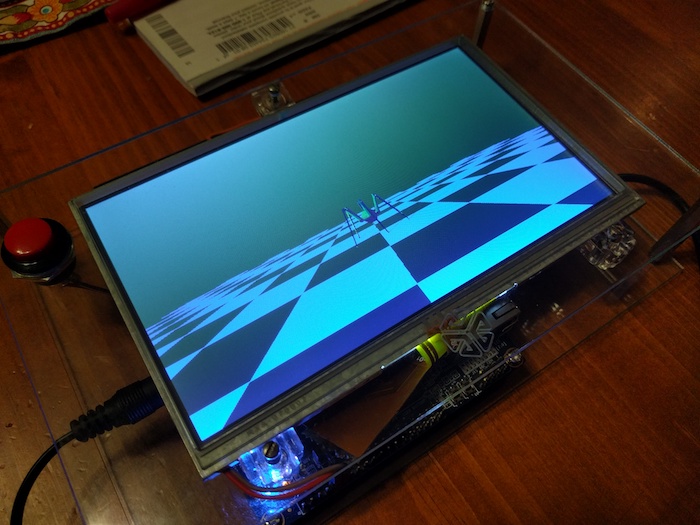
Often retro computing focuses on personal computer systems. When they were new the 8-bit graphics or intricate 2D sprites were state of the art, but now their appeal tends towards learning opportunities and the thrill of nostalgia. This may still be true of Alice4, the system [Brad, Lawrence, Mike, and Chris] put together to run Silicon Graphics (SGI) demos from the mid 1980’s but it’s not the whole story. [Lawrence] and [Brad] had both worked at SGI during its heyday and had fond memories of the graphics demos that shipped with those mammoth workstation. So they built Alice4 from the FPGA up to run those very same demos in real-time.
Thanks to Moore’s law, today’s embedded systems put yesterday’s powerhouses within reach. [Lawrence] and [Brad] found the old demo code in a ratty FTP server, and tailor-made Alice4’s software and hardware to run them natively. [Brad] wrote a libgl which implements the subset of the IrisGL API needed to support their selected set of demos. The libgl emits sets of triangles to the SDRAM where [Lawrence’s] HDL running on the onboard FPGA fetches them to interpolate color and depth and draw the result on-screen. Together they allow the $99 Altera Cyclone V development board at Alice4’s heart to run these state of the art demos in the palm of your hand.
Alice4 is open source and extensively documented. Peruse the archeology of reverse engineering the graphics API or the discussion of FIFO design in the FPGA. If those don’t sate your appetite check out a video of Alice4 in action after the break.
Continue reading “Retro Rebuild Recreates SGI Workstation Demos On The Go”
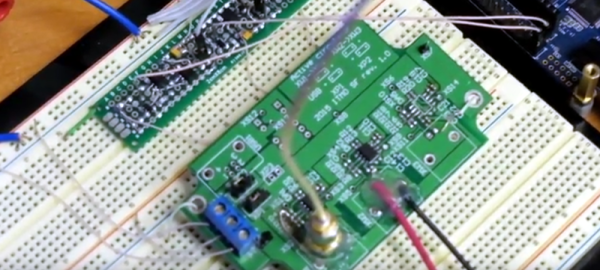

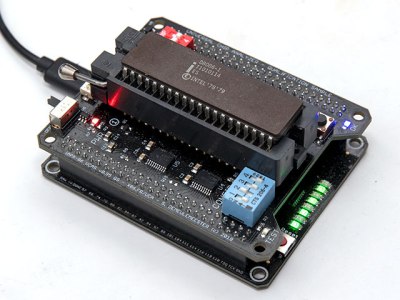 So, how does it actually test? Synthesized inside the FPGA is everything the CPU needs from the motherboard to make it tick, including ROM, RAM, bus controllers, clock generation and interrupt handling. Many testing frequencies are supported (which is helpful for spotting fakes), and if connected to a computer via USB, the UCA can check power consumption, and even benchmark the chip. We can’t begin to detail the amount of thought that’s gone into the design here, from auto-detecting data bus width to the sheer amount of models supported, but you can read more technical details








