Learning Morse Code The Ludwig Koch Way

Most countries have dropped the requirement for learning Morse code to become a ham radio operator. Because of that, you might think Morse code is dead. But it isn’t. Some people like the nostalgia. Some like that you can build simple equipment to send and receive Morse code. Others like that Morse code is much more reliable than voice and some older digital modes. Regardless of the reason, many people want to learn Morse code and it is still a part of the ham radio scene. The code has a reputation of being hard to learn, but it turns out that is mostly because people haven’t been taught code in smart ways.
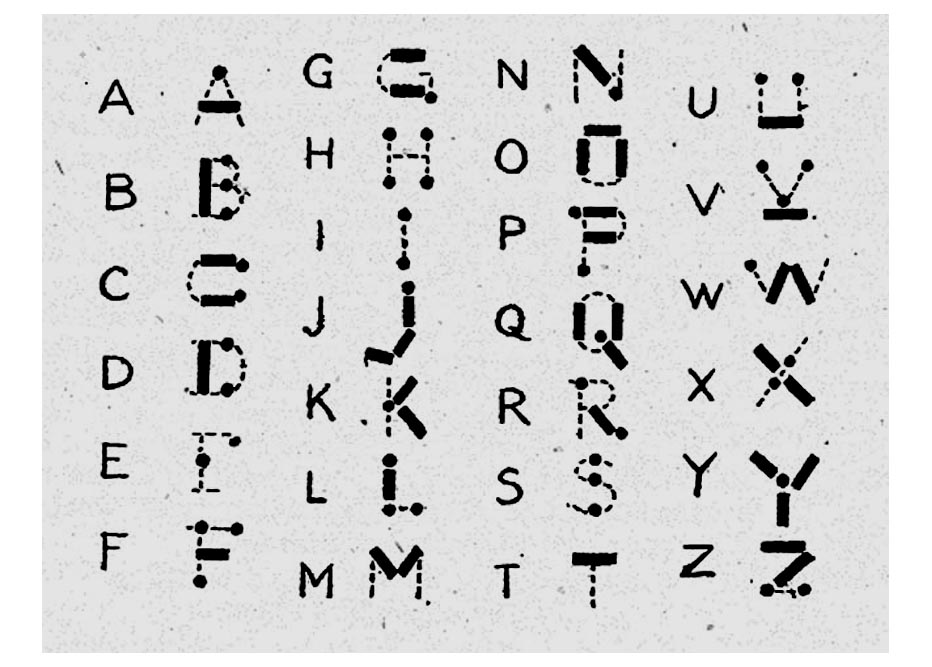
I don’t know if they still do, but some youth organizations used to promote some particularly bad ways to learn the code. The second worse way is to learn “dots and dashes” and many people did learn that way. The very worst way was using an image like the adjacent one to try to map the dots and dashes into letter shapes. This chart dates back to at least 1918 when a Girl Guides handbook printed it.

Even if you are a visual learner, this is a bad idea. The problem is, it is nearly impossible to hear sounds at 20 or 30 words per minute and map them to this visual representation. Another visual method is to use a binary tree where left branches are dots and right branches are dashes.

If you only need to master 5 words per minute to get a merit badge, you might get away with this. But for real use, 5 words a minute is very slow. For example, this sentence would take about 3 minutes to send at that speed. Just that one sentence.

So what are the better ways? Let’s take a look.

Continue reading “Learning Morse Code The Ludwig Koch Way” →

DNA Now Stands For Data And Knowledge Accumulation

Technology frequently looks at nature to make improvements in efficiency, and we may be nearing a new breakthrough in copying how nature stores data. Maybe some day your thumb drive will be your actual thumb. The entire works of Shakespeare could be stored in an infinite number of monkeys. DNA could become a data storage mechanism! With all the sensationalism surrounding this frontier, it seems like a dose of reality is in order.

The Potential for Greatness

The human genome, with 3 billion base pairs can store up to 750MB of data. In reality every cell has two sets of chromosomes, so nearly every human cell has 1.5GB of data shoved inside. You could pack 165 billion cells into the volume of a microSD card, which equates to 165 exobytes, and that’s if you keep all the overhead of the rest of the cell and not just the DNA. That’s without any kind of optimizing for data storage, too.

This kind of data density is far beyond our current digital storage capabilities. Storing nearly infinite data onto extremely small cells could change everything. Beyond the volume, there’s also the promise of longevity and replication, maintaining a permanent record that can’t get lost and is easily transferred (like medical records), and even an element of subterfuge or data transportation, as well as the ability to design self-replicating machines whose purpose is to disseminate information broadly.

So, where is the state of the art in DNA data storage? There’s plenty of promise, but does it actually work?

Continue reading “DNA Now Stands For Data And Knowledge Accumulation” →

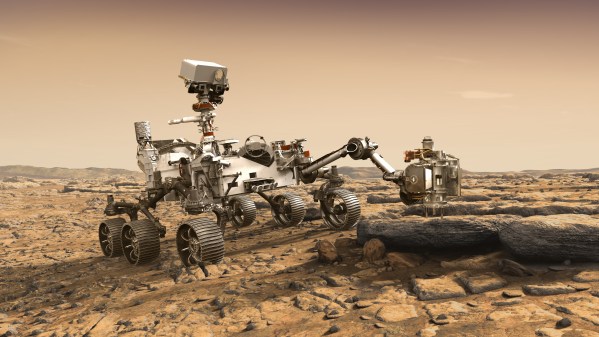
Mars 2020 Rover: Curiosity’s Hi-Tech Twin Is Strapped For Science; Includes A Flying Drone

While Mars may be significantly behind its sunward neighbor in terms of the number of motor vehicles crawling over its surface, it seems like we’re doing our best to close that gap. Over the last 23 years, humans have sent four successful rovers to the surface of the Red Planet, from the tiny Sojourner to the Volkswagen-sized Curiosity. These vehicles have all carved their six-wheeled tracks into the Martian dust, probing the soil and the atmosphere and taking pictures galore, all of which contribute mightily to our understanding of our (sometimes) nearest planetary neighbor.

You’d think then that sending still more rovers to Mars would yield diminishing returns, but it turns out there’s still plenty of science to do, especially if the dream of sending humans there to explore and perhaps live is to come true. And so the fleet of Martian rovers will be joined by two new vehicles over the next year or so, lead by the Mars 2020 program’s yet-to-be-named rover. Here’s a look at the next Martian buggy, and how it’s built for the job it’s intended to do.

Continue reading “Mars 2020 Rover: Curiosity’s Hi-Tech Twin Is Strapped For Science; Includes A Flying Drone” →

How To Get Into Cars: Basic Maintenance

So, you’ve decided you want to get into cars. After much research and deliberation, you’ve bought yourself a sweet project car, and can’t wait to get down to work. First things first – it’s time to learn about basic maintenance!

Get It Right For A Good Time

Doing necessary maintenance on time is key to enjoying your project car. Too many gearheads know the pain of a neglected beast that spends more time up on jackstands than out on the road. Buying the right car, and keeping a close eye on what needs to be done, will go a long way to improving your experience and relationship with your ride.

If you’ve just bought a car, no matter how good things look, it’s a good idea to go through things with a fine-tooth comb to make sure everything’s up to scratch. This can avoid expensive damage down the line, and is a great way to get your feet wet if you’re new to working on cars. Here’s a bunch of easy jobs you can tackle as a novice that will keep your ride in tip-top condition. Continue reading “How To Get Into Cars: Basic Maintenance” →

First Space Cookies: Cosmic Cooking Is Half-Baked

For decades, astronauts have been forced to endure space-friendly MREs and dehydrated foodstuffs, though we understand both the quality and the options have increased with time. But if we’re serious about long-term space travel, colonizing Mars, or actually having a restaurant at the end of the universe, the ability to bake and cook from raw ingredients will become necessary. This zero-gravity culinary adventure might as well start with a delicious experiment, and what better than chocolate chip cookies for the maiden voyage?

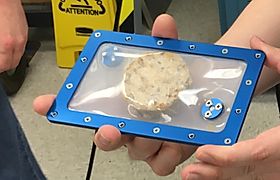
That little filtered vent lets steam out and keeps crumbs in. Image via Zero-G Kitchen

The vessel in question is the Zero-G Oven, built in a collaboration between Zero-G Kitchen and Nanoracks, a Texas-based company that provides commercial access to space. In November 2019, Nanoracks sent the Zero-G oven aloft, where it waited a few weeks for the bake-off to kick off. Five pre-formed cookie dough patties had arrived a few weeks earlier, each one sealed inside its own silicone baking pouch.

The Zero-G Oven is essentially a rack-mounted cylindrical toaster oven. It maxes out at 325 °F (163 °C), which is enough heat for Earth cookies if you can wait fifteen minutes or so. But due to factors we haven’t figured out yet, the ISS cookies took far longer to bake.

Continue reading “First Space Cookies: Cosmic Cooking Is Half-Baked” →

Tipping Points In The Climate System: The Worst Kind Of Positive Feedback

With global temperatures continuing to break records in recent years, it’s important to cast an eye towards the future. While efforts to reduce emissions remain in a political quagmire, time is running out to arrest the slide into catastrophe.

Further compounding the issue are a variety of positive feedback loops that promise to further compound the problem. In these cases, initial warming has flow-on effects that then serve to further increase global temperatures. Avoiding these feedback mechanisms is crucial if the Earth is to remain comfortably livable out to the end of the century.

A Multitude of Causes

The issue of climate change often appears as a simple one, with the goal being to reduce greenhouse gas emissions in order to prevent negative consequences for human civilization. Despite this, the effects of climate change are often diffuse and intermingled. The various climate systems of the Earth interact in incredibly complex ways, and there are many mechanisms at play in these feedback effects that could tip things over the edge.

Continue reading “Tipping Points In The Climate System: The Worst Kind Of Positive Feedback” →

Florence Nightingale: The Lady With The Data

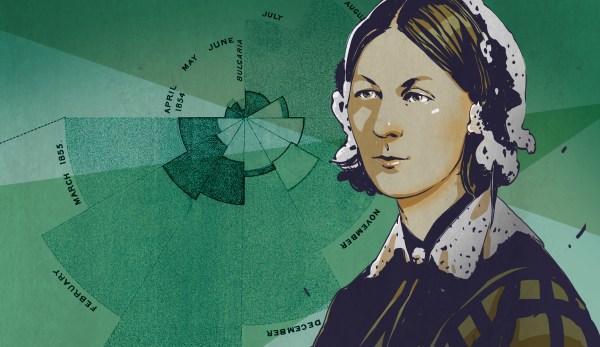
When you think of Florence Nightingale, you probably imagine a nurse with a lamp, comforting soldiers. Indeed, Florence is considered the mother of modern nursing. But she also made serious contributions in statistical data analysis, and used the diagram named after her, the Nightingale rose diagram, to convince the British Parliament to enact sanitation reforms that saved hundreds of thousands, if not millions, of lives.

During the Crimean war, Florence worked around the clock as head nurse in an overcrowded field hospital. But she also found time to create graphs to illustrate the terrible conditions of that field hospital to members of British Parliament. The sanitation reforms she led greatly improved the life of the soldiers in battle, and widespread adoption of her hygienic practices vastly reduced mortality rates of humanity in general.

Continue reading “Florence Nightingale: The Lady With The Data” →