A bunch of people who share a large workshop and meet on a regular basis to do projects and get some input. A place where kids can learn to build robots instead of becoming robots. A little community-driven factory, or just a lair for hackers. The world needs more of these spaces, and every hackerspace, makerspace or fab lab has its very own way of making it work. Nevertheless, when and if problems and challenges show up – they are always the same – almost stereotypically, so avoid some of the pitfalls and make use of the learnings from almost a decade of makerspacing to get it just right. Let’s take a look at just what it takes to get one of these spaces up and running well.
Working with high voltage is like working with high pressure plumbing. You can spring a leak in your plumbing, and of course you fix it. And now that you’ve fixed that leak, you’re able to increase the pressure still more, and sometimes another leak occurs. I’ve had these same experiences but with high voltage wiring. At a high enough voltage, around 30kV or higher, the leak manifests itself as a hissing sound and a corona that appears as a bluish glow of excited ions spraying from the leak. Try to dial up the voltage and the hiss turns into a shriek.
Why do leaks occur in high voltage? I’ve found that the best way to visualize the reason is by visualizing electric fields. Electric fields exist between positive and negative charges and can be pictured as electric field lines (illustrated below on the left.) The denser the electric field lines, the stronger the electric field.
Weak and strong electric fields
Ionization in electric fields
The stronger electric fields are where ionization of the air occurs. As illustrated in the “collision” example on the right above, ionization can happen by a negatively charged electron leaving the electrically conductive surface, which can be a wire or a part of the device, and colliding with a nearby neutral atom turning it into an ion. The collision can result in the electron attaching to the atom, turning the atom into a negatively charged ion, or the collision can knock another electron from the atom, turning the atom into a positively charged ion. In the “stripping off” example illustrated above, the strong electric field can affect things more directly by stripping an electron from the neutral atom, again turning it into a positive ion. And there are other effects as well such as electron avalanches and the photoelectric effect.
In either case, we wanted to keep those electrons in the electrically conductive wires or other surfaces and their loss constitutes a leak in a very real way.
The handheld screw driver is a wonderful tool. We’re often tempted to reach for its beefier replacement, the power drill/driver. But the manually operated screw driver has an extremely direct feedback mechanism; the only person to blame when the screw strips or is over-torqued is you. This is a near-perfect tool and when you pull the right screwdriver from the stone you will truly be the ruler of the fastener universe.
A Bit of Screw Driver History:
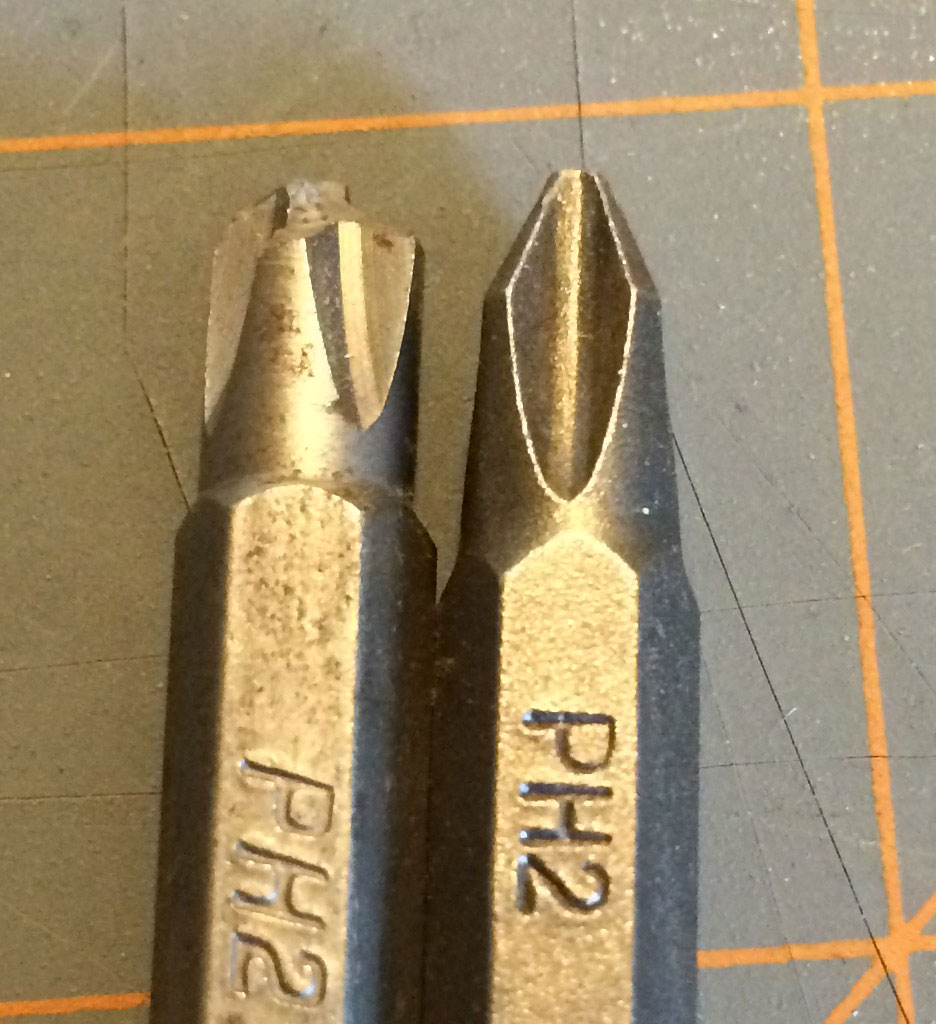
The kind of fun you can have with really cheap bits.
In order to buy a good set of screw drivers, it is important to understand the pros and cons of the geometry behind it. With a bit of understanding, it’s possible to look at a screw driver and tell if it was built to turn screws or if it was built to sell cheap.
Screw heads were initially all slotted. This isn’t 100 percent historically accurate, but when it comes to understanding why the set at the big box store contains the drivers it does, it helps. (There were a lot of square headed screws back in the day, we still use them, but not as much.)
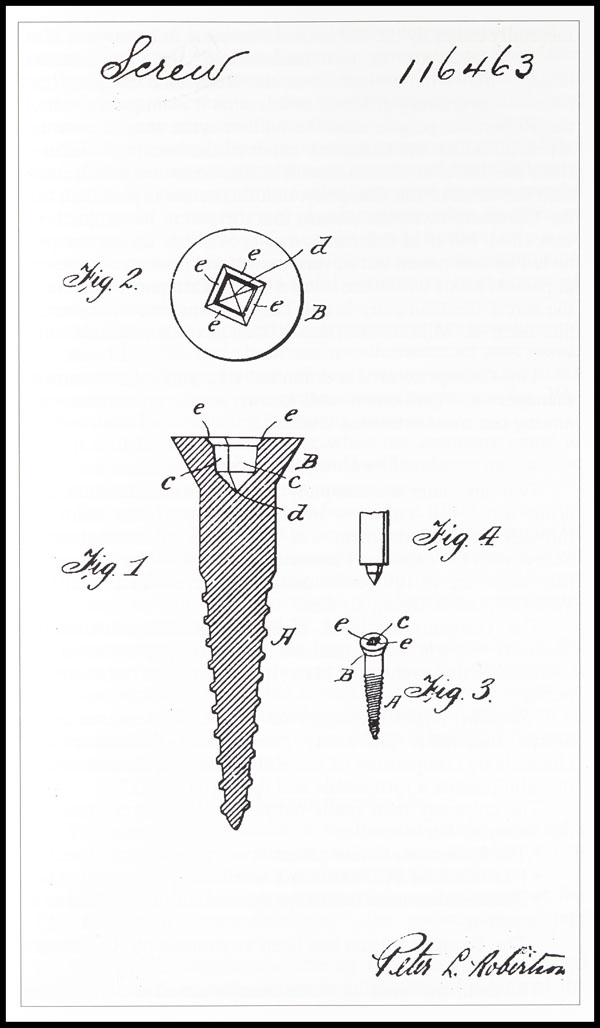
Believe it or not the “Robertson” screw came out before the Phillips. Robertson just hated money and didn’t want to license his patents. So it’s only now that they’re in common use again.
Flat head screws could be made with a slitting saw, hack saw, or file. The flat-head screw, at the time, was the cheapest to make and had pretty good torque transfer capabilities. It also needed hand alignment, a careful operator, and would almost certainly strip out and destroy itself when used with a power tool.
These shortcomings along with the arrival of the industrial age brought along many inventions from necessity, the most popular being the Phillips screw head. There were a lot of simultaneous invention going on, and it’s not clear who the first to invent was, or who stole what from who. However, the Philips screw let people on assembly lines turn a screw by hand or with a power tool and succeed most of the time. It had some huge downsides, for example, it would cam out really easily. This was not an original design intent, but the Phillips company said, “to hell with it!” and marketed it as a feature to prevent over-torquing anyway.
The traditional flathead and the Phillips won over pretty much everyone everywhere. Globally, there were some variations on the concept. For example, the Japanese use JST standard or Posidriv screws instead of Philips. These do not cam out and let the user destroy a screw if they desire. Which might show a cultural difference in thinking. That aside, it means that most of the screws intended for a user to turn with a screw driver are going to be flat-headed or Philips regardless of how awful flat headed screws or Philips screws are.
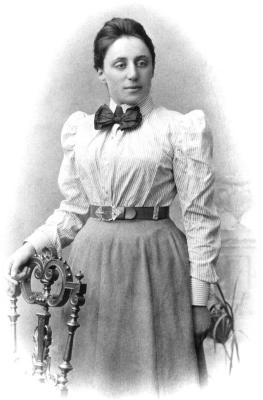
Einstein referred to her as the most important woman in the history of mathematics. Her theorem has been recognized as “one of the most important mathematical theorems ever proved in guiding the development of modern physics.” Yet many people haven’t the slightest clue of who this woman was, or what she did that was so significant to our understanding of how our world works. If you count yourself as one of those who have never heard of Emmy Noether and wish to enlighten yourself, please read on. I can only hope I do her memory justice. Not just by telling you who she was, but by also giving you an understanding of how her insight led to the coming together of symmetry and quantum theory, pointing academia’s arrow toward quantum electrodynamics.
Being a female in Germany in the late 1800s was not easy. She wasn’t allowed to register for math classes. Fortunately, her father happened to be a math professor, which allowed her to sit in on many of his classes. She took one of his final exams in 1904 and did so well that she was granted a bachelors degree. This allowed her to “officially” register in a math graduate program. Three years later, she earned one of the first PhD’s given to a woman in Germany. She was just 25 years old.
1907 was a very exciting time in theoretical physics, as scientists were hot on the heels of figuring out how light and atoms interact with each other. Emmy wanted in on the fun, but being a woman made this difficult. She wasn’t allowed to hold a teaching position, so she worked as an unpaid assistant, surviving on a small inheritance and under-the-table money that she earned sitting in for male professors when they were unable to teach. She was still able to do what professors are supposed to do, however – write papers. In 1916, she would pen the theorem that would have her rubbing shoulders with the other physics and mathematical giants of the era.
Noether’s Theorem – The Basics
Emmy Noether’s Theorem seems simple on the onset, but holds a fundamental truth that explains the fabric of our reality. It goes something like this:
For every symmetry, there is a corresponding conservation law.
We all have heard of laws such as Newton’s first law of motion, which is about the conservation of momentum. And the first law of thermodynamics, which is about the conservation of energy. Noether’s theorem tells us that there must be some type of symmetry that is related to these conservation laws. Before we get into the meaning, we must first understand a little known subject called The Principle of Least Action.
The Universe is Lazy
I would wager a few Raspberry Pi Zeros that many of you already have an intuitive grasp of this principle, even if you’ve never heard of it before now. The principle of least action basically says that the universe has figured out the easiest way possible to get something done. Mathematically, it’s the sum over time of kinetic energy minus potential energy as the action occurs. Let us imagine that you’re trying to program an STM32 Discovery eval board in GCC. After about the 6,000th try, you toss the POS across the room and grab your trusty Uno. The graph depicts the STM32 moving through time and space.
The green points represent particular points of how how high the STM32 is at a given point in time. Note that there are no values for height and time – this example is meant to explain a principle. We can say that at these points (and all points along the curve), the SMT32 has both kinetic and potential energies. Let us call the kinetic energy (kt) and the potential energy (pt). The ‘t‘ subscript is for time, as both the energies are functions of time. The action for each point will be called s, and can be calculated as:
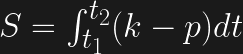
However, action is the total sum of the difference of energies at each point between t1 and t2. If you’ve read my integral post, you will know that we need to integrate in order to calculate the total action.
Now before you get your jumper wires in a bunch, all that is saying is that we’re taking the difference in potential (p) and kinetic (k) energies at each point along the curve between t1 and t2, and we’re adding them together. The elongated S symbol means a sum, and the (dt) means as it changes over time. The path that the STM32 will take will be the path where the action S is at its minimum value. Check out the video in the source section below if you’re confused. It’s only 10 minutes and goes into this concept in easy to follow details.
Noether’s Theorem – The Details
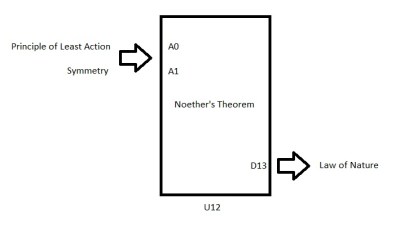
Noether’s theorem is based upon a mathematical proof. It’s not a theory. Her proof can be applied to physics to develop theories, however. Now that we know what the principle of least action is, we can do just this.
Any law of nature can be traced back to a symmetry and the least action principle. Let’s consider two very simple examples – Newton’s first law of motion and the first law of thermodynamics.
Conservation of Momentum
Space has what is known as translational symmetry. That’s just fancy-pants talk for saying that what you do in one point in space is the same as what you do in another point in space. It doesn’t matter what hacker space you throw your STM32, it will act the same at all hacker spaces on earth. Space itself provides the symmetry. And because the principle of least action applies, you have a natural law – the first law of motion.
Conservation of Energy
Time has the same translational symmetry as space does. If I toss the STM32 now, and toss it tomorrow, it will act the same. It doesn’t matter what point in time I toss it, the results will always be the same. Thus energy is conserved between different points in time. Time is our symmetry, and the 1st law of thermodynamics is the result.
Now, I realize these examples might seem a bit useless. But when you dig a bit deeper, things get interesting. Electrical charge is also conserved. Noether says there must then be some type of symmetry involved. What do you suppose that symmetry might be? Keep following that rabbit hole, and you’ll end up face to face with QED. We’ll get there in a future article, so for now just keep Noether’s Theorem in mind.
Sources
Physics Helps, The principle of least action, video link.
Ransom Stephens, Ph.D., Emmy Noether and The Fabric of Reality, video link
One of the biggest challenges for a company that holds invaluable data is protecting it. At first, this task would seem fairly straightforward. Keep the data on an encrypted server that’s only accessible via the internal network. The physical security of the server can be done with locks and other various degrees of physical security. One has to be thoughtful in how the security is structured, however. You need to allow authorized humans access to the data in order for the company to function, and there’s the rub. The skilled hacker is keenly aware of these people, and will use techniques under the envelope of Social Engineering along with her technical skills to gain access to your data.
Want to know how secure your house is? Lock yourself out. One of the best ways to test security is to try and break in. Large companies routinely hire hackers, known as penetration testers, to do just this. In this article, we’re going to dissect how a hired penetration tester was able to access data so valuable that it could have destroyed the company it belonged to.
The start of any hack involves information gathering. This is usually pretty easy for larger companies. Their website along with a few phone calls can reveal quite a bit of useful information. However, you can be assured that any company who has hired a pen tester has taken the necessary precautions to limit such information.
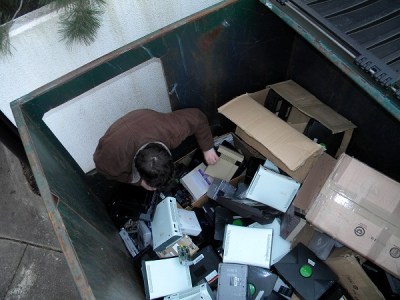
And such was the case for our hacker trying to gain access to the ACME Corp. servers. Her first target was the dumpsters – dumpster dives have been proven to unearth a trove of valuable information in the past. But the dumpsters were inside the complex, which was guarded by a contracted security firm. Through a bit of website snooping and a few phone calls, she was able to find out the department that was in charge of trash removal for the company. She then placed a phone call to this department. Using a social engineering (SE) technique known as pretexting, she pretended to be with a trash removal company and wanted to submit a quote to service their business. Using another SE technique called elicitation, she was able to find out:
that trash collection took place on Wednesdays and Thursdays
the total number of dumpsters
that there was a special dumpster for paper and technology trash
the name of the current waste removal company – Waster’s Management
the name of the employee in charge of the waste removal – [Christie Smith]
Dumpster Dive
Armed with this information, she went to the Waster’s Management website and grabbed their JPEG logo. Within a few days, she had a shirt and hat with the logo in her hands. She called the security department and said she was with Waster’s Management, and that [Christie Smith] had told her one of the dumpsters was damaged, and she needed to take a look at it before the next trash removal.
The next day, wearing the shirt and hat she had ordered online, she was given a badge from security and allowed access to the dumpsters. Now, any hacker worth her weight in PIC16F84’s already knows what dumpster she dove into. It didn’t take her long to walk away with several hard drives, a few USB drives and some useful documents. She was able to gain knowledge of an upcoming IT contract work, the name of the CFO, and the name of a server with some level of importance – prod23.
Hacking the Server
With some more SE, she was able to find out when the IT work was scheduled. It was after hours. She showed up a bit late and was able to walk right through the front door by claiming she worked for the IT contract company. She then shifted roles and pretended to be an employee. She approached one the real IT contract guys, and said she worked for the CFO, [Mr. Shiraz], and asked if he knew to be careful with the prod23 server. With more SE, she was able to find out the prod23 server was off-limits, encrypted, and only accessible by specific admins.
She was able to access an admin office, and it was there she would don her black hat. She booted the computer with BackTrack via USB and installed a key logger. She made an SSH tunnel to her personal server where she could dump the contents of the key logger, along with some other shells. Now, this is where things get interesting. She opened Virtual Box and used the computer’s hard drive as the boot medium. The VM booted the OS, and she hid all of the screen decorations to make it look like the target OS was running. The admin would log in without a clue, and our hacker would get their username and password through the key logger.
Once the login information came in, she was able to access the admin’s computer, and from there the prod23 server. You can imagine the look on the faces of the top executives for ACME Corp when our hacker handed them a copy of the keys to their kingdom.
Social engineering is human hacking, and a dark art in itself. Our hacker in this story would have never been able to even get close to the server if she did not have SE skills. No matter how secure you make something, so long as you allow humans access to it, it’s vulnerable to attack. And then it’s down to how well-trained your people are in repelling these kinds of intrusions.Just ask Target.
You can find the full story in the source below.
Sources
Social Engineering, The Art of Human Hacking, Chapter 8, by Christopher Hadnagy, ISBN-13: 860-1300286532
In high voltage applications involving tens of thousands of volts, too often people think about the high voltage needed but don’t consider the current. This is especially so when part of the circuit that the charge travels through is an air gap, and the charge is in the form of ions. That’s a far cry from electrons flowing in copper wire or moving through resistors.
Consider the lifter. The lifter is a fun, lightweight flying machine. It consists of a thin wire and an aluminum foil skirt separated by an air gap. Apply 25kV volts across that air gap and it lifts into the air.
Lifter flying with high voltage power supply
Lifter parts
So you’d think that the small handheld Van de Graaff generator pictured below, that’s capable of 80kV, could power the lifter. However, like many high voltage applications, the lifter works by ionizing air, in this case ionizing air surrounding the thin wire resulting in a bluish corona. That sets off a chain of events that produces a downward flowing jet of air, commonly called ion wind, lifting the lifter upward.
A toast to all the hackers out there who like to do it scrappy, who fight hard to get your products to work, who make your own tools and testing jigs and assembly lines in your basement, and who pound the pavement (and the keyboards) to get your product out there. Here’s to you (*clink*).
I had the fortune of a job interview recently in a big faceless company that you may have never heard of but probably use their stuff all the time. They make billions. And it was surreal. This article is about what it’s like for a scrappy start-up engineer to walk into the belly of the beast of an organization that counts its engineers in the tens of thousands. For obvious reasons, I can’t go into specific details, but let me paint for you in broad strokes what you, the hacker and entrepreneur, are up against.
When you have a company that’s been around for decades and whose yearly sales volume has more digits than some countries, everything is a few orders of magnitude bigger in scale. People, resources, volumes, everything.







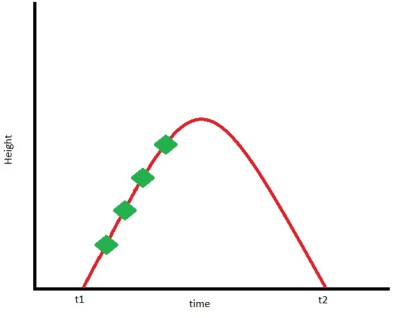 I would wager a few Raspberry Pi Zeros that many of you already have an intuitive grasp of this principle, even if you’ve never heard of it before now. The principle of least action basically says that the universe has figured out the easiest way possible to get something done. Mathematically, it’s the sum over time of kinetic energy minus potential energy as the action occurs. Let us imagine that you’re trying to program an STM32 Discovery eval board in GCC. After about the 6,000th try, you toss the POS across the room and grab your trusty Uno. The graph depicts the STM32 moving through time and space.
 Noether’s theorem is based upon a mathematical proof. It’s not a theory. Her proof can be applied to physics to develop theories, however. Now that we know what the principle of least action is, we can do just this.

 Within a few days, she had a shirt and hat with the logo in her hands. She called the security department and said she was with Waster’s Management, and that [Christie Smith] had told her one of the dumpsters was damaged, and she needed to take a look at it before the next trash removal.