Our Trucks Won’t Need No Batteries! Electric Trucks Look To Overhead Wires For Power

As the world grapples with the spectre of the so-called “hockey stick” graph of climate change, there have been a variety of solutions proposed to the problem of carbon emissions from sectors such as transport which have become inseparable from the maintenance of 21st century life. Sometimes these are blue-sky ideas that may just be a little bit barmy, while other times they make you stop and think: “That could just work!”.

Such an idea is that of replacing the diesel engines in trucks with electric motors powered not by batteries but from overhead cables. An electric tractor unit would carry a relatively small battery for last-mile transit, but derive its highway power by extending a pantograph from its roof to a high-voltage cable above the road. It’s extremely seductive to the extent that there have even been trials of the system in more than one country, but does it stack up to a bit of analysis?

Time’s Up For Those Big Rigs

Siemens and Scania are justifiably proud of their electrified stretch of autobahn and electric trucks in Germany.

One thing that should be obvious to all is that moving our long-distance freight around by means of an individual fossil-fuel-powered  diesel engine for every 38 tonne or so freight container may be convenient, but it is hardly either fuel-efficient or environmentally friendly The most efficient diesel engines on the road are said to have a 43% efficiency, and when hauling an single load they take none of the economies of scale afforded to the diesel engines that haul for example a freight train. Similarly they spread any pollution they emit across  the entirety of their route, and yet again fail to benefit from the economies of scale present in for example a power station exhaust scrubber. However much I have a weakness for the sight of a big rig at full stretch, even I have to admit that its day has passed.

The battery technology being pursued for passenger cars is a tempting alternative, as we’ve seen with Tesla Semi. But for all its technology that vehicle still walks the knife-edge between the gain in cost-effectiveness versus the cost of hauling around enough batteries to transport that quantity of freight. Against that the overhead wire truck seems to offer the best of both worlds, the lightness and easy refueling of a diesel versus the lack of emissions from an electric. In the idealised world of a brochure it runs on renewable wind, sun, and water power, so all our problems are solved, right? But does it really stack up?

Continue reading “Our Trucks Won’t Need No Batteries! Electric Trucks Look To Overhead Wires For Power”

Boom Hopes To Reignite Supersonic Travel With XB-1

Since the last Concorde rolled to a stop in 2003, supersonic flight has been limited almost exclusively to military aircraft. Many have argued that it’s an example of our civilization seeming to slip backwards on the technological scale, akin to returning to the Age of Sail. There’s no debating that we have the capability of moving civilian passengers and cargo at speeds above Mach 1 safely, it’s just something that isn’t done anymore.

Concorde on its final flight, November 2003

Of course to be fair, there’s plenty of good reasons why the sky isn’t filled with supersonic aircraft. For one, they’ve historically been more drastically expensive to build and operate than their slower peers. The engineering that goes into an aircraft that can operate for an extended period of time at supersonic speeds doesn’t come cheap, nor do the materials required. But naturally, the same could have been said for commercial jet aircraft at one time. With further development, the cost would eventually come down.

The real problem holding supersonic aircraft back is much more practical: they are just too loud. From the roar of their powerful engines on takeoff to the startling and sometimes even dangerous “sonic boom” they leave in their wake, nobody wants them flying over their homes or communities. In fact, civilian flight above Mach 1 over land has been outlawed in the United States for exactly this reason since 1973 under the Federal Aviation Administration’s regulation 91.817.

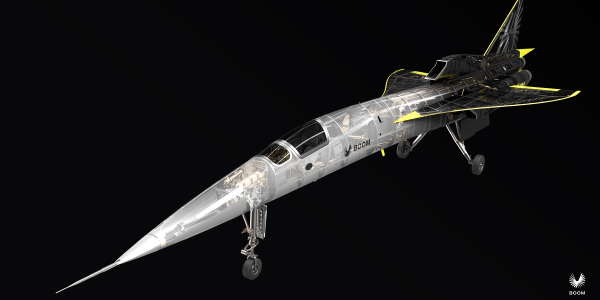
For any commercial supersonic aircraft to be viable, it needs to not only be much cheaper to build and operate than older designs, but it also needs to be far quieter. Which is exactly what Boom hopes to demonstrate with their XB-1 prototype. The sleek craft will never enter into commercial service itself, but if all goes according to plan during its 2021 test flights, it may prove that the state-of-the-art in aircraft design is ready to usher in a new era of supersonic civilian transport.

Continue reading “Boom Hopes To Reignite Supersonic Travel With XB-1”

The Weather Station At The Top Of The World

The crown jewels of the Earth’s mountain ranges, the Himalayas, are unsurpassed in their beauty, their height, and their deadly attraction to adventurers, both professional and amateur. The gem of the Himalayas is, of course, Mount Everest, known as Sagarmatha to the Nepalis and Chomolungma to the Tibetans. At 8,848 meters (29,029 ft) — or more; it’s a geologically young mountain that’s still being thrust upward by tectonic activity — it’s a place so forbidding that as far as we know the summit was never visited until 1953, despite at least 30 years of previous attempts, many of which resulted in death.

The conquest of Everest remains a bucket list challenge for many adventurers, and despite advances in technology that have made the peak accessible to more people — or perhaps because of that — more than 300 corpses litter the mountain, testament to what can happen when you take the power of Mother Nature for granted.

To get better data on the goings-on at the Roof of the World, an expedition recently sought to install five weather stations across various points on the route up Mount Everest, including one at its very peak. The plan was challenging, both from a mountaineering perspective and in terms of the engineering required to build something that would be able to withstand some of the worst conditions on the planet, and to send valuable data back reliably. It didn’t all go exactly to plan, but it’s still a great story about the intersection of science and engineering.

Continue reading “The Weather Station At The Top Of The World”

Separation Between WiFi And Bluetooth Broken By The Spectra Co-Existence Attack

This year, at DEF CON 28 DEF CON Safe Mode, security researchers [Jiska Classen] and [Francesco Gringoli] gave a talk about inter-chip privilege escalation using wireless coexistence mechanisms. The title is catchy, sure, but what exactly is this about?

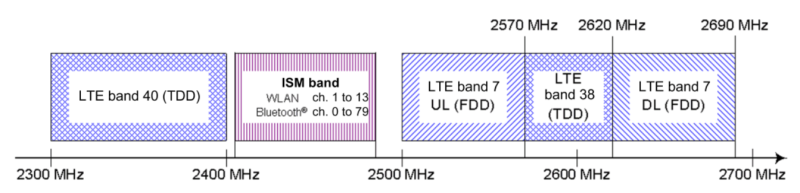
To understand this security flaw, or group of security flaws, we first need to know what wireless coexistence mechanisms are. Modern devices can support cellular and non-cellular wireless communications standards at the same time (LTE, WiFi, Bluetooth). Given the desired miniaturization of our devices, the different subsystems that support these communication technologies must reside in very close physical proximity within the device (in-device coexistence). The resulting high level of reciprocal leakage can at times cause considerable interference.

There are several scenarios where interference can occur, the main ones are:

  • Two radio systems occupy neighboring frequencies and carrier leakage occurs
  • The harmonics of one transmitter fall on frequencies used by another system
  • Two radio systems share the same frequencies

To tackle these kind of problems, manufacturers had to implement strategies so that the devices wireless chips can coexist (sometimes even sharing the same antenna) and reduce interference to a minimum. They are called coexistence mechanisms and enable high-performance communication on intersecting frequency bands and thus, they are essential to any modern mobile device. Despite open solutions exist, such as the Mobile Wireless Standards, the manufacturers usually implement proprietary solutions.

Spectra

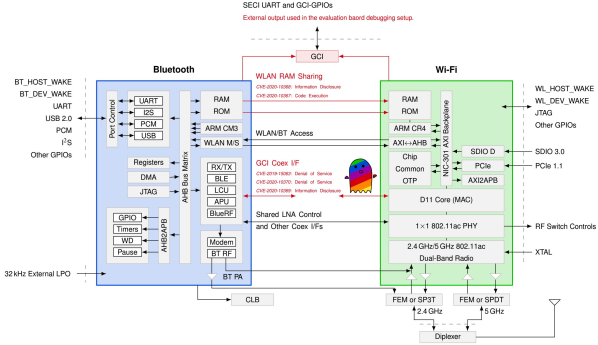
Spectra is a new attack class demonstrated in this DEF CON talk, which is focused on Broadcom and Cypress WiFi/Bluetooth combo chips. On a combo chip, WiFi and Bluetooth run on separate processing cores and coexistence information is directly exchanged between cores using the Serial Enhanced Coexistence Interface (SECI) and does not go through the underlying operating system.

Spectra class attacks exploit flaws in the interfaces between wireless cores in which one core can achieve denial of service (DoS), information disclosure and even code execution on another core. The reasoning here is, from an attacker perspective, to leverage a Bluetooth subsystem remote code execution (RCE) to perform WiFi RCE and maybe even LTE RCE. Keep in mind that this remote code execution is happening in these CPU core subsystems, and so can be completely invisible to the main device CPU and OS.

Join me below where the talk is embedded and where I will also dig into the denial of service, information disclosure, and code execution topics of the Spectra attack.

Continue reading “Separation Between WiFi And Bluetooth Broken By The Spectra Co-Existence Attack”

Just Who Makes Tubes These Days?

For most of us, electronic technology comes in the form of solid state devices. Transistors, integrated circuits, microcontrollers. But for the first sixty years or so of the field existing, these devices either hadn’t been invented yet or were at too early a stage in their development to be either cost-effective, or of much use. Instead a very different type of electronic component ruled the roost, the vaccum tube.

A set of electrodes in an evacuated glass envelope whose electrical properties depended on the modulation of the flow of electrons through them, these were ubiquitous in consumer electronics up until the 1960s, and clung on in a few mass-market applications even as far as the mid 1970s. As cheaper and more versatile semiconductors superseded them they faded from electronic parts catalogues, and the industry that had once produced them in such numbers disappeared in favour of plants producing the new devices. Consumer products no longer contained them, and entire generations of engineers grew up never having worked with them at all. If you were building a tube amplifier in the early 1990s, you were a significant outlier. Continue reading “Just Who Makes Tubes These Days?”

Proteus, The Shape-Shifting And Possibly Non-Cuttable Material

How cool would it be if there was a material that couldn’t be cut or drilled into? You could make the baddest bike lock, the toughest-toed work boots, or the most secure door. Really, the list of possibilities just goes on and on.

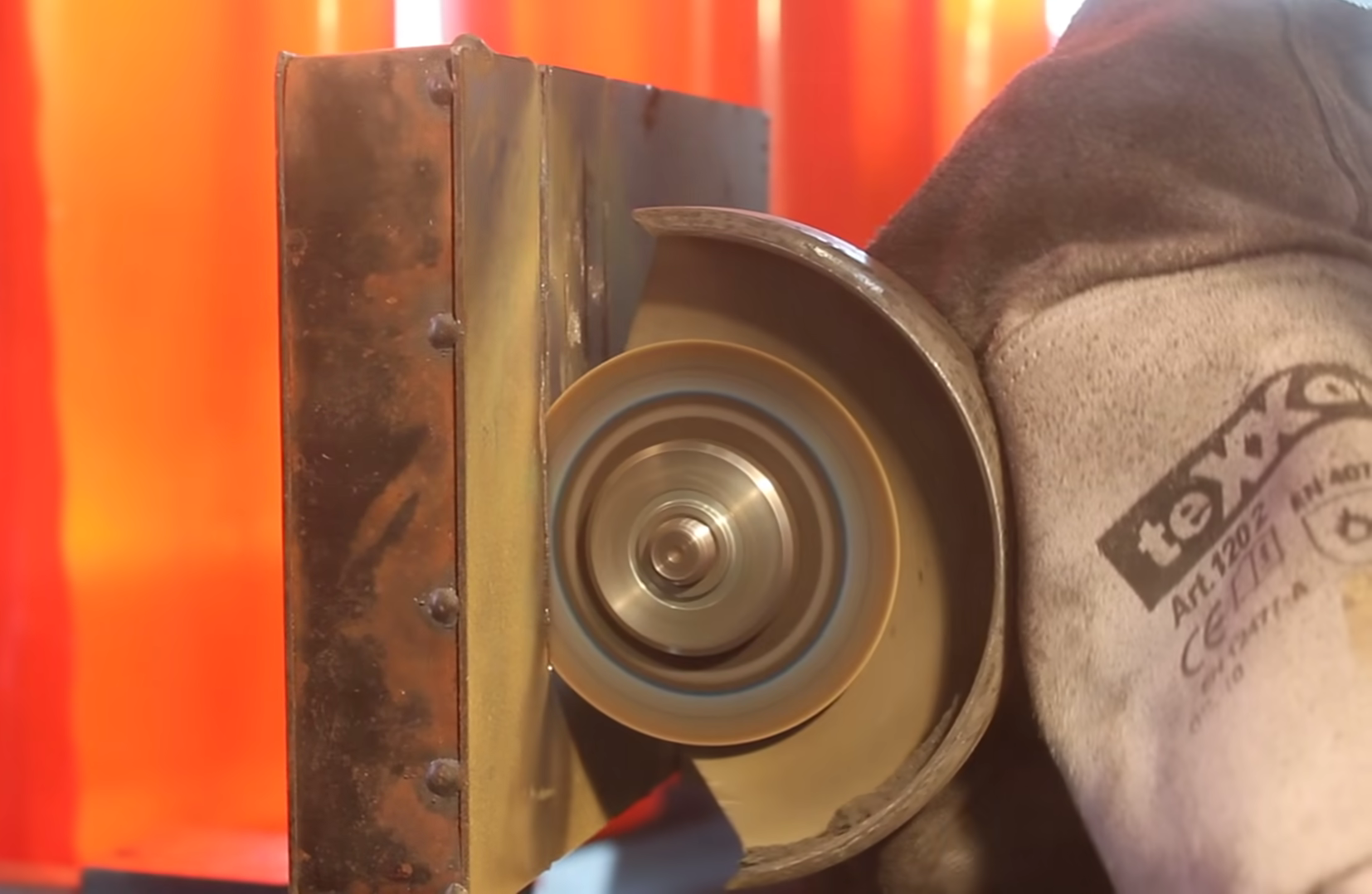
Proteus chews through an angle grinder disc in seconds.

Researchers from the UK and Germany claim that they’ve created such a magical material. It can destroy angle grinder discs, resist drill bits, and widen the streams of water jet cutters.

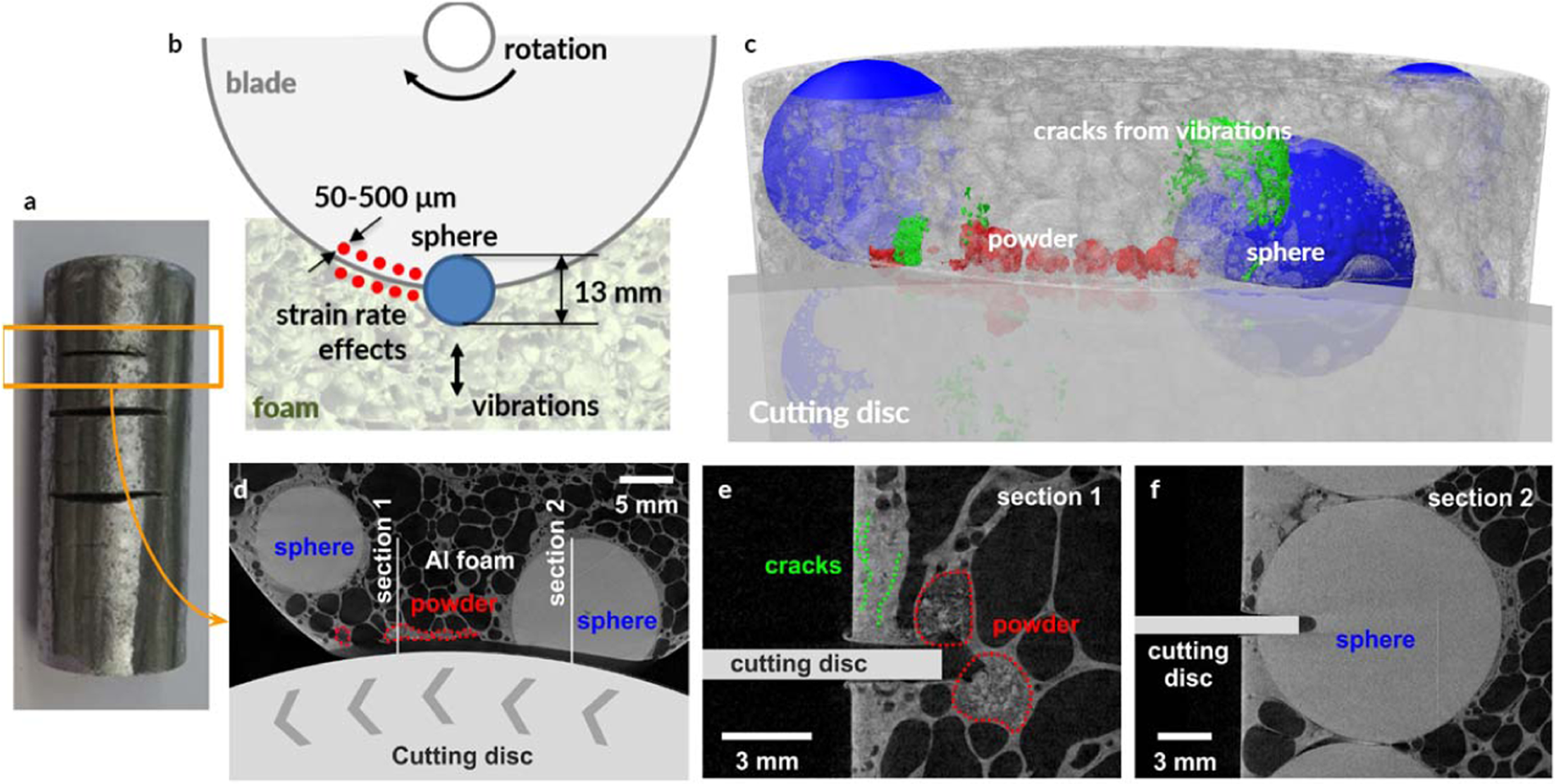
The material is made of aluminium foam that’s embedded with a bunch of small ceramic spheres. It works by inducing retaliatory vibrations into the cutting tools, which turns the tools’ force back on themselves and quickly dulls their edges.

The creators have named the material Proteus after the elusive and shape-shifting prophet of Greek mythology who would only share his visions of the future with those who could get their arms around him and keep him still. It sounds like this material could give Proteus a run for his money.

The ceramic spheres themselves aren’t indestructible, but they’re not supposed to be. Abrading the spheres only makes Proteus stronger. As the cutting tool contacts them, they’re crushed into dust that fills the voids in the aluminium foam, strengthening the material’s destructive vibratory effect. The physical inspiration for Proteus comes from protective hierarchical structures in nature, like the impact-resistant rind of grapefruit and the tendency of abalone shells to resist fracture under the impact of shark teeth.

How It’s Made

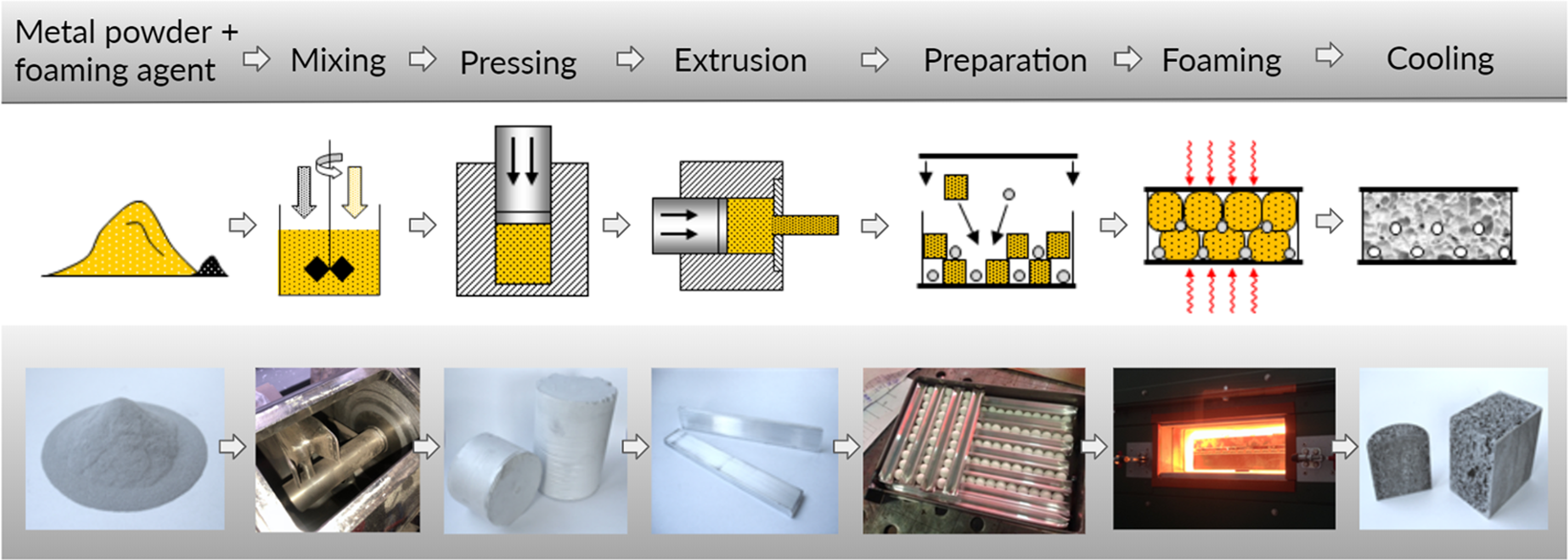
Proteus recipe in pictures.

At this point, Proteus is a proof of concept. Adjustments would likely have to be made before it can be produced at any type of scale. Even so, the recipe seems pretty straightforward. First, an aluminium alloy powder is mixed with a foaming agent. Then the mixture is cold compacted in a compressor and extruded in dense rods. The rods are cut down to size and then arranged along with the ceramic spheres in a layered grid, like a metallurgical lasagna.

The grid is spot-welded into a steel box and then put into a furnace for 15-20 minutes. Inside the furnace, the foaming agent releases hydrogen gas, which introduces voids into the aluminium foam and gives it a cellular structure.

Effects of cutting into a cylinder of Proteus with an angle grinder.

According to their paper, the researchers tried to penetrate the material with an angle grinder, a water jet cutter, and a drill. Of these, the drill has the best chance of getting through because the small point of contact can find gaps more easily, so it’s less likely to hit a ceramic sphere. The researchers also made cylindrical samples without steel cladding which they used to test the compressive strength and prove Proteus’ utility as a structural material for beams and columns. It didn’t fare well initially, but became less compressible as the foam matrix collapsed.

The creation process lends some leeway for customization, because the porosity of the aluminium foam can be varied by changing the bake time. As for the drill bit problem, tightening up security is as easy as adjusting the size and/or density of the ceramic spheres.

In the video after the break, you can watch a chunk of Proteus eat up an angle grinder disc in under a minute. Some may argue about the tool wielder’s technique, but we think there’s something to be said for any material that can destroy a cutting disc that fast. They don’t claim that Proteus is completely impenetrable, but it does look impressive. We wish they would have tried more cutting tools like a gas torch, or experimented with other destructive techniques, like plastic explosives, but we suppose that research budgets only go so far.

Continue reading “Proteus, The Shape-Shifting And Possibly Non-Cuttable Material”

The Smell Of Space

In space, so the Alien tagline goes, nobody can hear you scream. One of the most memorable pieces of movie promotion ever, it refers to the effect of the vacuum of space on the things human senses require an atmosphere to experience. It’s a lesson that Joss Whedon used to great effect with the Serenity‘s silent engine light-ups in Firefly, while Star Wars ignored it completely to give us improbable weapon noises in space battles.

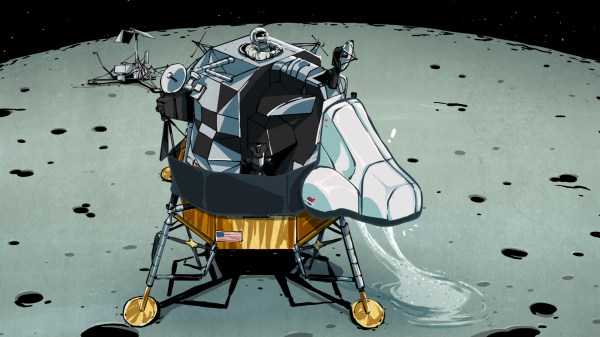
Sound may not pass through the vacuum of space, but that’s not to say there are not things other than light for the senses. The Apollo astronauts reported that moon dust released a smell they described as akin to burnt gunpowder once it was exposed to the atmosphere inside their lander, and by now you may have heard that there is a Kickstarter that aims to recreate the smell as a fragrance. Will it replace the cloying wall of Axe or Lynx Africa body spray that pervades high-school boys’ changing rooms, or is it a mere novelty?

Continue reading “The Smell Of Space”