Spacing Out: OneWeb Rescue, Starlink Base Stations, And Rocket Tests

Another couple of weeks, and a fresh crop of space news to run through as a quick briefing of the latest in the skies above us.

OneWeb's most recent launch, from Baikonur on the 21st of March 2020.
OneWeb’s most recent launch, from Baikonur on the 21st of March 2020. (OneWeb)

The global positioning orbits are getting pretty crowded, with GPS, Russia’s GLONASS, the EU’s Galileo, Japan’s QZSS, and now with the launch of the final satellite in their constellation, China’s BeiDou. As if five were not enough the chance that they might be joined by a sixth constellation from the United Kingdom resurfaced this week, as the UK government is expressing interest in supporting a rescue package for the troubled satellite broadband provider OneWeb. The idea of an independent GPS competitor from a post-Brexit UK has been bouncing around for a couple of years now, and on the face of it until this opportune chance to purchase an “oven ready” satellite constellation might deliver a route to incorporating a positioning payload into their design. The Guardian has its doubts, lining up a bevvy of scientists to point out the rather obvious fact that a low-earth-orbit satellite broadband platform is a very different prospect to a much-higher-orbiting global positioning platform. Despite the country possessing the expertise through its work on Galileo then it remains to be seen whether a OneWeb purchase would be a stroke of genius or a white elephant. Readers with long memories will know that British government investment in space has had its upsets before.

Happily for Brits, not all space endeavours from their islands end in ignominious retreat. Skyrora have scored another milestone, launching the first ever rocket skywards from the Shetland Islands. The Skylark Nano is a relatively tiny craft at only 2m high, and gathered research data during its flight to an altitude of 6km. We’ve followed their work before, including their testing in May of a Skylark L rocket on the Scottish mainland with a view to achieving launch capability in 2023.
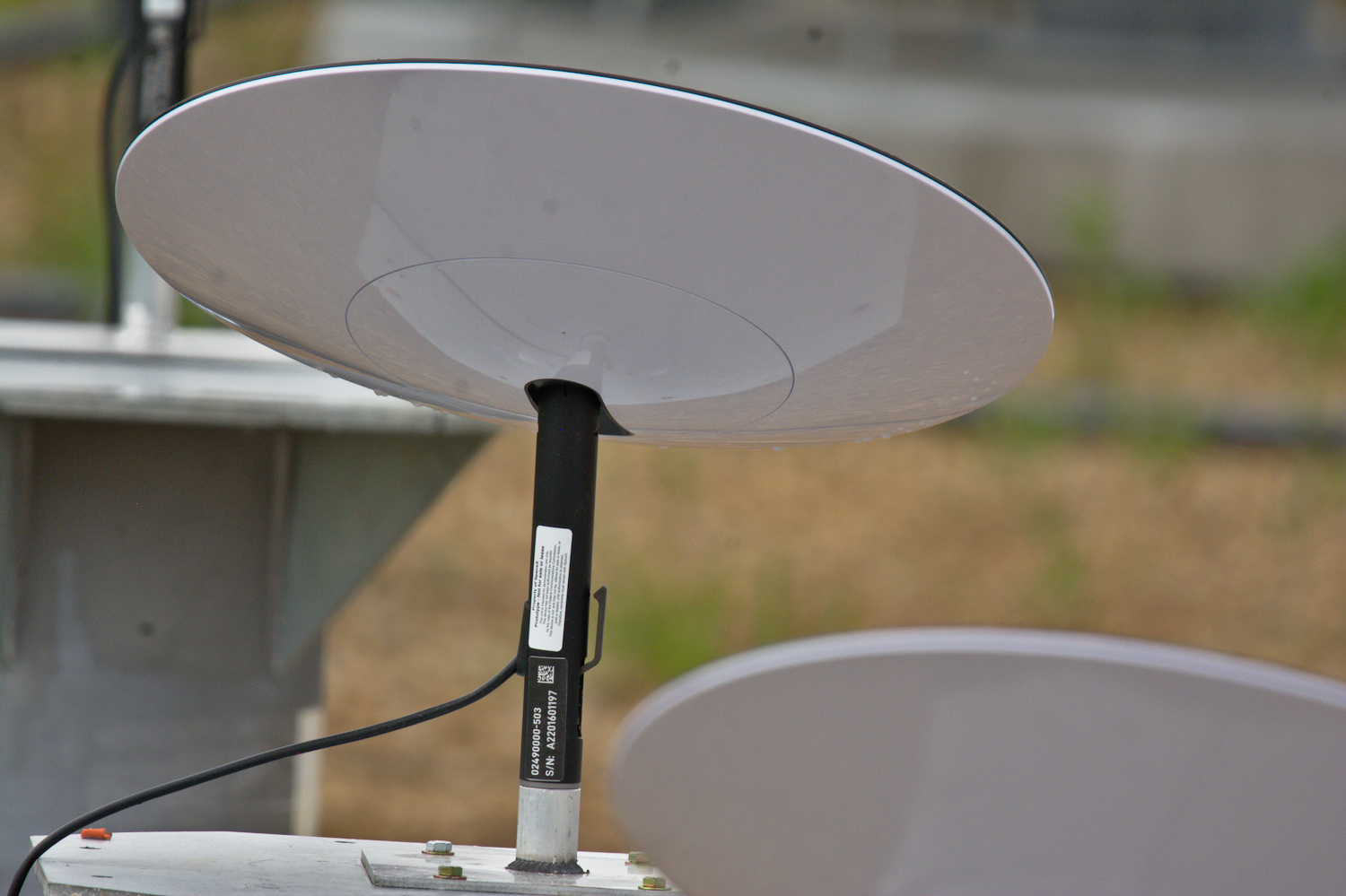
A Starlink phased array end user antenna, spotted in Winsconsin. (darkpenguin22)

SpaceX’s Starlink is never far away from the news, with a fresh set of launches delayed for extra pre-launch tests, and the prospect of signing up to be considered for the space broadband firm’s beta test. Of more interest for Hackaday readers though are a few shots of prototype Starlink ground stations and user terminals that have made it online, on the roof of a Tesla Gigafactory and at a SpaceX facility in Wisconsin. What can be seen are roughly 1.5m radomes for the ground stations and much smaller dinner-plate-sized enclosed arrays for the user terminals. The latter are particularly fascinating as they conceal computer-controlled phased arrays for tracking the constellation as it passes overhead. This is a technology more at home in billion-dollar military radars than consumer devices, so getting it to work on a budget that can put it on a roof anywhere in the world must be a challenge for the Starlink engineers. We can’t wait to see the inevitable eventual teardown when it comes.

Elsewhere, the Virgin Galactic SpaceShip Two completed its second glide test over its Mojave Spaceport home since being grounded in 2019 for extensive refitting, and is now said to be ready for powered tests leading to eventual commercial service giving the extremely well-heeled the chance to float in the zero gravity of suborbital spaceflight. And finally, comes the news that NASA are naming their Washington DC headquarters building for Mary W. Jackson, their first African American female engineer, whose story some of you may be familiar with from the book and film Hidden Figures. The previously unnamed building sits on a section of street named Hidden Figures Way.
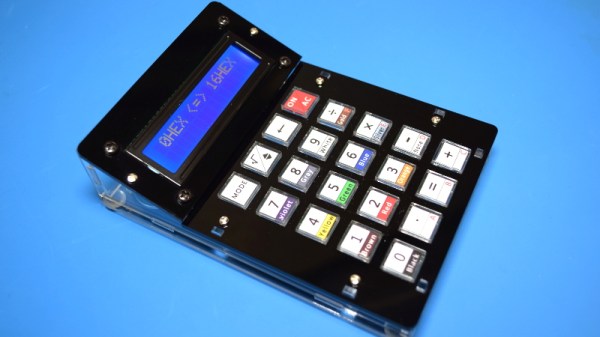

Review: Calculator Kit Is Just A Few Hacks From Greatness

While most people are satisfied with a calculator application on their smartphone these days, there’s still something to be said for the old fashioned desk calculator. Maybe it’s the fact the batteries last long enough that you can’t remember the last time you changed them, or the feel of physical buttons under your fingers. It could even be the fact that it keeps your expensive smartphone from needing to sit out on the workbench. Whatever the reason, it’s not uncommon to see a real-life calculator (or two) wherever solder smoke tends to congregate.

Which is precisely the idea behind this DIY calculator kit. Available from the usual overseas retailers for about $15 USD, it has some hobbyist-oriented features such as the ability to decode resistor color bands, convert hexadecimal numbers, and calculate resistor values for driving LEDs. If you’re going to keep a knock-around calculator on your bench, why not build the thing yourself?

Given the dual nature of this product, a DIY electronics kit and a functional desk calculator for electronic hobbyists, it seems only appropriate to review both aspects of it individually. Which is good, since there may be more to this product than just the sum of its parts.

Continue reading “Review: Calculator Kit Is Just A Few Hacks From Greatness”

Inputs Of Interest: X-Bows Ergo-Mechanical Keyboard

Okay, let’s just get this out of the way up front, shall we? This ergonomic mechanical keyboard was a free sample offered to me by X-Bows. They contacted me after I expressed interest in trying one in the comments of my post about the Kinesis Advantage. I had my doubts about this keyboard as far as my own personal ergonomic needs go, which are admittedly on the extreme side. TL;DR: I won’t be abandoning my curvy girls anytime soon. But I will say that I’m definitely impressed by the X-Bows.

X-Bows was founded by a doctor who saw a lot of RSI issues in programmers and writers and decided to take matters into his own hands. The keyboard was born on Kickstarter in 2017 and now comes in three models. They sent me the mid-range model called The Knight, which retails for $249, but seems to be on permanent sale for $199. The top-of-the-line Knight Plus has a magnetic, detachable 10-key that can attach to either side. Continue reading “Inputs Of Interest: X-Bows Ergo-Mechanical Keyboard”

Why Are Digital Cameras Still Boring?

In the matter of technological advancement, we are as a species, mostly insatiable. The latest toy, the fastest silicon, the largest storage, the list goes on. Take digital cameras as an example, what was your first one? Mine was a Casio QV200 in about 1997, I still have it somewhere though I can’t immediately lay my hands on it, and it could hold a what was for its time a whopping 64 VGA-resolution pictures in its 4Mb of onboard memory.

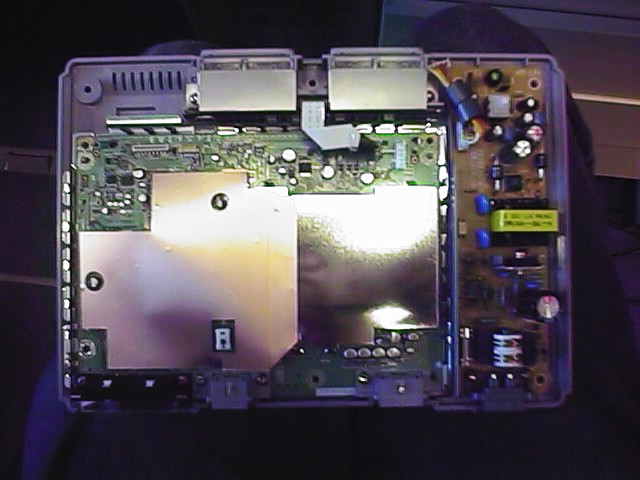
The QV200 showing off its VGA capabilities. It's March 1998, and this is a brand-new PlayStation that I'm about to install a mod chip inside.
The QV200 showing off its VGA photography capabilities. It’s March 1998, and this is a brand-new PlayStation that I’m about to install a mod chip inside.

It’s a shock to realise that nearly a quarter century has passed since then, and its fixed-focus 640×480 camera module with a UV-sensitive CMOS sensor that gave everything a slight blue tint would not even grace the cheapest of feature phones in 2020. Every aspect of a digital camera has improved beyond measure since the first models in the 1980s and early 1990s that started to resemble what we’d know today as a standalone digital camera, they have near-limitless storage, excellent lenses, huge and faithfully-reproducing sensors, and broadcast-quality video capability.

But how playful have camera manufacturers been with the form factor? We see reporters in sci-fi movies toting cameras that look nothing like their film-based ancestors. What do our real-life digital cameras have on offer as far as creative body design goes?

Continue reading “Why Are Digital Cameras Still Boring?”

The ISS Is Getting A New WC

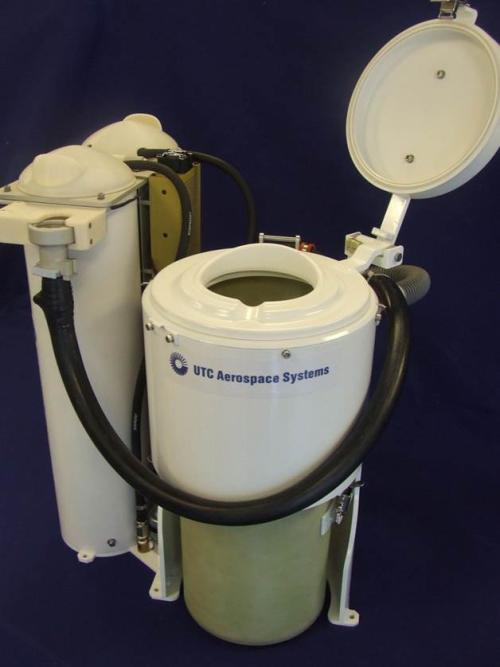
Every home needs renovations after a few decades, and the International Space Station is no different. This fall, they’ll be getting a new Universal Waste Management System (UWMS), aka a new toilet.

Though the news coincides with increased traffic to the ISS, this move stems from a more serious issue with bacterial contamination during longer-term space travel. Today’s ISS toilets already recycle urine back into potable water and scrub the air reclaimed from solid waste as it gets compacted and stored. The new UWMS will act more like a food dehydrator, reducing the water content as much as possible to save on space, and petrifying the poo to inactivate the bacteria.

The current commode on the American side of the ISS was designed in the 1990s and is based on the Space Shuttle’s facilities. It has a funnel with a hose for urine and a bag-lined canister with a seat for solid waste, both of which are heavily vacuum-assisted.

Though the current toilet still does everything it’s supposed to do, there is room for improvement. For instance, women find it difficult to engage both parts of the system at the same time, and almost everyone prefers the toe bars on the Russian toilet to the more encumbering thigh bars on the American throne. Also, the current commode’s interface is more complicated than it needs to be, which takes up valuable crew time. Continue reading “The ISS Is Getting A New WC”

The Segway Is Dead, Long Live The Segway

Before it was officially unveiled in December 2001, the hype surrounding the Segway Human Transporter was incredible. But it wasn’t because people were excited to get their hands on the product, they just wanted to know what the thing was. Cryptic claims from inventor Dean Kamen that “Ginger” would revolutionize transportation and urban planning lead to wild speculation. When somebody says their new creation will make existing automobiles look like horse-drawn carriages in comparison, it’s hard not to get excited.

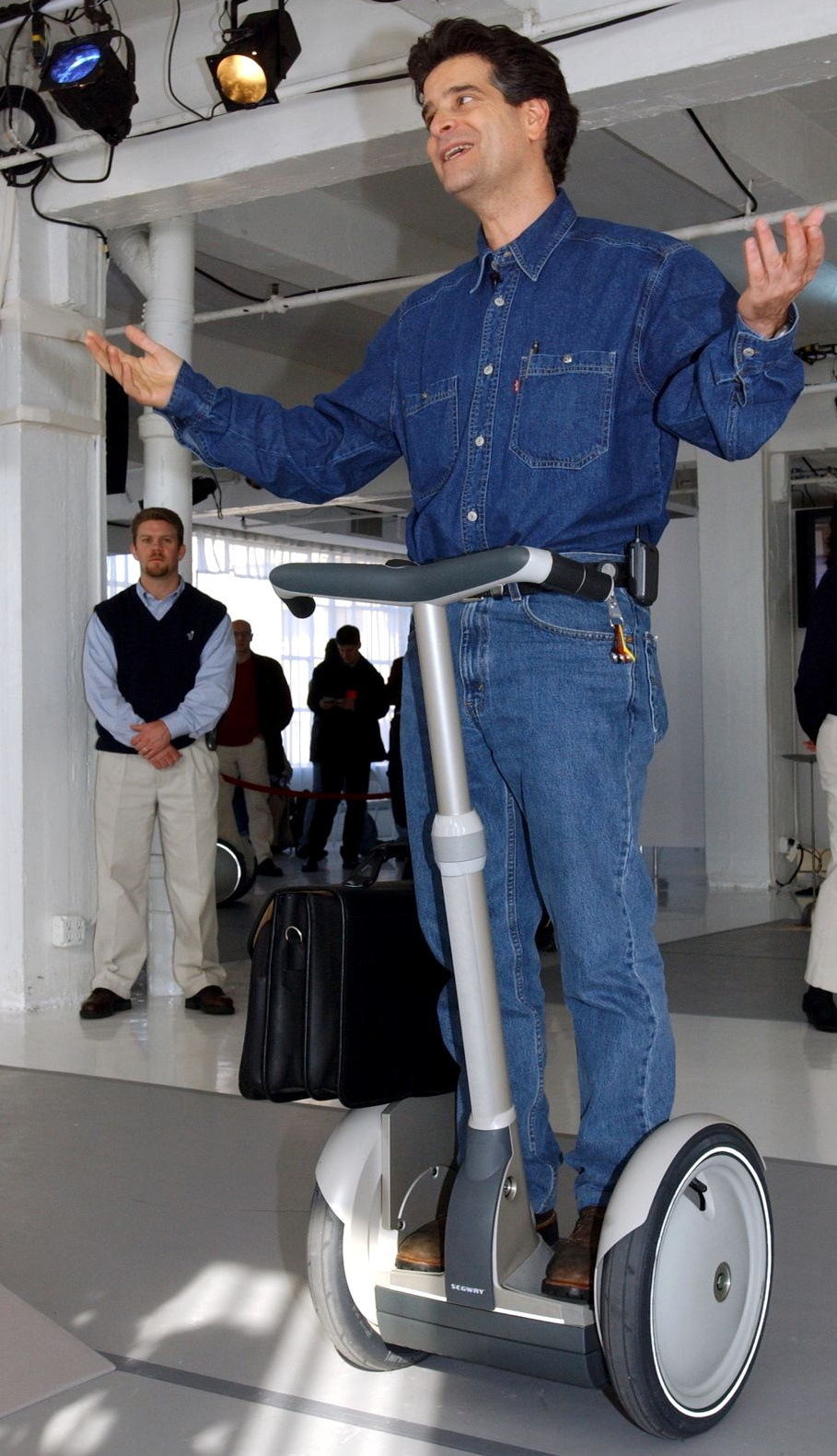
Dean Kamen unveils the Segway

There were some pretty outlandish theories. Some believed that Kamen, a brilliant engineer and inventor by all accounts, had stumbled upon some kind of anti-gravity technology. The kids thought they would be zipping around on their own Back to the Future hover boards by Christmas, while Mom and Dad were wondering what the down payment on a floating minivan might be. Others thought the big secret was the discovery of teleportation, and that we were only a few years out from being able to “beam” ourselves around like Captain Kirk.

Even in hindsight, you really can’t blame them. Kamen had the sort of swagger and media presence that we today associate with Elon Musk. There was a general feeling that this charismatic maverick was about to do what the “Big Guys” couldn’t. Or even more tantalizing, what they wouldn’t do. After all, a technology which made the automobile obsolete would change the world. The very idea threatened a number of very big players, not least of which the incredibly powerful petroleum industry.

Of course, we all know what Dean KamenĀ actually showed off to the world that fateful day nearly 20 years ago. The two-wheeled scooter was admittedly an impressive piece of hardware, but it was hardly a threat to Detroit automakers. Even the horses were largely unconcerned, as you could buy an actual pony for less than what the Segway cost.

Now, with the announcement that Segway will stop production on their eponymous personal transporter in July, we can confidently say that history will look back on it as one of the most over-hyped pieces of technology ever created. But that’s not to say Kamen’s unique vehicle didn’t have an impact. Continue reading “The Segway Is Dead, Long Live The Segway”

Linux-Fu: Parallel Universe

At some point, you simply run out of processing power. Admittedly, that point keeps getting further and further away, but you can still get there. If you run out of CPU time, the answer might be to add more CPUs. However, sometimes there are other bottlenecks like memory or disk space. However, it is also likely that you have access to multiple computers. Who doesn’t have a few Raspberry Pis sitting around their network? Or maybe a server in the basement? Or even some remote servers “in the cloud.” GNU Parallel is a tool that lets you spread work across multiple tasks either locally to remote machines. In some ways, it is simple, since it looks sort of like xargs but with parallel execution. On the other hand, it has myriad options and configurations that can make it a little daunting to use. Continue reading “Linux-Fu: Parallel Universe”