Twelve Circuit Sculptures We Can’t Stop Looking At

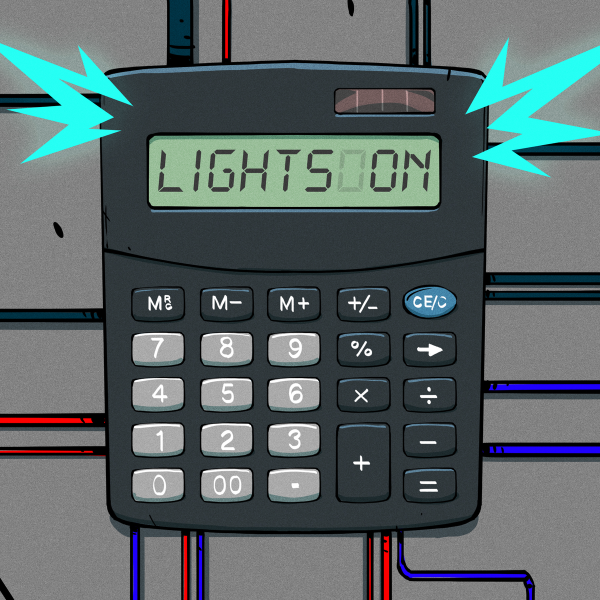
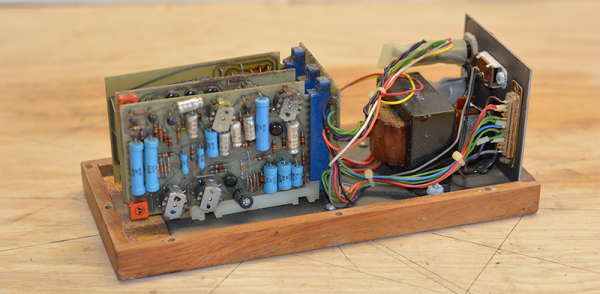
Circuits are beautiful in their own way, and a circuit sculpture takes that abstract beauty and makes it into a purposeful art form. Can you use the wires of the circuits themselves as the structure of a sculpture, and tell a story with the use and placement of every component? Anyone can exercise their inner artist using this medium and we loved seeing so many people give it a try. Today we announce the top winners and celebrate four score of entries in the Hackaday Circuit Sculpture Contest.

Let’s take a look at twelve outstanding projects that caught (and held) our eye:

Continue reading “Twelve Circuit Sculptures We Can’t Stop Looking At”

Web Development: What’s Big In 2019?

I try to keep up with web development trends but it’s hard to keep pace since it’s such a fast evolving field. Barely a week goes by without the release of a new JS framework, elaborate build tool or testing suite — all of them touted as the one to learn. Sorting the hype from the genuinely useful is no mean feat, so my aim in this article is to summarise some of the most interesting happenings that web development saw in the last year, and what trends we expect to see more of in 2019.

A technology or framework doesn’t have to be brand new to be on our list here, it just needs to be growing rapidly or evolving in an interesting way. Let’s take a look!

Continue reading “Web Development: What’s Big In 2019?”

A Cloned Bluetooth Tracker Meets Its Maker

The holidays bring us many things. Family and friends are a given, as is the grand meal in which we invariably overindulge. It’s a chance for decades old songs and movies to somehow manage to bubble back up to the surface, and occasionally a little goodwill even slips in here or there. But perhaps above all, the holidays are a time for every retailer to stock themselves to the rafters with stuff. Do you need it? No. Do they want it? No. But it’s there on display anyway, and you’re almost certainly going to buy it.

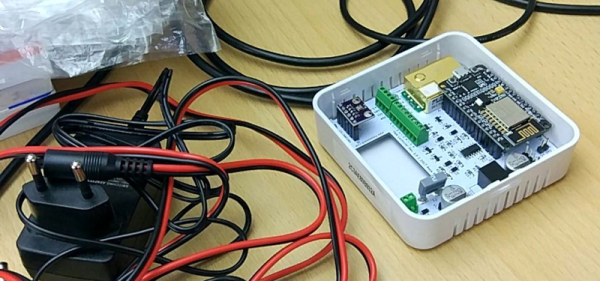
Which is precisely how I came to purchase a two pack of Bluetooth Low Energy (BLE) “trackers” for the princely sum of $10 USD. I didn’t expect much out of them for $5 each, but as this seemed an exceptionally low price for such technology in a brick and mortar store, I couldn’t resist. Plus there was something familiar about the look of the tracker that I couldn’t quite put my finger on while I was still in the store.

That vague feeling of recollection sent me digging through my parts bin as soon as I got home, convinced that I had seen something among the detritus that reminded me of my latest prize. Sure enough, I found a “Cube” Bluetooth tracker which, ironically, I had received as a Christmas gift some years ago. Putting them side by side, it was clear that the design of these “itek” trackers took more than a little inspiration from the better known (and five times as expensive) product.

The Cube was a bit thicker, but otherwise the shape, size, and even button placement on the itek was nearly identical. Reading through their respective manuals, the capabilities also seemed in perfect parity, down to being able to use the button on the device as a remote camera control for your smartphone. Which got me thinking: just how similar would these two devices be internally? Clearly they looked and functioned the same, but would they be built the same as well? They would have to cut costs somewhere.

Determined to find out how a company can put out what for all the world looks like a mirror image of a competitor’s device while undercutting them by such a large margin, I cracked both trackers open to get a bit more familiar with what makes them tick. What I found on closer inspection of these two similar gadgets is perhaps best summarized by that age old cautionary adage: “Don’t judge a book by its cover.”

Continue reading “A Cloned Bluetooth Tracker Meets Its Maker”

Low Tech High Safety And The NYC Subway System

The year is 1894. You are designing a train system for a large city. Your boss informs you that the mayor’s office wants assurances that trains can’t have wrecks. The system will start small, but it is going to get big and complex over time with tracks crossing and switching. Remember, it is 1894, so computing and wireless tech are barely science fiction at this point. The answer — at least for the New York City subway system — is a clever system of signals and interlocks that make great use of the technology of the day. Bernard S. Greenberg does a great job of describing the system in great detail.

The subway began operation in 1904, well over 30 years since the above-ground trains began running. A clever system of signals and the tracks themselves worked together with some mechanical devices to make the subway very safe. Even if you tried to run two trains together, the safety systems would prevent it.

On the face of it, the system is very simple. There are lights that show red, yellow, and green. If you drive, you know what these mean. But what’s really interesting is the scheme used at the time to make them light.

Continue reading “Low Tech High Safety And The NYC Subway System”

Ask Hackaday: Help Me Pick A CAD Package

Of all the skills that I have picked up over the years as an engineer, there is one that has stayed with me and been a constant over the last three decades. It has helped me work on electronic projects, on furniture, on car parts, robots, and even garments, and it is likely that I will continue using it periodically for the rest of my career. You see, I am a trained PAD expert.

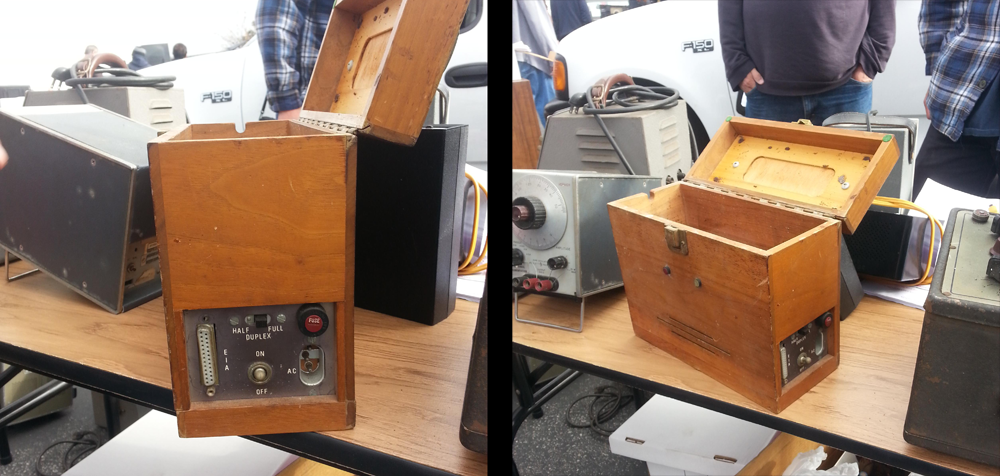
Don't build this, it's fundamentally flawed! Sometimes the front of an envelope is as effective as its back.
Don’t build this, it’s fundamentally flawed! Sometimes the front of an envelope is as effective as its back.

PAD, you ask? OK, it’s an acronym of my own coinage, it stands for Pencil Aided Design, and it refers to the first-year undergraduate course I sat many years ago in which I learned technical drawing to the old British standard BS308. If I’m making something then by far the quickest way for me to visualise its design is to draw it, first a freehand sketch to get a feel of how everything will sit, then a series of isometric component drawings on graph paper with careful attention to dimensions and angles. Well, maybe I lied a little there, the graph paper only comes in when I’m doing something very fancy; the back of an envelope is fine as long as the dimensions on the diagram are correct.

Continue reading “Ask Hackaday: Help Me Pick A CAD Package”

35C3: Biggest Communication Congress, Yet Little Chaos

Every year for the past 35 years, the German Chaos Computer Club has met just after Christmas for a few days of “Spaß am Gerät” — having fun with the machines. And that’s everything from trying to bring an old PDP-8 back into running condition to forging new software to replace the old and busted social media platforms that permeate our lives. The sum total of around 17,000 people doing the nerdy stuff that they love, and sharing it together, is both amazing and inspiring. Four days of little sleep and much socializing later, I bet there was still another four days’ worth of stuff to see.

The official theme this year was “Refreshing Memories” which honestly sounds a bit too much like a cola slogan, but was a great opportunity to think back on the hacks of the past that got us where we are. Assemblies put up shrines to their hacker heroes of the past. Retro computers were everywhere, in the talks and on the floor. This year’s Congress was a great time to look back and remember, but also to create new memories for the future. On that front, it was a total success.

But the unofficial theme this year was “Smooth Running”. Everything went very well, which is no small feat considering that the infrastructure, decoration, security, and even the medical response teams are from the Chaos community. It’s the depth of engagement that makes this work: of the 17,000 people who showed up, just over 4,000 of them volunteered for “angel” shifts — meaning they helped guard the doors, staff the info desks, or build up or tear down. It was the largest ever CCC, and you could feel it, but they pulled it off, and then some.

The angels are geeks just like you and me, and since everything went so smoothly, they had time to play. For instance, the phone operations people offer DECT phone service so that attendees can bring in their home phones and use them at Congress. In years past, the lines to register and enroll phones were painfully long. This year, it all happened online, and the result is that the phone ops crew got bored. That explains how they had time to establish roaming home-phone wireless service in some of the normal Leipzig city trams. Wait, what?

Continue reading “35C3: Biggest Communication Congress, Yet Little Chaos”

Irène Joliot-Curie And Artificial Radioactivity

When Marie and Pierre Curie discovered the natural radioactive elements polonium and radium, they did something truly remarkable– they uncovered an entirely new property of matter. The Curies’ work was the key to unlocking the mysteries of the atom, which was previously thought to be indivisible. Their research opened the door to nuclear medicine and clean energy, and it also led to the development of nuclear weapons.

Irène Joliot-Curie, her husband Frédéric, and many of their contemporaries were completely against the use of nuclear science as a weapon. They risked their lives to guard their work from governments hell-bent on destruction, and most of them, Irène included, ultimately sacrificed their health and longevity for the good of society. Continue reading “Irène Joliot-Curie And Artificial Radioactivity”