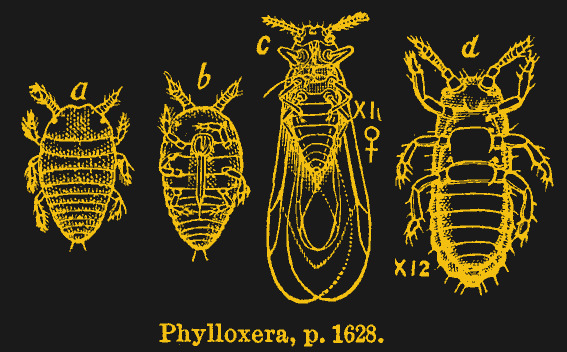
While it isn’t quite universal, a lot of people enjoy a glass of wine now and again. But the world faced a crisis in the 1800s that almost destroyed some of the world’s great wines. Science — or some might say hacking — saved the day, even though it isn’t well known outside of serious oenophiles. You might wonder how biological hacking occurred in the 19th century. It did. It wasn’t as fast or efficient, but fortunately for wine drinkers, it got the job done.
When people tell me about new cybersecurity threats, I usually point out that cybercrime isn’t new. People have been stealing money, tricking people into actions, and impersonating other people for centuries. The computer just makes it easier. Even computing itself isn’t a new idea. Counting on your fingers and counting with electrons is just a matter of degree. Surely, though, mashing up biology is a more recent scientific advancement, right? While it is true that CRISPR can make editing genes a weekend garage project, people have been changing the biology of plants and animals for centuries using techniques like selective breeding and grafting. Not as effective, but sometimes effective enough.
The artistic elite exists in a stratum above we hoi polloi, a world of achingly trendy galleries, well-heeled collectors, and art critics who act as gatekeepers to what is considered the pinnacle du jour of culture. Artistic movements that evolve outside this bubble may be derided or ignored as naive and unsophisticated, even in complete denial of their raw creative edge. When they are discovered by the establishment a few of their artists are selected and anointed, while inevitably the crucible in which they were formed is forgotten. On the streets of Bristol the incredible work of far more graffiti artists can be seen than just that of Banksy.
Our community has an art form all of its own, in the guise of PCB artwork and the #BadgeLife community. One day you will see electronic badges from darlings of the art world behind glass in those trendy galleries, but for now they live in glorious abundance in the wild. Here at Hackaday we are lucky enough to have in Brian Benchoff a colleague who is pushing the boundaries of PCB art, and at the Hackaday Superconference he took us through one of his more recent pieces of work.
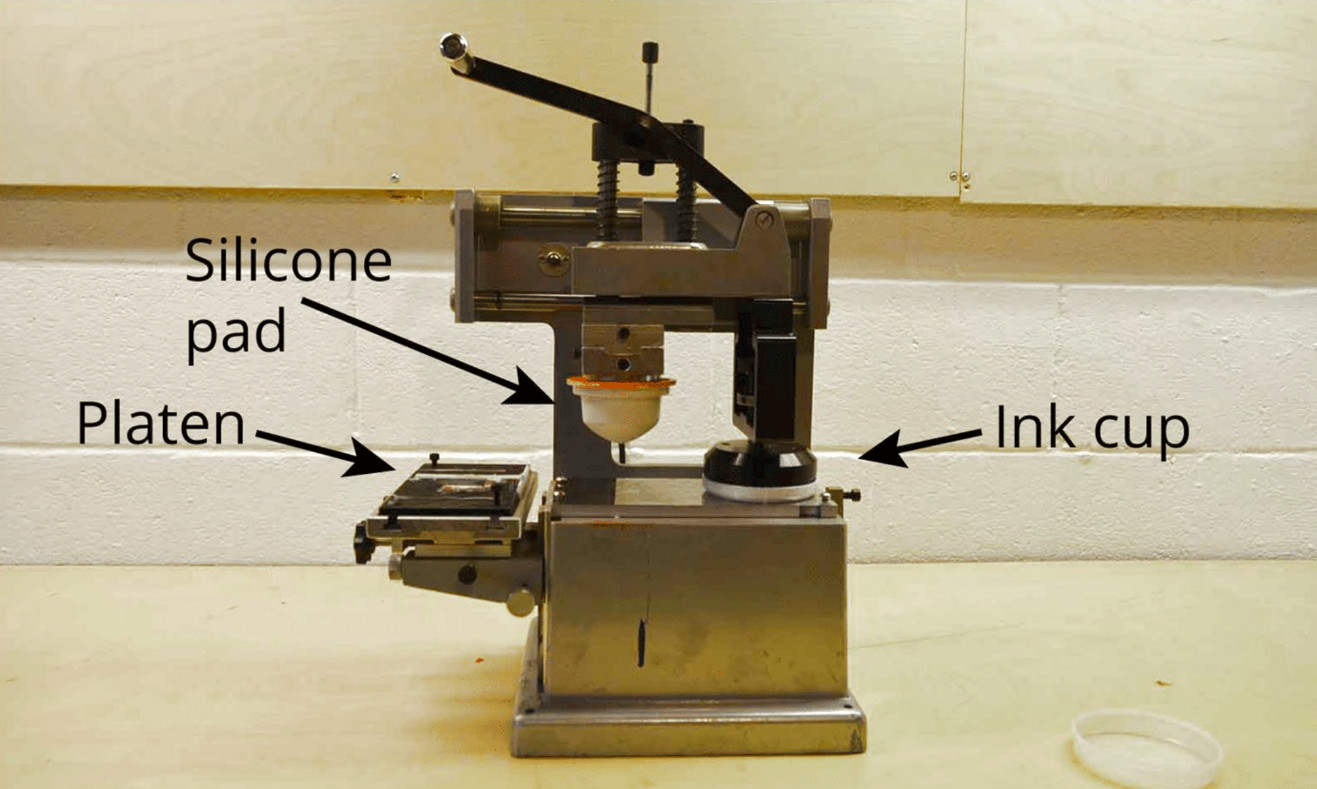
Brian’s pad printer.
The colour palette of a typical printed circuit board is limited by the combination of fibreglass, copper, soldermask, plating, and silkscreen its designer selects. Thus while the variety of soldermask colours and plating materials can make for an eye-catching work, they have remained a colour-tinted near monochrome. The Holy Grail of the PCB artist has been to step into the world of full colour, and Brian has been pursuing that goal by exploring pad printing to produce extra colours beyond the sodermask..
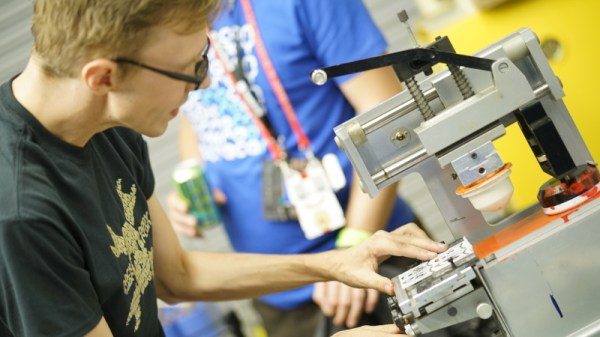
It’s a subject he’s written about here in the past, and he introduces it in the talk with a look at existing badge artwork and a mention of an expensive commercial inkjet process before considering the type of printing you see daily on the sides of promotional pens. Those company titles are deposited on pens using pad printing, an offset process in which ink is first deposited upon a photo-etched metal plate before being picked up on a silicone rubber pad for transfer to the object to be printed. It’s not the panacea for all coloured-PCB tasks, but for adding relatively small blocks of pigment to an otherwise monochromatic board it can be very successful.
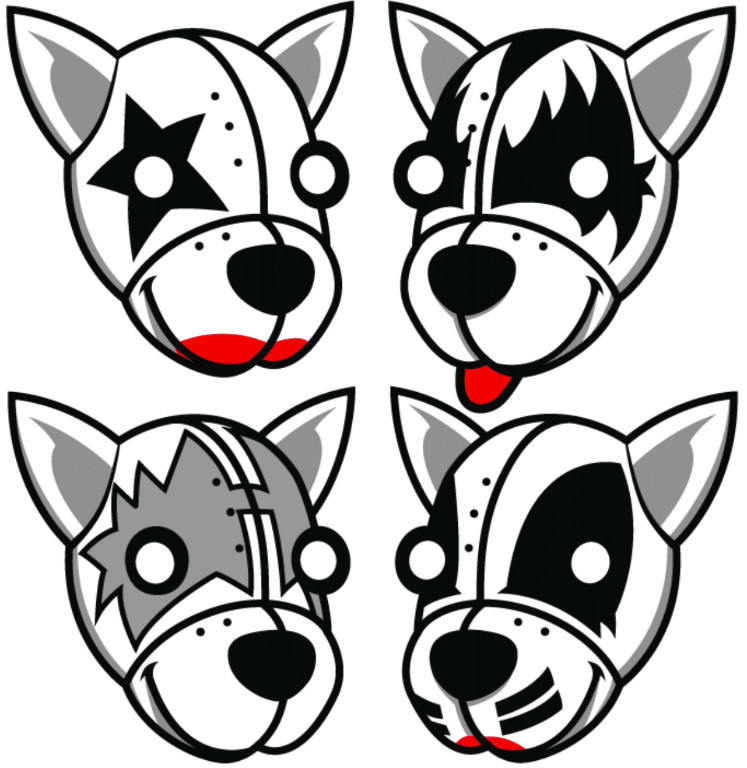
The eye-catching Kiss -themed Tindie badges.
Brian’s examples are a panelised set of Tindie badges as a homage to the rock band Kiss, and his Tide pod addon containing a serial number in an EEPROM that was part of a Blockchain-inspired game. The Kiss Tindie badges use black soldermask with extensive white silkscreen and a modest area of red pad printing for the stage makeup, while the Tide addon makes clever use of the same swoosh printed in alternate colours at 180 degrees to each other.
In both cases there is some labour involved in creating the prints, and as his detailed write-up of printing the Tide pods reminds us, the process of creating the printing plate is not exactly an easy one. But it remains the best way yet to add extra colours to a board without paying a small fortune for the inkjet process, and if you’d like to put your own designs at the bleeding edge of PCB art you might wish to read his writeups and watch the video below the break.
This is just one example of the kind of manufacturing techniques, and electronic design principles on display at the Hackaday Superconference. There’s another Supercon just around the corner, so grab your ticket and send in your own talk proposal right away!
Solder is the conductive metal glue that one uses to stick components together. If you get the component and the PCB hot enough, and melt a little solder in the joint, it will stay put and conduct reliably. But it’s far from simple.
There are many different solder alloys, and even the tip of the soldering iron itself is a multi-material masterpiece. In this article, we’ll take a look at the metallurgy behind soldering, and you’ll see why soldering tip maintenance, and regular replacement, is a good idea. Naturally, we’ll also touch upon the role that lead plays in solder alloys, and what the effect is of replacing it with other metals when going lead-free. What are you soldering with? Continue reading “The Fascinating World Of Solder Alloys And Metallurgy”→
There was a time when nuclear power plants were going to save the world. Barring accidents, the plants are clean and generate a lot of power. However, a few high-profile accidents and increased public awareness of some key issues have made nuclear power a hard sell, at least in the United States. The fastest growing nuclear power-related business in the US — according to sources — is companies decommissioning nuclear power plants. However, there’s a move afoot to make nuclear power a viable solution again. The company behind it says their plants will be cheaper to build, cheaper to operate, and are much safer than conventional plants. Are those claims reasonable?
In the “Automate the Freight” series, I’ve concentrated on stories that reflect my premise that the killer app for self-driving vehicles will not be private passenger cars, but will more likely be the mundane but necessary task of toting things from place to place. The economics of replacing thousands of salary-drawing and benefit-requiring humans in the logistics chain are greatly favored compared to the profits to be made by providing a convenient and safe commuting experience to individuals. Advances made in automating deliveries will eventually trickle down to the consumer market, but it’ll be the freight carriers that drive innovation.
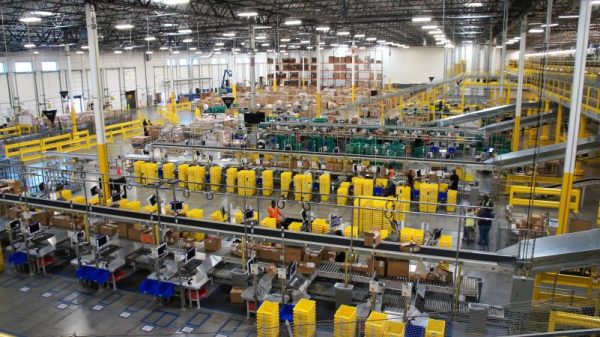
While I’ve concentrated on self-driving freight vehicles, there are other aspects to automating the supply chain that I’ve touched on in this series, from UAV-delivered blood and medical supplies to the potential for automating the last hundred feet of home delivery with curb-to-door robots. But automation of the other end of the supply chain holds a lot of promise too, both for advancing technology and disrupting the entire logistics field. This time around: automated packaging lines, or how the stuff you buy online gets picked and wrapped for shipping without ever being touched by human hands.
Stop what you’re doing and get your ticket to the Hackaday Superconference. This is the ultimate hardware conference, November 15th, 16th, and 17th in Pasadena, California. It will sell out, especially the early bird tickets which are certain to be snapped up before the end of this day. (Edit: Early Bird tickets are already sold out, but you can still get the Early Bird price by submitting a talk).
Supercon is all about hardware creation. From prototypes and manufacturable designs, to one-off hardware art and products that have sold thousands, this is where you meet the people and hear the stories behind new and interesting feats of engineering. It’s a weekend filled with fascinating talks and mind-expanding workshops, but Supercon is so much more.
This is a Hacker Village where the greenest beginner and the grayest veteran sit shoulder to shoulder to solder, to code, to dream of the future, and to share stories of the past. We want you here, and you need to make it happen. Whether it’s professional development (yes! ask your boss to make this a business outing) or your hard-earned vacation, Supercon will recharge your batteries and top off your inspiration for the year to come.
Yes, I’m talking to you. Core to the mission of the Hackaday Superconference is to encourage more people to speak publicly about everything that goes into designing and manufacturing hardware. This means we want first time speakers just as much as we want seasoned presenters. You will be celebrated at Supercon; the ethos of this community is warm, welcoming, and thankful that you took the time to help everyone learn something interesting.
Don’t stop to ask yourself if you should… yes, we want to read your talk proposal. No topic is too big or too small for consideration. This is your chance to give back as a thank-you to so many people who have helped you gather your own skills over the years. We stand on the shoulders of giants, it’s your turn to be giant.
True Believer Tickets
We like to think of our Early Bird tickets as a nod to the true believers out there. We haven’t published the speakers, the workshops, or really anything else. That info will be public as everything comes together, but by then it may be too late to get a ticket. Right now all we can tell you for certain is that there will be a big celebration to name the grand prize winner of the 2019 Hackaday Prize, there will be a ton of badge hacking on a mind-blowing hardware badge being designed by Sprite_TM (Jeroen Domburg), you will have way too much fun and get far too little sleep, and tickets will sell out. In other words, this will be awesome.
Competitive soldering
Hackaday Prize winners
Opening ceremonies were packed tight!
Workshops in full swing
Badge hacking throughout the weekend
Standing room only as Ben Krasnow gives the last talk of the conference on Sunday
Need more convincing? You can watch the recap video from 2018, or dive into the weekend overview, badge-hacking, and competitive soldering roundups. I’ve never met anyone from the first four years of Supercon who regretted buying early bird tickets. I’ve met plenty of people who regretted missing out. Don’t miss out on year five of the movement. This is your community, there is truly something for everyone, and Pasadena is a beautiful place to be in the middle of November. See you at Supercon!
It’s true that I’m not known for keeping particularly regular hours, but even I had my doubts about this plan. We’d go to sleep around midnight, wake up at 3 AM, drive up the coast aimlessly, then turn around and attend a full-day event where we’d have to maintain at least some semblance of professionalism. It was a bad idea, terrible even. But there I was at 11:30 PM sitting in a Waffle House with Thomas, the Supplyframe videographer, getting dangerously close to signing off on it.
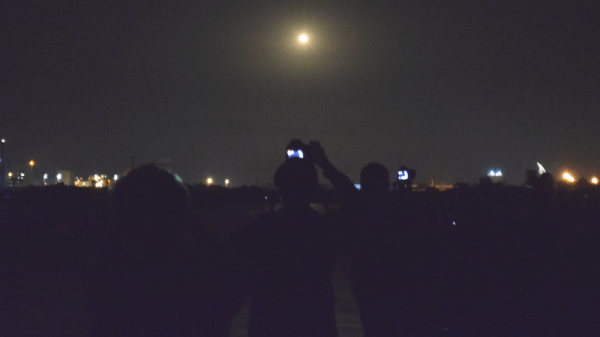
Officially we were there to cover the Cornell Cup Finals being held at Kennedy Space Center, but as it so happens, our arrival in Florida perfectly coincided with the launch of CRS-17, SpaceX’s latest International Space Station resupply mission. Technically this was not part of our assignment. But really, what choice did we have?
Even if our respective bosses didn’t see it as a wasted opportunity, we had to consider the locals. In the few hours we’d been here, it seemed the launch was all anyone wanted to talk about. Everyone from the airport shuttle driver to the waitress who brought us our hash browns reminded us a rocket would be lifting off soon. If we didn’t go, then come Friday afternoon we’d be the only people in Cape Canaveral who didn’t have a personal account of the event. By all indications, an unforgivable cultural faux pas in central Florida.
Of course, the truth of the matter is that we didn’t actually need any convincing to go on this adventure. We had the supreme good fortune of finding ourselves in the vicinity of Kennedy Space Center a few hours before they were going to send a rocket thundering off into the black, and there was no way we could just sleep through it. No, there was never any choice in the matter. We were going.