In the “Automate the Freight” series, I’ve concentrated on stories that reflect my premise that the killer app for self-driving vehicles will not be private passenger cars, but will more likely be the mundane but necessary task of toting things from place to place. The economics of replacing thousands of salary-drawing and benefit-requiring humans in the logistics chain are greatly favored compared to the profits to be made by providing a convenient and safe commuting experience to individuals. Advances made in automating deliveries will eventually trickle down to the consumer market, but it’ll be the freight carriers that drive innovation.
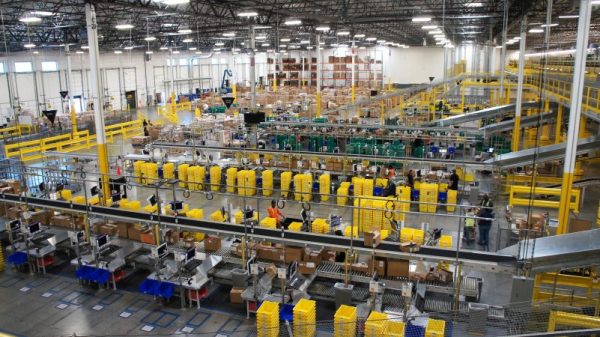
While I’ve concentrated on self-driving freight vehicles, there are other aspects to automating the supply chain that I’ve touched on in this series, from UAV-delivered blood and medical supplies to the potential for automating the last hundred feet of home delivery with curb-to-door robots. But automation of the other end of the supply chain holds a lot of promise too, both for advancing technology and disrupting the entire logistics field. This time around: automated packaging lines, or how the stuff you buy online gets picked and wrapped for shipping without ever being touched by human hands.
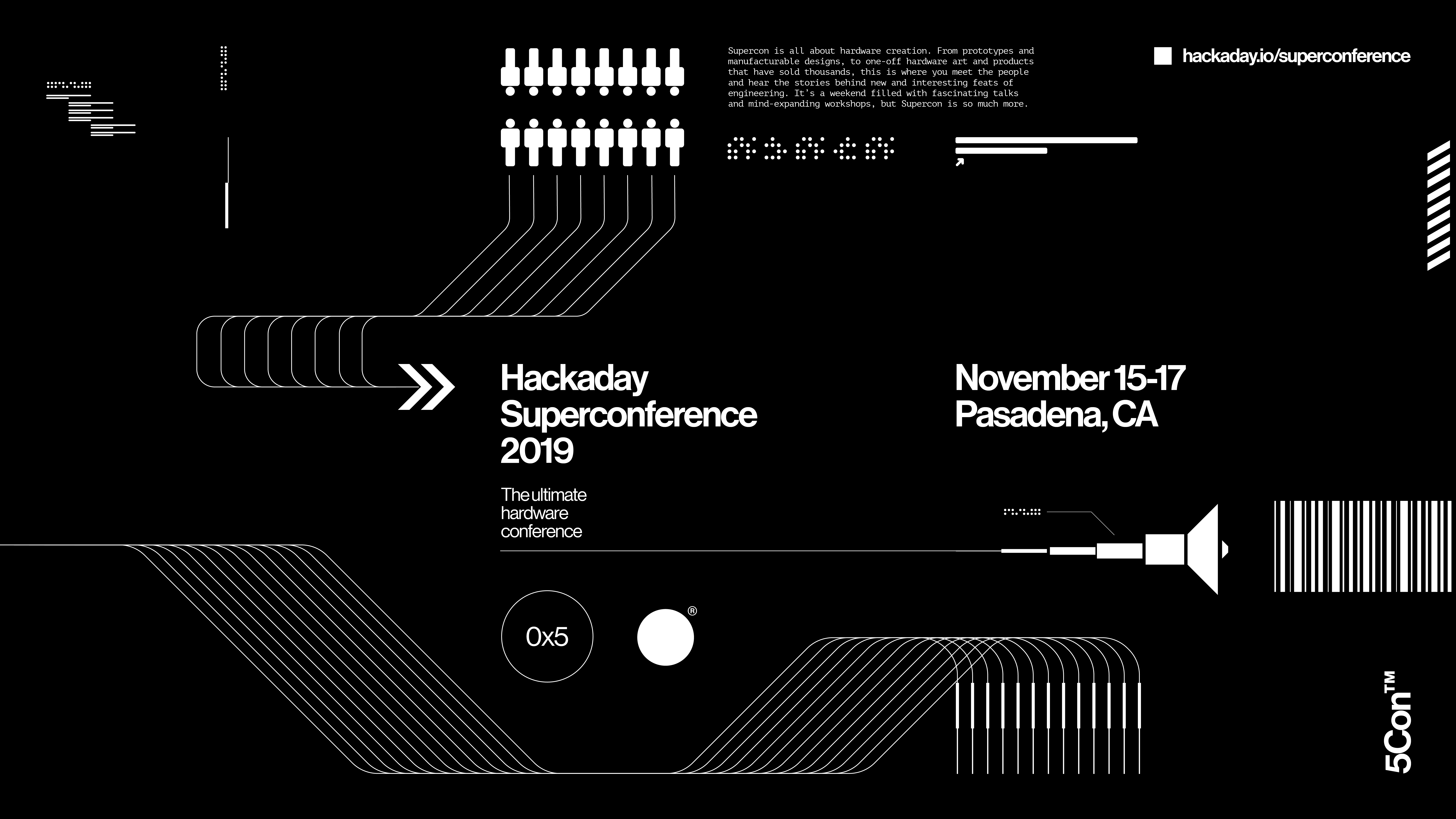
Stop what you’re doing and get your ticket to the Hackaday Superconference. This is the ultimate hardware conference, November 15th, 16th, and 17th in Pasadena, California. It will sell out, especially the early bird tickets which are certain to be snapped up before the end of this day. (Edit: Early Bird tickets are already sold out, but you can still get the Early Bird price by submitting a talk).
Supercon is all about hardware creation. From prototypes and manufacturable designs, to one-off hardware art and products that have sold thousands, this is where you meet the people and hear the stories behind new and interesting feats of engineering. It’s a weekend filled with fascinating talks and mind-expanding workshops, but Supercon is so much more.
This is a Hacker Village where the greenest beginner and the grayest veteran sit shoulder to shoulder to solder, to code, to dream of the future, and to share stories of the past. We want you here, and you need to make it happen. Whether it’s professional development (yes! ask your boss to make this a business outing) or your hard-earned vacation, Supercon will recharge your batteries and top off your inspiration for the year to come.
Yes, I’m talking to you. Core to the mission of the Hackaday Superconference is to encourage more people to speak publicly about everything that goes into designing and manufacturing hardware. This means we want first time speakers just as much as we want seasoned presenters. You will be celebrated at Supercon; the ethos of this community is warm, welcoming, and thankful that you took the time to help everyone learn something interesting.
Don’t stop to ask yourself if you should… yes, we want to read your talk proposal. No topic is too big or too small for consideration. This is your chance to give back as a thank-you to so many people who have helped you gather your own skills over the years. We stand on the shoulders of giants, it’s your turn to be giant.
True Believer Tickets
We like to think of our Early Bird tickets as a nod to the true believers out there. We haven’t published the speakers, the workshops, or really anything else. That info will be public as everything comes together, but by then it may be too late to get a ticket. Right now all we can tell you for certain is that there will be a big celebration to name the grand prize winner of the 2019 Hackaday Prize, there will be a ton of badge hacking on a mind-blowing hardware badge being designed by Sprite_TM (Jeroen Domburg), you will have way too much fun and get far too little sleep, and tickets will sell out. In other words, this will be awesome.
Competitive soldering
Hackaday Prize winners
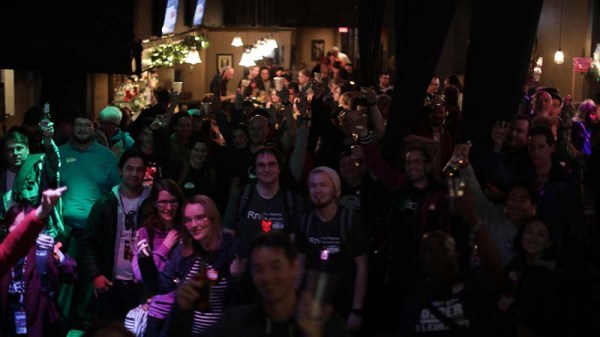
Opening ceremonies were packed tight!
Workshops in full swing
Badge hacking throughout the weekend
Standing room only as Ben Krasnow gives the last talk of the conference on Sunday
Need more convincing? You can watch the recap video from 2018, or dive into the weekend overview, badge-hacking, and competitive soldering roundups. I’ve never met anyone from the first four years of Supercon who regretted buying early bird tickets. I’ve met plenty of people who regretted missing out. Don’t miss out on year five of the movement. This is your community, there is truly something for everyone, and Pasadena is a beautiful place to be in the middle of November. See you at Supercon!
It’s true that I’m not known for keeping particularly regular hours, but even I had my doubts about this plan. We’d go to sleep around midnight, wake up at 3 AM, drive up the coast aimlessly, then turn around and attend a full-day event where we’d have to maintain at least some semblance of professionalism. It was a bad idea, terrible even. But there I was at 11:30 PM sitting in a Waffle House with Thomas, the Supplyframe videographer, getting dangerously close to signing off on it.
Officially we were there to cover the Cornell Cup Finals being held at Kennedy Space Center, but as it so happens, our arrival in Florida perfectly coincided with the launch of CRS-17, SpaceX’s latest International Space Station resupply mission. Technically this was not part of our assignment. But really, what choice did we have?
Even if our respective bosses didn’t see it as a wasted opportunity, we had to consider the locals. In the few hours we’d been here, it seemed the launch was all anyone wanted to talk about. Everyone from the airport shuttle driver to the waitress who brought us our hash browns reminded us a rocket would be lifting off soon. If we didn’t go, then come Friday afternoon we’d be the only people in Cape Canaveral who didn’t have a personal account of the event. By all indications, an unforgivable cultural faux pas in central Florida.
Of course, the truth of the matter is that we didn’t actually need any convincing to go on this adventure. We had the supreme good fortune of finding ourselves in the vicinity of Kennedy Space Center a few hours before they were going to send a rocket thundering off into the black, and there was no way we could just sleep through it. No, there was never any choice in the matter. We were going.
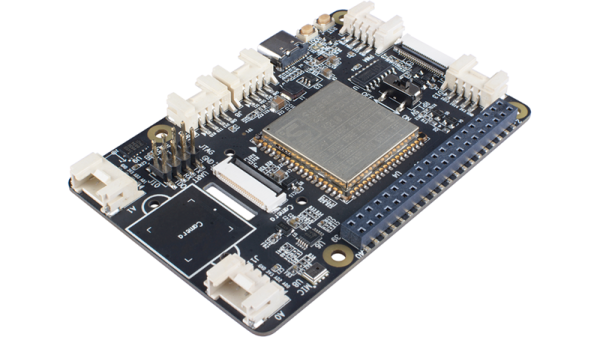
Over the last few years the open-source RISC-V microprocessor has moved from existing only on FPGAs into real silicon, and right now you can buy a RISC-V microcontroller with all the bells and whistles you would ever want. There’s an interesting chip from China called the Sipeed M1 that features a dual-core RISC-V core running at 600MHz, a bunch of I/Os, and because it’s 2019, a neural network processor. We’ve seen this chip before, but now Seeed Studios is selling it as a Raspberry Pi Hat. Is it an add-on board for a Pi, or is it its own standalone thing? Who knows.
The Grove AI Hat for Edge Computing, as this board is called, is built around the Sipeed MAix M1 AI Module with a Kendryte K210 processor. This is a dual-core 64-bit RISC-V chip and it is obviously the star of the show here. In addition to this chip you’ve also got a few Grove headers for digital I/O, I2C, PWM, and a UART. There’s a a USB Type C for power (finally we’re getting away from USB micro power plugs), and of course a 40-pin Raspberry Pi-style header.
This board is essentially a breakout board for the Sipeed M1 chip, which is one of the most interesting new microcontrollers we’ve seen since it launched late last year. There’s a lot of power here, and already people are emulating the Nintendo Entertainment System on this chip with great success. The problem with this chip is that apart from making your own breakout board, there aren’t many options to get it up and running quickly. This is the solution to that; at the very least it’s a Sipeed chip on a board with a power supply, and it’s also a co-processor that can be accessed with Linux and a Raspberry Pi.
When Maker Faire Bay Area closed down early Saturday evening, the fun did not stop: there’s a strong pool of night owls among the maker demographic. When the gates close, the after-parties around San Mateo run late into the night, and Hackaday’s meetup is a strong favorite.
This year Hackaday and Tindie joined forces with Kickstarter and moved our combined event to B Street Station, a venue with more space for hacks than previous years. The drinks started flowing, great people started chatting, basked in an ever present glow of LEDs. A huge amount of awesome hardware showed up, so let’s take a look the demos and stunts that came out to play.
If you own a desktop 3D printer, you’re almost certainly familiar with Slic3r. Even if the name doesn’t ring a bell, there’s an excellent chance that a program you’ve used to convert STLs into the G-code your printer can understand was using Slic3r behind the scenes in some capacity. While there have been the occasional challengers, Slic3r has remained one of the most widely used open source slicers for the better part of a decade. While some might argue that proprietary slicers have pulled ahead in some respects, it’s hard to beat free.
So when Josef Prusa announced his team’s fork of Slic3r back in 2016, it wasn’t exactly a shock. The company wanted to offer a slicer optimized for their line of 3D printers, and being big proponents of open source, it made sense they would lean heavily on what was already available in the community. The result was the aptly named “Slic3r Prusa Edition”, or as it came to be known, Slic3r PE.
Ostensibly the fork enabled Prusa to fine tune print parameters for their particular machines and implement support for products such as their Multi-Material Upgrade, but it didn’t take long for Prusa’s developers to start fixing and improving core Slic3r functionality. As both projects were released under the GNU Affero General Public License v3.0, any and all of these improvements could be backported to the original Slic3r; but doing so would take considerable time and effort, something that’s always in short supply with community developed projects.
Since Slic3r PE still produced standard G-code that any 3D printer could use, soon people started using it with their non-Prusa printers simply because it had more features. But this served only to further blur the line between the two projects, especially for new users. When issues arose, it could be hard to determine who should take responsibility for it. All the while, the gap between the two projects continued to widen.
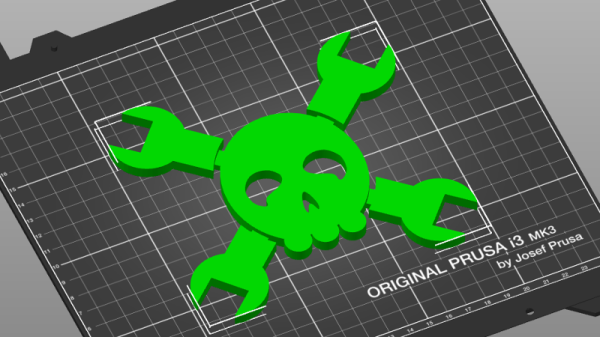
With a new release on the horizon that promised to bring massive changes to Slic3r PE, Josef Prusa decided things had reached a tipping point. In a recent blog post, he announced that as of version 2.0, their slicer would henceforth be known as PrusaSlicer. Let’s take a look at this new slicer, and find out what it took to finally separate these two projects.
Last year marked the 30th anniversary of the Internet Relay Chat protocol (IRC) and it is hard to imagine that [Jarkko Oikarinen] could have foreseen the impact his invention would one day have on the world as we know it. How it would turn from a simple, decentralized real-time communication system for university-internal use into a global phenomenon, connecting millions of users all over the world, forming its own subculture, eventually reaching mainstream status in some parts of the world — including a Eurodance song about a bot topping European music charts.
Those days of glory, however, have long been gone, and with it the version of an internet where IRC was the ideal choice. What was once a refuge to escape the real world has since become the fundamental centerpiece of that same real world, and our ways of communicating with each other has moved on with it. Nevertheless, despite a shift in mainstream and everyday communication behavior, IRC is still relevant enough today, and going especially strong in the open source community, with freenode, as one of the oldest networks, being the most frequently used one, along some smaller ones like OFTC and Mozilla’s own dedicated network. But that is about to change.
Last month, Mozilla’s envoy [Mike Hoye] announced the decommissioning of irc.mozilla.org within “the next small number of months“, and moving all communication to a new, or at least different system. And while this only affects Mozilla’s own, standalone IRC network and projects, and not the entire open source community, it is a rather substantial move, considering Mozilla’s overall reach and impact on the internet itself — past, present, and now even more the future. Let’s face it, IRC has been dying for years, but there is also no genuine alternative available yet that could truly replace it. With Mozilla as driving force, there is an actual chance that they will come up with a worthy replacement that transforms IRC’s spirit into the modern era.