The late 1950s and early 1960s were a tumultuous time in world history. The Cold War between the East and the West was in full-swing, driving the new fields of nuclear weapons and space exploration and giving the period its dual monikers of “Atomic Age” and “Space Age.”
Changes in these fields often went hand in glove, with developments in one requiring responses in the other. In 1958, the US conducted nuclear tests in the Pacific that effectively destroyed the ionosphere over the test site and shut down high-frequency communications to places like Hawaii and New Zealand. The strategic implications of this were clear, and the US began looking for ways for the military to reduce its reliance on HF communications and ionospheric skip by using space-based assets to communicate at much higher frequencies.
First there was [Geohot]’s lofty goal to build a hacker’s version of the self-driving car. Then came comma.ai and a whole bunch of venture capital. After that, a letter from the Feds and a hasty retreat from the business end of things. The latest development? comma.ai’s openpilot project shows up on GitHub!
If you’ve got either an Acura ILX or Honda Civic 2016 Touring addition, you can start to play around with this technology on your own. Is this a good idea? Are you willing to buy some time on a closed track?
A quick browse through the code gives some clues as to what’s going on here. The board files show just how easy it is to interface with these cars’ driving controls: there’s a bunch of CAN commands and that’s it. There’s some unintentional black comedy, like a (software) crash-handler routine named crash.py.
What’s shocking is that there’s nothing shocking going on. It’s all pretty much straightforward Python with sprinklings of C. Honestly, it looks like something you could get into and start hacking away at pretty quickly. Anyone want to send us an Acura ILX for testing purposes? No promises you’ll get it back in one piece.
If you missed it, read up on our coverage of the rapid rise and faster retreat of comma.ai. But we don’t think the game is over yet: comma.ai is still hiring. Are open source self-driving cars in our future? That would be fantastic!
Via Endagadget. Thanks for the tip, [FaultyWarrior]!
Nadya Peek is one of the hackers that should require no introduction for the regular Hackaday reader. She is a postdoc at the Center for Bits and Atoms at the MIT Media Lab. She’s responsible for Popfab, a CNC machine that fits in a suitcase and one of the first implementations of a Core XY stage we’ve seen. Nadya has joined the ranks of Rudolf Diesel, Nikola Tesla, Mikhail Kalashnikov, and George W.G. Ferris by having a very tiny piece of the Novena laptop bear her name. She’s built cardboard CNC machines, and taken the idea of simple, easy to build printers, routers, and drawbots worldwide. She just defended her thesis, the gist of which is, ‘How to rapidly prototype rapid prototyping machines.’ She’s also one of this year’s Hackaday Prize judges, for which we have the utmost appreciation.
This year, the organizers of the Fab 12 conference on digital fabrication in Shenzhen turned to Nadya and her team to bring their amazing experience to conference attendees. A workshop was in order, but Nadya didn’t have time to organize the logistics. The conference organizers made a deal: the Center for Bits and Atoms would teach a workshop, but getting all the materials and electronics was the responsibility of the organizers.
Upon arriving at the Shenzhen Sheridan, Nadya found the organizers didn’t hold up their end of the bargain. The cardboard, motors, electronics, and glue were nowhere to be found. A “rider” doesn’t quite translate from English, it seems. This is Shenzhen, though, where you can buy all the cardboard, motors, electronics, and iPhone clones you could imagine. What was the solution to this problem? Founding a company in Shenzhen for eight days.
Half a tourist’s guide to Shenzhen and half a deconstruction of what goes into cardboard CNC, Nadya’s talk for the 2016 Hackaday SuperConference covers what happens when you have a week to build a company that will build machines that build machines.
Would you use your tech prowess to cheat at the Pinewood Derby? When your kid brings home that minimalist kit and expects you to help engineer a car that can beat all the others in the gravity-powered race, the temptation is there. But luckily, there are some events that don’t include the kiddies and the need for parents to assume the proper moral posture. When the whole point of the Pinewood Derby is to cheat, then you pull out all the stops, and you might try building an electrodynamic suspension hoverboard car.
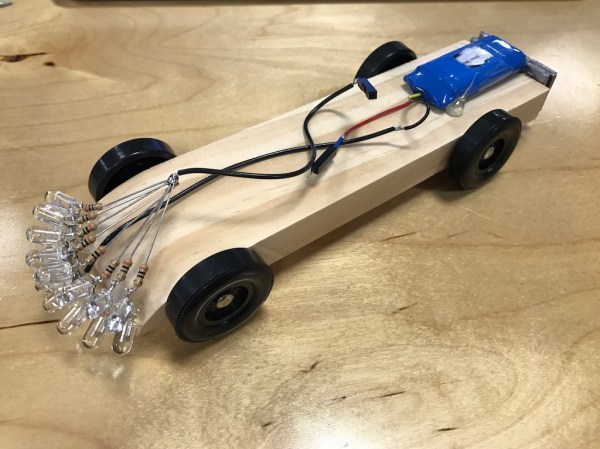
Fortunately for [ch00ftech], the team-building Derby sponsored by his employer is a little looser with the rules than the usual event. Loose enough perhaps to try a magnetically levitating car. The aluminum track provided a perfect surface to leverage Lenz’s Law. [ch00ftech] tried different arrangements of coils and drivers in an attempt to at least reduce the friction between car and track, if not outright levitate it. Sadly, time ran out and physics had others ideas, so [ch00ftech], intent on cheating by any means, tried spoofing the track timing system with a ridiculous front bumper of IR LEDs. But even that didn’t work in the end, and poor [ch00f]’s car wound up in sixth place.
So what could [ch00ftech] had done better? Was he on the right course with levitation? Or was spoofing the sensors likely to have worked with better optics? Or should he have resorted to jet propulsion or a propeller drive? How would you cheat at the Pinewood Derby?
Fail of the Week is a Hackaday column which celebrates failure as a learning tool. Help keep the fun rolling by writing about your own failures and sending us a link to the story — or sending in links to fail write ups you find in your Internet travels.
I believe higher quality learning happens from sharing failure than from sharing stories of success. If you have set your mind to living on contract, I present this cheat sheet of some of the most simple and effective ways to muck it all up that have surprisingly little or nothing to do with your technical skill, knowledge, or even deliverables.
The previous installment of Life on Contract discussed how one might find clients as an engineering contractor or consultant while also taking a bit of time to pull apart the idea of whether life on contract is appropriate as opposed to, for example, bootstrapping a business instead. Assuming you are set on working as a contractor, let’s talk about what happens after you have found a prospective client (or perhaps more likely: after they have found you.)
WARNING: this article features an utter lack of success tips and tricks. Partly because those can be found in any seminar or business self-help book, but mostly because I do not have a foolproof recipe for success, and cheat codes to unlock easy mode still elude me. But I have witnessed (or committed) and reflected on many excellent ways to fail at contracting; or at the very least succeed in not being invited back.
Just because I won’t be sharing success stories doesn’t mean success has no learning value. Got a success story, or a better way to fail? Tell us about it in the comments!
Over on Hackaday.io, [bobricius] took this technology and designed something great. It’s a GSM cell phone with a case made out of FR4. It’s beautiful, and if you’re ever in need of a beautifully crafted burner phone, this is the one to build.
The components, libraries, and toolchains to build a cellphone from scratch have been around for a very long time. Several years ago, the MIT Media Lab prototyped a very simple cellphone on a single piece of FR4. It made calls, but not much else. It was ugly, but it worked. [Bobricius] took the idea and ran with it.
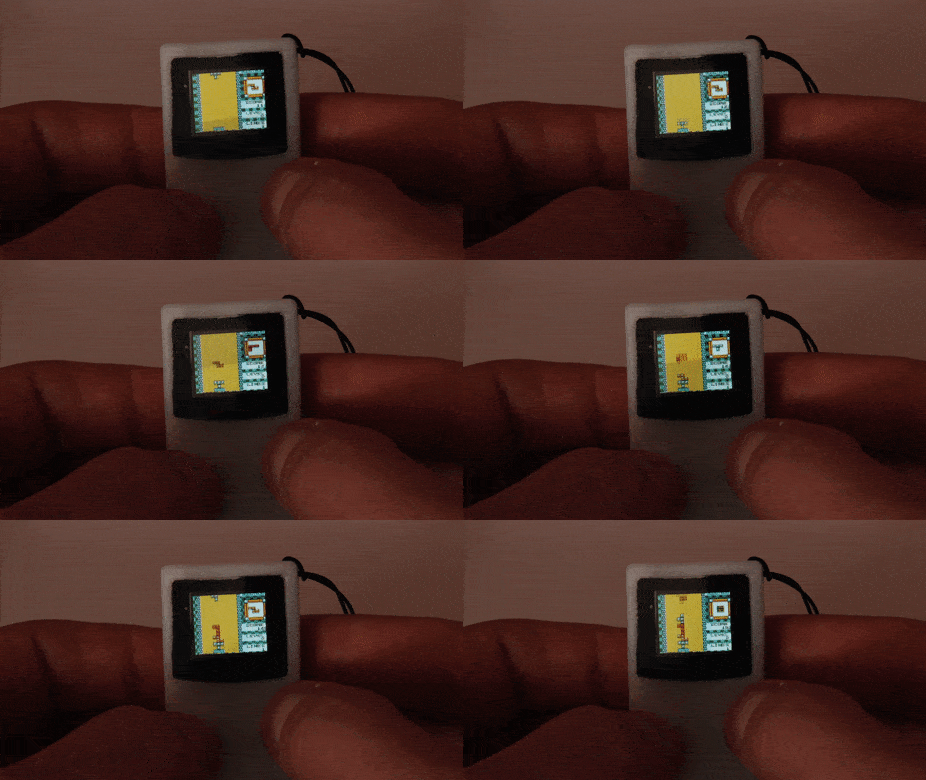
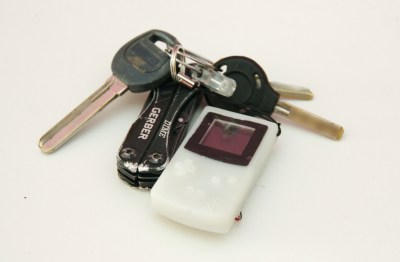
This is likely the world’s smallest fully-functional Game Boy Color, able to play all of the games using the tiny direction pad and buttons, with onboard display and battery and in the original form factor. This is an incredible hack which presents a tour de force in hardware and software. This will easily rank in the top five hacks you’ve seen this year.
I’m sure that many of you have fond memories of your first handheld games. This will be Game Boy for most, and we admit they had fairly decent portability and battery life that puts many smart phones to shame. Despite this, Sprite_TM always dreamed of an eminently more portable version and to his adolescent delight he discovered a key chain version of the Game Boy. Unfortunately, he was duped. The keychain looked like a Game Boy but only functioned as a clock.
But now, decades later, technology has progressed as have his own skills. For his talk at the 2016 Hackaday SuperConference, Sprite_TM actually built his childhood dream.




 Fail of the Week is a Hackaday column which celebrates failure as a learning tool. Help keep the fun rolling by writing about your own failures and


 I’m sure that many of you have fond memories of your first handheld games. This will be Game Boy for most, and we admit they had fairly decent portability and battery life that puts many smart phones to shame. Despite this, Sprite_TM always dreamed of an eminently more portable version and to his adolescent delight he discovered a key chain version of the Game Boy. Unfortunately, he was duped. The keychain looked like a Game Boy but only functioned as a clock.