The Flight Of The Seagull: Valentina Tereshkova, Cosmonaut

That the Cold War was a tense and perilous time in history cannot be denied, and is perhaps a bit of an understatement. The world stood on the edge of Armageddon for most of it, occasionally stepping slightly over the line, and thankfully stepping back before any damage was done.

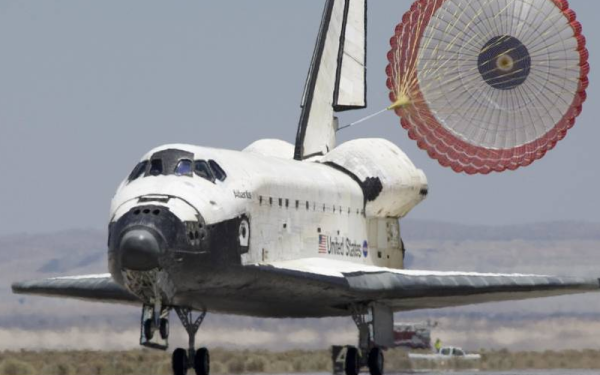
As nerve-wracking as the Cold War was, it had one redeeming quality: it turned us into a spacefaring species. Propelled by national pride and the need to appear to be the biggest kid on the block, the United States and the Soviet Union consistently ratcheted up their programs, trying to be the first to make the next major milestone. The Soviets made most of the firsts, making Sputnik and Gagarin household names all over the world. But in 1962, they laid down a marker for a first of epic proportions, and one that would sadly stand alone for the next 19 years: they put the first woman, Valentina Tereshkova, into space.

Continue reading “The Flight Of The Seagull: Valentina Tereshkova, Cosmonaut”

Stars Looking A Bit Dim? Throw Some Math At Them.

As the cost of high-resolution images sensors gets lower, and the availability of small and cheap single board computers skyrockets, we are starting to see more astrophotography projects than ever before. When you can put a $5 Raspberry Pi Zero and a decent webcam outside in a box to take autonomous pictures of the sky all night, why not give it a shot? But in doing so, many hackers are recognizing a fact well-known to traditional telescope jockeys: seeing a few stars is easy, seeing a lot of stars is another story entirely.

The problem is that stars are fairly dim; a problem compounded by the light pollution you get unless you’re out in a rural area. You can’t just brighten up the images either, as that only increases the noise in the image. A programmer always in search of a challenge, [Benedikt Bitterli] decided to take a shot at using software to improve astrophotography images. He documented the entire process, failures and all, on his blog for anyone else who might be curious about what it really takes to create the incredible images of the night sky we see in textbooks.

In principle it’s simple: just take a lot of pictures of the sky, stack them on top of each other, and identify which points of light are stars and which ones are noise artifacts. But of course the execution is considerably more difficult. For one thing, unless the camera was on a mount that was automatically tracking the sky, the stars will have slightly moved in each image. To help with this process, [Benedikt] used a navigational trick that humanity has relied on for millennia: mapping constellations. By comparing groupings of stars in each image, his software is able to accurately overlay each image.

But that’s only one part of the equation. In his post, [Benedikt] goes over the incredible amount of math that goes into identifying individual stars in the sea of noise you get when a digital image sensor looks into the black. You certainly don’t need to understand all the math to appreciate the final results, but it’s a fascinating read for those with an interest in computer vision concepts.

This kind of software is precisely what you want to pair with your 3D printed star tracker, or even better a Raspberry Pi sky monitoring station.

[Thanks to Helio Machado for the tip.]

3D Printed Clockwork Star Tracker

Astrophotography is one of those things you naturally assume must be pretty difficult; surely something so awesome requires years of practice and specialized equipment which costs as much as your car. You shake your fist at the sky (since you have given up on taking pictures of it), and move on with your life. Another experience you’ll miss out on.

But in reality, dramatic results don’t necessarily require sticker shock. We’ve covered cheap DIY star trackers before on Hackaday, but this design posted on Thingiverse by [Tinfoil_Haberdashery] is perhaps the easiest we’ve ever seen. It keeps things simple by using a cheap 24 hour clock movement to rotate a GoPro as the Earth spins. The result is a time-lapse where the stars appear to be stationary while the horizon rotates.

Using a 24 hour clock movement is an absolutely brilliant way to synchronize the camera with the Earth’s rotation without the hoops one usually has to jump through. Sure you could do with a microcontroller, a stepper motor, and some math. But a clock is a device that’s essentially been designed from the ground up for keeping track of the planet’s rotation, so why not use it?

If there’s a downside to the clock movement, it’s the fact that it doesn’t have much torque. It was intended to move an hour hand, not your camera, so it doesn’t take much to stall out. The GoPro (and other “action” cameras) should be light enough that it’s not a big deal; but don’t expect to mount your DSLR up to one. Even in the video after the break, it looks like the clock may skip a few steps on the way down as the weight of the camera starts pushing on the gears.

If you want something with a bit more muscle, we’ve recently covered a very slick Arduino powered “barn door” star tracker. But there’re simpler options if you’re looking to get some shots tonight.

Continue reading “3D Printed Clockwork Star Tracker”

Cloverleaf Satellite Antenna Mounted on a Pole

Tracking CubeSats For $25

CubeSats are tiny satellites which tag along as secondary payloads during launches. They have to weigh in at under 1.33 kg, and are often built at low cost. There’s even open source designs for these little spacecrafts. Over 800 CubeSats have been launched over the last few years, with many more launches scheduled in the near future.

[Thomas Cholakov] coupled a homemade cloverleaf antenna to a software-defined radio to track some of these satellites. The antenna is built out of copper-clad wire cut to the correct length to receive 437 MHz signals. Four loops are connected together and terminated to an RF connector.

This homebrew antenna is connected into a RTL-SDR dongle. The dongle picks up the beacon signals sent by the satellites and provides the data to a PC. Due to the motion of the satellites, their beacons can be easily identified by the Doppler shift of the frequency.

[Thomas] uses SDR Console to receive data from the satellites. While the demo only shows basic receiving, much more information on decoding these satellites can be found on the SDR Satellites website.

This looks like a fun weekend project, and probably the cheapest aerospace related project possible. After the break, watch the full video explaining how to build and set up the antenna and dongle.

Continue reading “Tracking CubeSats For $25”

Hacking When It Counts: The Pioneer Missions

If the heady early days of space exploration taught us anything, it was how much we just didn’t know. Failure after failure mounted, often dramatic and expensive and sometimes deadly. Launch vehicles exploded, satellites failed to deploy, or some widget decided to give up the ghost at a crucial time, blinding a multi-million dollar probe and ending a mission long before any useful science was done. For the United States, with a deadline to meet for manned missions to the moon, every failure in the late 1950s and early 1960s was valuable, though, at least to the extent that it taught them what not to do next time.

For the scientists planning unmanned missions, there was another, later deadline looming that presented a rare opportunity to expand our knowledge of the outer solar system, a strange and as yet unexplored wilderness with the potential to destroy anything humans could build and send there. Before investing billions in missions to take a Grand Tour of the outer planets, they needed more information. They needed to send out some Pioneers.

Continue reading “Hacking When It Counts: The Pioneer Missions”

NASA Remotely Hacks Curiosity’s Rock Drill

We have a lot of respect for the hackers at NASA’s Jet Propulsion Laboratory (JPL). When their stuff has a problem, it is often millions of miles away and yet they often find a way to fix it anyway. Case in point is the Curiosity Mars rover. Back in 2016, the probe’s rock drill broke. This is critical because one of the main things the rover does is drill into rock samples, collect the powder and subject it to analysis. JPL announced they had devised a way to successfully drill again.

The drill failed after fifteen uses. It uses two stabilizers to steady itself against the target rock. A failed motor prevents the drill bit from retracting and extending between the stabilizers. Of course, sending a repair tech 60 million miles is not in the budget, so they had to find another way. You can see a video about the way they found, below.

Continue reading “NASA Remotely Hacks Curiosity’s Rock Drill”

SpaceX’s Next Giant Leap: Second Stage Recovery

With the successful launch of the Bangabandhu-1 satellite on May 11th, the final version of the Falcon 9 rocket has finally become operational. Referred to as the “Block 5”, this version of the rocket is geared specifically towards reuse. The lessons learned from the recovery and reflight of earlier builds of the F9 have culminated into rocket that SpaceX hopes can go from recovery to its next flight in as few as 24 hours. If any rocket will make good on the dream of spaceflight becoming as routine as air travel, it’s going to be the Falcon 9 Block 5.

While there might still be minor tweaks and improvements made to Block 5 over the coming years, it’s safe to say that first stage recovery of the Falcon 9 has been all but perfected. What was once the fodder of campy science fiction, rockets propulsively lowering themselves down from the sky and coming to rest on spindly landing legs that popped out of the sides, is now a reality. More importantly, not only is SpaceX able to bring the towering first stage back from space reliably, they’re able to refuel it, inspect it, and send it back up without having to build a new one for each mission.

But as incredible a technical accomplishment as this is, SpaceX still isn’t recovering the entire Falcon 9 rocket. At best, they have accomplished the same type of partial reusability that the Space Shuttle demonstrated on its first flight all the way back in 1981. Granted they are doing it much faster and cheaper than it was done on the Shuttle, but it still goes against the classic airplane analogy: if you had to replace a huge chunk of the airliner every time it landed, commercial air travel would be completely impractical.

SpaceX has already started experimenting with recovering and reusing the payload fairings of the Falcon 9, and while they haven’t pulled it off yet, they’ll probably get there. That leaves only one piece of the Falcon 9 unaccounted for: the second stage. Bringing the second stage back to Earth in one piece might well be the most challenging aspect of developing the Falcon 9. But if SpaceX can do it, then they’ll have truly developed humanity’s first fully reusable rocket, capable of delivering payloads to space for little more than the cost of fuel.

Continue reading “SpaceX’s Next Giant Leap: Second Stage Recovery”