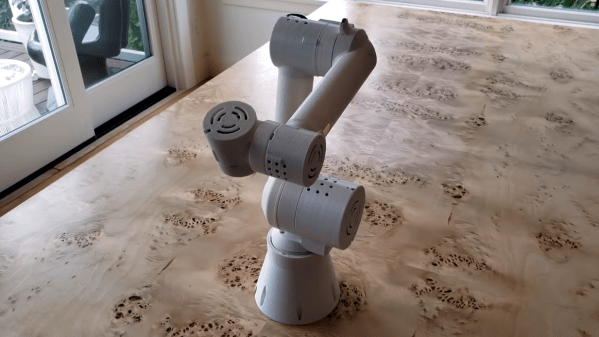
[John Lauer] has been hard at work re-thinking robot arms. His project to create modular, open source actuators that can be connected to one another to form an arm is inspiring, and boasts an impressively low parts cost as well. The actuators are each self-contained, with an ESP32 and a design that takes advantage of the form factors of inexpensive modules and parts from vendors like Aliexpress.

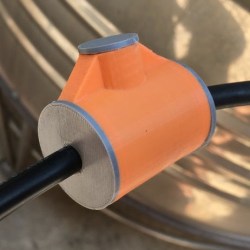
Each module has 3D printed gears (with an anti-backlash flex spline), an RGB LED for feedback, integrated homing, active cooling, a slip ring made from copper tape, and a touch sensor dial on the back for jogging and training input. The result is a low backlash, low cost actuator that keeps external wiring to an absolute minimum.
Originally inspired by a design named WE-R2.4, [John] has added his own twist in numerous ways, which are best summarized in the video embedded below. That video is number three in a series, and covers the most interesting developments and design changes while giving an excellent overview of the parts and operation (the video for part one is a basic overview and part two shows the prototyping process, during which [John] 3D printed the structural parts and gears and mills out a custom PCB.)
Continue reading “Robot Joints Go Modular With This Actuator Project”