Into The Plasmaverse Hack Chat

Join us on Wednesday, September 23 at noon Pacific for the Into the Plasmaverse Hack Chat with Jay Bowles!

Most kids catch on to the fact that matter can exist in three states — solid, liquid, and gas — pretty early in life, usually after playing in the snow a few times. The ice and snowflakes, the wet socks, and the fog of water vapor in breath condensing back into water droplets all provide a quick and lasting lesson in not only the states of matter but the transitions between them. So it usually comes as some surprise later when they learn of another and perhaps more interesting state: plasma.

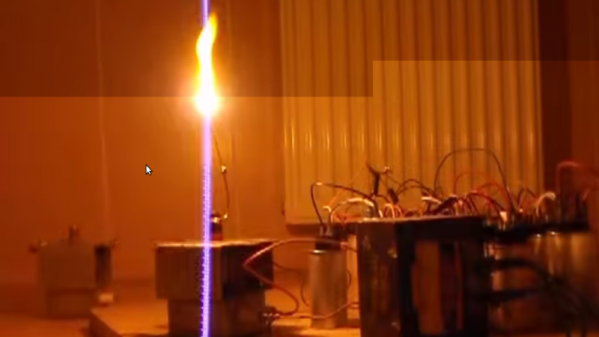
For the young scientist, plasma is not quite so easy to come by as the other phases of matter, coming about as it does from things they’re usually not allowed to muck with. High voltage discharges, strong electromagnetic fields, or simply a lot of heat can strip away electrons from a gas and make the ionized soup that we call plasma. But once they catch the bug, few things can compare to the dancing, frenetic energy of a good plasma discharge.

Jay Bowles picked up the plasma habit quite a while back and built his YouTube channel around it. Tesla coils, Van de Graaff generators, coils and capacitors of all types — whatever it takes to make a spark, Jay has probably made and used it to make the fourth state of matter. He’ll join us on the Hack Chat to talk about all the fun things to do with plasma, high-voltage discharge, and whatever else sparks his interest.

join-hack-chatOur Hack Chats are live community events in the Hackaday.io Hack Chat group messaging. This week we’ll be sitting down on Wednesday, September 23 at 12:00 PM Pacific time. If time zones baffle you as much as us, we have a handy time zone converter.

Click that speech bubble to the right, and you’ll be taken directly to the Hack Chat group on Hackaday.io. You don’t have to wait until Wednesday; join whenever you want and you can see what the community is talking about.
Continue reading “Into The Plasmaverse Hack Chat”

This Geiger Counter Has Few Parts

With all the focus on biological problems, we might forget that sometimes it’s handy to know about radiation hazards, too. [Ryan Harrington] shows us how to make a Geiger counter with very few parts, and you can see the results in the video below.

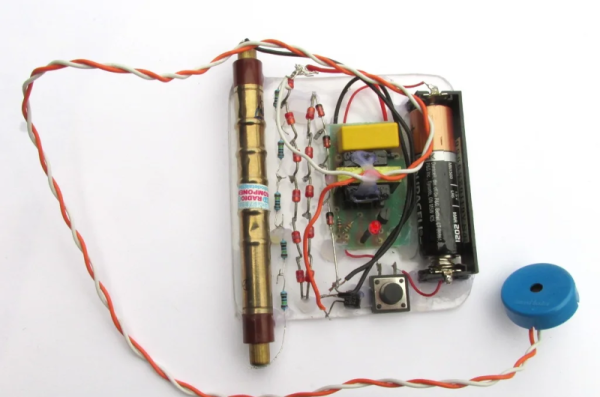
The glut of surplus Russian tubes has made this a common project, but we were amused to see the main part of the high-voltage supply was gutted from a cheap electronic flyswatter sourced from Harbor Freight. Even without a coupon, it only costs about $4.

There’s also a stack of zener diodes, a transistor, and some resistors. A battery, a piezo speaker, and a switch round out the bill of materials. Even then, the switch was upcycled from the flyswatter, so there’s not much to buy.

Continue reading “This Geiger Counter Has Few Parts”

A Miniature Power Supply For High Voltage Hacking

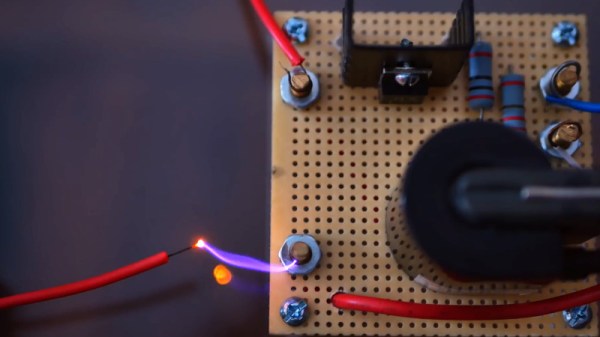
If you’re looking to experiment with plasma, you’re going to need a high voltage power supply. Usually that means something big, complex, and (naturally) expensive. But it doesn’t have to be. As [Jay Bowles] demonstrates in his latest Plasma Channel video, you can put together a low-cost power supply capable of producing up to 20,000 volts that fits in the palm of your hand. Though you should probably just put the thing down on a table when in use…

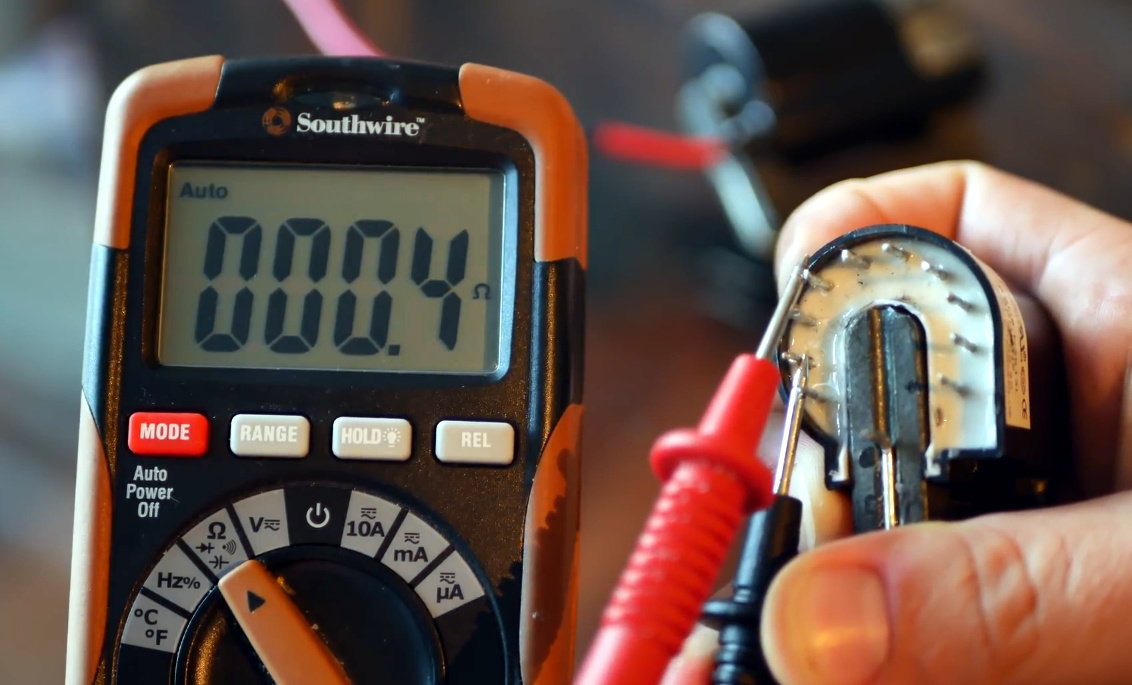
Finding the feedback coil with a multimeter.

The secret to the build is the flyback transformer. A household staple during the era of CRT televisions, these devices can still be readily found online or even salvaged from a broken TV. We’d recommend searching eBay for new old stock (NOS) transformers rather than risk getting blown through a wall while poking around in an old TV you found on the side of the road, but really it all depends on your experience level with this sort of thing.

In any event, once you have the flyback transformer in hand, the rest of the build is very simple. [Jay] demonstrates how you can determine the pinout for your transformer even if you can’t find a datasheet for it, and then proceeds to assemble the handful of ancillary parts necessary to drive it. Housed on a scrap of perfboard and mounted to a piece of plastic to keep stray objects away from the sparky bits underneath, this little power supply would be a reliable workhorse for anyone looking to start experimenting with high voltage. Perhaps an ionic lifter is in your future?

Readers with a photographic memory may recall that [Jay] used this same diminutive power supply in his recently completed water-based Marx generator.

Continue reading “A Miniature Power Supply For High Voltage Hacking”

How About A Nice Cuppa TEA Laser?

If lasers are your hobby, you face a conundrum. There are so many off-the-shelf lasers that use so many different ways of amplifying and stimulating light that the whole thing can be downright — unstimulating. Keeping things fresh therefore requires rolling your own lasers, and these DIY nitrogen TEA and dye lasers seem like a fun way to go.

These devices are the work of [Les Wright], who takes us on a somewhat lengthy but really informative tour of transversely excited atmospheric (TEA) lasers. The idea with TEA lasers is that a gas, often carbon dioxide in commercial lasers but either air or pure nitrogen in this case, is excited by a high-voltage discharge across long parallel electrodes. TEA lasers are dead easy to make — we’ve covered them a few times — but as [Les] points out, that ease of construction leads to designs that are more ad hoc than engineered.

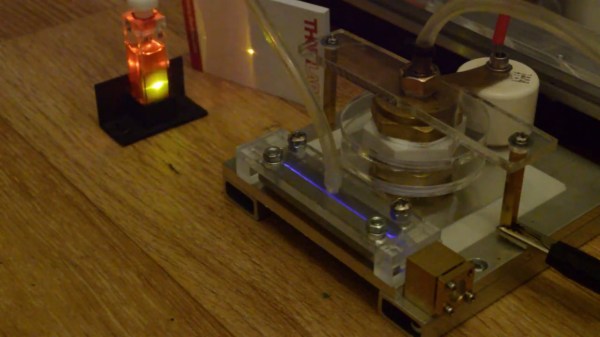
In the video below, [Les] presents three designs that are far more robust than the typical TEA laser. His lasers use capacitors made from aluminum foil with polyethylene sheets for dielectric, sometimes with the addition of beautiful “doorknob” ceramic caps too. A spark gap serves as a very fast switch to discharge high voltage across the laser channel, formed by two closely spaced aluminum hex bars. Both the spark gap and the laser channel can be filled with low-pressure nitrogen. [Les] demonstrates the power and the speed of his lasers, which can even excite laser emissions in a plain cuvette of rhodamine dye — no mirrors needed! Although eye protection is, of course.

These TEA lasers honestly look like a ton of fun to build and play with. You might not be laser welding or levitating stuff with them, but that’s hardly the point.

Continue reading “How About A Nice Cuppa TEA Laser?”

Pour Yourself A Glass Of 100,000 Volts

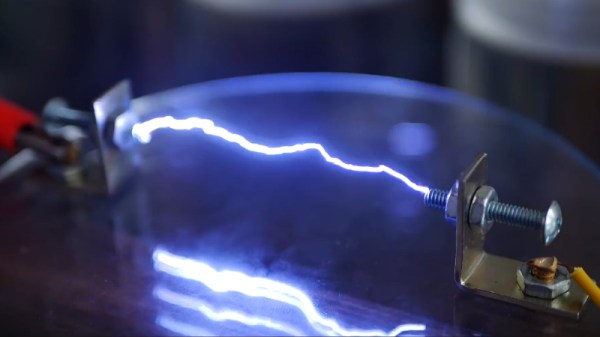
You’d be hard pressed to find a hacker or maker who doesn’t have a soft spot for the tantalizing buzz and snap of a high voltage spark gap, but it remains the sort of project that most of us don’t take on personally. There’s a perceived complexity in building a device capable of shooting a proper spark through several inches of open air, with connotations of exotic components and massive hand-wound coils. Plus, nobody wants to inadvertently singe off their eyebrows.

While the latest video from [Jay Bowles] might not assuage anyone’s fear of performing impromptu electrolysis, it does at least prove that you don’t need to have a laboratory full of gear to produce six figure voltages. In fact, you don’t even need much in the way of electronics: the key components of this DIY Marx generator are made with little more than water and some household items.

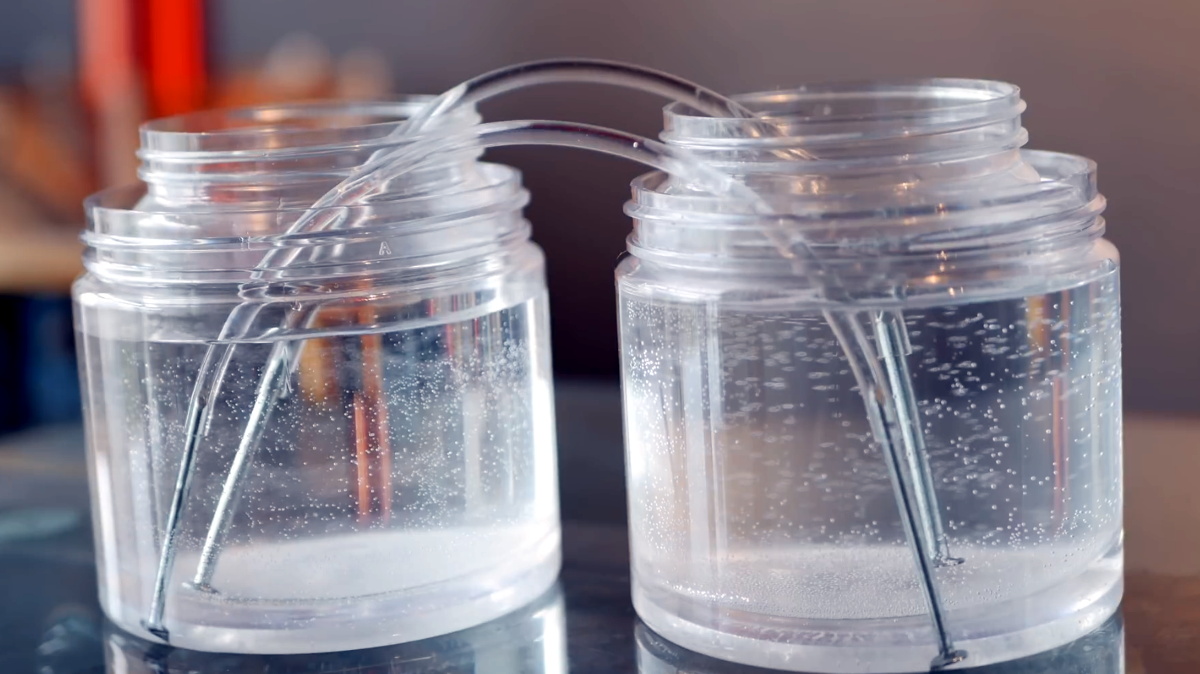
This is made possible by the fact that the conductivity of water can be changed depending on what’s been dissolved into it. Straight tap water is a poor enough conductor that tubes of it can be used in place of high voltage resistors, while the addition of some salt and a plastic insulating layer makes for a rudimentary capacitor. You’ll still need wires to connect everything together and some bits of metal to serve as spark gaps, but nothing you won’t find lurking in the parts bin.

Of course, water and a smattering of nails won’t spontaneously generate electricity. You need to give it a bit of a kick start, and for that [Jay] is using a 15,000 volt DC flyback power supply that looks like it may have been built with components salvaged from an old CRT television. While the flyback transformer alone could certainly generate some impressive sparks, this largely liquid Marx generator multiplies the input voltage to produce a serious light show.

We’re always glad to see a new video from the perennially jovial [Jay] come our way. While his projects might not always be practical in the strictest sense, they never fail to inspire a lively discussion about the fascinating applications of high voltage.

Continue reading “Pour Yourself A Glass Of 100,000 Volts”

Swap Your Microwave For A High Voltage Stereo

When building a new project, common wisdom suggests to avoid “reinventing the wheel”, or doing something simple from scratch that’s easily available already. However, if you can build a high-voltage wheel, so to speak, it might be fun just to see what happens. [Dan] decided to reinvent not the wheel, but the speaker, and instead of any conventional build he decided to make one with parts from a microwave and over 6,000 volts.

The circuit he constructed works essentially like a Tesla coil with a modulated audio signal as an input. The build uses the high voltage transformer from the microwave too, which steps the 240 V input up to around 6 kV. To modulate that kind of voltage, [Dan] sends the audio signal through a GU81M vacuum tube with the support of a fleet of high voltage capacitors. The antenna connected to the magnetron does tend to catch on fire somewhere in the middle of each song, so it’s not the safest device around even if the high voltage can be handled properly, but it does work better than expected as a speaker.

If you want a high-voltage speaker that (probably) won’t burn your house down, though, it might be best to stick to a typical Tesla coil. No promises though, since working with high voltages typically doesn’t come with safety guarantees.

Continue reading “Swap Your Microwave For A High Voltage Stereo”

Washing Your Hands With 20,000 Volts

These last few weeks we’ve all been reminded about the importance of washing our hands. It’s not complicated: you just need soap, water, and about 30 seconds worth of effort. In a pinch you can even use an alcohol-based hand sanitizer. But what if there was an even better way of killing bacteria and germs on our hands? One that’s easy, fast, and doesn’t even require you to touch anything. There might be, if you’ve got a high voltage generator laying around.

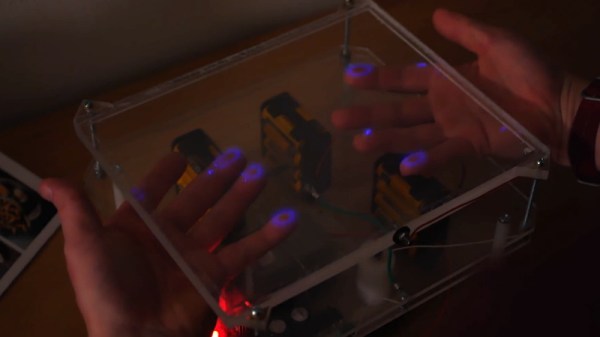
In his latest video, [Jay Bowles] proposes a novel concept: using the ozone generated by high-voltage corona discharge for rapid and complete hand sterilization. He explains that there’s plenty of research demonstrating the effectiveness of ozone gas a decontamination agent, and since it’s produced in abundance by coronal discharge, the high-voltage generators of the sort he experiments with could double as visually striking hand sanitizers.

Looking to test this theory, [Jay] sets up an experiment using agar plates. He inoculates half of the plates with swabs that he rubbed on his unwashed hands, and then repeats the process after passing his hands over the high-voltage generator for about 15 seconds. The plates were then stored at a relatively constant 23°C (75°F), thanks to the use of his microwave as a makeshift incubator. After 48 hours, the difference between the two sets of plates is pretty striking.

Despite what appears to be the nearly complete eradication of bacteria on his hands after exposing them to the ozone generator, [Jay] is quick to point out that he’s not trying to give out any medical advice with this video. This simple experiment doesn’t cover all forms of bacteria, and he doesn’t have the facilities to test the method against viruses. The safest thing you can do right now is follow the guidelines from agencies like the CDC and just wash your hands the old fashioned way; but the concept outlined here certainly looks worthy of further discussion and experimentation.

Regular viewers of his channel may notice that the device in this video as actually a modified version of the hardware he used to experiment with electrophotography last year.

Continue reading “Washing Your Hands With 20,000 Volts”