The greatest bit of consumer electronics is shipping and the reviews are out: Amazon’s Alexa-enabled microwave is a capable microwave, but befuddling to the voice-controlled-everything neophyte. Voice controlled everything is the last hope we have for technological innovation; it’s the last gasp of the consumer electronics industry. This is Amazon’s first thing with a built-in voice assistant, and while this is a marginally capable microwave at only 700 Watts — fine for a college dorm, but it’s generally worth shelling out a bit more cash for a 1000 Watt unit — the controls are befuddling. The first iteration is always hard, and we’re looking forward to the Amazon Alexa-enabled toaster, toothbrush, vacuum cleaner, and Bezos shrine.
Need a laser cutter, like crowdfunding campaigns, and know literally nothing about laser cutters? Have we got something for you. The Etcher Laser crowdfunding campaign has been pinging my email non-stop, and they’ve got something remarkable: a diode laser cutter engraver for $500. It comes in a neat-looking enclosure, so it’s sure to raise a lot of money.
A while back [Paulusjacobus] released an Arduino-based CNC controller for K40 laser cutters. There were a few suggestions to upgrade this to the STM32, so now this CNC controller is running on a Blue Pill. Yes, it’s great and there’s more floating points and such and such, so now this project is a Kickstarter project. Need a CNC controller based on the STM32? Boom, you’re done. It’s also named the ‘Super Gerbil’, which is an awesome name for something that is effectively a GRBL controller. Naming things is the hardest problem in computer science, after all.
The Gigatron computer is a ‘home computer’ without a microprocessor or microcontroller. How does it do this? A metric butt-load of ROM and look-up tables. This is cool and all, but now the Gigatron logo is huge. we’re talking 18 μm by 24 μm. This was done by etching a silicon test wafer with electron beam lithography.
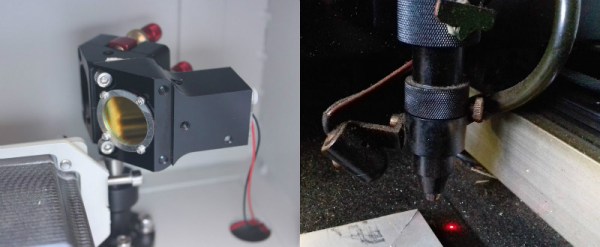
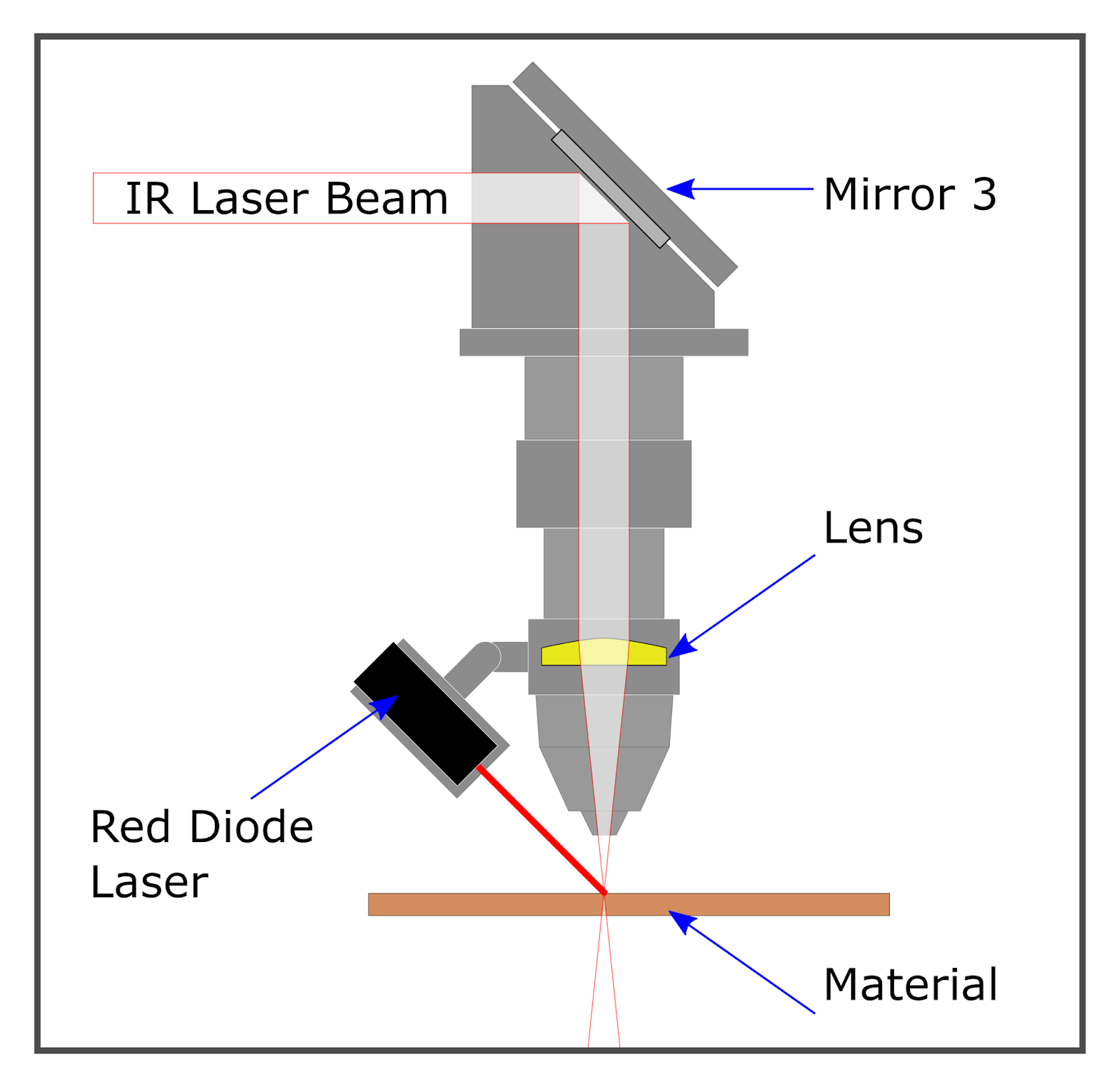

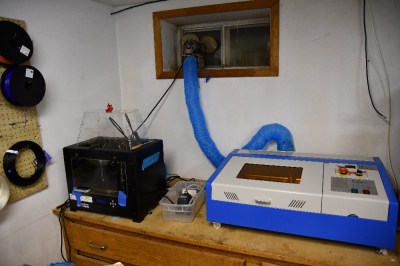 Over the last decade or so things have changed. China got involved, and suddenly there were cheap lasers on the market. Currently, there are several low-cost laser models available in various power levels. The most popular is the smallest – a 40-watt model, dubbed the K40. There are numerous manufacturers and there have been many versions over the years. They all look about the same though: A blue sheet metal box with the laser tube mounted along the back. The cutting compartment is on the left and the electronics are on the right. Earlier versions came with Moshidraw software and a parallel interface.
 [Styropyro’s]