The Challenges Of A Laundry Folding Robot

rosie“This is the year of the general purpose home robot!” “2016 is going to be for robots like 1976 was for the home computer!” The problem with statements like those is the fact that we’ve been hearing them since the 1970’s. General purpose home robots still have a long way to go. Sure, we’ve got Roomba, we’ve even got self-driving cars. But we don’t have Rosie from the Jetsons. And while I don’t think we’re going to get to Rosie for a while, there are some simple challenges that can spur development in that direction. One need look no further than one’s own laundry room.
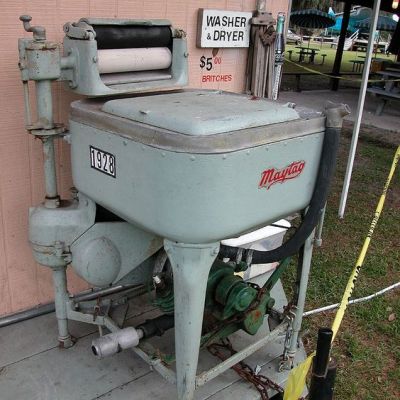
maytagUsing machines to wash and dry laundry isn’t a new concept. Washers and dryers have become commonplace enough that we don’t think of them as robots. Hamilton Smith patented the rotary washing machine in 1858. Maytag has had home machines available for nearly 100 years. Many of the early machines were powered by gasoline engines, as electricity wasn’t common in rural farmhouses. Things have improved quite a bit since then! From the dryer we transfer our laundry to a basket, where it has to be folded. It is this final step that cries out for a homemaking automaton to take this chore out of Everyman’s hands.
As one can imagine, folding laundry is one of those tasks that is easy for humans, but hard for robots. However, it’s not impossible. The idea of this article is to show what has been done, and get people talking. A project like this would take a person or group of people with skills in mechanics, electronics, machine vision, and software. It would also be sure to place well in the 2016 Hackaday Prize.

Continue reading “The Challenges Of A Laundry Folding Robot”

Shoot Darts At The Shins Of Total Strangers

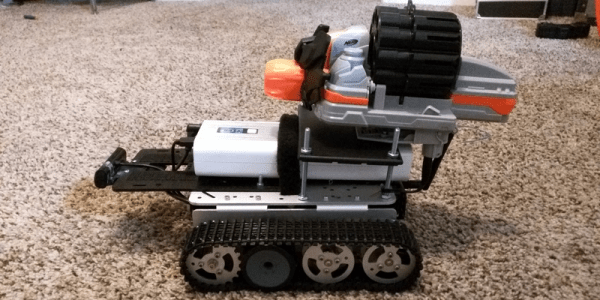
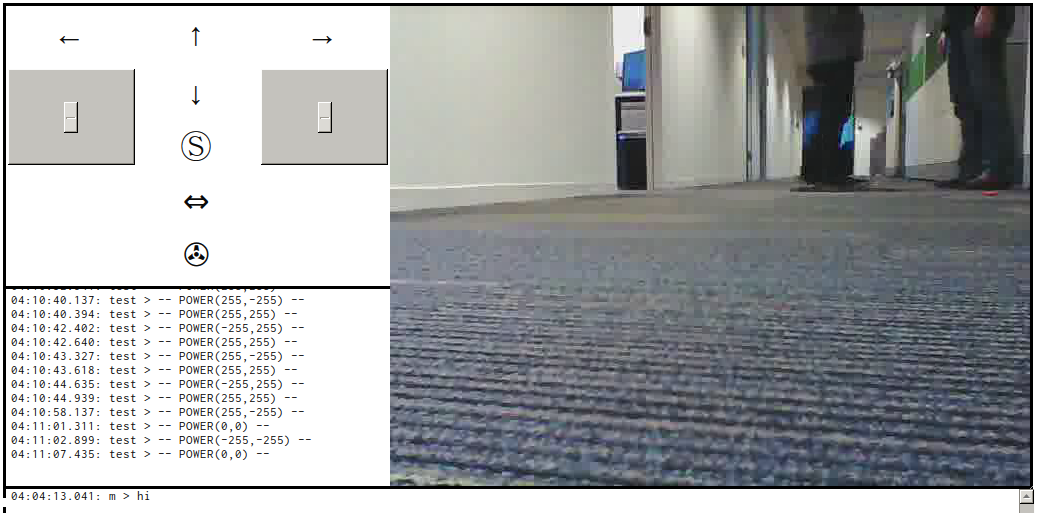
[Michael Brumlow] found us and sent us a link. Within a few seconds, we were driving a webcam-enabled Nerf dart tank through his office and trying not to hit walls or get stepped on by his co-workers. Unfortunately, it was out of darts at the time, but you can find them all over the floor if you scout around.

screenshot_remote_botAll of the code details, including the link where you can test drive it yourself, are up on [Michael]’s GitHub. The brains are an Intel Edison board, and the brawns are supplied by an Arduino motor controller shield and (for the latest version) a chassis bought from China.

It runs fairly smoothly, considering the long round trip from [Michael]’s office in Texas, through wherever Amazon keeps their Web Services, over to us in Germany and back. Once we got used to the slight lag, and started using the keyboard’s arrow keys for control, we were driving around like a pro.

It’s got a few glitches still, like the camera periodically overheating and running out of WiFi distance. [Michael] said he’d try to keep it charged up and running while you give it a shot. The controls are multiplexed in the cloud, so your chance of steering it is as good as anyone else’s. It’ll be interesting to see what happens when thousands of Hackaday readers try to control it at once!

It takes a certain kind of bravery to put your telepresence robot up on the open Internets. So kudos to you, [Michael], and we hope that you manage to get some work done this week, even though you will have all of Hackaday driving into your cubicle walls.

Cute, Hackable, 3D Printable Robot Family

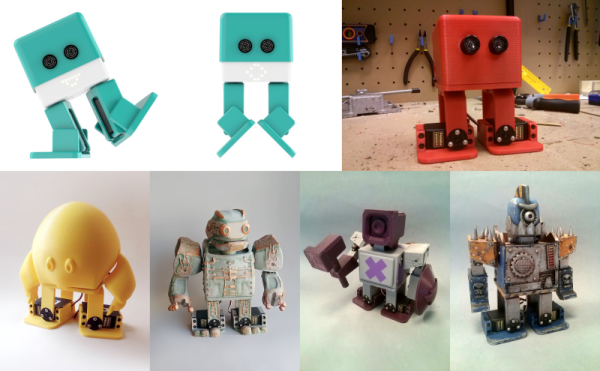
We first saw the robot Zowi (top row in the banner photo) at Make Munich a few weeks ago, and we were very impressed by how much interesting motion they were getting out of the ‘bot for only using four servo motors. The combination of big feet, strong ankle joints, and clever programming let the cute little bot stand on one leg, do a moonwalk, and even hop. (See the video, below the break.) We knew it was for sale. What we didn’t know is that it was entirely open source.

[Javier Isabel], the inventor, is very good at giving credit where it’s due, and that’s a great thing because his ‘bot is basically an improved BOB robot. That said, you really need to see this thing moving to know what a difference Zowi’s significantly stronger servos and clever programming can make.

But that’s not all! Since everything about Zowi is open, and up on GitHub you can not only 3D print one of your own, but you can easily modify the attractively-boxy case. And a handful of people have taken [Javier] up on the offer, and submitted their modifications back as pull requests. So if you’d rather something mildly more humanoid, and are willing to add a couple more servos, there’s a good basis for your explorations ready to go.

We really like the idea of collaborative toy-robot design, and from what we’ve seen the basic Zowi platform is a winner. Check it out and see if you’re not inspired to add your own personal touch to the design. If you do, be sure to contribute back for others to see!

Thanks [Nils Hitze] for the tip!

Continue reading “Cute, Hackable, 3D Printable Robot Family”

Adorable Matchbox Robot

[wattnotions] has been playing with matches, well the box they come in anyway. One day he was letting synapses fire unsupervised, and wondered if he could build a robot inside of a matchbox. His first prototype was a coin lithium battery and scrounged motors from those 3 US Dollar servos you can buy by the dozen. It scooted around just fine, but it drained the battery instantly and was a little boring.

Next, he etched a board. It had a little PIC micro, a connector for a mini LiPo, and an H bridge. It fired up just fine, and even though it drained the battery way too fast, at least it wasn’t brainless anymore. In our experience, robots tend to discard all the useful data they collect anyway, so being blind wasn’t too much of a problem.

Inspired and encouraged, with synapses gloriously undeterred, [wattnotions] set out to make a version 2. This time he ordered a board from OSHPark, made a 3D model in SketchUp, and proceeded to lock himself out from his own chip. Without a high voltage programmerhe was out of luck. The development was unfortunately put on hold.

It was fun to read along with [wattnotions] as he went on a small robot adventure. We hope he’ll complete a version 3 and have a swarm of the little fellows scooting around.

Continue reading “Adorable Matchbox Robot”

Swarm Of Robot Boats Coming To An Ocean Near You Soon

Planning a hostile takeover of your local swimming pool? This might help: [Dr Anders Lyhne Christensen] sent us a note about his work at the BioMachines Lab of the Institute of Telecommunications in Portugal. They have been building a swarm of robot boats to experiment with autonomous swarms, with some excellent results.

In an autonomous swarm, each robot makes its own decisions and talks to its neighbors, and the combined behavior of the swarm produces an overall behavior, like ants in a nest. They’ve created swarms that can autonomously navigate, patrol an area or monitor the temperature in an area and return to base to report the results. In an excellent video, [Anders] outlines how they used computational evolution to create these behaviors, randomly mutating a neural net to find the best approach, which is then sent to the real boats.

Perhaps coolest of all: the whole project is open source, with the brains of each boat running on a Raspberry Pi, and a CNC milled foam hull with 3D printed component mounts. Each boat costs about 300 Euro (about $340), but you could reduce the cost a bit by salvaging components and once the less-expensive Pi Zero becomes obtainable. This project will no doubt be useful for many an evil genius who is sick of being splashed by the toughs at the local pool: a swarm of killer robots surrounding them would be an excellent way to keep them at bay.

Continue reading “Swarm Of Robot Boats Coming To An Ocean Near You Soon”

Robot Does The Worm To Get Around

Walking, jumping, rolling, flying, swimming – robotic locomotion is limited only by the imagination of the inventor. [Roger Rabbit] apparently has a pretty vivid imagination, because he’s building robots that move like worms.

2823251454881775155inchworm-robot-thumbnailVersion 1 of [Roger]’s robot is only semi-vermiform and is more of tube climber. It has a pair of 3D-printed pantographs that expand and contract with servos and move along the robot’s axis on a stepper-driven lead screw. An Arduino reads sensors and coordinates the expansion of the pantographs to grip the internal diameter of a pipe and push the worm-bot along. It’s a slow but effective way to get around in the limited confines of a pipe.

The next iteration, dubbed [Wolly],  is much more worm-like and not restricted to pipe-running. It has four expandable triangular frames connected to each other with rack-and-pinion backbones. The first frame contracts, the racks push it forward, it expands, the next contracts, and soon it’s doing the worm across the floor. Still slow, but pretty neat to watch, and you can see how it can be steered. It might even be able to roll around its long axis, and it’d make a decent tube climber as well.

This creepy autonomous worm-bot seems very similar to [Wolly], but aside from that we haven’t covered too many robots like these. There’s a lot of thought and effort in these worm-bots, and we’re keen to see where [Roger] takes this unique robot body plan.

Continue reading “Robot Does The Worm To Get Around”

Sparklecon: Crappy Robots, Better Robots, Hammer Jenga, Tesla Coils

Last weekend was Sparklecon, the premier meetup in Southern California of dorks dorking around, fire, electricity, welding, and general mischief. Just imagine a party of a hundred or so like-minded individuals at a hackerspace. Now imagine the entire party is the after party. That’s a pretty good idea of what happened.

The event was held at the 23b shop in Fullerton, a true hackerspace tucked away in a small industrial park. The people at 23b are using their location to their advantage: no one in the neighborhood really cares what happens after 5pm on a Friday. This allows for some very loud, very bright, and very dangerous hijinks.

IMG_4358

There weren’t many pages missing from the Hackaday Omnibus donated to the 23b shop. Oddly, the only pages missing were the articles written by Benchoff.

There was something for everyone at Sparklecon, including:

  • Electric Pickle. Take a stick welder, and put a few hundred amps through a pickle. First, the pickle turns into a sodium light. Then, it turns into a carbon arc light. Best done after dark.
  • FPV drone racing. Flying around and crashing into trees in an abandoned lot. FPV from a few quads were projected onto the side of a building
  • Live music! Analog synths and Game Boys!
  • Tesla coils! This was a 300 amp monster, and completely analog. The spark gap was impressive by itself, but it gets really cool when you steal a fluorescent light from a fixture and stand 20 feet away from the Tesla coil.
  • Hammer Jenga! Cut some 2x4s up and make a tower of Jenga. Get a hammer, some colorful commentators,  a dozen people, and make some competition brackets. Hackaday’s own [Jasmine] was the first champion of the night.
  • Sparklebot Death Battle! It’s like BattleBots, only things break more often and we don’t have [Bil Dwyer].
  • Hebocon! Battling robots, but much crappier than the Sparklebot Death Battle. These robots broke more often.

The main event was, of course, Sparklecon’s own version of Battlebots. There were only four competitors the entire night, but the competition was fierce.

Three of the bots were wedge designs, in keeping with the ramp-ification of battling robots. The lone exception to this was [Charlie]’s Slow Bot, a cube design equipped with a spinning steel blade. The blade moves fast, but Slow Bot doesn’t. It’s a purely defensive design, meant to destroy bots trying for an easy kill. The test video of Slow Bot can be seen here:

The first fight of Slow Bot did not live up to the hype, unfortunately. After Slow Bot’s primary weapon got up to speed, the opposing bot moved in for the kill. The bolts on Slow Bot‘s blade sheared, ending the match, and leaving five or six people looking around the 23b shop for M5 bolts, or some larger bolts and a tap.

Is it all hilarously unsafe? Well, there were some plexiglas shields in front of the crowd, and most people viewed the fights on the projector beaming against the wall, anyway.

Is it worth it to go to Sparklecon? If you like dangerous experiments, soldering wires directly onto AA batteries, fire, electricity, electromagnetic fields, broken robots, and hanging out by a fire, yes. It’s a party at a proper hackerspace, making it the best kind of party ever. If history repeats itself, there will also be an afterparty at 23b following the LayerOne conference in May.