For years, we have been graced with consumer electronics that run some form of Linux, have a serial port on the circuit board somewhere, and are able to be upgraded through official and unofficial means. That digital picture frame you got for Christmas in 2007 and forgot to regift in 2008? That’s a computer, and it would make a wonderful Twitter feed display. Your old Linksys WRT54G router? You can make a robotic lawnmower out of that thing. The ability to modify the firmware of consumer electronics is the cornerstone of Hackaday’s editorial prerogative. Now that right we have all enjoyed is in jeopardy, thanks to regulations from the FCC and laziness from router manufacturers. Continue reading “FCC Locks Down Router Firmware”→
Like ridiculously large electromechanical devices? [Fran] took a tour of the Wanamaker Pipe Organ in Philly, the largest fully playable pipe organ in the world. The scale is tremendous – 28,000 pipes in 463 ranks spread out over five floors of a department store.
The Nintendo Entertainment System is well over thirty years old now, and still there are only about ten or so games that require the Nintendo Zapper, the light gun so primitive you can use a light bulb to beat Duck Hunt. Now there’s a new game: Super Russian Roulette. Yes, it’s Russian Roulette with the NES Zapper. It’s actually a very advanced game for the NES, using a lot of Pulse Code Modulation (PCM) for real audio in the game. Of course it’s also Russian Roulette with a gun that doesn’t look like a revolver, making this the perfect game to introduce young children to the wonders of the Nintendo Entertainment System. Video demo.
Tek logos and typefaces through the years. Click to embiggen.
Tektronix has a new logo! It’s not as cool as the old CRT flying spaceman globe thingy logo, but at least it’s not awash with 90s era corporate industrial design motifs.
The new logo is finally a logo and not just a serif typeface with a red slash below it. In keeping with every new corporate branding in recent memory, the new typeface is a sans-serif with a few bits cut off here and there. Is it a good logo? I’m sure it tested well in focus groups. Sometimes art is more of a science than an art. A lot of people don’t get that.
Because you – yes, you – don’t believe content creators should be paid, adblock reigns supreme. While Hackaday.com only has a few static, nonintrusive ads per page, Wired is taking a far different approach. They’re requiring you to whitelist their domain in adblock (loading over a dozen ads, some of them video, sponsored links to products on Amazon, and other advertisements masquerading as content), or pay them $1 per month. Someone over at noisebridge still reads Wired and has a JavaScript one-liner that fixes Wired’s Ad Blocker Blocker. Of course this will eventually lead to more articles and content targeting the ‘doesn’t understand Internets’ and ‘not sophisticated enough to install a browser plugin’ demographic, i.e. low brow clickbait. A much better solution would be to take responsibility for the media you consume. Whitelist Hackaday in your ad blocker.
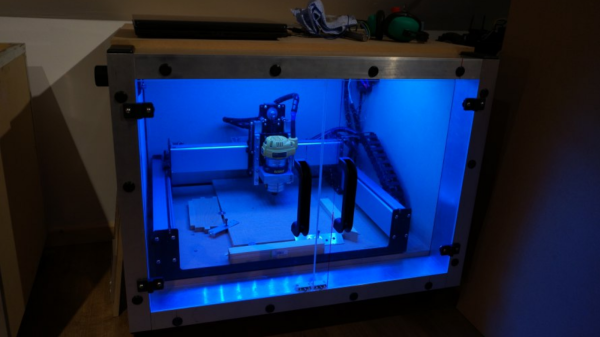
Setting up a desktop CNC brings along two additional problems that need to be resolved – noise and dust. [Nick] upgraded from a Shapeoko2 to the Shapeoko3 and decided to build a fresh dust and noise proof enclosure for his CNC , and it turned out way better than he had anticipated.
When trying to build something like this, aluminium extrusions seem like the obvious choice for the structure. Instead, he opted for low-cost steel frame shelving units. The 3mm thick steel frame results in a nice rigid structure. The top and bottom were lined with 18mm thick MDF panels. For the two sides and back, he choose 60mm noise dampening polyurethane foam lined with 6mm MDF on both sides, and held together with spray adhesive and tight friction fit in the frame.
The frame was a tad shallower and caused the spindle of the Shapeoko3 to stick out the front. To take care of this, he installed an additional aluminium frame to increase the depth of the enclosure. This also gave him a nice front surface on which to mount the 10mm thick polycarbonate doors. The doors have magnetic latches to hold them close, and an intentional gap at the top allows air to enter inside the enclosure. A 3D printed outlet port was fixed to the side wall, where he can attach the vacuum hose for dust collection. The final step was to add a pair of industrial door handles and a bank of blue LED strip lights inside the enclosure for illumination.
It’s a simple build, but well executed and something that is essential to keep the shop clean and dampen noise.
Cheap consumer WiFi devices are great for at least three reasons. First, they almost all run an embedded Linux distribution. Second, they’re cheap. If you’re going to break a couple devices in the process of breaking into the things, it’s nice to be able to do so without financial fears. And third, they’re often produced on such low margins that security is an expense that the manufacturers just can’t stomach — meaning they’re often trivially easy to get into.
Case in point: [q3k] sent in this hack of a tiny WiFi-enabled SD card reader device that he and his compatriots [emeryth] and [informatic] worked out with the help of some early work by [Benjamin Henrion]. The device in question is USB bus-powered, and sports an SD card reader and an AR9331 WiFi SOC inside. It’s intended to supply wireless SD card support to a cell phone that doesn’t have enough on-board storage.
The hack begins with [Benajmin] finding a telnet prompt on port 11880 and simply logging in as root, with the same password that’s used across all Zsun devices: zsun1188. It’s like they want to you get in. (If you speak Chinese, you’ll recognize the numbers as being a sound-alike for “want to get rich”. So we’ve got the company name and a cliché pun. This is basically the Chinese equivalent of “password1234”.) Along the way, [Benjamin] also notes that the device executes arbitrary code typed into its web interface. Configure it to use the ESSID “reboot”, for instance, and the device reboots. Oh my!
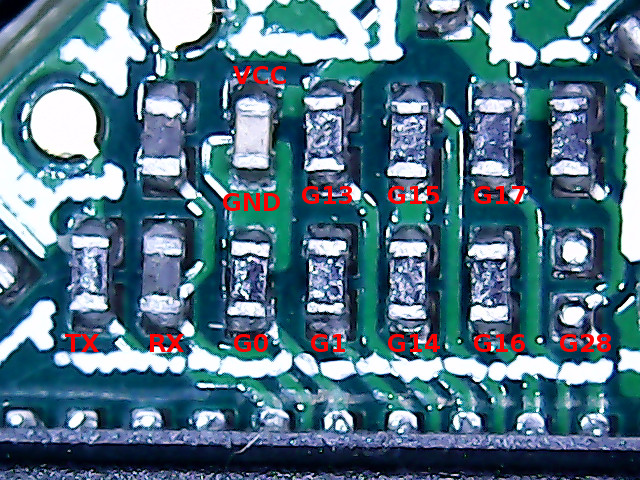
From here [q3k] and co. took over and ported OpenWRT to the device and documented where its serial port and GPIOs are broken out on the physical board. But that’s not all. They’ve also documented how and where to attach a wired Ethernet adapter, should you want to put this thing on a non-wireless network, or use it as a bridge, or whatever. In short, it’s a tiny WiFi router and Linux box in a package that’s about the size of a (Euro coin | US quarter) and costs less than a good dinner out. Just add USB power and you’re good to go.
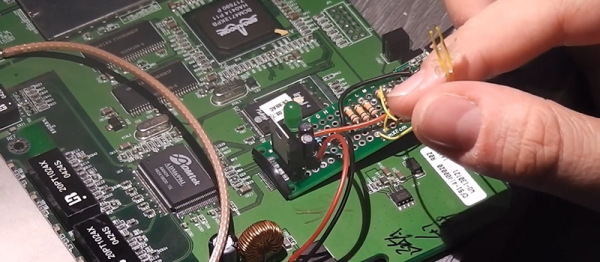
The hack itself is simple. [daffy] locates unused USB data lines, adds in a 5V voltage regulator to supply USB bus power, and then connects it all to a USB sound card. Hardware side, done! And while he doesn’t cover the software side of things in this first video, we know where he’s headed.
The WRT54G router was the first commodity Linux-based router to be extensively hacked, and have open-source firmware written for it. If you’re using OpenWRT or dd-wrt on any of your devices, you owe a debt to the early rootability of the WRT54G. Anyway, it’s a good bet that [daffy] is going to find software support for his USB sound card, but we remain in suspense to see just exactly how the details pan out.
Our favorite WRT54G hack is still an oldie: turning a WRT54G into the brains for a robot. But that was eight years ago now, so surely there’s something newer and shinier. What’s the coolest device that you’ve seen a WRT router hacked into?
Need a good excuse to duck out on the family over the holidays and spend a few hours in your shop? [Jens] has just the thing. He built a color-mixing toy that looks great and we’d bet you have everything on-hand necessary to build your own version.
The body of the toy is an old router case. Who doesn’t have a couple might-be-broken-but-I-kept-it-anyway routers sitting around? Spray painted red, it looks fantastic! The plastic shell hosts 6 RGB LEDs, 3 toggle switches, and 2 buttons. [Jens] demonstrates the different features in the demo video below. They include a mode to teach counting in Binary, color mixing using the color knobs, and a few others.
Everything is driven by an Arduino Pro Mini. The lights are APA106 LEDs; a 4-pin through-hole package version of the WS2812 pixels. You could easily substitute these for the surface mount varieties if you just hot glue them to the underside of the holes in the panel. We’d love to see some alternate arrangements for LEDs and a couple more push buttons for DIY Simon Says.
[Kratz] just turned into a rock hound and has a bunch of rocks from Montana that need tumbling. This requires a rock tumbler, and why build a rock tumbler when you can just rip apart an old inkjet printer? It’s one of those builds that document themselves, with the only other necessary parts being a Pizza Hut thermos from the 80s and a bunch of grit.
Boot a Raspberry Pi from a USB stick. You can’t actually do that. On every Raspberry Pi, there needs to be a boot partition on the SD card. However, there’s no limitation on where the OS resides, and [Jonathan] has all the steps to replicate this build spelled out.
Some guys in Norway built a 3D printer controller based on the BeagleBone. The Replicape is now in its second hardware revision, and they’re doing some interesting things this time around. The stepper drivers are the ‘quiet’ Trinamic chips, and there’s support for inductive sensors, more fans, and servo control.
Looking for one of those ‘router chipsets on a single board’? Here you go. It’s the NixCoreX1, and it’s pretty much a small WiFi router on a single board.
[Mowry] designed a synthesizer. This synth has four-voice polyphony, 12 waveforms, ADSR envelopes, a rudimentary sequencer, and fits inside an Altoids tin. The software is based on The Synth, but [Mowry] did come up with a pretty cool project here.