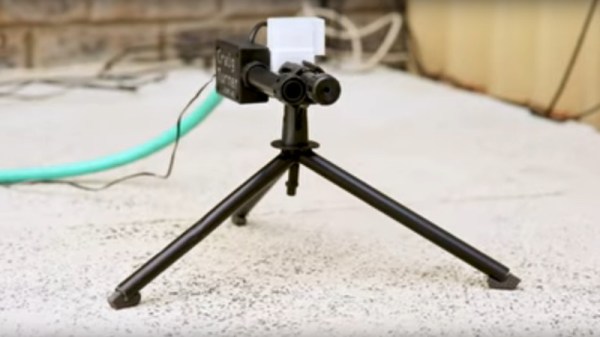
Some of us here at Hackaday are cat lovers, but we also understand that a plethora of unwanted cats using a suburban back garden can be bothersome, and a few years ago we featured a project from Aussie YouTuber [Craig Turner], in which he created a motion-detecting water spray for use as a relatively harmless cat repellent. Now he’s back with an updated version which is a little slicker and easier to make.
At its heart is the same PIR-turns-on-water operation, but this time there is a solenoid valve and purpose-built nozzle instead of a car central locking actuator and a lawn sprayer. Doing the electronic work is an off-the-shelf PIR module, so there is no longer any need to hack a security PIR detector. Add in some pipe sections and PTFE tape with a bit of hot glue, and the result is a far more professional and streamlined device. The video gives a full run-down on construction, though we notice he neglected to emphasise the polarity of his protection diode so keep an eye out if you follow his example.
So if the thought of a continuous supply of free feline company courtesy of your neighbours is not for you then now you are equipped to send them packing. The latest video incarnation of the project is below the break, but if you are in search of the original then you can go back to our coverage at the time.
Continue reading “In This Aussie’s Back Yard, No Cat Is Safe From An Automated Soaking!”
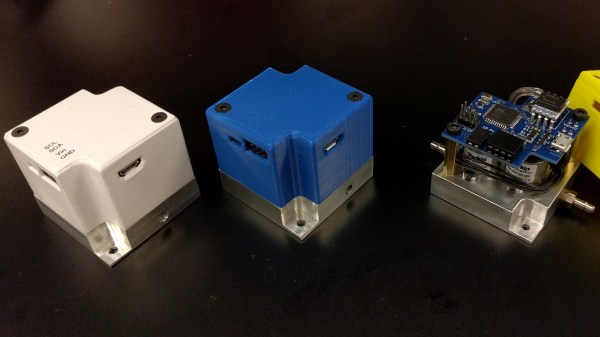
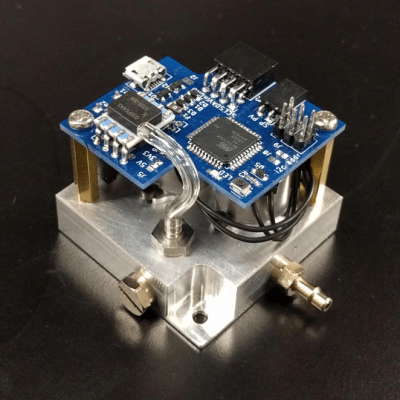 For many projects that require control of air pressure, the usual option is to hook up a pump, maybe with a motor controller to turn it on and off, and work with that. If one’s requirements can’t be filled by that level of equipment and control, then it’s time to look at commercial regulators. [Craig Watson] did exactly that, but found the results as disappointing as they were expensive. He found that commercial offerings — especially at low pressures — tended to leak air, occasionally reported incorrect pressures, and in general just weren’t very precise. Out of a sense of necessity he set out to design his own