Taking apart printers to salvage their motors and rods is a common occurrence in hacker circles, but how about salvaging the electronics? A lot of printers come with WiFi modules, and these can be repurposed as USB WiFi dongles. Tools required? And old printer, 3.3 V regulator, and a USB cable. Couldn’t be simpler.
The Raspberry Pi has a connector for a webcam, and it’s a very good solution if you need a programmable IP webcam with GPIOs. How about four cameras?. This Indiegogo is for a four-port camera connector for the Raspi. Someone has a use for this, we’re sure.
The one flexible funding campaign that isn’t a scam. [Kyle] maintains most of the software defined radio stack for Arch Linux, and he’s looking for some funds to improve his work. Yes, it’s basically a ‘fund my life’ crowdfunding campaign, but you’re funding someone to work full-time on open source software.
Calibration tools for Delta 3D printers. It’s just a few tools that speed up calibration, made for MATLAB and Octave.
[Oona] is doing her usual, ‘lets look at everything radio’ thing again, and has a plan to map microwave relay links. If you’ve ever seen a dish or other highly directional antenna on top of a cell phone tower, you’ve seen this sort of thing before. [Oona] is planning on mapping them by flying a quadcopter around, extracting the video and GPS data, and figuring out where all the other microwave links are.
PowerPoint presentations for the Raspberry Pi and BeagleBone Black. Yes, PowerPoint presentations are the tool of the devil and the leading cause of death for astronauts*, but someone should find this useful.
* Yes, PowerPoint presentations are the leading cause of death for astronauts. The root cause of the Columbia disaster was organizational factors that neglected engineer’s requests to use DOD space assets to inspect the wing, after which they could have been rescued. These are organizational factors were, at least in part, caused by PowerPoint.
Challenger was the same story, and although PowerPoint didn’t exist in 1986, “bulletized thinking” in engineering reports was cited as a major factor in the disaster. If “bulletized thinking” doesn’t perfectly describe PowerPoint, I don’t know what does.
As far as PowerPoint being the leading cause of death for astronauts, 14 died on two shuttles, while a total of 30 astronauts died either in training or in flight.
 There’s a problem with products geared towards building the Internet of Things. Everyone building hardware needs investors, and thus some way to monetize their platform. This means all your data is pushed to ‘the cloud’, i.e. a server you don’t own. This is obviously not ideal for the Hackaday crowd. Yes, IoT can be done with a few cheap radios and a hacked router, but then you don’t get all the cool features of a real Things project – mesh networking and a well designed network.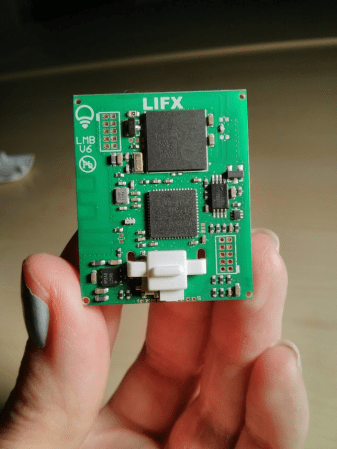
 Texas Instruments’ CC3000 WiFi chip is the darling of everyone producing the latest and greatest Internet of Thing, and it’s not much of a surprise: In quantity, these chips are only $10 a piece. That’s a lot less expensive than the WiFi options a year ago. Now, TI is coming out with
 The project featured in this post is an entry in
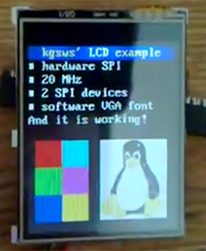 [kgsws] is working on a small project that requires some audio and a display of some sort. While this project can be easily completed with a bigish microcontroller or ARM board, he’s taking a much simpler route: the entire project