We don’t really get out much, but we have noticed that there are brightly painted upright pianos in public places these days. Research indicates that these pianos are being placed by small, independent local organizations, most of which aim to spread the joy of music and encourage a sense of community.
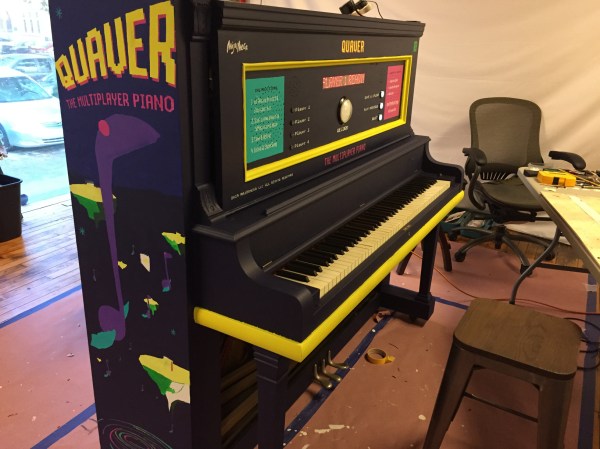
[Sean and Mike] took this idea a couple of steps further with Quaver, their analog looping piano. Both of them are maker/musicians based in Lancaster, Pennsylvania, which happens to be a hot spot for public pianos. [Sean and Mike] often stop to play them and wanted a good way to capture their impromptu masterpieces. Quaver is an antique upright that has been modified to record, save, loop, and upload music to the internet. It does all of this through a simple and intuitive user interface and a Raspi 2. Quaver works a lot like a 4-track recorder, so up to four people can potentially contribute to a song.
The player sits down, cracks their knuckles, and presses our personal favorite part of the interface: the giant, irresistible record button. A friendly scrolling LED matrix display tells them to start playing. Once they are satisfied, they press the button again to stop the recording, and the notes they played immediately play back in a loop through a pair of salvaged Bose speakers from the 1980s. This is just the beginning of the fun as you play along with your looping recording, building up several voices worth of song!
Continue reading “It’s An Upright Piano, It’s A Looper, It’s A Pi Project”

 In 2013,