Radiosondes: Getting Data From Upstairs

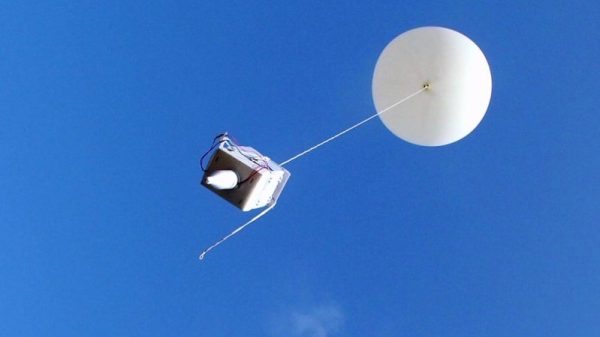
Ever since I first learned about radiosondes as a kid, I’ve been fascinated by them. To my young mind, the idea that weather bureaus around the world would routinely loft instrument-laden packages high into the atmosphere to measure temperature, pressure, and winds aloft seemed extravagant. And the idea that this telemetry package, having traveled halfway or more to space, could crash land in a field near my house so that I could recover it and take it apart, was an intoxicating thought.

I’ve spent a lot of time in the woods over the intervening years, but I’ve never seen a radiosonde in the wild. The closest I ever came was finding a balloon with a note saying it had been released by a bunch of schoolkids in Indiana. I was in Connecticut at the time, so that was pretty cool, but those shortsighted kids hadn’t put any electronics on their balloon, and they kind of left me hanging. So here’s a look at what radiosondes are, how they work, and what you can do to increase your chances of finding one.

Continue reading “Radiosondes: Getting Data From Upstairs”

The Internet Of Non-Electronic Things

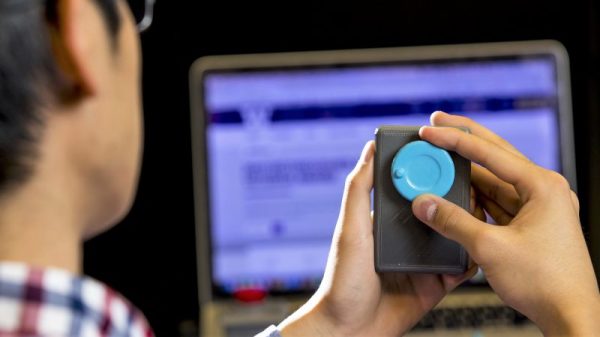
The bill of materials for even the simplest IoT project is likely to include some kind of microcontroller with some kind of wireless module. But could the BOM for a useful IoT thing someday list only a single item? Quite possibly, if these electronics-less 3D-printed IoT devices are any indication.

While you may think that the silicon-free devices described in a paper (PDF link) by University of Washington students [Vikram Iyer] and [Justin Chan] stand no chance of getting online, they’ve actually built an array of useful IoT things, including an Amazon Dash-like button. The key to their system is backscatter, which modulates incident RF waves to encode data for a receiver. Some of the backscatter systems we’ve featured include a soil sensor network using commercial FM broadcasts and hybrid printable sensors using LoRa as the carrier. But both of these require at least some electronics, and consequently some kind of power. [Chan] and [Iyer] used conductive filament to print antennas that can be mechanically switched by rotating gears. Data can be encoded by the speed of the alternating reflection and absorption of the incident WiFi signals, or cams can encode data for buttons and similar widgets.

It’s a surprisingly simple system, and although the devices shown might need some mechanical tune-ups, the proof of concept has a lot of potential. Flowmeters, level sensors, alarm systems — what kind of sensors would you print? Sound off below.

Continue reading “The Internet Of Non-Electronic Things”

Joe Kim: Where Technology And Art Collide

The rewards of being a writer for Hackaday are many, but aside from the obvious perks like the secret Hackaday handshake and admission to the private writer’s washroom, having the opportunity to write original content articles is probably the best part of the job. It gets even better, though, because after you submit an article, you’ll eventually get an email from Supplyframe Art Director Joe Kim with a Dropbox link to the original art he has created to accompany your piece. No matter where I am when that email comes in, I click on the link immediately, eager to see what Joe has come up with. And I’m never disappointed.

Continue reading “Joe Kim: Where Technology And Art Collide”

The Physics Of Healing: Radiation Therapy

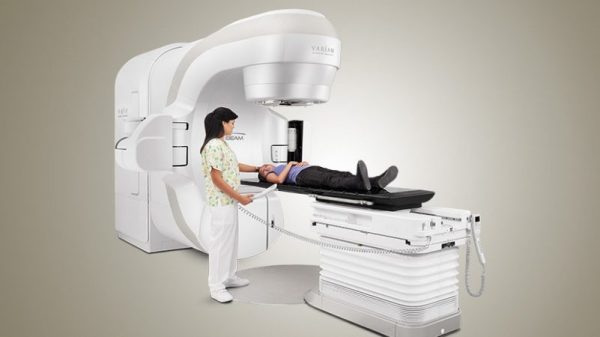
Few days are worse than a day when you hear the words, “I’m sorry, you have cancer.” Fear of the unknown, fear of pain, and fear of death all attend the moment when you learn the news, and nothing can prepare you for the shock of learning that your body has betrayed you. It can be difficult to know there’s something growing inside you that shouldn’t be there, and the urge to get it out can be overwhelming.

Sometimes there are surgical options, other times not. But eradicating the tumor is not always the job of a surgeon. Up to 60% of cancer patients will be candidates for some sort of radiation therapy, often in concert with surgery and chemotherapy. Radiation therapy can be confusing to some people — after all, doesn’t radiation cause cancer? But modern radiation therapy is a remarkably precise process that can selectively kill tumor cells while leaving normal tissue unharmed, and the machines we’ve built to accomplish the job are fascinating tools that combine biology and engineering to help people deal with a dreaded diagnosis.

Continue reading “The Physics Of Healing: Radiation Therapy”

Solving A Rubik’s Cube With Just Two Motors

We’ve all seen videos of Rubik’s cube champions who can solve the puzzle in less than 5 seconds. And there are cube-twisting robots that can solve the cube even faster, often in under a second. This Rubik’s cube solver is not one of those robots, but it’s still pretty cool.

The reason we like Dexter Industries’ “BricKuber” is not for its lightning speed — it takes a minute or two to solve the puzzle. What we like is the simplicity of the approach to manipulating the cube. Built from LEGO parts, including Mindstorms motors and a BrickPi controller, the BricKuber uses only two motors to work the cube. One motor powers a square turntable upon which the cube sits, while the other powers an arm that does double duty — it either clamps the cube so the turntable can rotate a layer, or it rakes the cube to flip it 90° on the turntable. With a Pi Cam overhead, the rig images all six faces, calculates a solution to the cube, and then flips and twists the cube to solve it. It’s simultaneously mind-boggling and strangely relaxing to watch.

All the code is open source, and we strongly suspect a similar and possibly faster robot could be built without the LEGO parts. You might even be able to build one with popsicle sticks and an Arduino.

Continue reading “Solving A Rubik’s Cube With Just Two Motors”

Count YouTube Subscribers With This Red Play Button Award

Professional YouTubers live and die by the number of subscribers they have. It seems like a brutal way to make a living to us, but to each his own. Still, if you’re going to do it, you might as well do it right, and keeping track of how you’re doing with this Play Button Award subscriber counter might make sense. Or it might drive you nuts.

YouTuber [ibuynewstuff] has reached the vaunted 100,000 subscriber mark, the number required to earn the Silver Play Button award. Sadly, 100k is the bare minimum needed to get YouTube’s attention, and tales of waiting for months for the award to arrive are not uncommon. [ibuynewstuff] worked around the issue by 3D-printing his own temporary play button badge. Mounted to a picture frame with an ESP8266 and an 8 x 80 LED display behind a diffuser, [ibuynewstuff] can keep track of his progress toward the Gold Play Button award at 1,000,000 subs. Hopefully, his Silver award will arrive before then.

Want to replicate this but would rather have something a little more permanent than a plastic play button? Try casting your own Copper Play Button award.

Continue reading “Count YouTube Subscribers With This Red Play Button Award”

Spoof A Skimmer For Peace Of Mind

It’s a sad commentary on the state of the world when it becomes a good practice to closely inspect the card reader on every ATM and gas pump for the presence of a skimmer. The trouble is, even physically yanking on the reader may not be enough, as more sophisticated skimmers now reside safely inside the device, sipping on the serial comms output of the reader and caching it for later pickup via Bluetooth. Devilishly clever stuff.

Luckily, there’s an app to detect these devices, and the prudent consumer might take solace when a quick scan of the area reveals no skimmers in operation. But is that enough? After all, how do you know the smartphone app is working? This skimmer scammer scanner — or is that a skimmer scanner scammer? — should help you prove you’re being as safe as possible.

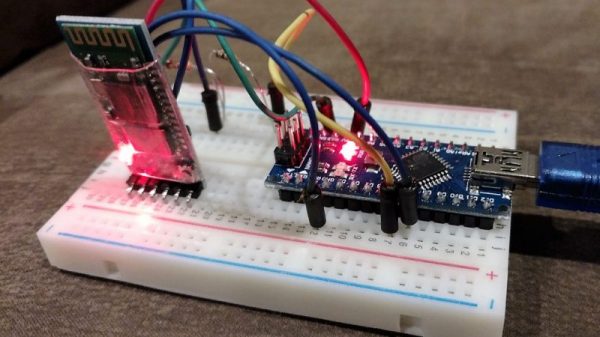
The basic problem that [Ben Kolin] is trying to solve here is: how do you prove a negative? In other words, one could easily write an app with a hard-coded “This Area Certified Zebra-Free” message and market it as a “Zebra Detector,” and 99.999% of the time, it’ll give you the right results. [Ben]’s build provides the zebra, as it were, by posing as an active skimmer to convince the scanner app that a malicious Bluetooth site is nearby. It’s a quick and dirty build with a Nano and a Bluetooth module and a half-dozen lines of code. But it does the trick.

Need a primer on the nefarious world of skimming? Here’s an overview of how easy skimming has become, and a teardown of a skimmer captured in the wild.