Mike Ossmann And Dominic Spill: IR, Pirates!

Mike Ossmann and Dominic Spill have been at the forefront of the recent wave of software-defined radio (SDR) hacking. Mike is the hardware guy, and his radio designs helped bring Bluetooth and ISM-band to the masses. Dominic is the software guy who makes sure that all this gear is actually usable. The HackRF SDR is still one of the best cheap choices if you need an SDR that can transmit and receive.

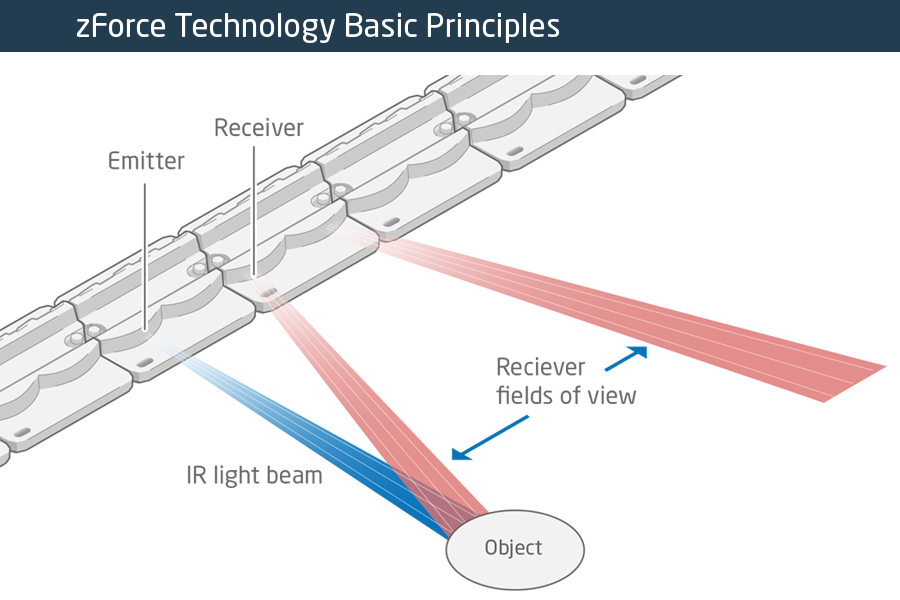
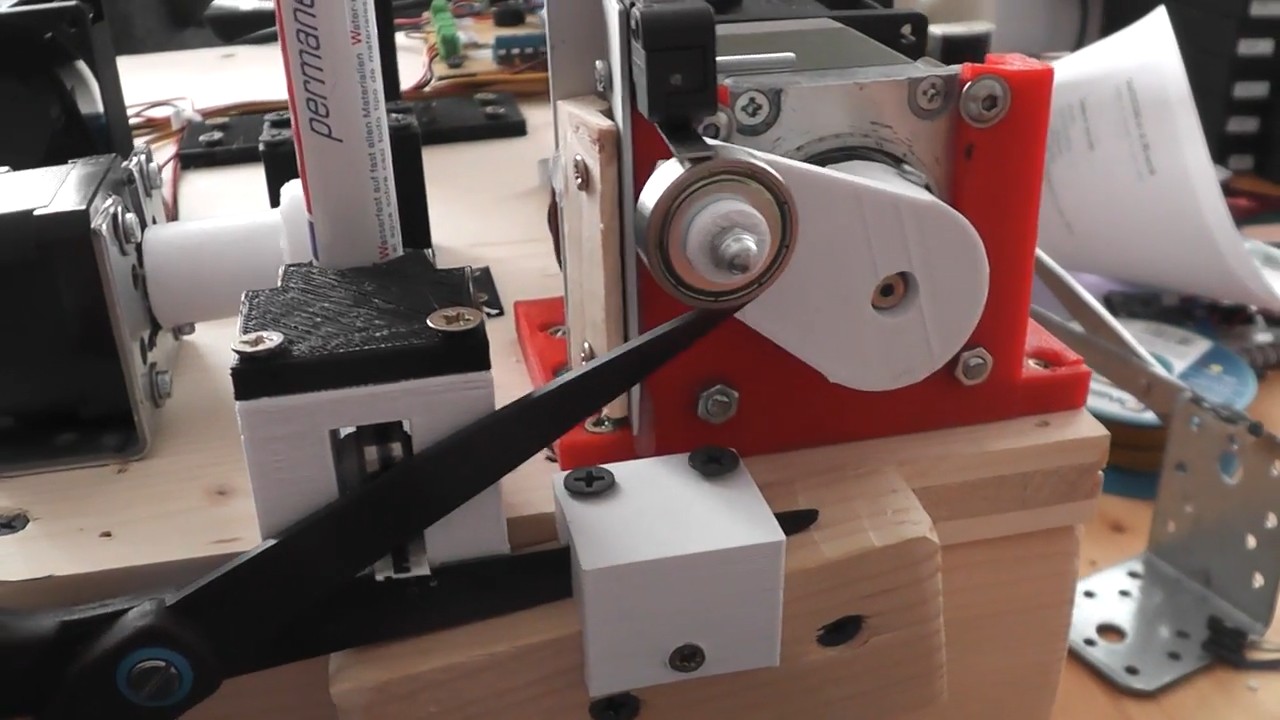
So what are these two doing on stage giving a talk about IR communication? Can you really turn traffic lights green by blinking lights? And can you spoof a TV remote with a cardboard cutout, a bicycle wheel, and a sparkler? What does IR have to do with pirates, and why are these two dressed up as buccaneers? Watch our video interview and find out, or watch the full talk for all of the juicy details.

Continue reading “Mike Ossmann And Dominic Spill: IR, Pirates!”

CNC Milling Is More Manual Than You Think

I was in Pasadena CA for the Hackaday Superconference, and got to spend some quality time at the Supplyframe Design Lab. Resident Engineer Dan Hienzsch said I could have a few hours, and asked me what I wanted to make. The constraints were that it had to be small enough to fit into checked luggage, but had to be cool enough to warrant taking up Dan’s time, with bonus points for me learning some new skills. I have a decent wood shop at home, and while my 3D printer farm isn’t as pro as the Design Lab’s, I know the ropes. This left one obvious choice: something Jolly Wrencher on the industrial Tormach three-axis CNC metal mill.

A CNC mill is an awesome tool, but it’s not an omniscient metal-eating robot that you can just hand a design file to. If you thought that having a CNC mill would turn you into a no-experience-needed metal-cutting monster, you’d be sorely mistaken.

Of course the machine is able to cut arbitrary shapes with a precision that would be extremely demanding if done by hand, but the craft of the operator is no less a factor than with a manual mill in making sure that things don’t go sideways. Dan’s good judgment, experience, and input was needed every step of the way. Honestly, I was surprised by how similar the whole procedure was to manual milling. So if you want to know what it’s like to sit on the shoulder of a serious CNC mill operator, read on!

Continue reading “CNC Milling Is More Manual Than You Think”

Anouk Wipprecht: Robotic Dresses And Human Interfaces

Anouk Wipprecht‘s hackerly interests are hard to summarize, so bear with us. She works primarily on technological dresses, making fashion with themes inspired by nature, but making it interactive. If that sounds a little bit vague, consider that she’s made over 40 pieces of clothing, from a spider dress that attacks when someone enters your personal space too quickly to a suit with plasma balls that lets her get hit by Arc Attack’s giant musical Tesla coils in style. She gave an inspiring talk at the 2017 Hackaday Superconference, embedded below, that you should really go watch.

Anouk has some neat insights about how the world of fashion and technology interact. Technology, and her series of spider dresses in particular, tends to evolve over related versions, while fashion tends to seek the brand-new and the now. Managing these two impulses can’t be easy.

For instance, her first spider was made with servos and laser-cut acrylic, in a construction that probably seems familiar to most Hackaday readers. But hard edges, brittle plastic, and screws that work themselves slowly loose are no match for human-borne designs. Her most recent version is stunningly beautiful, made of 3D printed nylon for flexibility, and really nails the “bones of a human-spider hybrid” aesthetic that she’s going for.

The multiple iterations of her drink-dispensing “cocktail dress” (get it?!) show the same progression. We appreciate the simple, press-button-get-drink version that she designed for a fancy restaurant in Ibiza, but we really love the idea of being a human ice-breaker at parties that another version brings to the mix: to get a drink, you have to play “truth or dare” with questions randomly chosen and displayed on a screen on the wearer’s arm.

Playfulness runs through nearly everything that Anouk creates. She starts out with a “what if?” and runs with it. But she’s not just playing around. She’s also a very dedicated documenter of her projects, because she believes in paying the inspiration forward to the next generation. And her latest project does something really brilliant: merging fashion, technology, and medical diagnostics.

It’s a stripped-down EEG that kids with ADHD can wear around in their daily lives that triggers a camera when their brains get stimulated in particular ways. Instead of a full EEG that requires a child to have 30 gel electrodes installed, and which can only be run in a medical lab, stripping down the system allows the child to go about their normal life. This approach may collect limited data in comparison to the full setup, but since it’s collected under less intimidating circumstances, the little data that it does collect may be more “real”. This project is currently in progress, so we’ll just have to wait and see what comes out. We’re excited.

There’s so much more going on in Anouk’s presentation, but don’t take our word for it. Go watch Anouk’s talk right now and you’ll find she inspires you to adds a little bit more of the human element into your projects. Be playful, awkward, or experimental. But above all, be awesome!

Continue reading “Anouk Wipprecht: Robotic Dresses And Human Interfaces”

Get Your Hands On A 2017 Hackaday Superconference Badge

We just got the shipment of hot Hackaday Superconference badges in our hands yesterday, and they’re frankly awesome. Due to great manufacturing partners and a fantastic design by [Mike Harrison], we ended up with too few manufacturing defects and too many badges. How’s that for a nice problem to have?

But our gain is your gain! We have enough badges for everyone who’s coming to the con, and we’re selling the rest on Tindie.

In case you missed it, the badge is a digital video camera, or at least that’s how it’s going to start out its life. It’s got a camera sensor, enough processing power on-board to handle the image data, a screen, and SD card storage. It’s also got a good assortment of buttons, and more importantly, prototyping space and an abundance of pins broken out for you to play with. For the nitty-gritty, see the badge’s Hackaday.io project page. We’ve coded up the obvious applications, added in some challenging puzzles, and now we’re handing them off to you.

Hackaday Badge History

What will you do with them? That remains to be seen. The first time we put on a Supercon, we made the best badge you’ve ever seen — a blank protoboard, and a big pile of parts. Add in an enthusiastic and creative crowd, and out pops magic. Last year, [Voja] produced a badge with finesse and more resources, adding blinkies, IR, and an accelerometer, and we saw hacks making use of each of the features. This year, we’ve pushed it even further. Now it’s your turn.

The Superconference is this weekend, and a few hundred Hackaday hackers will get their hands on this lump of open hardware. Something fantastic is certainly going to happen. If you couldn’t make it but still want to play along, now’s your chance!

Conference badges are a fantastic playground for hardware hackers: they’re a small enough project to get done, but large enough to do something interesting. Some badges, like [Brian Benchoff]’s badge for Tindie, are minimalistic. Others, like this unofficial badge for DEFCON, are quadcopters. In between, there’s room for artistry and aesthetics and just plain cleverness. And don’t forget utility. The 2017 Layer One conference badge (here on Hackaday.io) is easily converted into an OBD II CAN bus sniffer or a video game machine — your pick.

Hackaday loves custom hardware and badges like this are more than just a PCB full of components. They’re a piece of the culture from the event where they made their debut. We’re happy we can share that with some of the hackers who couldn’t make it to Supercon this year.

What Is Entropy And How Do I Get More Of It?

Let’s start off with one of my favorite quotes from John von Neumann: “Any one who considers arithmetical methods of producing random digits is, of course, in a state of sin. For, as has been pointed out several times, there is no such thing as a random number — there are only methods to produce random numbers, and a strict arithmetic procedure of course is not such a method.”

What von Neumann is getting at is that the “pseudo” in pseudorandom number generator (PRNG) is really a synonym for “not at all”. Granted, if you come in the middle of a good PRNG sequence, guessing the next number is nearly impossible. But if you know, or can guess, the seed that started the PRNG off, you know all past and future values nearly instantly; it’s a purely deterministic mathematical function. This shouldn’t be taken as a rant against PRNGs, but merely as a reminder that when you use one, the un-guessability of the numbers that it spits out is only as un-guessable as the seed. And while “un-guessability” isn’t a well-defined mathematical concept, or even a real word, entropy is.

That’s why entropy matters to you. Almost anything that your computer wants to keep secret will require the generation of a secret random number at some point, and any series of “random” numbers that a computer generates will have only as much entropy, and thus un-guessability, as the seed used. So how does a computer, a deterministic machine, harvest entropy for that seed in the first place? And how can you make sure you’ve got enough? And did you know that your Raspberry Pi can be turned into a heavy-duty source of entropy? Read on!

Continue reading “What Is Entropy And How Do I Get More Of It?”

Pull Passwords Out Of Silicon

[q3k] got tipped off to a very cool problem in the ongoing Pwn2Win capture-the-flag, and he blew it out of the water by decoding the metal interconnect layers that encode a password in a VLSI IC. And not one to rent someone else’s netlist extraction code, he did it by writing his own.

The problem in the Pwn2Win CTF came in the form of the design files for a hypothetical rocket launch code. The custom IC takes an ASCII string as input, and flips a pin high if it matches. Probably the simplest way to do this in logic is to implement a shift register that’s long enough for the code string’s bits, and then hard-wire some combinatorial logic that only reads true when all of the individual bits are correct.

(No, you don’t want to implement a password-checker this way — it means that you could simply brute-force the password far too easily — but such implementations have been seen in the wild.)

Anyway, back to our story. After reversing the netlist, [q3k] located 320 flip-flops in a chain, suggesting a 40-byte ASCII code string. Working backward in the circuit from the “unlocked” pin to the flip-flops, he found a network of NOR and NAND gates, which were converted into a logic notation and then tossed into Z3 to solve. Some cycles later, he had pulled the password straight out of the silicon!

This looks like a really fun challenge if you’re into logic design or hardware reverse engineering. You don’t have to write your own tools to do this, of course, but [q3k] would say that it was worth it.

Thanks [Victor] for the great tip!
Featured image by David Carron, via Wikipedia.

Hackaday Prize Entry: Two Leg Robot

If you’re working on your own bipedal robot, you don’t have to start from the ground up anymore. [Ted Huntington]’s Two Leg Robot project aims to be an Open Source platform that’ll give any future humanoid-robot builders a leg up.

While we’ve seen quite a few small two-legged walkers, making a pair of legs for something human-sized is a totally different endeavor. [Ted]’s legs are chock-full of sensors, and there’s a lot of software that processes all of the data. That’s full kinematics and sensor info going back and forth from 3D model to hardware. Very cool. And to top it all off, “Two Leg” uses affordable motors and gearing. This is a full-sized bipedal robot platform that you might someday be to afford!

Will walking robots really change the world? Maybe. Will easily available designs for an affordable bipedal platform give hackers of the future a good base to stand on? We hope so! And that’s why this is a great entry for the Hackaday Prize.