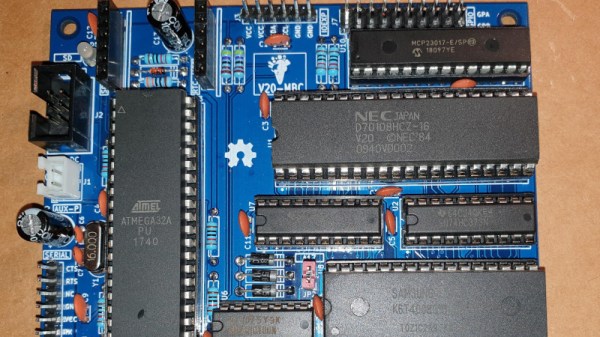
In the days when the best an impoverished student could hope to find in the way of computing was a cast-off 1980s PC clone, one upgrade was to fit an NEC V20 or V30 processor in place of the Intel 8088 or 8086. Whether it offered more than a marginal advantage is debatable, but it’s likely that one of the chip’s features would never have been used. These chips not only supported the 8086 instruction set, but also offered a compatibility mode with the older 8080 processor. It’s a feature that [Just4Fun] has taken advantage of, with V20-MBC, a single board computer that can run both CP/M-86 and CPM/80.
If this is starting to look a little familiar then it’s because we’ve featured a number of [Just4Fun]’s boards before. The Z80-MBC2 uses the same form factor, and like this V20 version, it has one of the larger ATMega chips taking place of the acres of 74 chips that would no doubt have performed all the glue logic tasks of the same machine had it been built in the early 1980s. There is a video of the board in action that we’ve placed below the break, showing CP/M in ’80, ’86, and even ’80 emulated in ’86 modes.
The only time a V20 has made it here before, it was in the much more conventional home of a home-made PC.
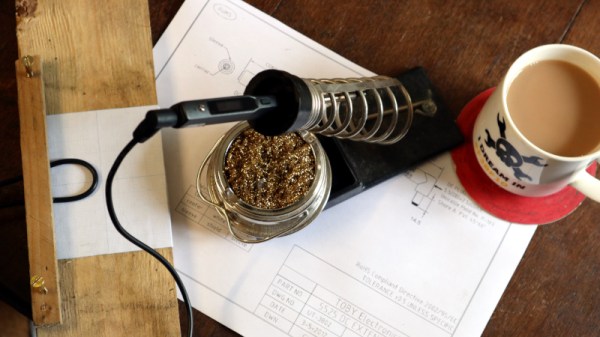
By now, I must have had my Miniware TS100 soldering iron for nearly three years. It redefined what could be expected from the decent end of the budget soldering iron spectrum when it came on the market, and it’s still the one to beat even after those years. Small, lightweight, powerful, and hackable, it has even spawned direct imitations.
If the TS100 has a fault, it comes not from the iron itself but from its cable. A high-grade iron will have an extra-flexible PVC or silicone cable, but the TS100 does not have a cable of its own. Instead it relies on whatever cable comes on its power supply, which is frequently a laptop unit built with portable computing rather than soldering in mind. So to use it is to be constantly battling against its noticable lack of flexibility, a minor worry but one that I find irksome. I determined to find a solution, making a DC extension cable more flexible than that on my power supply. Continue reading “The Simplest TS100 Upgrade Leads Down A Cable Testing Rabbit Hole”→
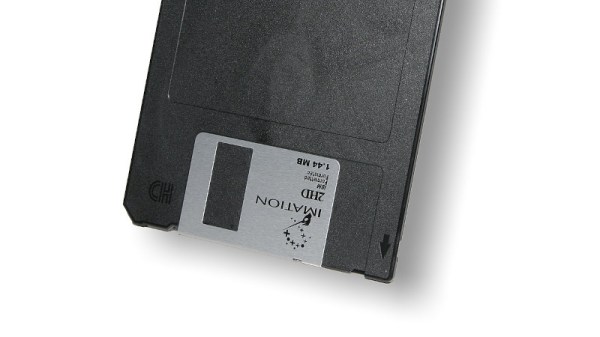
If you have ever studied the early history of the GNU/Linux operating system in its many forms, you’ll have read that [Linus Torvalds] developed his first kernel for his Intel 386-based computer. Though the 386 architecture is now ancient, the current Linux kernel can still be compiled for it and many distributions still maintain an i386 branch to provide broad compatibility for later machines able to run i386 code. But what if you were to take a current Linux kernel and stick it on a floppy in a machine from the early 1990s, with meagre RAM? [Fozztex] did just that, with not a 386 but a 486, sporting what would have been an impressive for the time 36MB of RAM. You can watch it in action in the video below the break.
A recent Linux kernel is rarely if ever compiled for something as small as a floppy disk, so getting one to boot from such ancient media appeared to be a challenge. It was possible though with the tinyconfig make option, and after finding a small enough root filesystem courtesy of Aboriginal Linux, a bootable floppy was created. It’s not entirely useful and its sole purpose was to see whether Linux could see a large hard drive on the 486, but it’s still a version 5.6 Linux kernel booting from floppy on an ancient computer. Never complain that your Raspberry Pi Zero is slow again, we’ve come a long way!
What if your microcontroller IDE was running on the microcontroller itself and not hosted on the computer you use to do the programming? The greatest legacy of Arduino in all its forms has arguably been a software one, in that it replaced annoying proprietary development environments with one that installed easily on a range of operating systems, was easy to use, and above all, worked. The next level of portability is to get rid of any specialize computer-side software. [Ronny Neufeld] wrote MicroIDE for ESP32 as an IDE accessible through a web browser, which interestingly is hosted on the target device itself.
Using the IDE is easy enough, install a binary, connect to the ESP with a web browser, start writing MicroPython code. There is a choice of connecting directly to the chip as a hotspot, or connecting via another WiFi network. The interface is looking pretty slick but he’s at pains to remind us that it’s a work in progress. Sadly there is no source code yet as it’s a binary distribution that is free for non-commercial use, we’d hope that an open-source release might one day happen. It’s not for everyone, but the convenience of accessing the same interface from almost any modern device should help attract a healthy community.
This appears to be the first web-based on-chip ESP IDE we’ve shown you. But it’s not the first on-chip coding example, as this BASIC interpreter shows.
There is a romance to notions of a byegone age of DJing — driving a pair of Technics 1200s dwarfed on either side by the stacks, pumping techno bass through the laser-tinged darkness into a hungry crowd. Even if the reality of early evening Saturday wedding parties playing inoffensive crooners for the 50-somethings didn’t really live up to it.
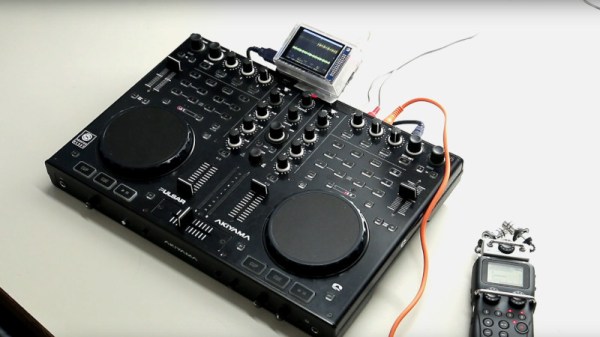
The trouble with DJing old-style was that it required extensive logistics to shift all that equipment not to mention a record collection, so the modern DJ for whom everything has gone digital is truly lucky in the scale of their operation. For some people even that is too much to carry, and [Dennisdebel] has minimised a DJ rig to the next level, by running the popular Mixxx DJing software on a Raspberry Pi hooked up to his DJ controller. You can see the result in the video below the break.
This is more of a HOWTO for installing a set of software packages on the Pi to achieve an aim rather than a special hardware hack, but as he points out the interest lies in regaining control of the process. The DJ space is dominated by commercial offerings increasingly laden with DRM and proprietary cloud offerings, so this represents a means of taking back control of the process. If it’s not hacky enough, you can always add a home-made DJ mixing station.
Another couple of weeks, and a fresh crop of space news to run through as a quick briefing of the latest in the skies above us.
OneWeb’s most recent launch, from Baikonur on the 21st of March 2020. (OneWeb)
The global positioning orbits are getting pretty crowded, with GPS, Russia’s GLONASS, the EU’s Galileo, Japan’s QZSS, and now with the launch of the final satellite in their constellation, China’s BeiDou. As if five were not enough the chance that they might be joined by a sixth constellation from the United Kingdom resurfaced this week, as the UK government is expressing interest in supporting a rescue package for the troubled satellite broadband provider OneWeb. The idea of an independent GPS competitor from a post-Brexit UK has been bouncing around for a couple of years now, and on the face of it until this opportune chance to purchase an “oven ready” satellite constellation might deliver a route to incorporating a positioning payload into their design. The Guardian has its doubts, lining up a bevvy of scientists to point out the rather obvious fact that a low-earth-orbit satellite broadband platform is a very different prospect to a much-higher-orbiting global positioning platform. Despite the country possessing the expertise through its work on Galileo then it remains to be seen whether a OneWeb purchase would be a stroke of genius or a white elephant. Readers with long memories will know that British government investment in space has had its upsets before.
Happily for Brits, not all space endeavours from their islands end in ignominious retreat. Skyrora have scored another milestone, launching the first ever rocket skywards from the Shetland Islands. The Skylark Nano is a relatively tiny craft at only 2m high, and gathered research data during its flight to an altitude of 6km. We’ve followed their work before, including their testing in May of a Skylark L rocket on the Scottish mainland with a view to achieving launch capability in 2023.
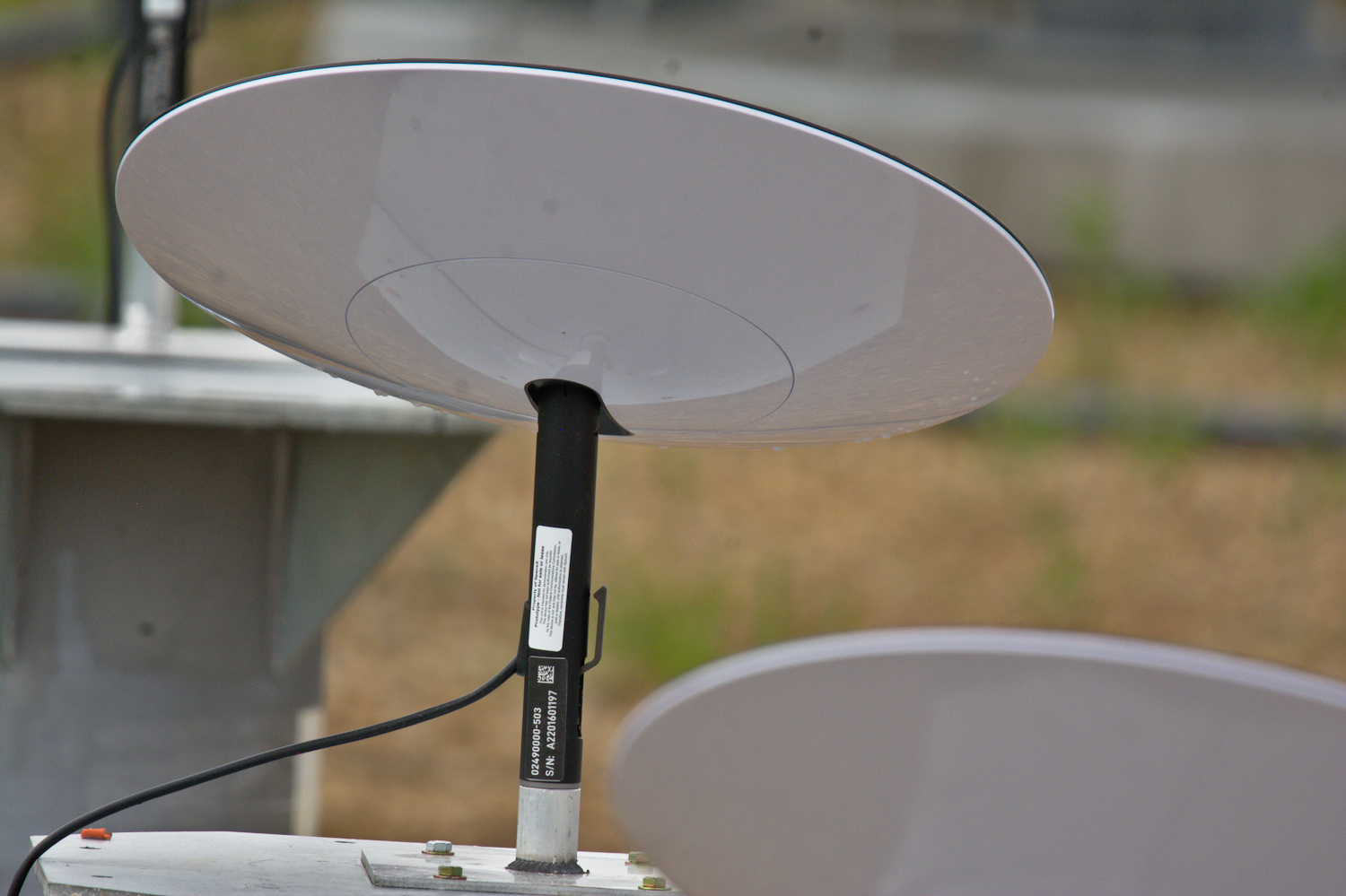
A Starlink phased array end user antenna, spotted in Winsconsin. (darkpenguin22)
SpaceX’s Starlink is never far away from the news, with a fresh set of launches delayed for extra pre-launch tests, and the prospect of signing up to be considered for the space broadband firm’s beta test. Of more interest for Hackaday readers though are a few shots of prototype Starlink ground stations and user terminals that have made it online, on the roof of a Tesla Gigafactory and at a SpaceX facility in Wisconsin. What can be seen are roughly 1.5m radomes for the ground stations and much smaller dinner-plate-sized enclosed arrays for the user terminals. The latter are particularly fascinating as they conceal computer-controlled phased arrays for tracking the constellation as it passes overhead. This is a technology more at home in billion-dollar military radars than consumer devices, so getting it to work on a budget that can put it on a roof anywhere in the world must be a challenge for the Starlink engineers. We can’t wait to see the inevitable eventual teardown when it comes.
Elsewhere, the Virgin Galactic SpaceShip Two completed its second glide test over its Mojave Spaceport home since being grounded in 2019 for extensive refitting, and is now said to be ready for powered tests leading to eventual commercial service giving the extremely well-heeled the chance to float in the zero gravity of suborbital spaceflight. And finally, comes the news that NASA are naming their Washington DC headquarters building for Mary W. Jackson, their first African American female engineer, whose story some of you may be familiar with from the book and film Hidden Figures. The previously unnamed building sits on a section of street named Hidden Figures Way.
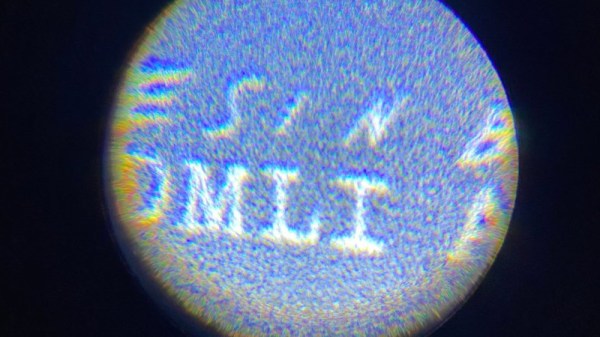
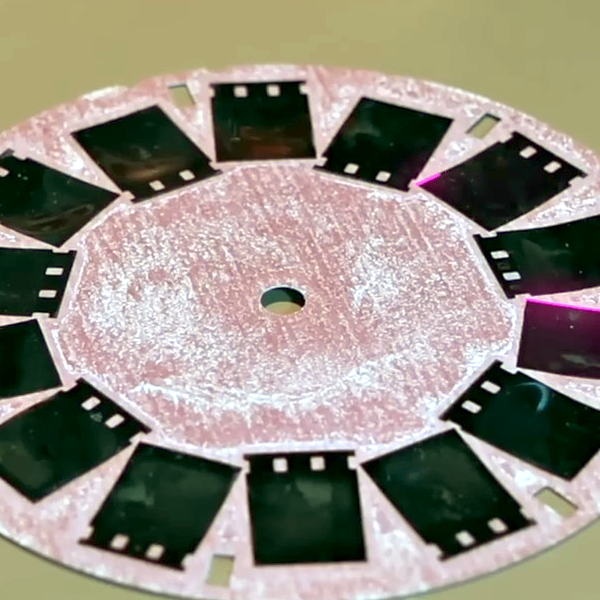
If you spent your youth watching James Bond or similar movies on rainy Saturday afternoons, then you may be familiar with a microdot as a top-secret piece of spy equipment, usually revealed as having been found attached to a seemingly innocuous possession of one of the bad guy’s henchmen, which when blown up on the screen delivers the cryptic yet vital clue to the location of the Evil Lair. Not something you give much thought in 2020 you might think, but that’s reckoning without [Sister HxA], who has worked out how to make them herself and detailed the process in a Twitter thread.
A microdot is a tiny scrap of photographic film, containing the image of some secret document or other, the idea being that it is small enough to conceal on something else. The example she gives is hiding it underneath a postage stamp. Because of their origins in clandestine work there is frustratingly little info on how to produce them, but she found a set of British instructions. Photographing a sheet such that its image occupies a small portion of her negative she makes a postage-stamp-sized one, and with care photographing that she manages to produce another of only a few millimetres in size. The smaller one isn’t very legible, but it’s still a fascinating process.

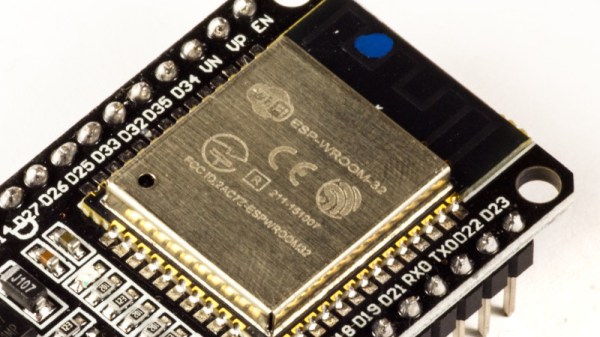
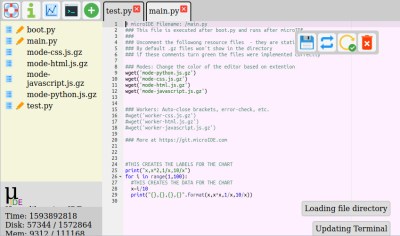 Using the IDE is easy enough, install a binary, connect to the ESP with a web browser, start writing MicroPython code. There is a choice of connecting directly to the chip as a hotspot, or connecting via another WiFi network. The interface is looking pretty slick but he’s at pains to remind us that it’s a work in progress. Sadly there is no source code yet as it’s a binary distribution that is free for non-commercial use, we’d hope that an open-source release might one day happen. It’s not for everyone, but the convenience of accessing the same interface from almost any modern device should help attract a healthy community.