AVR Laptop Pushes The Limits Of 8-Bit

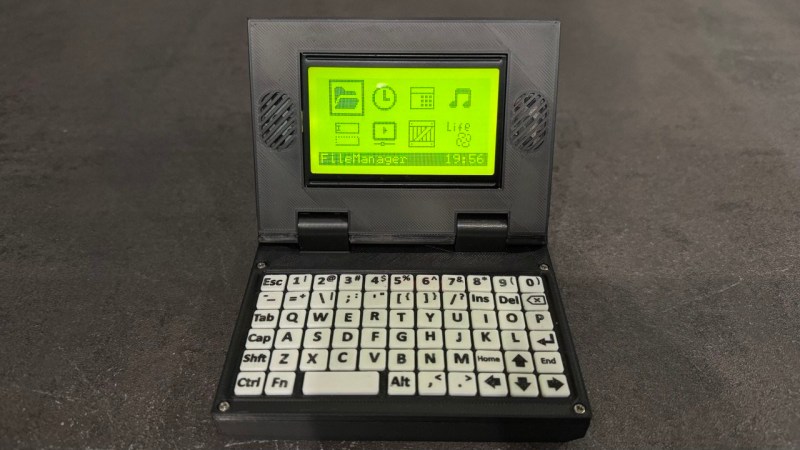
If you saw a device that had a laptop form factor playing sound and video, alt-tabbing over to play a game or take some notes, then back to the video — well, that’s normal; that’s what laptops do. If you learned the heart of this machine was an Arduino-compatible AVR microcontroller board, you’d probably do the same spit-take we did. Well, put down your coffee, because [Vladimir]’s AVR Laptop project really is that impressive.

The micro at the heart of this amazing laptop is an ATmega2560. That’s a pretty powerful chip by 8-bit microcontroller standards, but it’s still an 8-bit microcontroller, so getting the FreeRTOS-based system and all of the functions he wants onboard took some careful coding. The ST7920 128×64 monochrome LCD isn’t being driven by any standard library, for example — [Vladimir] built his own driver that does only what he wants. Even in 1-bit color, getting 24 fps video playback was a challenge, especially with sound, and the write-up gets into how that was accomplished.

The code is pending review before release, but we do look forward to seeing how he pulled it all off. In the meantime, we can at least watch it in action in the demo video embedded below.

The vibe of making an 8-bit machine do things you don’t expect to fit in 8 bits reminds us of SymbOS for the Z80. For the sysadmins out there, we’ve also seen an AVR web server.

Continue reading “AVR Laptop Pushes The Limits Of 8-Bit” →

Debloat The Internet With A Self-Hosted Compressing Proxy

It’s no secret that the size of webpages has been slowly — or not so slowly — creeping up over the years. Does a simple website need to span multiple floppy disks? [PortalRunner’s] doesn’t — or rather, he doesn’t want to burn that much of his limited mobile data. So he built a self-hosted HTTPS proxy to compress images and websites, block ads, and save his bandwidth.

The proxy itself is based on mitmproxy rather than reinventing the wheel. The biggest gains are, of course, from knocking images down to size — since he’s only going to be looking at them on a tiny screen, he can not only apply the better compression of .webp rather than the more common .PNG and .JPEG, but also toss unneeded information by reducing the resolution. Exactly how much quality to toss is left up to the individual user in a handy config.

Likewise, if you’re willing to wait a little longer for pages to load, you can force every webpage to get the highest possible level of compression — otherwise the server is only going to do that with ridiculous Java-heavy pages that absolutely need it. As a bonus, going through your home server means this acts like a private VPN to help protect your data on the go. If you want the details, check out the GitHub link above or the video embedded below.

This project is explicitly about saving data; it won’t help older hardware get online the way the publicly hosted FrogFind search engine or private-hosted MacProxy servers do. If you really want to escape the bloat of the modern internet, a proxy can also help you go way back.

Continue reading “Debloat The Internet With A Self-Hosted Compressing Proxy” →

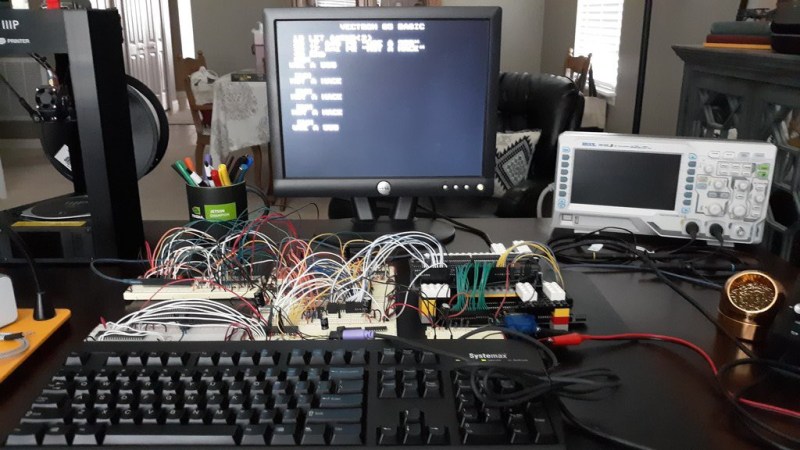
The prototype Vectron65 on breadboard with the VGA Plus v2 and VGA Text Mode cards

2026 Retrocomputer Challenge: Vectron65 Plus Puts The Emphasis On Plus

[Nick Bild] evidently has a soft spot for the 6502, given that his Vectron65 Plus home computer project uses at least one of them, depending on the add-ons. You see, he hasn’t just made a homebrew computer, he’s also produced multiple expansions. One of which, the VGA Plus Text Mode, has its own 6502 co-processor. He’s also produced two versions of a VGA graphics card capable of 640×480 output. We’re still not 100% sure how many entries we are going to count [Nick]’s work as for the contest, since the graphics cards can be used with just about anything, not just the Vectron65, but we do know they’re strong contenders every one.

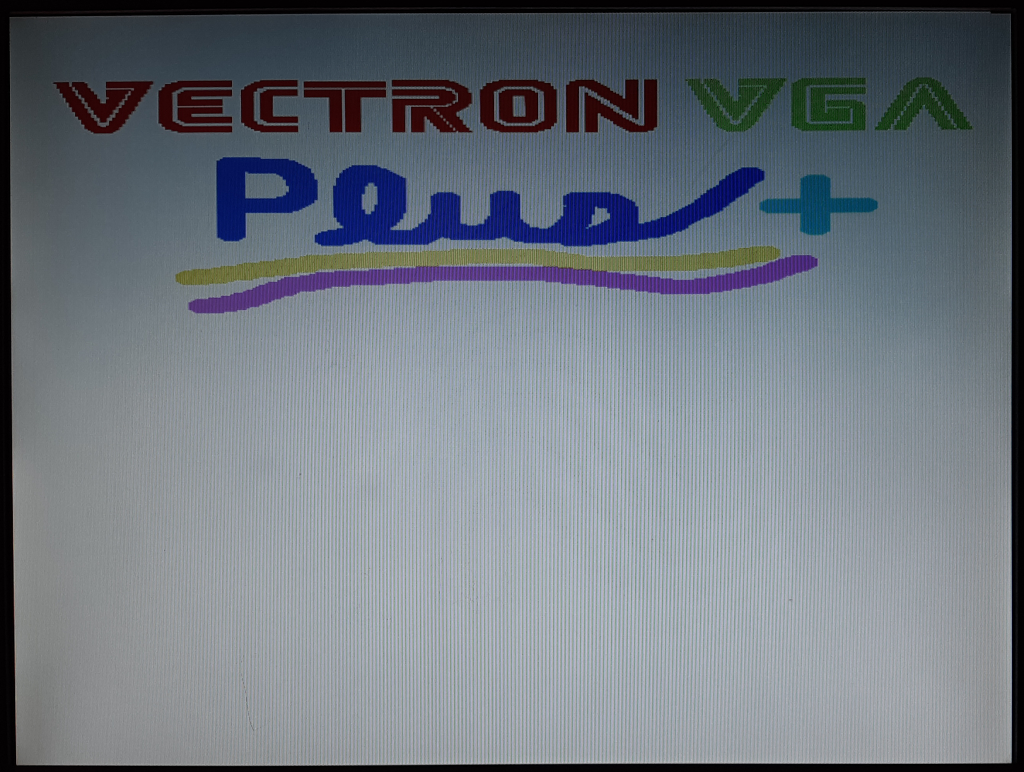
The video doesn’t really show the graphics, so here’s an example.

We covered the start of the Vectron65 project back in 2019, and it’s only gotten more practical as it has moved off breadboard onto PCB, and into a new version as the 65 Plus with more RAM and GPIO ports. Considering that the original let you game in VR using an add-on we covered, we might have to drop the “nearly” from “nearly practical” when talking about the Plus. Especially when you consider the graphics — we covered first version of 7400-series based VGA graphics card, while the newer V2 differs mostly in doubling the RAM and producing a more stable output. The V2 VGA card can work in tandem with the Text Mode card to write 40-column text to the screen without using up all the 6502 CPU’s cycles, offloading them to the second 6502 on the card with the help of a character ROM. Hey, if Commodore could put a second 6502 in a disk drive, why not? You can check out the whole suite in action in the demo video below. We admit to being particularly tickled by the Hackaday Comment Generator he’s running in BASIC.

If you’re worried about competing with [Nick], don’t worry — the 2026 Retrocomputing contest has multiple categories. You still have a few weeks to do something retro-modern, restomod an old machine, or just do some old-school programming.

Continue reading “2026 Retrocomputer Challenge: Vectron65 Plus Puts The Emphasis On Plus” →

2026 Retrocomputing Challenge: Lunar Lander On The PDP-1

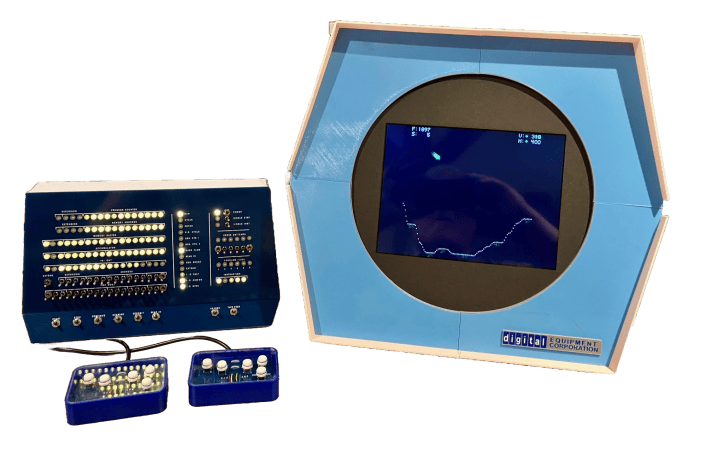
A lot of the retrocomputing world is focused on the 1980s, and for good reason– the home computer revolution was in full swing in that decade, and there is a veritable Cambrian Explosion of capable hardware to play with, emulate or recreate. There’s plenty of retro to look back to before that halcyon decade, though, as [Michael Gardi]’s port of Lunar Lander to the PDP-1 reminds us.

Both Digital Equipment Corporation’s PDP series and the game Lunar Lander are probably iconic enough in their own right to need no introduction, but there’s actually a connection between them. While many people think the game started with Atari’s 1979 arcade cabinet, the first version– then only text based, and called the Lunar Landing Game–actually dates back 10 years before that, and was dreamed up at DEC on a PDP-8. If you’re of a certain vintage, odds are, you probably typed in the BASIC version of the Lunar Landing Game at some point.

This is not that game. Despite the 1959 PDP-1 being more restricted, hardware-wise, than the PDP-8, [Michael Gardi] manages to get Lunar Lander in all of its graphical glory running on the PDP-1. Of course, if you’ve seen SpaceWar you know DEC’s first minicomputer can handle the graphics. You can play the emulated version online, if you’d like, or download it yourself from the link above. There is one PDP-1 that survives in working order, and [Michael] hopes to get the chance to run it there one day on the machine that started hacker culture. We wish him luck!

In the meantime, this may be the most “retro” project in our ongoing retrocomputer contest. There’s no special prize for that superlative, but if you can do older, have at ‘er! There are three weeks left to go back in time and claim both bragging rights and fabulous prizes.


2026 Retrocomputing Challenge: A Homebrew Computer In Only Three ICs

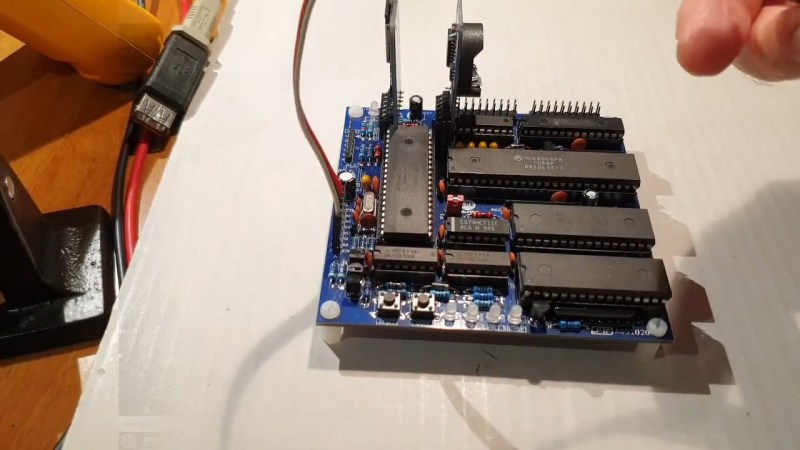
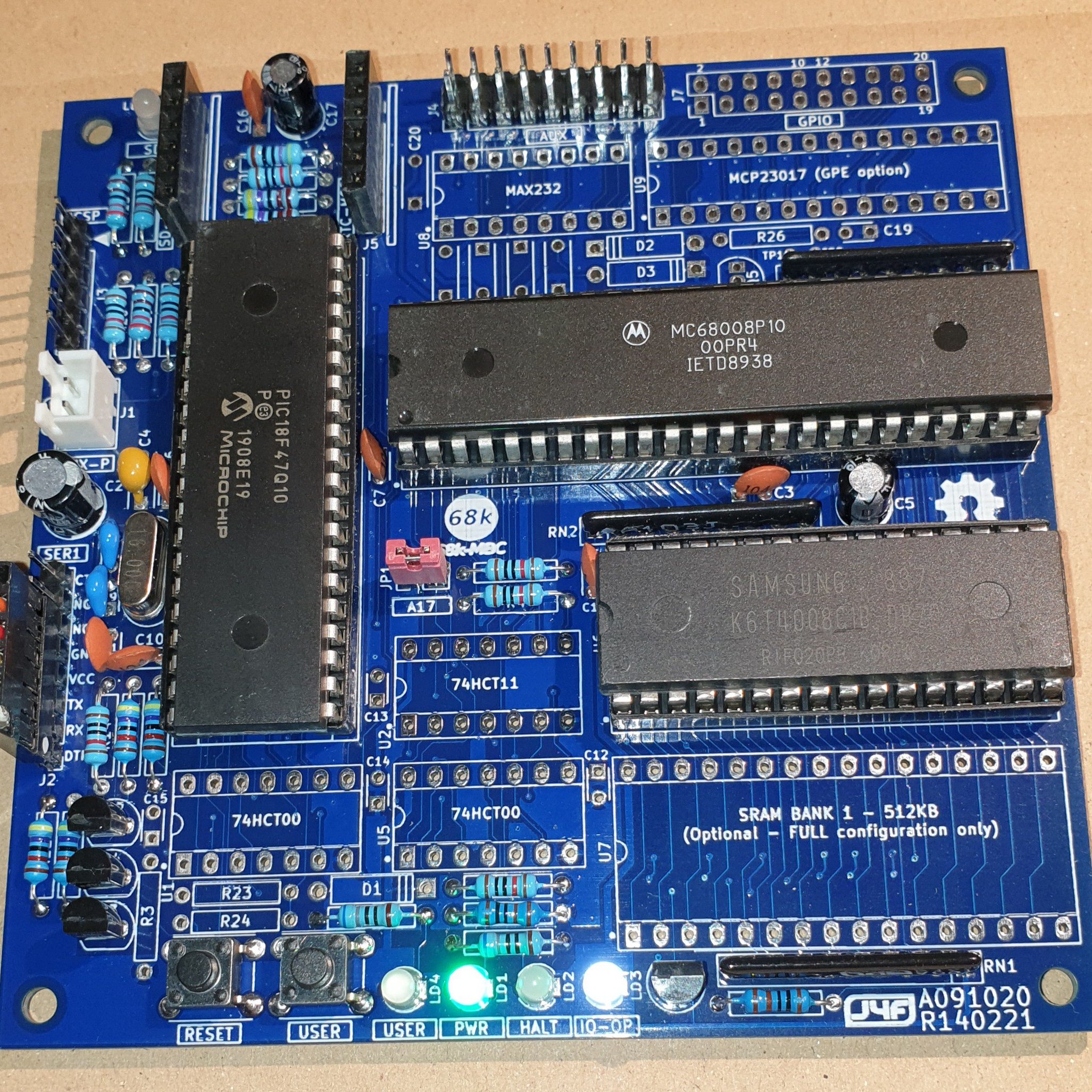
Homebrew computers don’t have to be retrocomputers, but [Just4Fun]’s all-through-hole, 68008-based “68k-MBC” certainly qualifies, so it is a worthy entry in our ongoing contest. While there are both “full” and “lite” hardware configurations, the three-IC “lite” configuration is what first caught our eye. Yes, three: the 68008, an SRAM chip, and a PIC microcontroller that acts as the ROM.

Software is provided by the suitably-retro CP/M68K, or standalone executables, which run on both hardware configurations.

There are four lights, but three chips in the “lite” version of the build.

The “lite” option restricts you to a maximum of 512 KB of RAM and a single serial port, but it looks like you still get I2C and the option to plug in an SD “hard drive” or RTC module however you configure the machine. Through the serial port, you can of course connect a terminal of you choice, or even use a thermal printer. The “full” version has two serial ports, if you want to do both. [Just4Fun] also has a parallel adapter lets you plug in printers with that interface as well. The demo video is below, but be warned that the text-to-speech narration won’t be to everyone’s liking.

We’ve featured other single-board-computers using the 68k before, but this one is a worthy contender in our contest, not least for the impressively low chip count. This contest has gotten oodles of entries, but there’s still time for yours: entries close October 27th.

Continue reading “2026 Retrocomputing Challenge: A Homebrew Computer In Only Three ICs” →

DIY Game Console Does It With Optical Discs

Optical media may be dead for video games on the big corporate consoles, but not in [Emmet]’s heart– or on his DIY game console, that he built specifically to use optical media. Not fancy blu-ray or newfangled DVDs, either, but good old fashioned CDs from the Orange Book.

Yeah, he’s not fitting modern AAA flagship games on those disks, but the Intel N150 on the single board computer he’s using isn’t going to power through them, either. That’s fine, though, because there are literally decades of content this machine can handle. That’s why the board is running Batocera, which is a Linux distro tailor-made for retrogaming on x86– and also ARM, but that’s not important here.

He’s using ESP32-S3s to run custom wireless gamepads with BLE, which means he’s got more power in each of them than some of the retro consoles this machine is emulating, but it gets the job done. Unlike some cartridge projects we’ve seen that merely queue up the games, the CDs on this one actually do seem to store the ROM file, along with a shell script to put it in the correct emulator’s library. We might have gone with autorun, but it’s [Emmet]’s console and he’s got it working how he likes.

What really makes this project stand out, in our opinion, is the effort [Emmet] put into custom CD labels and art for the jewel cases. It really makes this feel like an actual game console and not just a PC hooked to a the TV. The 3D printed case doesn’t hurt in that respect, either.

Be it from a nostalgia, as in this project, a need for cheap storage, or the perverse desire to hook it to an NES, optical media seems to be having a bit of a moment. Speaking of moment, we’re going to have to take a moment to come to grips with the fact that CDs have become nostalgic. Didn’t they just replace vinyl?

Continue reading “DIY Game Console Does It With Optical Discs” →

The pogo-quadcopter on ice

Pogo-Bot Goes All Terrain With Compliant Foot

What do you get when you combine a pogo stick, a quadcopter, and engineering students from the University of Toronto? This thing, apparently– a “monopedal hopping robot” that uses a spikey, pivoting foot pad tensioned by what look like elastic bands to keep it upright on all terrain from soft sand to hard ice.

It’s an interesting concept. The thrust from the four propellers is what gives the energy to get the robot moving, but its pogo-like hopping is entirely down to the spring-loaded single legged “landing gear”. Early iterations just used a spike on the end of that leg, but that failed in ways that some might find humorous, which you will see if you watch the video embedded below. Giving the monopod an actual foot with some traction and the ability to pivot and match the terrain works much better– now not only can this robot leap tall fences in a single bound, an errant ice patch won’t send it skittering away.

This isn’t the first one-legged robot we’ve seen; some only use their leg while others have wings, but this odd quadcopter is the first we’ve seen to brave Canadian winter. Continue reading “Pogo-Bot Goes All Terrain With Compliant Foot” →