Only The Hottest Tunes Play On This Fire Organ

Most musical organs use air as their working fluid, but there’s nothing in the rule book that says they have to. Calliopes have used steam for 150 years now, while [Look Mum No Computer] has opted to go full pyromaniac and pump propane though the summer’s hottest new instrument.

Just like every steam or compressed-air organ we’ve heard, the tuning could use some work — though we have faith [LMNK] will get to that in due time — and just like the circus organs of yore, it sits upon a trailer for easy transport. That may or may not be to flee from fire marshals, because the whole point of the propane organ isn’t to waste flammable gas: it’s to burn it. The fire itself doesn’t make a sound; that’s the propane going through the copper organ pipes. Igniting it is just bonus, and what a bonus it is!

Said ignition is provided by regular spark plugs and ignition coils, like you’d find in any internal combustion engine. An earlier version used pilot lights, but those had an annoying habit of blowing out and were wasteful of propane to boot. This way the same MIDI signal that controls the gas valve can set the ignition off, and provide a light show to go with the sound. The video embedded below deals with building this new ignition setup, but he has other videos on the channel detailing other aspects of the construction. If you’re not so interested in that and just want a performance, jump right to 16:47 for the obligatory Toccata and Fugue.

Perhaps [LMNK] will write a theme tune for his museum of obsolete technology on this organ, with accompaniment from his rope-core drum machine, and effects on his tape delay synth.

Continue reading “Only The Hottest Tunes Play On This Fire Organ”
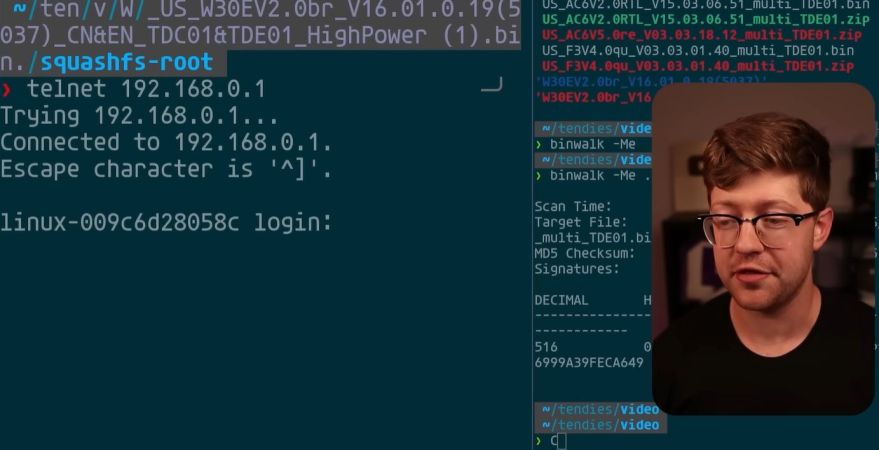
Iz in ur Tenda AC10V6, hax0ring your printf output. (Credit: Low Level, YouTube)

Hacking A Tenda AC1200 Wi-Fi Router With A CVE Combo

It’s rather awkward when you buy a piece of hardware like a sketchy router to make a video about its hidden admin password backdoor – known as CVE-2026-11405 – only to discover that you bought the wrong Tenda router, namely the AC10V6 model. After making this mistake, [Low Level] did the only reasonable thing one ought to do in this case, and try to find an exploit in this ‘wrong’ router as well.

The obvious start here is to do the same as with the other exploit, in that you download a firmware image from the manufacturer’s website, then pluck it apart using binwalk to do an initial check for juicy files. After that tools like Ghidra can be used to do a more in-depth analysis of any binary files, with a special focus on things like user-facing elements like login screen, as input validation will likely forever remain the number one type of exploited CVE.

One major change that Tenda made here was to encrypt the firmware image, which seemed suspicious. With that easy path blocked, the research of others on different Tenda routers was looked at, including the AC20 with the fascinating Telnet exploit in the form of CVE-2025-9090 where merely poking a file on the device turned on the Telnet service. This left the minor issue of finding a password to log into said Telnet session.

Continue reading “Hacking A Tenda AC1200 Wi-Fi Router With A CVE Combo”

3D Printing A Usable Airless Tire

For decades now, companies like Michelin have been teasing us with futuristic-looking automobile tires that don’t use air. Instead, they use a polymer mesh of sorts which maintains the same pressure on the travel surface that a pneumatic tire does, with much less maintenance than their pneumatic counterparts. At least, in theory. There’s a reason that these tires live in the same mythical realm that Half Life 3 and the modern affordable Volkswagen do, and [Berm Peak] decided to discover those reasons for himself.

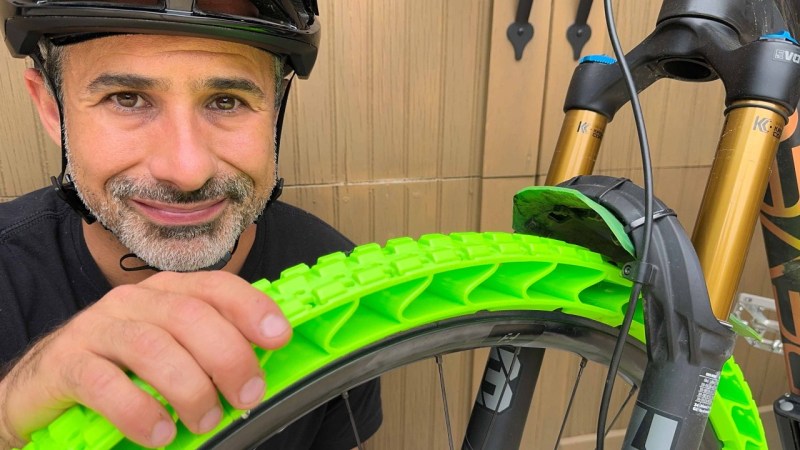
Of course, [Berm Peak] isn’t building these for his daily driver, an electric pickup truck featured in previous videos of his. He’s putting these on his mountain bike instead, a challenging environment for a tire like this in its own right. When mountain biking at the level he does, punctures and flats can become a real nuisance on the trail, so he set about experimenting with these designs with the 3D printer to see if he could make something rivaling pneumatic technology. After a few design iterations he settled on a TPU-based version with a compliant S-shaped spacing between the tread and wheel. The tire printed in sections that are installed by joining them together on the bike rim with a separate 3D printed rim interface.

At the end of this process [Berm Peak] ends up with a surprisingly capable tire that mostly holds up to his extreme off-road testing, an impressive feat for something 3D printed in his shop. Presumably a company specializing in bicycle tires could build something even more capable, but it turns out that a different technology has already solved all of the problems that airless tires solve. Mountain bikers today almost exclusively ride on tires with sealant, so punctures and flats are essentially a solved problem. But the neon-green airless tires were still a fun project for [Berm Peak] and quite the head-turner out on the bike trails.

Continue reading “3D Printing A Usable Airless Tire”

Full Teardown Of A 2026 Amazon Fire Stick HD

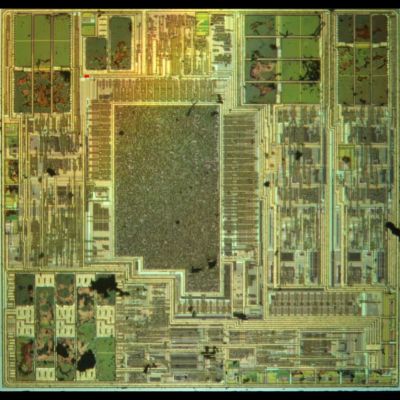
Die of the Amazon Fire Stick HD (2026) PMIC IC. (Credit: electronupdate, YouTube)

After the release of Google’s Chromecast so-called ‘streaming sticks’ have remained a popular form factor, even though such technology is these days part of ‘smart’ TVs. Being curious as to what kind of hardware they put into these sticks or dongles these days, [electronupdate] decided to do his typical full teardown of a 2026 model Fire Stick HD from Amazon, including the typical nekkid die shots.

Although most of the bits inside are fairly typical, being just your typical Mediatek-sourced solution, the ceramic patch antennas for Bluetooth and Wi-Fi are a rather interesting detail, as are the purported limitations that make this the ‘HD’ version of the Fire Stick, unlike its 4K brethren.

The used Mediatek MT8698D SoC isn’t so different from the SoC in those 4K versions, with the 2025-era 4K Plus using the MT8696D, but the 4K Select using basically the same SoC as the HD version, featuring the same G310V2 GPU at 500 MHz per the Amazon Developer documentation and the same decoder block (VPU), both of which are capable of 4K video decoding. This implies that the HD vs 4K distinction is purely software-based.

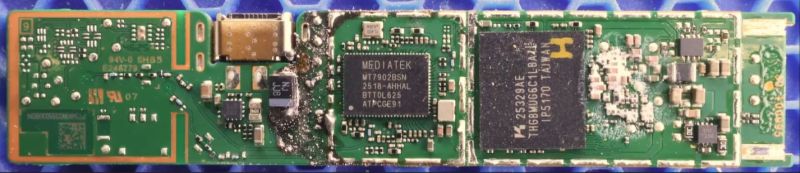
The Amazon Fire Stick HD PCB devoid of its metal shielding. (Credit: electronupdate, YouTube)

After popping open the device and noting the various ICs, the NAND Flash, the Mediatek MT7902 wireless IC, the PMIC and the aforementioned SoC all have their caps popped in order to take a closer look at their dies. For reference, as one of the largest ICs, the SoC die is a mere 5.2 x 6.45 mm. The PMIC die is more interesting as usual, as this one integrates USB-PD functionality, adding quite a bit of logic to what is otherwise a fairly mundane bit of power management features.

Overall not a very surprising design, though it does tickle that thought in the back of one’s mind whether it could be turned into a ‘4K stick’ with a few software tweaks, or perhaps more simply by installing plain Android onto its 8 GB of eMMC.

Continue reading “Full Teardown Of A 2026 Amazon Fire Stick HD”

Addressable LEDs Make Giant 16×2 Character Display

We’ve always taken a certain childlike joy in seeing tiny things made big, and big things tiny. Evidently [Uncle Stem] is the same way, if this 7x sized 16×2 “LCD” display is any indicator.

“LCD” is in scare quotes there, because while the original display is a character LCD, [Uncle Stem]’s embigginated recreation is not. Liquid crystal displays are beyond all but the most dedicated DIYers, so [Stem] recreated the whole thing with addressable LEDs instead — over a thousand of them. Each character got its own PCB, and rather than pay for assembly [Stem] used a 3D printed stencil to help apply solder paste, an idea we’ve seen before. His choice of long lengths of nickle strip — the stuff you spot weld to Li-ion batteries — to join the LED-holding PCBs is also worth noting.

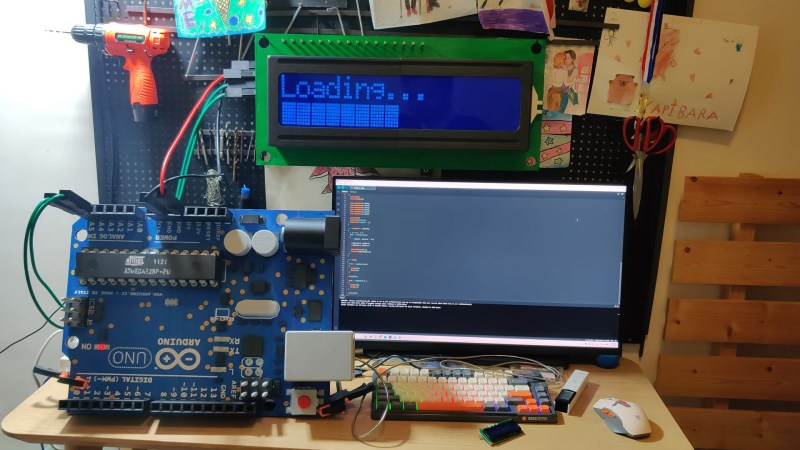
In order to get his giant display to act like the I2C-operated module he loves, [Uncle Stem] equipped it with an RP2040 pre-programmed with the LCD character set. That way he can plug it into any Arduino project that uses the LiquidCrystal_I2C library and have the authentic 1602 experience. The green “PCB” the display is mounted to is actually laser-cut plywood, while some acrylic sits in front of his PCBs with office paper to act as as a diffuser. A 3D printed frame completes the illusion. He even goes so far as to replicate the pin headers at 7:1 scaling with brass rods.

He also connects it to a over-sized Arduino, with giant jumper wires. But for the record, not the giant Arduino we featured previously. Like we said, hackers like to mess with scale, and we’ve seen everything from giant benchies to a working Mac Classic for Barbie.

Continue reading “Addressable LEDs Make Giant 16×2 Character Display”

Know Your Food: Our Daily Bread

It’s time to return to our no-punches-pulled look at food manufacture, and this time we’re looking at the humble loaf of bread. As before, we’re approaching the subject with a look at breadmaking both in the traditional sense that marketing people would like you to imagine, and in the modern sense of the loaf you’ll find on your supermarket shelf.

A Food Of Great Cultural Significance

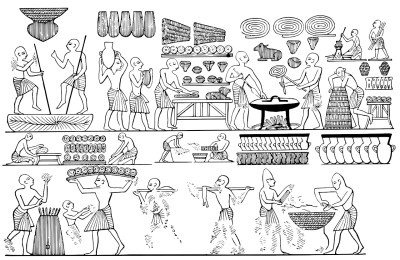
An ancient Egyptian relief, showing stylised figures at work on a variety of baking tasks.
An ancient Egyptian bakery, depicted in the reign of Ramesses III. Scanned by Peter Isotalo, CC BY-SA 4.0.

Perhaps there are few foods with as much cultural significance as bread. If your distant ancestors took the path of growing grain as their major subsistence carbohydrate, the chances are there will be some form of bread woven into your identity. Where this is being written for example were I to head for the cathedral of a Sunday morning I would recite the Lord’s Prayer as part of the service, Give us this day our daily bread. Whether your culture leavens its bread or not, or whatever grain it uses, the chances are that there will be something similar about the humble foodstuff within it.

Continue reading “Know Your Food: Our Daily Bread”