Native SMB3 Client Brings Modern NAS Access To 20-Year-Old PowerPC Macs

As software updates cease for operating systems, they eventually begin to lose access to parts of the LAN and internet due to out of date encryption features, as well as the inability to handle file sharing protocols like SBM3, which is somewhat of a necessity if you have e.g. a NAS on the LAN. Such too was the case with [watermark_hd]’s 20-year old PowerPC Macs and their installations of OS X Tiger and Leopard.

Cue Aqualink, a native SMB3 client for these older OS X versions that uses [Ronnie Sahlberg]’s libsmb2 server/client library for SMB2 and SBM3. The source code can be found over on GitHub, along with a Japanese translation. By using a local WebDAV server Tiger’s built-in mount_webdav feature can be used to mount these remote volumes.

While you can often still use SMB1 even on modern Windows and Linux/BSD via Samba, allowing even retro systems like these PowerMacs to speak SMB3 is at least a great boost for network security, even if the aforementioned encryption shortcomings mean that you cannot quite run encrypted file shares yet.

Although OS X eventually began to adopt modern SMB versions, some of us may remember how incredibly buggy they were, to the point that us OS X users often had to fall back to CIFS (SMB 1.0), so this is another potential use for this Aqualink application.

AI Book Scanning: Just What Is A Rare Book?

One of the stories of the last few weeks has been that AI companies have been scanning books in very large numbers in order to train their models with content guaranteed to have been written before 2002, and thus AI free. It’s caused some outrage, because of the size of the operation, and because the scanning process is destructive. In particular the phrase being bandied around is that these are rare books, and it’s this phraseology I find problematic. I think it’s time to unpack why that is the case.

It’s Not Book Burning, Folks

Before I worked for Hackaday I had a long career in and around the publishing industry, mostly on the electronic side, but from time to time crossing paths with my colleagues in the world of paper-based publishing. I understand the appeal of a good book, I’ve spend a lot of my life among bibliophiles, and let’s just say I own a few books myself. In particular I understand the symbolism of destroying books, bringing to mind as it does the actions of repressive regimes. I have stood in Bebelplatz in Berlin where the photo of Nazi student organisation members burning the library of Magnus Hirschfeld’s institute was taken in 1933, and if you know me, you’ll have an idea why that’s close to home. But for all that, what the AI companies are doing is not the same thing.

In this case they’re destroying the books for two reasons. Firstly, as I remember from a previous employer in the publishing world, it’s much easier to digitise a stack of papers than it is a bound book. Thus I’m pretty sure that’s one reason they remove the binding before digitising the pages. Then secondly, as I understand it it’s a copyright issue. If they buy a book, digitise it, and destroy the physical copy, they can legitimately claim that only one copy of it exists, and they hope, sidestep copyright claims from publishers. Continue reading “AI Book Scanning: Just What Is A Rare Book?”

Artificial Intelligence As It Once Was

One day, people will look back at what we call Artificial Intelligence and laugh. We do the same thing today, as chat bots totally outstrip what the computer industry called AI up until pretty recently. This didn’t escape curators at the Internet Archive, apparently, and [Jason Scott] tells us about a recent collection, “Vintage Artificial Intelligence.”

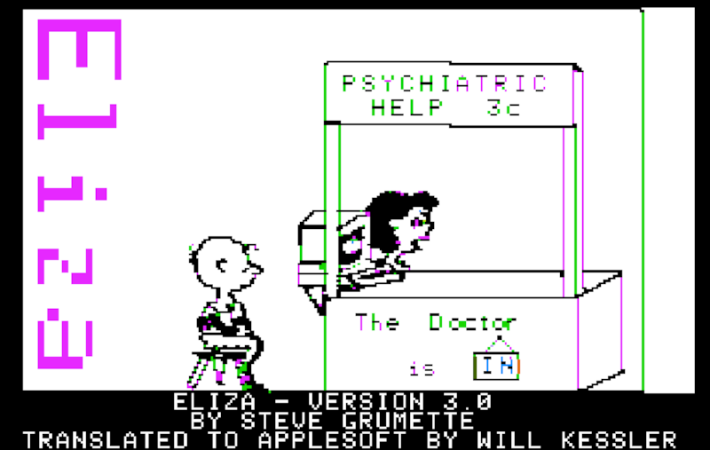
These are old software titles that will run for you in emulated machines right in your browser, ranging from somewhere in the 1970s to the 1990s. There’s Eliza, of course. Actually, there are several copies of Eliza. Given how simple it was to write Eliza, it did a pretty good job. Then there are adventure games that are pretty conversational, Lisp, Prolog, which was going to spawn expert systems to replace us all, and Racter, which tried to write fiction.

There was even Alter Ego that was supposed to help you explore life decisions, maybe? There are a couple different versions of even a few versions of Conway’s Game of Life. We aren’t sure that’s ever really been AI, but perhaps it depends on your definition. We’re happy to see Sargon, the chess program, represented.

We didn’t see Hexapawn, which is a shame. We also didn’t see Parry (the paranoid counterpart to Eliza) or that elusive software we remember but can never find that built word chains from text called George.

We’ve written about Eliza before. If you want to experiment with Prolog and you like Pokémon, you’ll appreciate this tutorial.

Anatomy Of An SLA Resin Printing Disaster

When I got back into SLA resin printing recently, I knew that I’d inevitably have to deal with the agony of failed prints and of course resin spills. This moment eventually came, and I felt motivated to treat mistakes as teaching moments on aspects like how to properly prepare an SLA build plate in terms of angles and supports or how to deal with failed print aftermaths.

Before moving on to the disaster, I’d like to first start with a look at the resin print of the previous article, which contained a number of fairly small parts. These I had oriented and supported almost fully using the automatic methods provided by the ChituBox slicer software, and worked about 90% as I had hoped, while leaving plenty of room for improvement as well.

Overall, preparing an SLA build plate in the slicer isn’t quite the same as for an FDM printer, mostly due to one phrase that strikes fear in the heart of anyone who has ever done resin printing: “peeling forces”.

Continue reading “Anatomy Of An SLA Resin Printing Disaster”

Quest VR Headset Becomes Unlocked Hardware

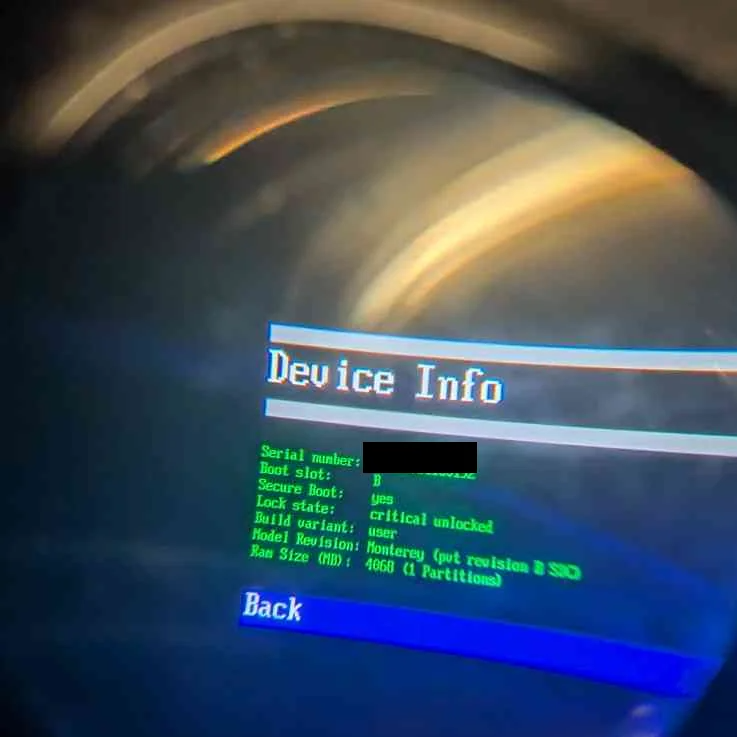
The Quest virtual reality headset gets a fully unlocked bootloader thanks to the QuestStack tool, which automates a complex process of privilege escalation to provide stable, privileged access to the hardware. This solidly frees the headset from its existence as a device tied to Meta’s walled garden, although the tool only works on the Quest 1.

Image credit: notmastergamerok on Reddit

Not simple enough? No problem, there’s also a web version by [darknight1050] that makes the unlock process as simple as plug in headset, visit web page, receive unlocked bootloader.

The first-generation Quest headset is an older (released in 2019) piece of hardware that is still perfectly capable, although it has been surpassed by later models in terms of performance and optics.

It has also been essentially forgotten as far as parent company Meta is concerned, with no requirement for new content to be compatible with it, nor consideration in general given to the device for some time now.

Hardware that is no longer supported should be opened. The Oculus Go got an official unlocked OS build which was a positive thing, but the Go was also a pretty limited device. The Quest 1 — the ‘Oculus’ part of the name having been dropped around the time Facebook renamed itself to ‘Meta’ — is considerably more capable than the Go was. Now people can have privileged access to its hardware, which may help save some of them from junk piles while enabling folks to do as they please with the hardware they purchased.

The Days Of Broadcast Digital TV Could Be Numbered

When the analog TV signals were turned off in most places around fifteen years ago, their replacement took the form of a set of digital multiplexes. ATSC for North America, and DVB-T for Europe and other places. This would deliver a multi-channel broadcasting solution for the future, and this would be how those not on a cable would consume their telly. It’s a surprise then to find that some governments are already looking at turning off digital TV broadcasting, with the UK in particular wanting to put a date on the switch-off of 2032.

It’s been no secret for many years that linear broadcast TV is being overtaken by streaming services, and this move projected to come at the end of the transmitting contract was always likely to come eventually. Even with increasingly few younger people watching traditional TV though, it still comes as a bit of a shock that it’s happening so soon. The replacement will be an online service for which initially a set-top-box will be required. We’re guessing there will be a storm of protest, but since it’s still quite a few years away and broadband coverage is now near-universal, there’s a good chance it will peter out as the time approaches.

Aside from the end of analog TV, we’ve seen a steady decline in AM and Long Wave transmission across Europe. What makes this surprising then is that instead of being a legacy analogue system, the one facing the turn-off is the future-proof replacement, and one that still sees plenty of use at that. A major shift in consumer electronic technology is taking place, but will anyone notice it?


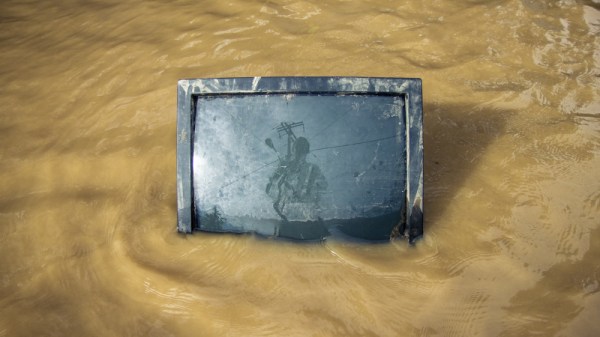
Header: Carlos Adampol Galindo, CC BY-SA 2.0.

Straight Talk On 3D Printing Footwear At Home

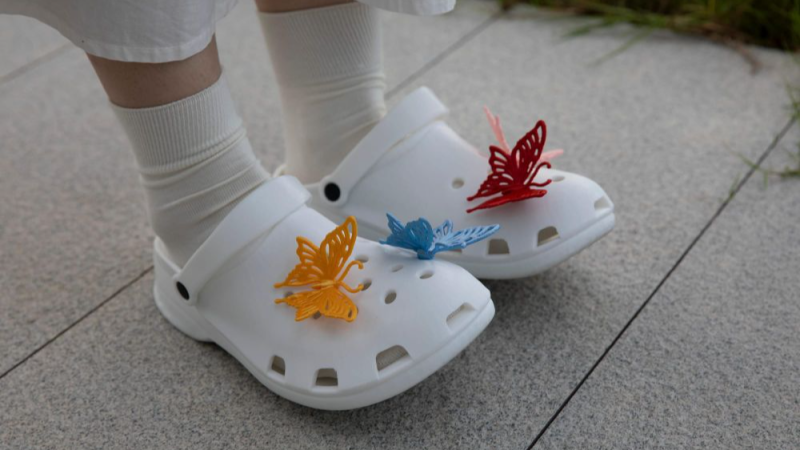
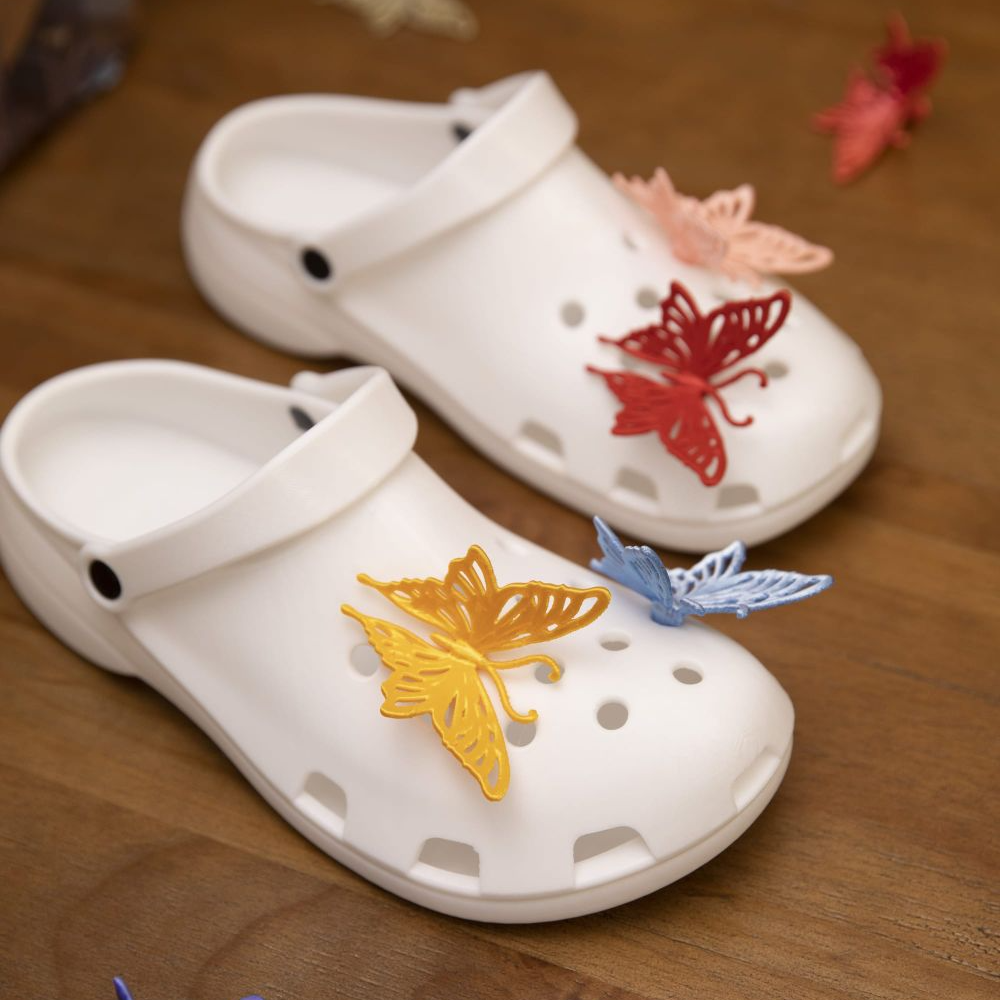
Printed footwear is an intriguing idea, but as far as projects go it is somewhat more complex than it first appears. This guide to 3D printing your own clogs not only provides a solid process, but also acts as a list of the challenges and pitfalls involved. After all, a piece of footwear is actually a fairly large object. Failed prints can be costly and time-consuming, so a guide like this is a valuable resource.

First of all, a 3D printer that can handle multi-material printing is called for. The footwear itself will be printed in TPU 90A as a sweet spot for hardness, but the print will require supports and those supports will need to peel away cleanly. The solution is a shoe printed in TPU with a rigid support structure of PLA. Using two different materials in the same print with anything remotely resembling efficiency calls for either a dual-nozzle print head, or a multi-toolhead printer.

3D printing one’s own clogs can be rewarding, if not necessarily cost-effective.

Here we want to take a moment and say that while the guide itself suggests PETG is also a suitable support structure, we suspect this might only be true for the exact filament formulations used in the guide. The safer approach is to use PLA. Why? As we’ve seen in other tests, PETG has been observed to stick extremely well to flex filaments in general, whereas PLA doesn’t really want to stick to anything other than PLA. The exact formulations of TPU and PETG used in the guide might be compatible with one another, but in general we recommend sticking to PLA as a rigid support for flexible filament.

Assuming a capable printer and suitable materials are nailed down, one also needs to worry about keeping the TPU dry. It is very sensitive to moisture, which directly affects print quality. You’ll also need to dial in the settings — a gyroid-patterned infill of 15% provides the right amount of “squish”, which is most effectively fine-tuned by changing the infill pattern rather than the density.

Is it worth the time and effort and filament cost to print one’s own pair of slip-ons versus simply buying a pair of Crocs®? Maybe not, but it can still be rewarding and this guide will help minimize any failed prints in the process. And if you do get a nice print but the TPU is sticking a little too well to the build plate, reach for the isopropyl alcohol.