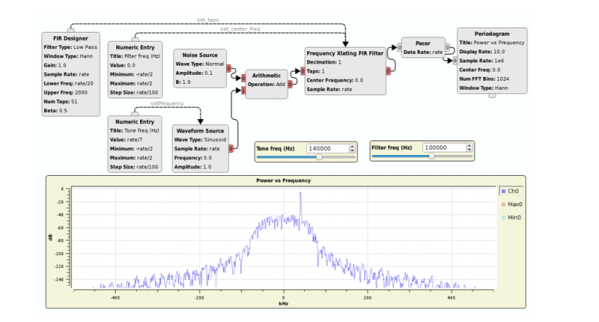
If you want to go to the next level with software defined radio (SDR), there are a lot of choices. The RTL-SDR dongles are fine, but if you get serious you’ll probably want something else. How do you choose? Well, your friends at the European Space Agency Libre Space Foundation have published a paper comparing many common options. True, they are mostly looking at how the receivers work with CubeSats, but it is still a good comparison.
The devices they examine are:
RTS-SDR v3
Airspy Mini
SDRPlay RSPduo
LimeSDR Mini
BladeRF 2.0 Micro
Ettus USRP B210
Pluto SDR
They looked at several bands of interest, but not the HF bands — not surprising considering that some of the devices can’t even operate on HF. They did examine VHF, UHF, L band, S band, and C band performance. Some of the SDRs have transmit capabilities, and for those devices, they tested the transmit function as well as receive.
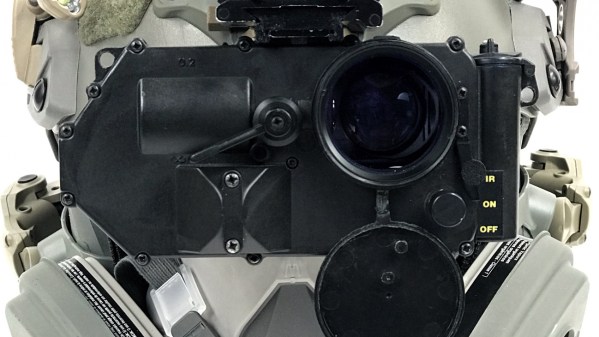
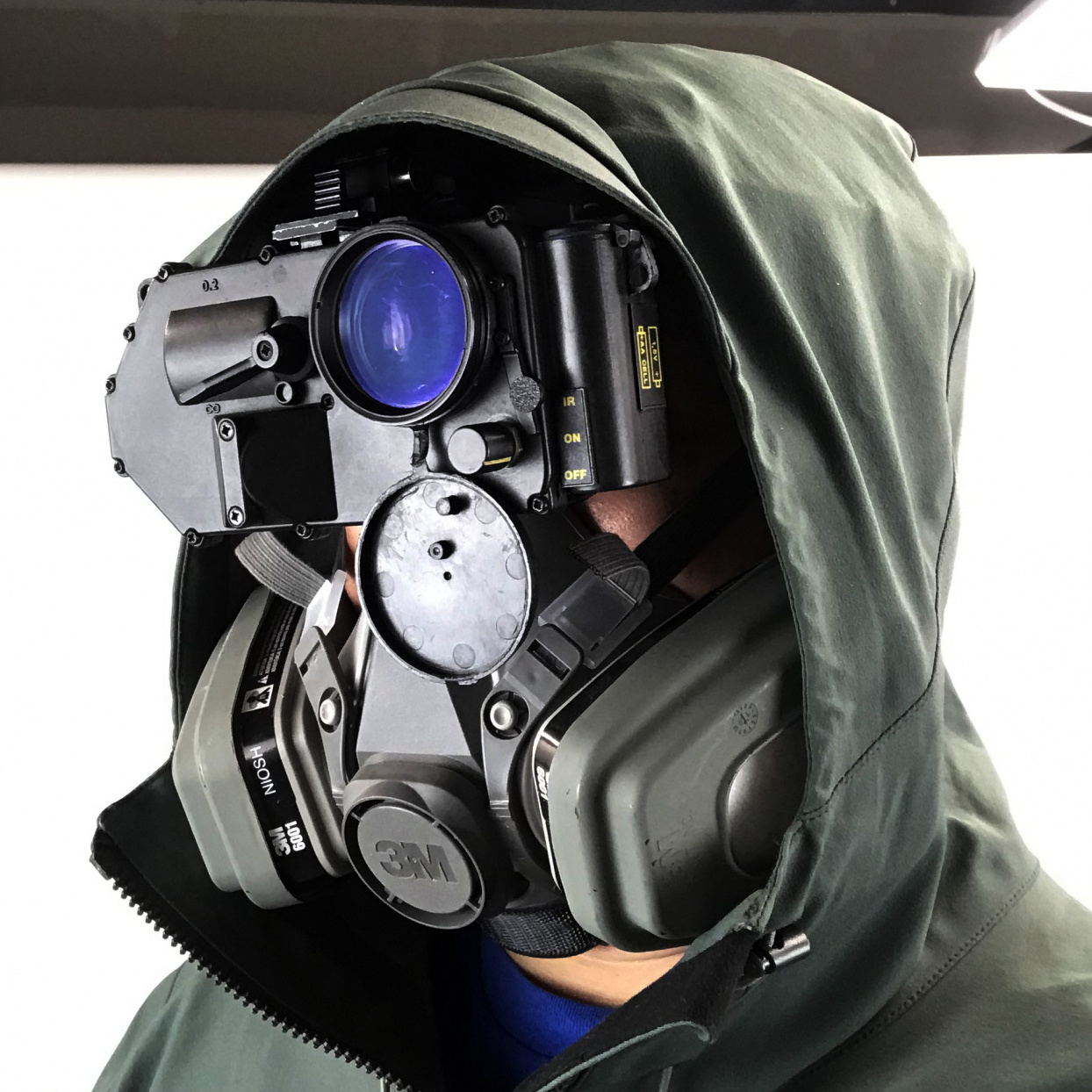
Night vision aficionado [Nicholas C] shared an interesting teardown of a Norwegian SIMRAD GN1 night vision device, and posted plenty of pictures, along with all kinds of background information about their construction, use, and mounting. [Nicholas] had been looking for a night vision device of this design for some time, and his delight in finding one is matched only by the number of pictures and detail he goes into when opening it up.
The GN1 rocks an irresistible retro-futuristic look.
What makes the SIMRAD GN1 an oddball is the fact that it doesn’t look very much like other, better known American night vision devices. Those tend to have more in common with binoculars than with the GN1’s “handheld camera” form factor. The GN1 has two eyepieces in the back and a single objective lens on the front, which is off-center and high up. The result is a seriously retrofuturistic look, which [Nicholas] can’t help but play to when showing off some photos.
[Nicholas] talks a lot about the build and tears it completely down to show off the internal optical layout necessary to pipe incoming light through the image intensifier and bend it around to both eyes. As is typical for military hardware like this, it has rugged design and every part has its function. (A tip: [Nicholas] sometimes refers to “blems”. A blem is short for blemish and refers to minor spots on optics that lead to visual imperfections without affecting function. Blemished optics and intensifier tubes are cheaper to obtain and more common on the secondary market.)
In wrapping up, [Nicholas] talks a bit about how a device like this is compatible with using sights on a firearm. In short, it’s difficult at best because there’s a clunky thing in between one’s eyeballs and the firearm’s sights, but it’s made somewhat easier by the fact that the GN1 can be mounted upside down without affecting how it works.
Some people will do anything for a good cup of coffee, and we don’t blame them one bit — we’ve been known to pack up all our brewing equipment for road trips to avoid being stuck with whatever is waiting in the hotel room.
While this stylish lever-based industrial coffee machine made by [exthemius] doesn’t exactly make textbook espresso, it’s pretty darn close. Think of it like an Aeropress on steroids, or more appropriately, bulletproof coffee. As you can see in the demo after the break, the resulting coffee-spresso hybrid brew looks quite tasty.
Here’s how it works: finely-ground beans go in a pressurized portafilter basket that was scavenged from an entry-level prosumer espresso machine. Pour boiling water into the top of the cylinder, and pull the giant lever down slowly to force it through the portafilter. Presto, you’re in thin, brown flavor town.
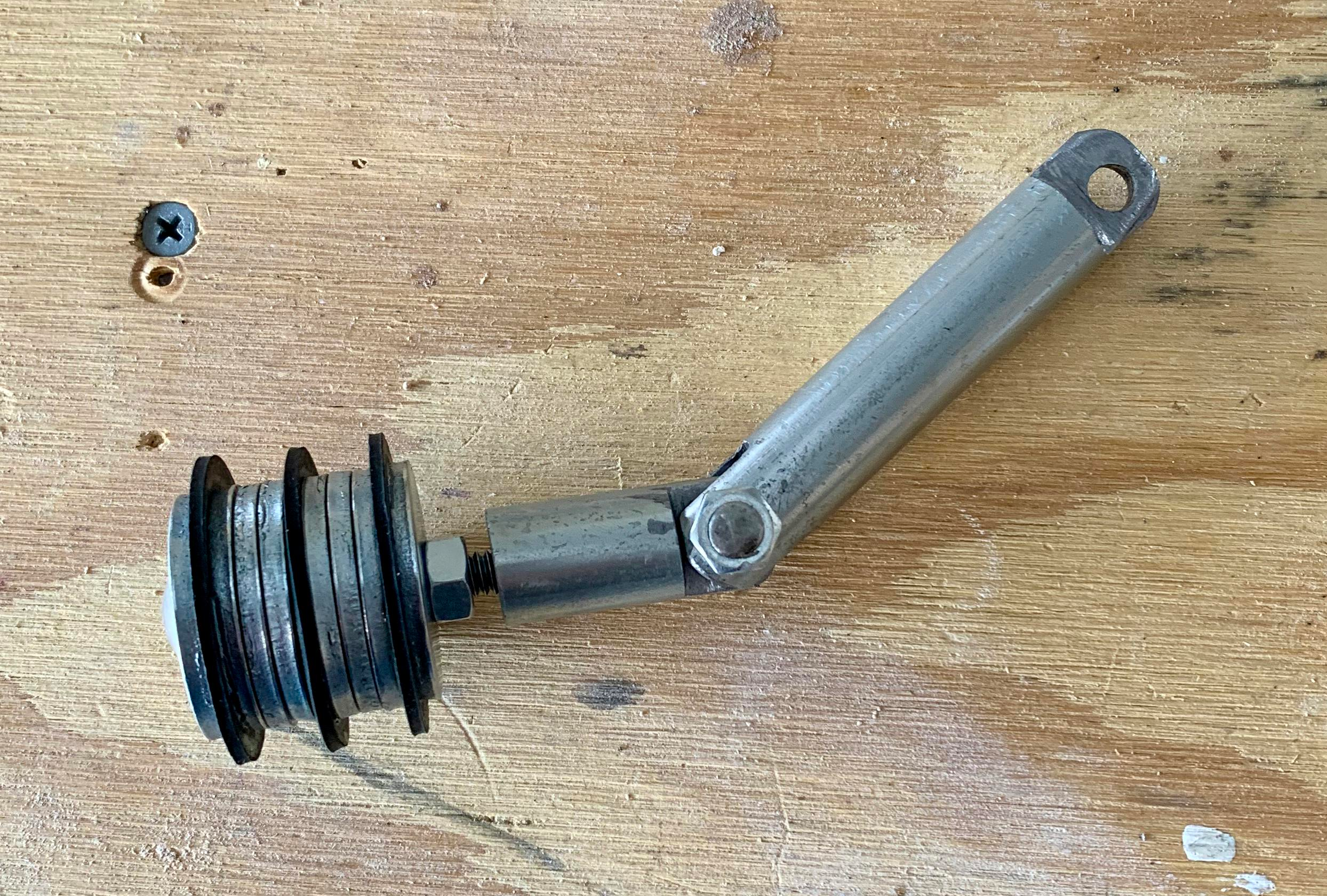
We love the piston-esque plunger that [exthemius] made by layering washers and rubber gaskets up like a tiramisu. Although there are no plans laid out, there’s probably enough info in the reddit thread to recreate it.
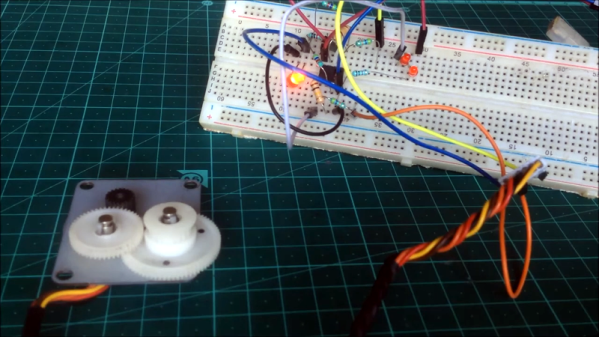
It isn’t hard to imagine a scenario where you are stuck at home all day with nothing to do and certain items are in short supply. Sure, bathroom tissue gets all the press, but try buying some flour or a freezer and see how far you get. Plus online shopping has given up on next day delivery for the duration. Not hard to imagine at all. Now suppose your latest self-quarantine project needs a rotary shaft encoder. Not having one, what do you do? If you are [Tech Build] you go all MacGyver on an old printer and pull out a stepper motor.
How does a stepper motor turn into an encoder? Well, that’s the MacGyver part. We are not big fans of the physical circuit diagrams, but it looks like [Tech Build] borrowed (with credit) from an earlier post and that one has a proper schematic.
The implied takeaway from all the coverage is that 3D printers are a solution to critical equipment shortages, but the fact that 3D printers are involved isn’t really the important part. We all know printers can make plastic parts, so what should be the real takeaway? The biggest lessons we can learn about Prusa’s ongoing effort are related to how they’ve gone about it.
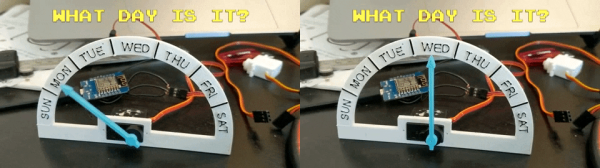
With much of the world staying at home at the moment, keeping track of our sanity and the day of the week is a bit of a challenge, especially without the normal daily routine to hold onto. To help with one of these problems, [phreakmonkey] has built a Day Clock. As the name suggests, it’s only purpose is to show what day of the week it is.
Avery simple device, the two main components are a servo and a Wemos D1 Mini, the popular ESP8266-based dev board. Using the NTPtimeESP library, it gets day of the week from the internet, and moves the servo to indicate the current day on a 3D printed face. Most readers should be able to whip one up in an hour or two, which can help keep sane in these interesting times.
For another Corona clock, check out [Elliot Williams]’ version that helps with keeping domestic peace. If you want to do something to combat the spread of the current epidemic, you can build a few face shields, make your idle computer available for Folding@Home or sew a few masks. Every bit helps.
The world around us is a scary place, with a lot of visible and invisible dangers. Some of those invisible dangers are pretty obvious, such as that of an electrical shock from exposed wiring. Some are less obvious, for example the dangers of UV radiation to one’s skin and eyes commonly known, but also heavily underestimated by many until it’s too late. In the US alone, skin cancer ends up affecting about one in every five people.
Perhaps ironically, while the danger from something like UV radiation is often underestimated, other types of electromagnetic radiation are heavily overestimated. All too often, the distinction between what is and isn’t considered to be harmful appears to be made purely on basis of whether it is ‘natural’ radiation or not. The Sun is ‘natural’, ergo UV radiation cannot be harmful, but the EM radiation from a microwave or 5G wireless transceiver is human-made, and therefore harmful. This is, of course, backwards.
Rather than dismissing such irrational fears of radiation, let’s have a look at both the science behind radiation and the way humans classify ‘danger’, such as in the case of 5G cell towers. Continue reading “On 5G And The Fear Of Radiation”→