A Stylish Home For Your Next ESP Project

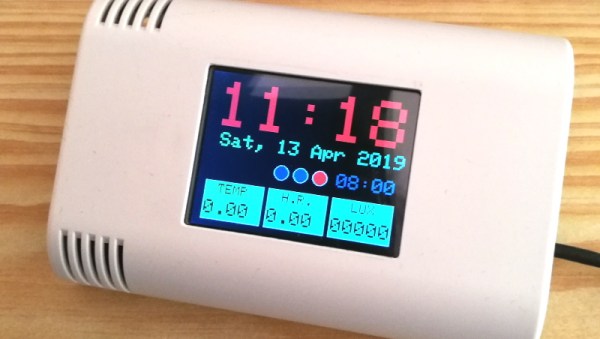
The ESP8266 and ESP32 are fast becoming the microcontroller of choice for, well, everything. But one particular area we’ve seen a lot of activity in recently is home automation; these boards make it so incredibly easy and cheap to get your projects online that putting together your own automation system is far more appealing now than it’s ever been. Capitalizing on that trend, [hwhardsoft] has been working on a ESP enclosure that’s perfect for mounting on the living room wall.
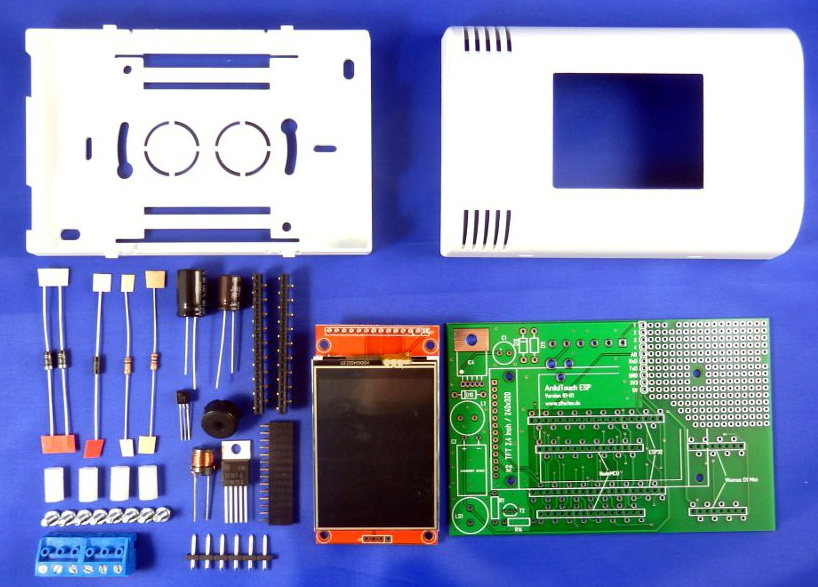
Of course, there’s more to this project than an admittedly very nice plastic box. The system also includes a ILI9341 2.4 inch touch screen LCD, an integrated voltage regulator, and even a section of “perfboard” that gives you a spot to easily wire up ad-hoc circuits and sensors. You don’t even need to switch over to the bare modules either, as the PCB is designed to accommodate common development boards such as the Wemos D1 Mini and NodeMCU.

Despite its outward appearance, this project is very much beginner friendly. Utilizing through hole components, screw down terminals, and a impeccably well-labeled silkscreen, you won’t need to be a hardware expert to produce a very slick gadget the whole family can appreciate.

Much like the HestiaPi project we covered a few months back, this project takes a cheap and readily available development board and turns it into something that has all the trappings of a commercial offering. These projects are reminders that the line between built and bought is only getting blurrier as time goes on.

Continue reading “A Stylish Home For Your Next ESP Project”

Hackaday Podcast 036: Camera Rig Makes CNC Jealous, Become Your Own Time Transmitter, Pi HiFi With 80s Vibe, DJ Xiaomi

Hackaday Editors Elliot Williams and Mike Szczys work their way through a fantastic week of hacks. From a rideable tank tread to spoofing radio time servers and from tune-playing vacuum cleaners to an epic camera motion control system, there’s a lot to get caught up on. Plus, Elliot describes frequency counting while Mike’s head spins, and we geek out on satellite optics, transistor-based Pong, and Jonathan Bennett’s weekly security articles.

Take a look at the links below if you want to follow along, and as always tell us what you think about this episode in the comments!

Take a look at the links below if you want to follow along, and as always, tell us what you think about this episode in the comments!

Direct download (60 MB or so.)

Continue reading “Hackaday Podcast 036: Camera Rig Makes CNC Jealous, Become Your Own Time Transmitter, Pi HiFi With 80s Vibe, DJ Xiaomi”

Homemade Wall Stops Roomba And Other Vacuum Tricks

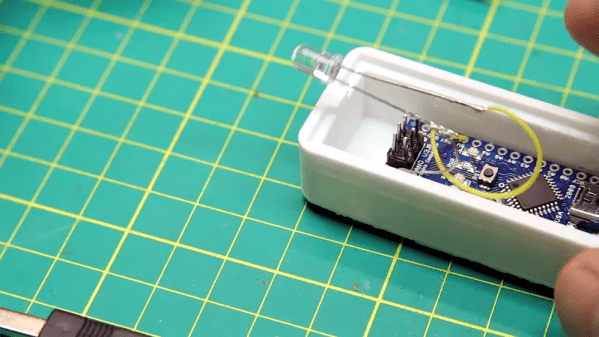
If you have a Roomba, you know they are handy. However, they do have a habit of getting into places you’d rather they avoid. You can get virtual walls which are just little IR beacons, but it is certainly possible to roll your own. That’s what [MKme] did and it was surprisingly simple, although it could be the springboard to something more complicated. You can see a video about the build below.

As Arduino projects go, this could hardly be more simple. An IR LED, a resistor and a handfull of code that calls into an IR remote library. If that’s all you wanted, the Arduino is a bit overkill, although it is certainly easy enough and cheap.

Continue reading “Homemade Wall Stops Roomba And Other Vacuum Tricks”

This Week In Security: Zeroconf Strikes Again, Lastpass Leaks Your Last Password, And All Your Data Is Belong To Us

VoIP cameras, DVRs, and other devices running the Web Services Dynamic Discovery (WSDD) protocol are being used in a new type of DDoS attack. This isn’t the first time a zeroconf service has been hijacked as part of a DDoS, as UPnP has also been abused in similar ways.

Feel like alphabet soup yet? A Denial of Service attack is one where the target is simply made unavailable, rather than actually compromised. The classic example of this is the SYN flood, where an attacker would open hundreds of connections to a web server at once, exhausting the server’s resources and interrupting legitimate use of that server. As mitigations for these attacks were developed (SYN Cookies, for example), DoS attacks were replaced by Distributed Denial of Service (DDOS) attacks. Rather than attack a weakness on the target machine, like available RAM or CPU cycles, a DDoS generally targets available network bandwidth by hitting the target website from many, many locations at once. No clever software tricks can help when your Internet connection is fully saturated with junk traffic. Continue reading “This Week In Security: Zeroconf Strikes Again, Lastpass Leaks Your Last Password, And All Your Data Is Belong To Us”

3D Printed VirtuScope Is A Raspberry Pi 4 Cyberdeck With A Purpose

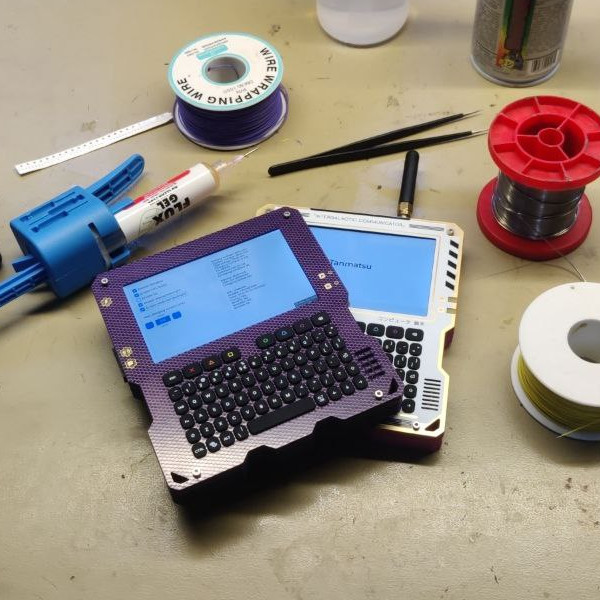
William Gibson might have come up with the idea for the cyberdeck in 1984, but it’s only recently that technology like desktop 3D printing and powerful single board computers have enabled hackers and makers to assemble their own functional versions of these classic cyberpunk devices. Often the final product is little more than a cosplay prop, but when [Joe D] (better known on the tubes as [bootdsc]) started designing his VirtuScope, he wanted to create something that was actually practical enough to use. So far, it looks like he’s managed to pull it off.

Many of the cyberdeck builds we see are based around the carcass of a era-appropriate vintage computer, which looks great and really helps sell the whole retro-future vibe. Unfortunately, this can make the projects difficult and expensive to replicate. Plus there’s plenty of people who take offense to gutting a 30+ year old piece of hardware just so you can wear it around your neck at DEF CON.

[bootdsc] deftly avoided this common pitfall by 3D printing the entire enclosure for the VirtuScope, and since he’s shared all of the STLs, he’s even made it so anyone can run off their own copy. The majority of the parts can be done on any FDM printer with a 20 x 20 x 10cm build area, though there are a few detail pieces that need the resolution of an SLA machine.

Under the hood the VirtuScope is using the Raspberry Pi 4, which [bootdsc] says is key to the build’s usability as the latest version of the diminutive Linux SBC finally has enough computational muscle to make it a viable for daily computing. Granted the seven inch LCD might be a tad small for marathon hacking sessions, but you could always plug in an external display when you don’t need to be mobile. For your wireless hacking needs, the VirtuScope features an internal NooElec SDR (with HF upconverter) and a AWUS036AC long-range WiFi adapter; though there’s plenty of room to outfit it with whatever kind of payload you’d find useful while on the go.

Documentation for this project is still in the early stages, but [bootdsc] has already provided more than enough to get you started. He tells us that there are at least two more posts coming that will not only flesh out how he built the VirtuScope, but explain why it’s now become his portable SDR rig of choice. We’re excited to see more details about this build, and hope somebody out there is willing to take on the challenge of building their own variant.

In the past we’ve seen partially 3D printed cyberdecks, and at least one that also went the fully-printed route, but none of them have been quite as accessible as the VirtuScope. By keeping the geometry of the printed parts simple and utilizing commonly available components, [bootdsc] may well have laid the groundwork for hackerdom’s first “mass produced” cyberdeck.

Continue reading “3D Printed VirtuScope Is A Raspberry Pi 4 Cyberdeck With A Purpose”

British Cops Catch Shooter-Printing Villain

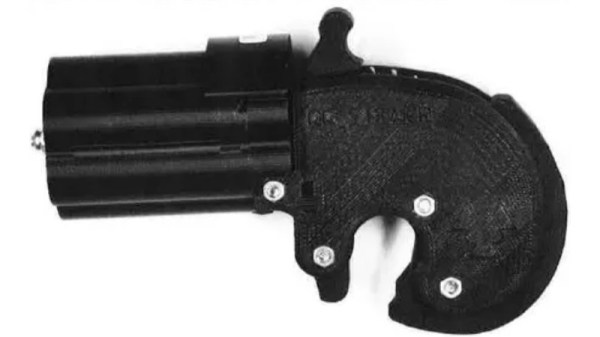
It’s a perennial of breathless British tabloid scare reporting that 3D printers will unleash a tide of weapons upon the streets. But perhaps it might actually be time for Brits lock up their children, because London’s Metropolitan Police have announced their first prosecution for 3D printing a handgun. The gun pictured appears to be a Repringer 5-shot .22 revolver, and was found by police during a drugs raid.

The UK has significantly restrictive firearms legislation and shooting incidents are extremely rare in the country, so while this might not raise any eyebrows on the other side of the Atlantic it’s an extremely unusual event for British police. It appears that the builder was not the type of libre firearms enthusiast who has made the news with similar work in the USA, so it has to be assumed that it was printed purely as a means to secure an illegal firearm however rough-and-ready or indeed dangerous it might be.

Stepping aside from the firearm aspect of the story, it should be of concern for any British 3D printer enthusiasts. As we’ve reported over the years with respect to drone incidents they can sometimes throw reason to the wind when faced with unfamiliar technology, indeed we’ve already seen them imagining RepRap parts to be for a firearm. We’d counsel all parties to keep sane heads, and hope that both the sentence for today’s criminal proves to be a suitable deterrent, and that no clueless fool decides to download and print another weapon for the hell of it. As always, we’ll bring you developments as they happen.

Moon Elevator Could Be Sooner Than You Think

The big expense in getting people to orbit or the moon or any other space destination is the cost of escaping the Earth’s gravity. One often-proposed solution involves building a giant space elevator from some point on the Earth to orbit. That sounds great, but the reality is the materials needed to make a giant stalk reaching from the ground to orbit don’t exist today. Cables or other structures for such an elevator would have to be so impossibly thick as to break under their own weight. However, a recent paper from a researcher at Cambridge and another at Columbia suggest that while you can’t build an elevator from the Earth’s surface to orbit, we may have the technology to build a tunnel that anchors on the moon and lets out in Earth’s orbit.

Before you dismiss the idea out of hand, have a look at the paper. A classic space elevator proposal has one point on Earth and the far end balanced with a counterweight keeping the cables under tension. The proposed lunar elevator would minimize these problems by having most of the bulk in space and on the moon.

Continue reading “Moon Elevator Could Be Sooner Than You Think”