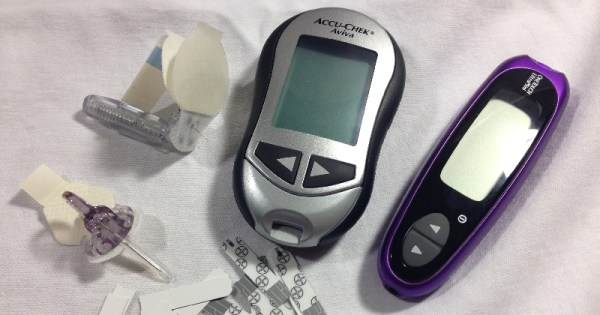
If you’ve ever known anyone who has to monitor their blood glucose level, you know it is annoying to have to prick your finger with a lancet to draw blood for each measurement. A new sweatband that incorporates flexible electronics can measure glucose–as well as sodium, potassium, and lactate–from your sweat, without a painful pin prick.
Hackaday Links: February 21, 2016
Like ridiculously large electromechanical devices? [Fran] took a tour of the Wanamaker Pipe Organ in Philly, the largest fully playable pipe organ in the world. The scale is tremendous – 28,000 pipes in 463 ranks spread out over five floors of a department store.
The Nintendo Entertainment System is well over thirty years old now, and still there are only about ten or so games that require the Nintendo Zapper, the light gun so primitive you can use a light bulb to beat Duck Hunt. Now there’s a new game: Super Russian Roulette. Yes, it’s Russian Roulette with the NES Zapper. It’s actually a very advanced game for the NES, using a lot of Pulse Code Modulation (PCM) for real audio in the game. Of course it’s also Russian Roulette with a gun that doesn’t look like a revolver, making this the perfect game to introduce young children to the wonders of the Nintendo Entertainment System. Video demo.

Tektronix has a new logo! It’s not as cool as the old CRT flying spaceman globe thingy logo, but at least it’s not awash with 90s era corporate industrial design motifs.
The new logo is finally a logo and not just a serif typeface with a red slash below it. In keeping with every new corporate branding in recent memory, the new typeface is a sans-serif with a few bits cut off here and there. Is it a good logo? I’m sure it tested well in focus groups. Sometimes art is more of a science than an art. A lot of people don’t get that.
Because you – yes, you – don’t believe content creators should be paid, adblock reigns supreme. While Hackaday.com only has a few static, nonintrusive ads per page, Wired is taking a far different approach. They’re requiring you to whitelist their domain in adblock (loading over a dozen ads, some of them video, sponsored links to products on Amazon, and other advertisements masquerading as content), or pay them $1 per month. Someone over at noisebridge still reads Wired and has a JavaScript one-liner that fixes Wired’s Ad Blocker Blocker. Of course this will eventually lead to more articles and content targeting the ‘doesn’t understand Internets’ and ‘not sophisticated enough to install a browser plugin’ demographic, i.e. low brow clickbait. A much better solution would be to take responsibility for the media you consume. Whitelist Hackaday in your ad blocker.
A few months ago there was news the FCC would start locking down router firmware. Scary stuff, and now it has come to pass. TP-Link has already locked down the firmware for a few popular wireless routers, and they’re not offering alternative firmware.
$5 VGA For Raspberry Pi
Hackaday.io user [mincepi] wanted a VGA output on his Raspberry Pi Zero. His quest led him to design a PCB that mates with a VGA monitor and the Pi board and–according to his estimates–costs about $3.62 each (although to get that price, you have to build three).
Retrotechtacular: Transmission Lines
This great old video (embedded below the break) from Tektronix in the mid-60s covers a topic that seems to confuse folks more than it should — transmission lines. We found it on Paul Carbone’s blog, a great site for aficionados of old analog scopes in its own right.
As with many of these older videos, the pacing is a bit slow by today’s standards, but the quality of the material eventually presented more than makes it worth the effort to reign in your ADHD. For a preview, you can skip to the end where they do a review of all the material.
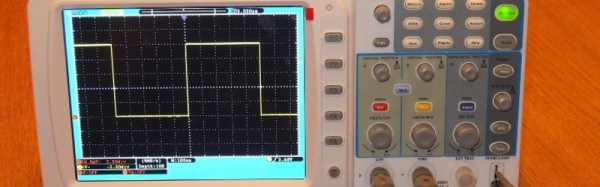
They start off 5:31 with a pulse travelling down a wire pair, and take a very real-world approach to figuring out the characteristic impedance of the line: if the pulse was created by a battery of 9V, how much current is flowing? If the DC resistance of the wire is zero then there should be an infinite current by Ohm’s law, and that’s clearly not happening. This motivates the standard analysis where you break the wire down into distributed inductance and capacitance.
Of course they do the experiment where you inject a pulse into a long loop of coaxial cable and play around with the termination at the other end of the line. They also measure the velocity factor of the line. Our only gripe is that they don’t tap the line in different places to demonstrate standing waves. The good news is that we’ve got YouTube (and [w3aew]) for that.
If you’ve got 23 minutes to spare, and are curious about transmission lines or just enjoy the soothing voice of a trained radio announcer reading out values of various termination resistors, this old gem is just the ticket. Enjoy!
Nixie Thermometer Destined For Custom PC Case
There’s no denying the retro appeal of the warm glow of a set of Nixies, and when a friend was looking for a unique touch for the case of his new liquid-cooled PC, [Luca] pitched in with this sweet Nixie thermometer.
From the look of [Luca]’s detailed blog entries, he’s been at this build since the New Year. He starts with a list of requirements, including the oddly specific need for a round PC board. For the thermometer, three Nixies are enlisted for the display, two for the temperature and one for the units. Everything was prototyped on perf board before committing to a PCB design, but even with careful planning, the Nixie sockets on the final PCB came out a tiny bit too close together. Luckily the tubes still fit, even if they are snuggled together some. And yes, the tube bases all include the hated RGB LEDs – hey, it’s what the customer wanted. The specs are for the colors to change at the touch of a button; we’d like to see a color gradient linked to the temperature – blue for “nice and cool”, red for “leave the room.” You can see the finished thermometer in action below the break.
The recent run of Nixie projects continues unabated, and this one has a nice look that’s sure to complement the finished case. We’ve asked [Luca] to keep us up-to-date on the project, so hopefully we’ll get a look at why a round PCB is needed. While we wait for that, check out an earlier Nixie thermometer build with a bar graph twist.
Continue reading “Nixie Thermometer Destined For Custom PC Case”
Breathing New Life Into An Old Key
For most of us who have experimented with Morse code, the oldest key we are likely to have used will have been a piece of military surplus kit from the Second World War era. [Kyle Gabriel] however is a lucky man. His grandfather left him his key-on-board telegraph practice set, a vintage key and telegraph sounder arrangement used to learn Morse code in the days when the telegraph was king. Rather than keep the set merely as an heirloom, [Kyle] set about bringing it up to date by interfacing it to a Raspberry Pi and writing a Morse reader program.
Along the way [Kyle] had to contend with debouncing the switching signal from the key, considering an RC network before settling on a software debounce timer. He provides a brief synopsis of the mechanics of Morse decoding software, and a demonstration of the code in action which you can see in the video below the break.
[Kyle’s] decoding software, beatbybeat, is on GitHub. We can see it will be a useful tool for anyone interested in Morse, or who is writing their own Morse software.
Morse code has featured on these pages more than a few times over the years. Of relevance to this piece are an Arduino decoding Morse code, a more up-to-date practice oscillator with a home-made key, and a couple of other vintage telegraphs reading RSS feeds and reading emails.
Mid Century Modern Speaker From 90s Road Trash
[BarryAbrams] found some 90s speakers on the side of the road. At first he thought he might have made a real score, but his coworker who knows about this sort of thing (we all have one) let him know they were merely average. Undaunted, he removed the speakers from their MDF housing, fixed a small dent in one of the tweeters, and got to work.
He cut a new frame for the speakers out of plywood. He adorned the plywood box with maple and walnut from a local supplier. The box then got a coat of urethane. His skill at sign making showed in the final finish, and the wood looks very good. Our only complaint is the straight legs instead of the slightly angled and tapered ones common to mid-century modern furniture style.
The electronics are a Chinese amp and a Sonos knock-off. [Barry] only needed to control the volume and power for the speaker set. He came up with a clever 3D-printed knob and switch configuration. When the volume is turned all the way down the speaker set turns off.
The end result sounds and looks better than anything he could get for the $125 US Dollars he spent on the project. We certainly wouldn’t complain if this were a fixture in our living space.
Continue reading “Mid Century Modern Speaker From 90s Road Trash”