Supercon 2022: [Jorvon Moss] Gives His Robots A Soul

How do you approach your robot designs? Maybe, you do it from a ‘oh, I have these cool parts’ position, or from a ‘I want to make a platform on wheels for my experiments’ perspective. In that case, consider that there’s a different side to robot building – one where you account for your robot’s influence on what other people around feel about them, and can get your creations the attention they deserve. [Jorvon ‘Odd-Jayy’ Moss]’s robots are catchy in a way that many robot designs aren’t, and they routinely go viral online. What are his secrets to success? A combination of an art background, a Bachelor of Fine Arts in illustration, and a trove of self-taught electronics skills helped him develop a standout approach to robot building.

Now, [Jorvon] has quite a few successful robot projects under his belt, and at Supercon 2022, he talks about how our robots’ looks and behaviour shapes their perception. How do your own robots look to others, and what feelings do they evoke? With [Jorvon], you will go through fundamentals of what makes a robot look lively, remarkable, catchy or creepy, and it’s his unique backgrounds that let him give you a few guidelines on what you should and should not do when building a certain kind of robot.

You’ll do good watching this video – it’s short and sweet, and shows you a different side to building robots of your dreams; plus, the robot riding around on the stage definitely makes this presentation one of a kind. No matter your robot’s technical complexity, it’s significant that it can make people go ‘wow’ when they see it. Not all robots are there to single-mindedly perform a simple task, after all – some are meant to travel around the world.

Continue reading “Supercon 2022: [Jorvon Moss] Gives His Robots A Soul”
All Your Robots Are Belong To Us: You Just Rent Them

Monthly bills. Everyone has them. Except if you go far enough back, not everyone had them. After all, you might live in a home your family has owned for generations. You might be able to produce all the basic necessities using your homestead: food from a garden, water from a well, textiles, soap, and candles. You might have to buy the occasional animal, but your recurring bills could be modest outside of the ever-present tax burden.

But as people moved to cities, they had to pay rent. Buy gas or coal and, eventually, electricity. Water and trash collection are pretty essential, too. But at some point, everyone realized that being in a position to bill you monthly is a good idea. Now we pay for the internet, movie subscriptions, meal plans, alarm monitoring, shopping clubs, cell phones, spa memberships. Soon we might be paying a monthly fee for our robots, too.

Rent To (Not) Own

In industry, this is a common occurrence. You often don’t buy a robot arm or similar device. That, after all, is a capital expense, and most tax codes require you to count it as an asset that slowly depreciates. Instead, you hire a robot from a service provider. Not only does that make it a pure expense, but the provider worries about software, repairs, and all that.

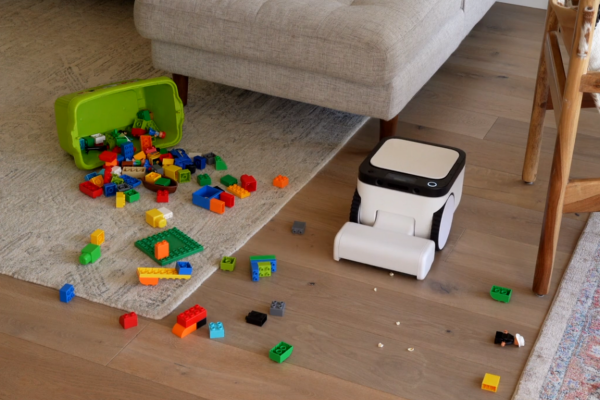
But at home, it is different. There’s no tax advantage in most places between owning a car and leasing it. Yet vendors want to adopt a rent-a-robot strategy. Case in point: a startup named Matician wants you to sign up for a robotic vacuum. For $125 a month, you get a super smart robot vacuum. You could, of course, buy a Roomba, but — according to Matician — the Matic robot uses computer vision to map your house and automatically finds messes. You can also voice command it to clean up areas. It also avoids wire and furniture. They didn’t mention if it can avoid presents left by your pets or not. It will avoid pets and kids, though.

Continue reading “All Your Robots Are Belong To Us: You Just Rent Them”

Open-Source AR Hack Chat

Join us on Wednesday, May 31 at noon Pacific for the Open-Source AR Hack Chat with Raj Nakaraja!

We may live in a soup of electromagnetic waves that range in wavelength from the diameter of Jupiter down to a fraction of the radius of a hydrogen atom, but our eyeballs have evolved to only let us sense a tiny slice of that spectrum. That’s too bad, really, because there’s a lot going on in the rest of the spectrum that could potentially inform our ROYGBIV-centric view of the world. Think of the possibilities of being able to see UV the way an insect does, or being able to watch the radiation pattern of an antenna and make adjustments on the fly. Sounds like a job for augmented reality.

join-hack-chatIf seeing the world with different eyes sounds as cool to you as it does to us, you won’t want to miss Raj Nakaraja’s stop by the Hack Chat. Raj is head of engineering at Brilliant Labs, an augmented reality company that’s looking to bring AR into the mainstream. They’ve got some cool ideas about AR, and we’re going to take the opportunity to talk to Raj about open-source AR in general, Brilliant’s products specifically, and how AR can be incorporated into not only our projects, but into our lives as well.

Our Hack Chats are live community events in the Hackaday.io Hack Chat group messaging. This week we’ll be sitting down on Wednesday, May 31 at 12:00 PM Pacific time. If time zones have you tied up, we have a handy time zone converter.

Click that speech bubble to the right, and you’ll be taken directly to the Hack Chat group on Hackaday.io. You don’t have to wait until Wednesday; join whenever you want and you can see what the community is talking about.

Hackaday Links Column Banner

Hackaday Links: May 28, 2023

The Great Automotive AM Radio War of 2023 rages on, with the news this week that Ford has capitulated, at least for now. You’ll recall that the opening salvo came when the US automaker declared that AM radio was unusable in their EV offerings thanks to interference generated by the motor controller. Rather than fixing the root problem, Ford decided to delete the AM option from their EV infotainment systems, while letting their rolling EMI generators just keep blasting out interference for everyone to enjoy. Lawmakers began rattling their sabers in response, threatening legislation to include AM radio in every vehicle as a matter of public safety. Ford saw the writing on the wall and reversed course, saying that AM is back for at least the 2024 model year, and that vehicles already delivered without it will get a fix via software update.

Continue reading “Hackaday Links: May 28, 2023”

Hack Simple

Here at Hackaday, we definitely love to celebrate the hard hacks: the insane feats of reverse engineering, the physics-defying flights of fancy, or the abuse of cutting edge technology. But today I’d like to raise a rhetorical glass in tribute of the simple hacks. Because, to be perfectly honest, the vast majority of my hacks are simple hacks, and it’s probably the same for you too. And these often go unsung because, well, they’re simple. But that doesn’t mean that something simple can’t be helpful.

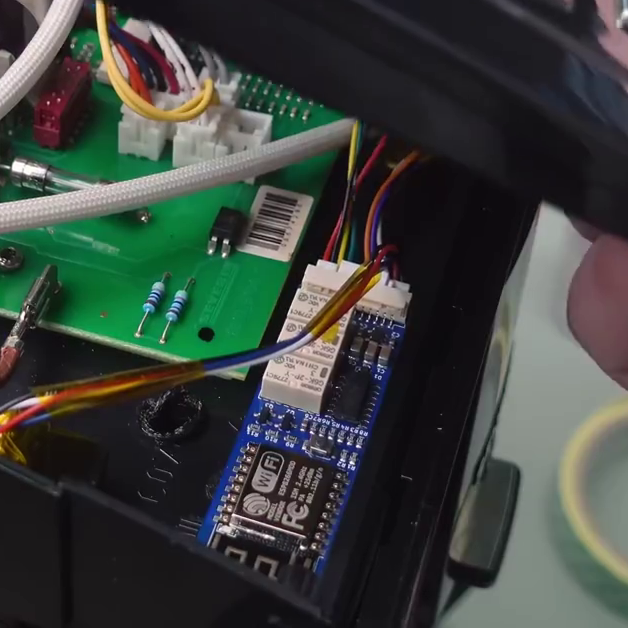
Case in point: an ESP8266 press-buttons device that we featured this week. It doesn’t do much. It’s main feature is that it connects to a home automation network over WiFi and enables you to flip three relays. Wires coming off the board are to be soldered to the not-yet-smart device in question, simply connected to each side of the button you’d like to press. In the example, a coffee machine was turned on and the “go” button pressed, automating one of the most essential kitchen rituals. While recording the podcast, I realized that I’ve built essentially this device and have it controlling our house’s heating furnace.

For the experienced hacker, there’s not much here. It’s a simple board design, the software heavily leverages ESPHome, so there’s not much work on that front either. But imagine that you lacked any of the wide-ranging skills that it takes to make such a device: PCB layout, ESP8266 software wrangling, or the nuances of designing with relays. You could just as easily build this device wrong as right. The startup costs are non-trivial.

Making a simple design like this available to the public isn’t a technical flex, and it’s not contributing to the cutting edge. But it just might be giving someone their first taste of DIY home automation, and a sweet taste of success. There’s not much easier than finding a switch and soldering on two wires, but if that’s the spark that pushes them on their path to greater hacks, that’s awesome. And even if it doesn’t, at least it’s another appliance under user control, connected to a private WiFi network rather than spying you out and phoning home to Big Toaster.

So here’s to the simple hacks!

Learning 3D Printing Best Practices From A Pro

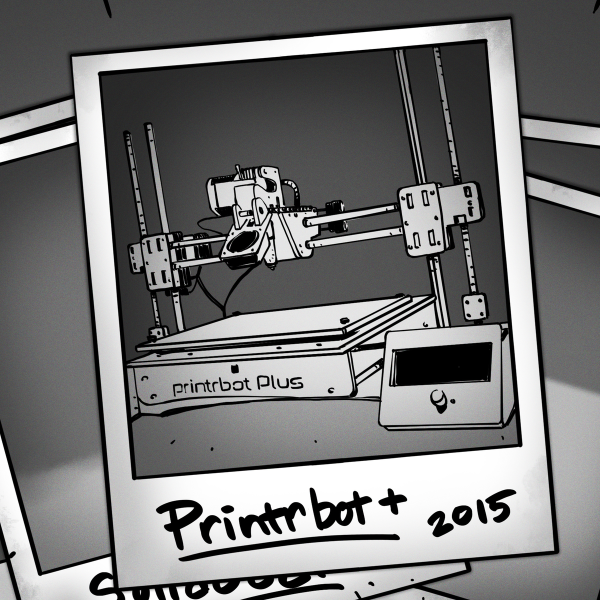
It might seem like 3D printing is a thoroughly modern technology, but the fact is, it’s been used in the industry for decades. The only thing that’s really new is that the printers have become cheap and small enough for folks like us to buy one and plop it on our workbench. So why not take advantage of all that knowledge accumulated by those who’ve been working in the 3D printing field, more accurately referred to as additive manufacturing, since before MakerBot stopped making wooden printers?

That’s why we asked Eric Utley, an applications engineer with Protolabs, to stop by the Hack Chat this week. With over 15 years of experience in additive manufacturing, it’s fair to say he’s seen the technology go through some pretty big changes. Hes worked on everything from the classic stereolithography (SLA) to the newer Multi Jet Fusion (MJF) printers, with a recent focus on printing in metals such as Inconel and aluminum. Compared to the sort of 3D printers he’s worked with, we’re basically playing with hot, semi-melted, LEGOs — but that doesn’t mean some of the lessons he’s learned can’t be applied at the hobbyist level. Continue reading “Learning 3D Printing Best Practices From A Pro”

Hackaday Podcast 220: Transparent Ice, Fake Aliens, And Bendy Breadboards

You can join Elliot and Al as they get together to talk about their favorite hacks of the week. There’s news about current contests, fake alien messages, flexible breadboards, hoverboards, low-tech home automation, and even radioactive batteries that could be a device’s best friend.

We have a winner in the What’s that Sound competition last week, which was, apparently, a tough one. You’ll also hear about IC fabrication, FPGAs, and core memory. Lots to talk about, including core memory, hoverboards, and vacuum tubes.

Check out the links below if you want to follow along, and as always, tell us what you think about this episode in the comments!

Or download all the things!

Continue reading “Hackaday Podcast 220: Transparent Ice, Fake Aliens, And Bendy Breadboards”