When Will Our Cars Finally Speak The Same Language? DSRC For Vehicles

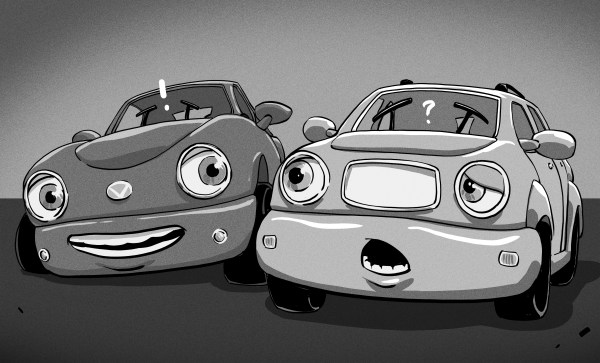
At the turn of the 21st century, it became pretty clear that even our cars wouldn’t escape the Digital Revolution. Years before anyone even uttered the term “smartphone”, it seemed obvious that automobiles would not only become increasingly computer-laden, but they’d need a way to communicate with each other and the world around them. After all, the potential gains would be enormous. Imagine if all the cars on the road could tell what their peers were doing?

Forget about rear-end collisions; a car slamming on the brakes would broadcast its intention to stop and trigger a response in the vehicle behind it before the human occupants even realized what was happening. On the highway, vehicles could synchronize their cruise control systems, creating “flocks” of cars that moved in unison and maintained a safe distance from each other. You’d never need to stop to pay a toll, as your vehicle’s computer would communicate with the toll booth and deduct the money directly from your bank account. All of this, and more, would one day be possible. But only if a special low-latency vehicle to vehicle communication protocol could be developed, and only if it was mandated that all new cars integrate the technology.

Except of course, that never happened. While modern cars are brimming with sensors and computing power just as predicted, they operate in isolation from the other vehicles on the road. Despite this, a well-equipped car rolling off the lot today is capable of all the tricks promised to us by car magazines circa 1998, and some that even the most breathless of publications would have considered too fantastic to publish. Faced with the challenge of building increasingly “smart” vehicles, manufacturers developed their own individual approaches that don’t rely on an omnipresent vehicle to vehicle communication network. The automotive industry has embraced technology like radar, LiDAR, and computer vision, things which back in the 1990s would have been tantamount to saying cars in the future would avoid traffic jams by simply flying over them.

In light of all these advancements, you might be surprised to find that the seemingly antiquated concept of vehicle to vehicle communication originally proposed decades ago hasn’t gone the way of the cassette tape. There’s still a push to implement Dedicated Short-Range Communications (DSRC), a WiFi-derived protocol designed specifically for automotive applications which at this point has been a work in progress for over 20 years. Supporters believe DSRC still holds promise for reducing accidents, but opponents believe it’s a technology which has been superseded by more capable systems. To complicate matters, a valuable section of the radio spectrum reserved for DSRC by the Federal Communications Commission all the way back in 1999 still remains all but unused. So what exactly does DSRC offer, and do we really still need it as we approach the era of “self-driving” cars?

Continue reading “When Will Our Cars Finally Speak The Same Language? DSRC For Vehicles”

Airbus To Halt Production Of The A380; Goodbye To An Engineering Triumph

Eleven years ago, the Airbus A380 entered commercial service with Singapore Airlines. In the time since then it has become the queen of the skies. It’s a double-decker airliner, capable of flying 550 passengers eight thousand nautical miles. Some configurations of the A380 included private suites. Some had a shower. This is the epitome of luxury, a dream of flying with long-stemmed glasses, a movie, and a pleasant dream in mid-air.

Now, after the cancellation of A380 orders by Emirates, Airbus has announced it will end production of this massive, massive plane. No, it’s not the last flight of the Concorde, but it is the beginning of the end of an era. The biggest and most impressive planes just aren’t economical; it’s possible to fly three 787s across the globe for a single flight of an A380. The skies won’t fall silent, but soon the A380 will be no more.

Continue reading “Airbus To Halt Production Of The A380; Goodbye To An Engineering Triumph”

The “Impossible” Tech Behind SpaceX’s New Engine

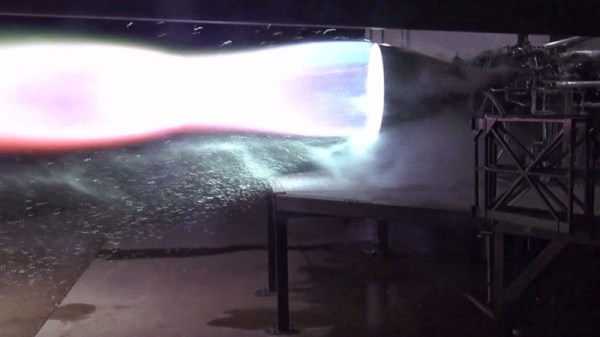
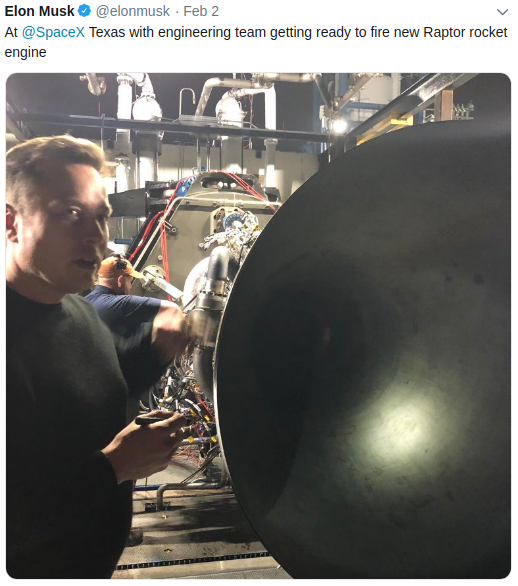
Followers of the Church of Elon will no doubt already be aware of SpaceX’s latest technical triumph: the test firing of the first full-scale Raptor engine. Of course, it was hardly a secret. As he often does, Elon has been “leaking” behind the scenes information, pictures, and even video of the event on his Twitter account. Combined with the relative transparency of SpaceX to begin with, this gives us an exceptionally clear look at how literal rocket science is performed at the Hawthorne, California based company.

This openness has been a key part of SpaceX’s popularity on the Internet (that, and the big rockets), but its been especially illuminating in regards to the Raptor. The technology behind this next generation engine, known as “full-flow staged combustion” has for decades been considered all but impossible by the traditional aerospace players. Despite extensive research into the technology by the Soviet Union and the United States, no engine utilizing this complex combustion system has even been flown. Yet, just six years after Elon announced SpaceX was designing the Raptor, they’ve completed their first flight-ready engine.

The full-flow staged combustion engine is often considered the “Holy Grail” of rocketry, as it promises to extract the most possible energy from its liquid propellants. In a field where every ounce is important, being able to squeeze even a few percent more thrust out of the vehicle is worth fighting for. Especially if, like SpaceX, you’re planning on putting these new full-flow engines into the world’s largest operational booster rocket and spacecraft.

But what makes full-flow staged combustion more efficient, and why has it been so difficult to build an engine that utilizes it? To understand that, we’ll need to first take a closer look at more traditional rocket engines, and the design paradigms which have defined them since the very beginning.

Continue reading “The “Impossible” Tech Behind SpaceX’s New Engine”

Automate The Freight: Amazon Tackles The Last Mile Problem On Wheels

We’ve been occasionally exploring examples of what could be the killer application for self-driving vehicles: autonomous freight deliveries, both long-haul and local, as well as some special use cases. Some, like UAV delivery of blood and medical supplies in Kenya, have taken off and are becoming both profitable and potentially life-saving. Others, like driverless long-haul trucking, made an initial splash but appear to have gone quiet since then. This is to be expected, as the marketplace picks winners and losers in a neverending quest to maximize return on investment. But the whole field seems to have gotten a bit sleepy lately, with no big news of note for quite a while.

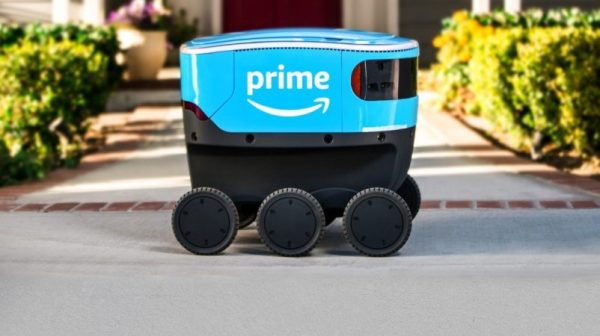
That changed last week with Amazon’s announcement of Scout, their autonomous delivery vehicle. Announced first on Amazon’s blog and later picked up by the popular and tech press who repeated the Amazon material almost verbatim, Scout appears at first glance to be a serious attempt by Amazon to own the “last mile” of delivery – the local routes that are currently plied by the likes of UPS, FedEx, and various postal services. Or is it?

Continue reading “Automate The Freight: Amazon Tackles The Last Mile Problem On Wheels”

FAA Proposes Refined Drone Regulations

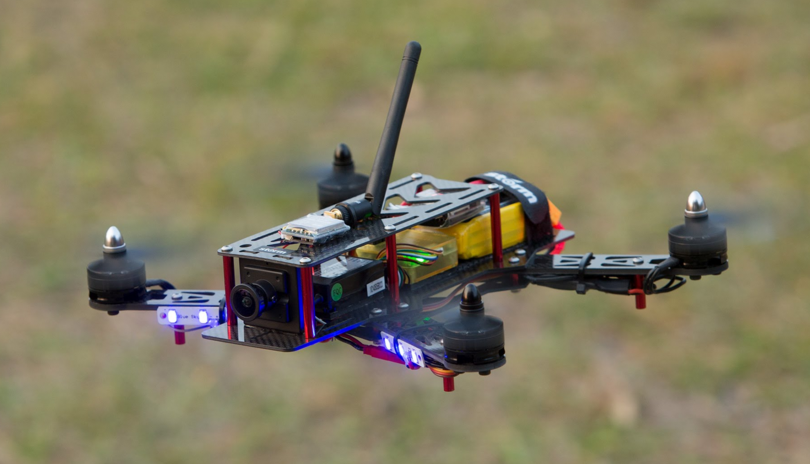
The wheels of government move slowly, far slower than the pace at which modern technology is evolving. So it’s not uncommon for laws and regulations to significantly lag behind the technology they’re aimed at reigning in. This can lead to something of a “Wild West” situation, which could either be seen as a good or bad thing depending on what side of the fence you’re on.

In the United States, it’s fair to say that we’ve officially moved past the “Wild West” stage when it comes to drone regulations. Which is not to say that remotely controlled (RC) aircraft were unregulated previously, but that the rules which governed them simply couldn’t keep up with the rapid evolution of the technology we’ve seen over the last few years. The previous FAA regulations for remotely operated aircraft were written in an era where RC flights were lower and slower, and long before remote video technology moved the operator out of the line of sight of their craft.

To address the spike in not only the capability of RC aircraft but their popularity, the Federal Aviation Administration was finally given the authority to oversee what are officially known as Unmanned Aerial Systems (UAS) with the repeal of Section 336 in the FAA Reauthorization Act of 2018. Section 336, known as the “Special Rule for Model Aircraft” was previously put in place to ensure the FAA’s authority was limited to “real” aircraft, and that small hobby RC aircraft would not be subject to the same scrutiny as their full-size counterparts. With Section 336 gone, one could interpret the new FAA directives as holding manned and unmanned aircraft and their operators to the same standards; an unreasonable position that many in the hobby strongly rejected.

At the time, the FAA argued that the repealing Section 336 would allow them to create new UAS regulations from a position of strength. In other words, start with harsh limits and regulations, and begin to whittle them down until a balance is found that everyone is happy with. U.S. Secretary of Transportation Elaine L. Chao has revealed the first of these refined rules are being worked on, and while they aren’t yet official, it seems like the FAA is keeping to their word of trying to find a reasonable middle ground for hobby fliers.

Continue reading “FAA Proposes Refined Drone Regulations”

Drone Sightings, A New British Comedy Soap Opera

There’s a new soap opera that I can’t stop watching. Actually, I wish I could change the channel but this is unfortunately happening in real life. It’s likely the ups and downs of drone sightings would be too far fetched for fiction anyway.

If you aren’t British, maybe you will know a little of our culture through the medium of television. We don’t all live in stately homes like Downton Abbey of course, instead we’re closer to the sometimes comedic sets, bad lighting, and ridiculously complicated lives of the residents of Coronation Street or of Albert Square in Eastenders that you may have flashed past late at night on a high-number channel.

Our new comedy soap lacks the regional accents of Emmerdale or Hollyoaks, but has no less of the farce about it. Here at Hackaday we’ve brought you news of the UK’s peculiar habit of bad reporting and shoddy investigation of questionable drone sightings several times over the last year or two. Most recently we covered a series of events before Christmas that closed Gatwick, London’s second airport for several days over what turned out to be nothing of substance.

Unfortunately it didn’t end there. We’re back once more to catch up with the latest events down on the tarmac, and come away with a fresh set of reasonable questions unanswered by the popular coverage of the matter.

Continue reading “Drone Sightings, A New British Comedy Soap Opera”

The Short And Tragic Story Of Life On The Moon

The Moon is a desolate rock, completely incapable of harboring life as we know it. Despite being our closest celestial neighbor, conditions on the surface couldn’t be more different from the warm and wet world we call home. Variations in surface temperature are so extreme, from a blistering 106 C (223 F) during the lunar day to a frigid -183 C (-297 F) at night, that even robotic probes struggle to survive. The Moon’s atmosphere, if one is willing to call the wispy collection of oddball gasses including argon, helium, and neon at nearly negligible concentrations an atmosphere, does nothing to protect the lunar surface from being bombarded with cosmic radiation.

Von Kármán Crater

Yet for a brief time, very recently, life flourished on the Moon. Of course, it did have a little help. China’s Chang’e 4 lander, which made a historic touchdown in the Von Kármán crater on January 3rd, brought with it an experiment designed to test if plants could actually grow on the lunar surface. The device, known as the Lunar Micro Ecosystem (LME), contained air, soil, water, and a collection of seeds. When it received the appropriate signal, LME watered the seeds and carefully monitored their response. Not long after, Chinese media proudly announced that the cotton seeds within the LME had sprouted and were doing well.

Unfortunately, the success was exceptionally short-lived. Just a few days after announcing the success of the LME experiment, it was revealed that all the plants which sprouted had died. The timeline here is a bit hazy. It was not even immediately clear if the abrupt end of the LME experiment was intentional, or due to some hardware failure.

So what exactly do we know about Chang’e 4’s Lunar Micro Ecosystem, and the lifeforms it held? Why did the plants die? But perhaps most importantly, what does all this have to do with potential future human missions to that inhospitable rock floating just a few hundred thousand kilometers away from us?

Continue reading “The Short And Tragic Story Of Life On The Moon”