Martian Dust Storm May Spell Doom For Rover

Everyone knows that space is an incredibly inhospitable place, but the surface of Mars isn’t a whole lot better. It’s a dim, cold, and dry world, with a wisp of an atmosphere that provides less than 1% of Earth’s barometric pressure. As the planet’s core no longer provides it with a magnetosphere, cosmic rays and intense solar flares bathe the surface in radiation. Human life on the surface without adequate environmental shielding is impossible, and as NASA’s fleet of rovers can attest, robotic visitors to the planet aren’t completely immune to the planet’s challenges.

Opportunity Mission Patch

As a planet-wide dust storm finally begins to settle, NASA is desperately trying to find out if the Red Planet has claimed yet another victim. The agency hasn’t heard from the Opportunity rover, which landed on Mars in 2004, since before the storm started on June 10th; and with each passing day the chances of reestablishing contact are diminished. While they haven’t completely given up hope, there’s no question this is the greatest threat the go-kart sized rover has faced in the nearly 15 years it has spent on the surface.

Opportunity was designed with several autonomous fail-safe systems that should have activated during the storm, protecting the rover as much as possible. But even with these systems in place, its twin Spirit succumbed to similar conditions in 2010. Will Opportunity make it through this latest challenge? Or has this global weather event brought the long-running mission to a dramatic close?

Continue reading “Martian Dust Storm May Spell Doom For Rover”
Tariff Expansion Set To Hit 3D-Printing Right In The Filament

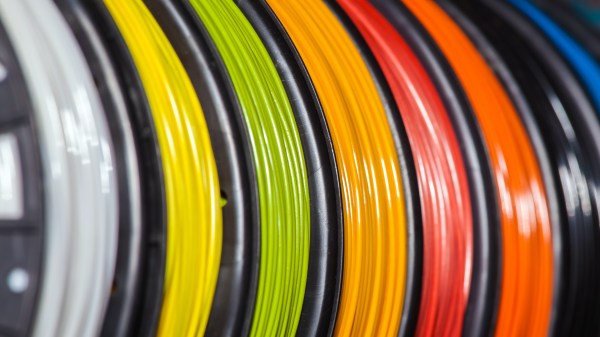
Mere weeks after tariffs were put into place raising the cost of many Chinese-sourced electronics components by 25%, a second round of tariffs is scheduled to begin that will deal yet another blow to hackers. And this time it hits right at the heart of our community: 3D-printing.

A quick scan down the final tariff list posted by the Office of the US Trade Representative doesn’t reveal an obvious cause for concern. In among the hundreds of specific items listed one will not spot “Filaments for additive manufacturing” or anything else that suggests that 3D-printing supplies are being targeted. But hidden in the second list of tariff items, wedged into what looks like a polymer chemist’s shopping list, are a few entries for “Monofilaments with cross-section dimension over 1 mm.” Uh-oh!

Continue reading “Tariff Expansion Set To Hit 3D-Printing Right In The Filament”

DefCAD Triggers HTTP 451

Depending on where you live, pointing your browser to Defcad.com yesterday may have shown you something you’d never seen before. It certainly did for me. That’s because I live in one of the two states (as of this writing) in the United States which have scrambled to block access to the online repository of firearm CAD files after they were approved for release by the US State Department.

Anyone using the internet in those states was presented with HTTP status code 451: “Unavailable For Legal Reasons”. This code was named for Ray Bradbury’s dystopian novel “Fahrenheit 451″, in which books are burned to censor the information they contain. Rather than simply returning the traditional 403 error, 451 can be used to signal that the server is willing to serve the user the information, but is being prevented from doing so by court order.

Whatever your personal feelings are on the public having unfettered access to technical information on firearms, this is still a worrying development. The First Amendment covers more than literal speech: source code and technical data is a form of expression just as much as a poem or song, and are equally protected. If the federal government believes the files that Cody Wilson’s Defense Distributed offers up are not restricted by International Traffic in Arms Regulations (ITAR), then how can a citizen of the United States not view them? The question remains unanswered and overnight a federal judge granted a restraining order to restrict the website for the remaining states.

Continue reading “DefCAD Triggers HTTP 451”

3D Printed Gun Saga: Court Case Over CAD Files Settled

Can you create 3D printed designs and distribute them freely and without restriction? Maybe, and it’s likely to become easier in the future. A settlement has been reached in the saga of the US Department of State versus Cody Wilson, and beginning August 1st the Defense Distributed library of gun designs will once again become available.

Cody is well known for creating the first 3D printed gun. He went on to found Defense Distributed, a company that published designs and technical files for 3D printing firearms before being pulled into litigation that sought to curb the distribution of such plans by subjecting them to International Traffic in Arms Regulations (ITAR) restrictions. Read that carefully, it’s the (international) distribution of CAD files at question here, and not the act of 3D printing, and Defense Distributed has been granted an ITAR exemption. Will other arms-related design files be similarly exempted? The settlement mentions upcoming rule changes seeking to make this type of exemption the standard.

As members of the Hackaday community, we’re the people to whom our friends and family turn for perspective when new technology makes it into their news feeds. Those with little or no exposure to 3D printing may easily fall to doom and gloom reports. But is this a story of doom and gloom? Absolutely not, guns are still guns and 3D printers are still 3D printers. Let’s take a look.

Continue reading “3D Printed Gun Saga: Court Case Over CAD Files Settled”

Let’s Talk About Elon Musk’s Submarine

When word first broke that Elon Musk was designing a kid-sized submarine to help rescue the children stuck in Thailand’s Tham Luang cave, it seemed like a logical thing for Hackaday to cover. An eccentric builder of rockets and rocket-launched electric sports cars, pushing his engineering teams and not inconsiderable financial resources into action to save children? All of that talk about Elon being a real life Tony Stark was about to turn from meme into reality; if the gambit paid off, the world might have it’s first true superhero.

With human lives in the balance, and success of the rescue attempt far from assured (regardless of Elon’s involvement), we didn’t feel like playing arm-chair engineer at the time. Everyone here at Hackaday is thankful that due to the heroics of the rescuers, including one who paid the ultimate price, all thirteen lives were saved.

Many said it couldn’t be done, others said even saving half of the children would have been a miracle. But Elon’s submarine, designed and built at a breakneck pace and brought to Thailand while some of the children were still awaiting rescue, laid unused. It wasn’t Elon’s advanced technology that made the rescue possible, it was the tenacity of the human spirit.

Now, with the rescue complete and the children well on their way to returning to their families, one is left wondering about Elon’s submarine. Could it have worked?

Continue reading “Let’s Talk About Elon Musk’s Submarine”

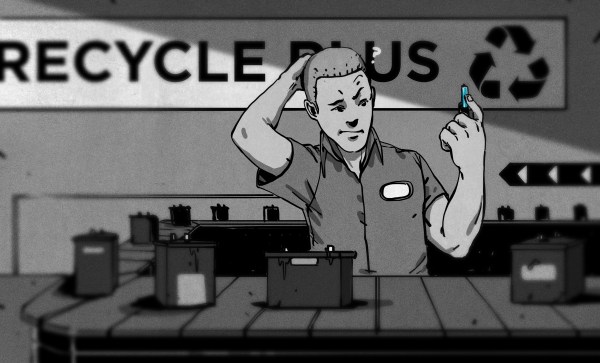
Getting The Lead Out Of Lithium Battery Recycling

When that fateful morning comes that your car no longer roars to life with a quick twist of the key, but rather groans its displeasure at the sad state of your ride’s electrical system, your course is clear: you need a new battery. Whether you do it yourself or – perish the thought – farm out the job to someone else, the end result is the same. You get a spanking new lead-acid battery, and the old one is whisked away to be ground up and turned into a new battery in a nearly perfect closed loop system.

Contrast this to what happens to the battery in your laptop when it finally gives up the ghost. Some of us will pop the pack open, find the likely one bad cell, and either fix the pack or repurpose the good cells. But most dead lithium-based battery packs are dropped in the regular trash, or placed in blue recycling bins with the best of intentions but generally end up in the landfill anyway.

Why the difference between lead and lithium batteries? What about these two seemingly similar technologies dictates why one battery can have 98% of its material recycled, while the other is cheaper to just toss? And what are the implications down the road, when battery packs from electric vehicles start to enter the waste stream in bulk?

Continue reading “Getting The Lead Out Of Lithium Battery Recycling”

Teardown Of USB Fan Reveals Journalists’ Lack Of Opsec

Last month, Singapore hosted a summit between the leaders of North Korea and the United States. Accredited journalists invited to the event were given a press kit containing a bottle of water, various paper goods, and a fan that plugs into a USB port.

Understandably, the computer security crowd on Twitter had a great laugh. You shouldn’t plug random USB devices into a computer, especially if you’re a journalist, especially if you’re in a foreign country, and especially if you’re reporting on the highest profile international summit in recent memory. Doing so is just foolhardy.

This is not a story about a USB fan, the teardown thereof, or of spy agencies around the world hacking journalists’ computers. This a story of the need for higher awareness on what we plug into our computers. In this case nothing came of it — the majority of USB devices are merely that and nothing more. One of the fans was recently torn down (PDF) and the data lines are not even connected. (I’ll dive into that later on in this article). But the anecdote provides an opportunity to talk about USB security and how the compulsion to plug every USB device into a computer should be interrupted by a few seconds of thoughtfulness first.

Continue reading “Teardown Of USB Fan Reveals Journalists’ Lack Of Opsec”