Potential Contenders For Battery Supremacy

Lithium ion batteries have been a revolutionary technology. Their high energy and power density has made the electric car a practical reality, enabled grid storage for renewable energy, and put powerful computers in the palm of the hand. However, if there’s one thing humanity is known for, it’s always wanting more.

Potential contenders for the title of ultimate battery technology are out there, but it will take a major shift to dethrone lithium-ion from the top of the tree.

Dominant For Good Reason

Lithium-ion batteries were first developed by Stanley Whittingham, working at Exxon, who were looking to diversify away from oil in the midst of the major energy crises of the 1970s. Over the years, the technology was developed further, with work by John Goodenough (a superb hacker name if we’ve ever heard one) and Akira Yoshino increasing performance with improved cathode and anode materials. Commercialization was first achieved by Keizaburo Tozawa, working at Sony to develop a better battery for the company’s line of camcorders. Continue reading “Potential Contenders For Battery Supremacy”

What’s The Deal With Rolling Blackouts In California’s Power Grid?

A heat wave spreading across a large portion of the west coast of the United States is not surprising for this time of year, but the frequency and severity of these heat waves have been getting worse in recent years as the side effects from climate change become more obvious. In response to this, the grid operators in California have instituted limited rolling blackouts as electricity demand ramps up.

This isn’t California’s first run-in with elective blackouts, either. The electrical grid in California is particularly prone to issues like this, both from engineering issues and from other less obvious problems as well.

Continue reading “What’s The Deal With Rolling Blackouts In California’s Power Grid?”

The Mini Console Revolution, And Why Hackers Passed Them By

The Raspberry Pi was initially developed as an educational tool. With its bargain price and digital IO, it quickly became a hacker favorite. It also packed just enough power to serve as a compact emulation platform for anyone savvy enough to load up a few ROMs on an SD card.

Video game titans haven’t turned a blind eye to this, realising there’s still a market for classic titles. Combine that with the Internet’s love of anything small and cute, and the market was primed for the release of tiny retro consoles.

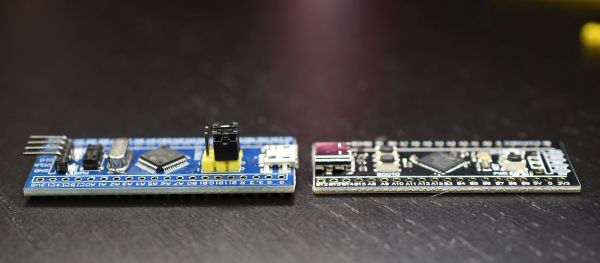
Often selling out quickly upon release, the devices have met with a mixed reception at times due to the quality of the experience and the games included in the box. With so many people turning the Pi into a retrogaming machine, these mini-consoles purpose built for the same should have been immediately loved by hardware hackers, right? So what happened?

Continue reading “The Mini Console Revolution, And Why Hackers Passed Them By”

Dealing With A Hacked Brain; Let’s Talk About Depression

This post is different from normal Hackaday fare. I don’t want to presume anything about you, but I’m pretty sure the story I’m about to share resonates with at least some of you.

I’ve been having a tough time, exacerbated by this age of social distancing. This all crept up on me at first, but as I began to look back on my behavior and moods, I began noticing patterns that I hadn’t noticed before. This is certainly a relevant issue in this community, so let’s talk about mental health, beginning with my own journey.

Continue reading “Dealing With A Hacked Brain; Let’s Talk About Depression”

Degrees Of Freedom: Booting ARM Processors

Any modern computer with an x86 processor, whether it’s Intel or AMD, is a lost cause for software freedom and privacy. We harp on this a lot, but it’s worth repeating that it’s nearly impossible to get free, open-source firmware to run on them thanks to the Intel Management Engine (IME) and the AMD Platform Security Processor (PSP). Without libre firmware there’s no way to trust anything else, even if your operating system is completely open-source.

The IME or PSP have access to memory, storage, and the network stack even if the computer is shut down, and even after the computer boots they run at such a low level that the operating system can’t be aware of what they’re really doing. Luckily, there’s a dark horse in the race in the personal computing world that gives us some hope that one day there will be an x86 competitor that allows their users to have a free firmware that they can trust. ARM processors, which have been steadily increasing their user share for years but are seeing a surge of interest since the recent announcement by Apple, are poised to take over the personal computing world and hopefully allow us some relevant, modern options for those concerned with freedom and privacy. But in the real world of ARM processors the road ahead will decidedly long, windy, and forked.

Even ignoring tedious nitpicks that the distinction between RISC vs CISC is more blurred now than it was “back in the day”, RISC machines like ARM have a natural leg up on the x86 CISC machines built by Intel and AMD. These RISC machines use fewer instructions and perform with much more thermal efficiency than their x86 competitors. They can often be passively cooled, avoiding need to be actively cooled, unlike many AMD/Intel machines that often have noisy or bulky fans. But for me, the most interesting advantage is the ability to run ARM machines without the proprietary firmware present with x86 chips.

Continue reading “Degrees Of Freedom: Booting ARM Processors”

The Weather Station At The Top Of The World

The crown jewels of the Earth’s mountain ranges, the Himalayas, are unsurpassed in their beauty, their height, and their deadly attraction to adventurers, both professional and amateur. The gem of the Himalayas is, of course, Mount Everest, known as Sagarmatha to the Nepalis and Chomolungma to the Tibetans. At 8,848 meters (29,029 ft) — or more; it’s a geologically young mountain that’s still being thrust upward by tectonic activity — it’s a place so forbidding that as far as we know the summit was never visited until 1953, despite at least 30 years of previous attempts, many of which resulted in death.

The conquest of Everest remains a bucket list challenge for many adventurers, and despite advances in technology that have made the peak accessible to more people — or perhaps because of that — more than 300 corpses litter the mountain, testament to what can happen when you take the power of Mother Nature for granted.

To get better data on the goings-on at the Roof of the World, an expedition recently sought to install five weather stations across various points on the route up Mount Everest, including one at its very peak. The plan was challenging, both from a mountaineering perspective and in terms of the engineering required to build something that would be able to withstand some of the worst conditions on the planet, and to send valuable data back reliably. It didn’t all go exactly to plan, but it’s still a great story about the intersection of science and engineering.

Continue reading “The Weather Station At The Top Of The World”

The Smell Of Space

In space, so the Alien tagline goes, nobody can hear you scream. One of the most memorable pieces of movie promotion ever, it refers to the effect of the vacuum of space on the things human senses require an atmosphere to experience. It’s a lesson that Joss Whedon used to great effect with theĀ Serenity‘s silent engine light-ups in Firefly, while Star Wars ignored it completely to give us improbable weapon noises in space battles.

Sound may not pass through the vacuum of space, but that’s not to say there are not things other than light for the senses. The Apollo astronauts reported that moon dust released a smell they described as akin to burnt gunpowder once it was exposed to the atmosphere inside their lander, and by now you may have heard that there is a Kickstarter that aims to recreate the smell as a fragrance. Will it replace the cloying wall of Axe or Lynx Africa body spray that pervades high-school boys’ changing rooms, or is it a mere novelty?

Continue reading “The Smell Of Space”