Pogo Pin Serial Adapter Thing

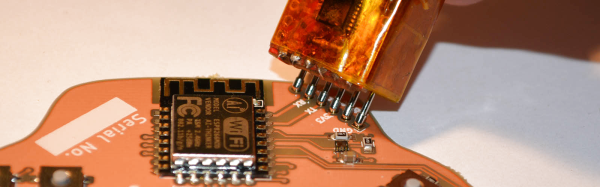
A few weeks ago, I was working on a small project of mine, and I faced a rather large problem. I had to program nearly five hundred badges in a week. I needed a small programming adapter that would allow me to stab a few pads on a badge with six pogo pins, press a button, and move onto the next badge.

While not true for all things in life, sometimes you need to trade quality for expediency. This is how I built a terrible but completely functional USB to serial adapter to program hundreds of badges in just a few hours.

Continue reading “Pogo Pin Serial Adapter Thing”

Avoiding The Engineer-Saviour Trap

The random seaside holidays of Hackaday staffers rarely sow the seeds of our articles, but my most recent trip had something slightly unusual about it. I was spending a couple of days in a resort town on the Isle of Wight, just off the coast of Southern England, and my hotel was the local outpost of a huge chain that provides anonymous rooms for travelling salesmen and the like. I could probably find an identical place to lay my head anywhere in the world from Anchorage to Hobart and everywhere in between.

My room though was slightly different to the norm. By chance rather than necessity I’d been assigned one of the hotel’s accessible rooms, designed with people with disabilities in mind. And once I’d reached the limit of the free amusement that the digital TV channels of Southern England could provide, my attention turned to the room itself, eyeing up its slightly unfamiliar design features as an engineer.

Continue reading “Avoiding The Engineer-Saviour Trap”

Why I Got The Job

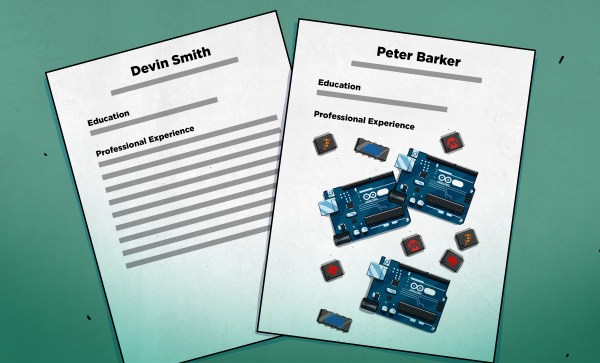
Hackaday readers are a vast and varied bunch. Some of us would call ourselves engineers or are otherwise employed in some kind of technical role. Others may still be studying to gain the requisite qualifications and are perhaps wondering just how to complete that final leap into the realm of gainful employment. Well, this one’s for you.

What sort of job are you looking for?

You might be a straight, down the lines, petroleum engineering graduate who’s looking to land a job in the oil and gas industry. Conversely, you might be an arts student who’s picked up a few skills with electronics over the years and are keen to gain a position doing grand installation pieces for musuems or corporate clients.

There’s a broad spectrum of jobs out there that require high-level technical skills, and my first piece of advice is that you shouldn’t limit yourself. There are things you can do to keep your options open, even over a long career – these could pay dividends when you’re looking for a seachange.

Continue reading “Why I Got The Job”

How To Do Beautiful Enclosures With Custom Fiberglass

There are times when I feel the need to really make a mess. When I think of making messes with a degree of permanency, I think of fiberglass. I also really like the smell, reminds me of a simpler time in 8th grade shop class. But the whole process, including the mess, is worth it for the amazing shapes you can produce for speaker pods and custom enclosures.

Utilizing fiberglass for something like a custom speaker pod for a car is not difficult, but it does tend to be tedious when it comes to the finishing stages. If you have ever done bodywork on a car you know what kind of mess and effort I am talking about. In the video below, I make a simple speaker pod meant for mounting a speaker to the surface of something like a car door.

You can also use a combination of wood and fiberglass to make subwoofer cabinets that are molded to the area around them. You can even replace your entire door panel with a slick custom shaped one with built in speakers  if you’re feeling adventuresome.

Continue reading “How To Do Beautiful Enclosures With Custom Fiberglass”

A Case For The Desktop Vinyl Cutter

As far as desktop workbench fab tools go, it’s too easy to let 3D printers keep stealing the spotlight. I mean, who doesn’t appreciate that mechatronic “buzz” as our printer squirts a 3D CAD model into plastic life? While the 3D printer can take up a corner of my workbench, there’s still plenty of room for other desktop rapid-prototyping gadgets.

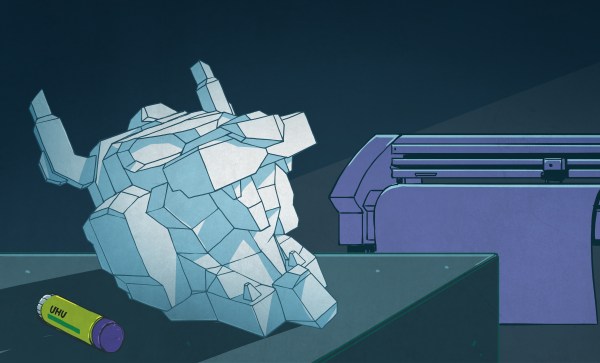
Today, I’d like to shed some light on vinyl cutters. Sure, we can start with stickers and perhaps even jumpstart an after-hours Etsy-mart, but there’s a host of other benefits besides just vinyl cutting. In fact, vinyl cutters might just be the unsung heroes of research in folding and papercraft.

Continue reading “A Case For The Desktop Vinyl Cutter”

The Dark Arts – Remote File Inclusion

In the waning hours of 2010, a hacking group known as Lulzsec ran rampant across the Internet, leaving a path of compromised servers, a trail of defaced home pages, leaked emails, and login information in their wake. They were eventually busted via human error, and the leader of the group becoming an FBI informant. This handful of relatively young hackers had made a huge mess of things. After the digital dust had settled – researches, journalists, and coders began to dissect just how these seemingly harmless group of kids were able to harness so much power and control over the World Wide Web. What they found was not only eye-opening to web masters and coders, but shined a light on just how vulnerable all of our data was for everyone to see. It ushered in an era of renewed focus on security and how to write secure code.

In this Dark Arts series, we have taken a close look at the primary techniques the Luzsec hackers used to gain illegal access to servers. We’ve covered two them – SQL injection (SQLi) and cross-site scripting (XSS). In this article, we’ll go over the final technique called remote file inclusion (RFI).

DISCLAIMER: Fortunately, the surge of security-minded coding practices after the fall of Lulzsec has (for the most part) removed these vulnerabilities from the Internet as a whole. These techniques are very dated and will not work on any server that is maintained and/or behind a decent firewall, and your IP will probably get flagged and logged for trying them out. But feel free to set up a server at home and play around. Continue reading “The Dark Arts – Remote File Inclusion”

Failing Infrastructure And The Lessons It Teaches

Infrastructure seems so permanent and mundane that most of us never give it a second thought. Maintenance doesn’t make for a flashy news story, but you will frequently find a nagging story on the inside pages of the news cycle discussing the slowly degrading, crumbling infrastructure in the United States.

If not given proper attention, it’s easy for these structures to fall into a state of disrepair until one suddenly, and often catastrophically, fails. We’ve already looked at a precarious dam situation currently playing out in California, and although engineers have that situation under control for now, other times we haven’t been so lucky. Today we’ll delve into a couple of notable catastrophic failures and how they might be avoided in future designs.

Gaining Weight While Delaying Repairs

Most of us take infrastructure for granted every day. Power lines, roads, pipelines, and everything else have a sense of permanence and banality that can’t be easily shaken. Sadly, this reality shattered for most people in Minneapolis, Minnesota in August 2007.

Continue reading “Failing Infrastructure And The Lessons It Teaches”