Books You Should Read: The Idea Factory

You’ve heard of Bell Labs, but likely you can’t go far beyond naming the most well-known of discoveries from the Lab: the invention of the transistor. It’s a remarkable accomplishment of technological research, the electronic switch on which all of our modern digital society has been built. But the Bell Labs story goes so far beyond that singular discovery. In fact, the development of the transistor is a microcosm of the Labs themselves.

The pursuit of pure science laid the foundation for great discovery. Yes, the transistor was conceived, prototyped, proven, and then reliably manufactured at the Labs. But the framework that made this possible was the material researchers and prototyping ninjas who bridged the gap between the theory and the physical. The technology was built on what is now a common material; semiconducting substances which would not have been possible without the Labs refinement of the process for developing perfectly pure substances reliably doped to produce the n-type and p-type substances that made diode and transistor possible.
Continue reading “Books You Should Read: The Idea Factory”

Beyond A Boot Print: The Lasting Effect Of Apollo On Humanity

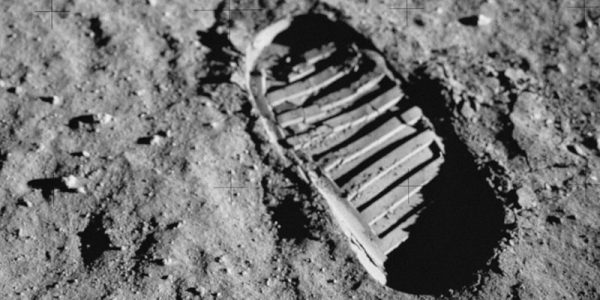
July 20th, 1969 was the day that people from Earth set foot on different soil for the first time. Here we are 48 years later, and the world’s space programs are — well — not very close to returning to the moon. If you aren’t old enough to remember, it was really amazing. The world was in a lot of turmoil in the 1960s (and still is, of course) but everyone stopped to look at the sky and listen to the sound of [Neil Armstrong] taking that first step. It was shocking in a good way and almost universally observed. Practically everyone in the world was focused on that one event. You can see some of that in the NASA video, below.

Space flight was an incredible accomplishment, but it paled in comparison with the push to actually landing a person on the moon and bringing them home safely. The effort is a credit to the ability of people to work together (on the order of thousands of minds) to overcome a difficult challenge. We can learn a lot from that alone, and it makes a compelling argument to continue taking on tough problems. Today, as we remember the Apollo landings, let’s take a moment to recognize what came of it beyond an iconic boot-print in the floury lunar soil.

Continue reading “Beyond A Boot Print: The Lasting Effect Of Apollo On Humanity”

The 4-20 MA Current Loop

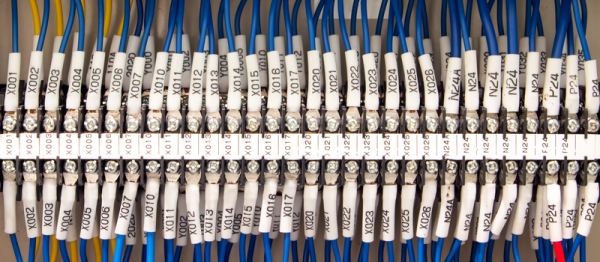
The I/O capabilities built into most microcontrollers make it easy to measure the analog world. Say you want to build a data logger for temperature. All you need to do is get some kind of sensor that has a linear voltage output that represents the temperature range you need to monitor — zero to five volts representing 0° to 100°C, perhaps. Hook the sensor up to and analog input, whip up a little code, and you’re done. Easy stuff.

Now put a twist on it: you need to mount the sensor far from the microcontroller. The longer your wires, the bigger the voltage drop will be, until eventually your five-volt swing representing a 100° range is more like a one-volt swing. Plus your long sensor leads will act like a nice antenna to pick up all kinds of noise that’ll make digging a usable voltage signal off the line all the harder.

Luckily, industrial process engineers figured out how to deal with these problems a long time ago by using current loops for sensing and control. The most common standard is the 4-mA-to-20-mA current loop, and here we’ll take a look at how it came to be, how it works, and how you can leverage this basic process control technique for your microcontroller projects.

Continue reading “The 4-20 MA Current Loop”

Paul Horowitz And The Search For Extra Terrestrial Intelligence

I recently had the opportunity to attend a lecture by Harvard Professor Paul Horowitz. It’s a name you likely recognize. He is best known for his iconic book the Art of Electronics which is often referred to not by its name but by the last names of the authors: “Horowitz and Hill”.

Beyond that, what do you know about Paul Horowitz? Paul is an electrical engineer and physicist and Paul has spent much of his storied career learning and practicing electronics for the purpose of finding intelligent extra terrestrial life.

Continue reading “Paul Horowitz And The Search For Extra Terrestrial Intelligence”

Hitching A Ride On A Missile

Before the Saturn V rocket carried men to the moon, a number of smaller rockets carried men on suborbital and orbital flights around the Earth. These rockets weren’t purpose-built for this task, though. In fact, the first rockets that carried people into outer space were repurposed ballistic missiles, originally designed to carry weapons.

While it might seem like an arduous task to make a ballistic missile safe enough to carry a human, the path from a weapons delivery system to passenger vehicle was remarkably quick. Although there was enough safety engineering and redundancy to disqualify the space program as a hack, it certainly was a clever repurposing of the available technology. Read on for the full story.

Continue reading “Hitching A Ride On A Missile”

Rovers To The Rescue: Robot Missions Tackles Trash

Everyone knows plastic trash is a problem with junk filling up landfills and scattering beaches. It’s worse because rather than dissolving completely, plastic breaks down into smaller chunks of plastic, small enough to be ingested by birds and fish, loading them up with indigestible gutfill. Natural disasters compound the trash problem; debris from Japan’s 2011 tsunami washed ashore on Vancouver Island in the months that followed.

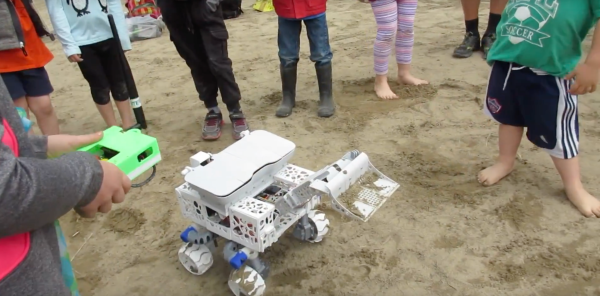
Erin Kennedy was walking along Toronto Island beach and noticed the line of plastic trash that extended as far as the eye could see. As an open source robot builder, her first inclination was to use robots to clean up the mess. A large number of small robots following automated routines might be able to clear a beach faster and more efficiently than a person walking around with a stick and a trash bag.

Erin founded Robot Missions to explore this possibility, with the goal of uniting open-source “makers” — along with their knowledge of technology — with environmentalists who have a clearer understanding of what needs to be done to protect the Earth. It was a finalist in the Citizen Science category for the 2016 Hackaday Prize, and would fit very nicely in this year’s Wheels, Wings, and Walkers challenge which closes entries in a week.

Join me after the break for a look at where Robot Missions came from, and what Erin has in store for the future of the program.

Continue reading “Rovers To The Rescue: Robot Missions Tackles Trash”

Ask Hackaday: Selling Yourself As A Hacker

While there are plenty of hackers that hack just for the love of it, it’s no secret that many of us are looking to hit it big someday. Tales of the businesses like HP and Apple that started in someone’s garage inevitably lead to musings like, “Hey, I’ve got a garage!” and grand plans to turn that special idea into the Next Big Thing™. Many will try, most will fail for one reason or another, but hope springs eternal, and each new widget seems to start the entrepreneurial cycle again.

But for as much pressure as we may feel to be the next Packard, Wozniak, or Musk, not everyone is cut out to be the boss. Some of us have no interest in or aptitude for business — we don’t want to hire or fire people, we don’t want to wheel and deal, and we certainly don’t want to worry about salesmanship. Some of us just want to abstract all that complexity away and just find a job, preferably one that leverages the things we love to do.
Continue reading “Ask Hackaday: Selling Yourself As A Hacker”