We weren’t certain if this Star Wars fan film was out kind of thing until we saw the making of video afterwards. They wanted to film a traditional scene in a new way. The idea was to take some really good quadcopter pilots, give them some custom quadcopters, have them re-enact a battle in a scenic location, and then use some movie magic to bring it all together.
The quadcopters themselves are some of those high performance racing quadcopters with 4K video cameras attached. The kind of thing that has the power to weight ratio of a rocket ship. Despite what the video implies, they are unfortunately not TIE Fighter shaped. After a day of flying and a few long hikes to retrieve the expensive devices after inevitable crashes (which, fortunately, provided some nice footage), the next step was compositing.
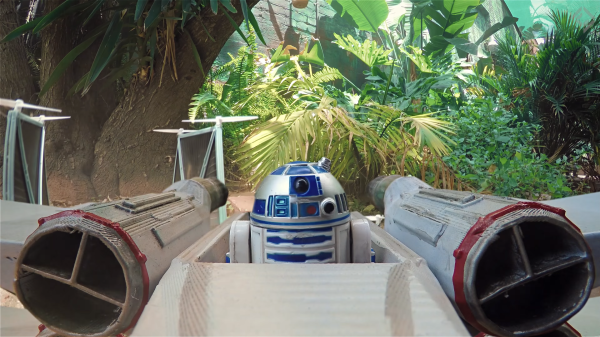
However, how to trick the viewer into believing they were in a X-Wing quadcopter? A cheap way to do it would be to spend endless hours motion tracking and rendering a cockpit in place. It won’t look quite real. The solution they came up with is kind of dumb and kind-of brilliant. Mount a 3D printed cockpit on a 2×4 with a GoPro. Play the flight footage on a smartphone while holding the contraption. Try to move the cockpit in the same direction as the flight. We’re not certain if it was a requirement to also make whooshing and pew pew laser noises while doing so, but it couldn’t hurt.
In the end it all came together to make a goofy, yet convincingly good fan film. Nice work! Videos after the break.
Continue reading “Drones, Clever Hacks, And CG Come Together For Star Wars Fan Film” →

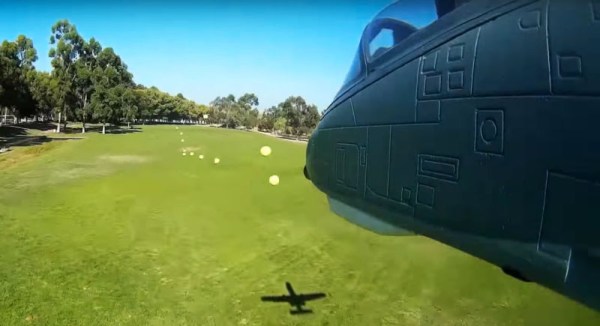
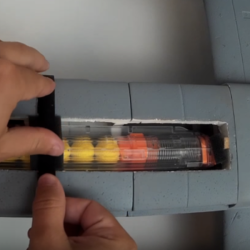 The firing assembly in the jet comes from a Nerf Rival Zeus Blaster, which is itself an interesting device. It uses two electric flywheels to launch soft foam balls – much like a pitching machine. With one flywheel running a little faster than the other, the trajectory can be modified. For example, a slight topspin gives the balls a longer and more stable flight path. Of course, foam balls slow down quickly once launched and at high speeds the aircraft can overtake the same projectiles it just fired, but it’s fun all the same.